
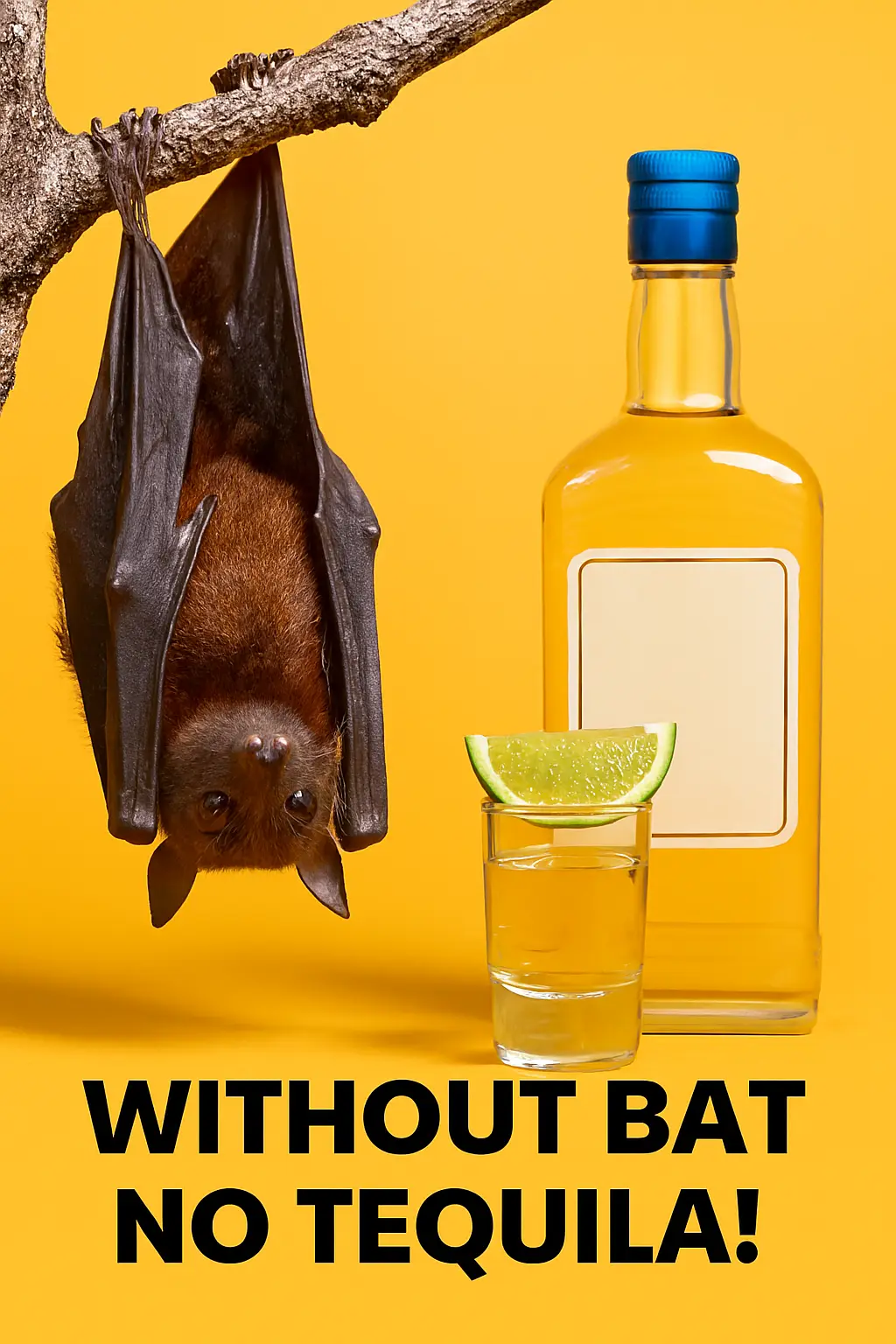
equila, Mexico’s most famous spirit, owes much of its existence to an unlikely ally — bats. Specifically, the lesser long-nosed bat and the Mexican long-tongued bat play a vital role in pollinating the blue agave plants from which tequila is made. These nocturnal creatures help sustain the delicate balance of the agave ecosystem, making them essential to the drink’s future.
Blue agave plants take around seven to ten years to mature before they can be harvested for tequila production. During this time, the plants produce tall flowering stalks called quiotes, which can reach up to six meters in height. Most agave farmers traditionally cut these stalks off to preserve the plant’s sugar concentration, ensuring a sweeter heart, or piña, for distillation. However, when the flowering stalks are removed, bats lose their primary source of nectar, disrupting their feeding habits and reducing the chance for natural pollination.
The relationship between bats and agave is a classic example of mutualism in nature. As bats feed on the nectar of agave flowers, they transfer pollen from one plant to another, promoting genetic diversity and resilience within the species. Without bat pollination, agave plants would become more genetically uniform, making them vulnerable to pests, diseases, and climate stress — all of which could threaten tequila production.
In recent years, conservationists and tequila producers have begun to recognize the importance of protecting bats and encouraging natural pollination. Initiatives like the “Bat-Friendly Tequila” and “Bat-Friendly Mezcal” programs allow some agave plants in each field to bloom naturally, providing food for bats and ensuring genetic variation. Farmers who participate in these programs label their bottles with a special bat-friendly certification, signaling to consumers that their tequila supports wildlife conservation.
These sustainable practices not only protect bat populations but also safeguard the long-term future of tequila. Encouraging biodiversity helps agave plants adapt to environmental changes, including drought and shifting weather patterns linked to climate change.
Jamaicans reveal devastation as hurricane causes floods, power cuts and splits city in two
The story of tequila and bats is a reminder that even the world’s most celebrated products rely on natural relationships to survive. Every sip of tequila is connected to the nighttime flight of bats across Mexico’s agave fields. Protecting these pollinators is not only a matter of preserving wildlife — it’s also essential for maintaining the flavor, quality, and cultural heritage of one of Mexico’s most iconic spirits.