Afham

Hantavirus outbreak

No sign of larger hantavirus outbreak, says UN health agency

The World Health Organization has said there is currently no evidence that recent hantavirus cases indicate the beginning of a larger global outbreak. Health officials stressed that hantavirus infections remain rare and are typically linked to contact with infected rodents rather than widespread human-to-human transmission. Concerns increased after isolated hantavirus cases were reported in several regions, prompting public discussion about the possibility of another pandemic. However, the UN health agency stated that available data does not suggest unusual transmission patterns or rapidly increasing infection rates. Experts noted that hantavirus is fundamentally different from airborne viruses such as COVID-19 because it usually spreads through exposure to rodent urine, droppings, or saliva. According to health authorities, most infections occur in rural or forested areas where people may come into contact with contaminated dust or poorly ventilated spaces inhabited by rodents. Symptoms often begin with fever, fatigue, muscle aches, and headaches before potentially developing into severe respiratory complications in some patients. The WHO urged governments and the public to remain cautious but avoid panic. Officials advised maintaining good hygiene practices, safely cleaning rodent-infested areas, sealing homes against rodents, and using protective equipment when handling contaminated materials. Early medical attention is also important, as prompt treatment can improve survival rates. Public health experts continue to monitor cases worldwide, but they emphasized that hantavirus outbreaks are generally localized and limited. Surveillance systems remain active to detect any unusual developments quickly. The agency added that while hantavirus can be dangerous, there is no indication at this stage of sustained international spread. Health authorities are continuing research and monitoring efforts to ensure rapid response if the situation changes, while reassuring the public that the current risk of a major hantavirus outbreak remains low.

Read More
Putin denounces NATO at Victory Day parade

Putin denounces Nato at scaled-back Victory Day parade

Russian President Vladimir Putin used a scaled-back Victory Day parade in Moscow to deliver a sharp criticism of NATO, accusing the alliance of fueling global instability and escalating tensions near Russia’s borders. Speaking during the annual May 9 celebrations marking the Soviet Union’s victory over Nazi Germany in World War II, Putin said the West was attempting to “rewrite history” and weaken Russia through military pressure and sanctions. This year’s parade appeared smaller than previous editions, with fewer military vehicles and limited public participation. Analysts linked the reduced scale to ongoing military commitments and economic pressures caused by the war in Ukraine. Despite the toned-down event, the Kremlin sought to project strength and national unity through patriotic speeches, flyovers, and displays of military symbolism. Putin praised Russian troops fighting in Ukraine, describing them as defenders of the nation and heirs to the sacrifices made during World War II. He also repeated claims that NATO expansion threatens Russian security, a narrative Moscow has consistently used since the beginning of the conflict. Western leaders, however, reject those accusations and argue that Russia’s invasion of Ukraine is the main cause of instability in Europe. Several foreign allies attended the ceremony, though attendance from international leaders was noticeably lower than in previous years. Security across Moscow remained extremely tight amid fears of potential drone attacks and sabotage attempts. Victory Day remains one of Russia’s most important national holidays, blending remembrance of wartime sacrifice with displays of political and military power. This year’s event highlighted both Russia’s efforts to maintain a strong image on the global stage and the growing strains caused by its confrontation with the West.

Read More
Iran US tensions

Iran accuses US of ‘reckless military adventure’

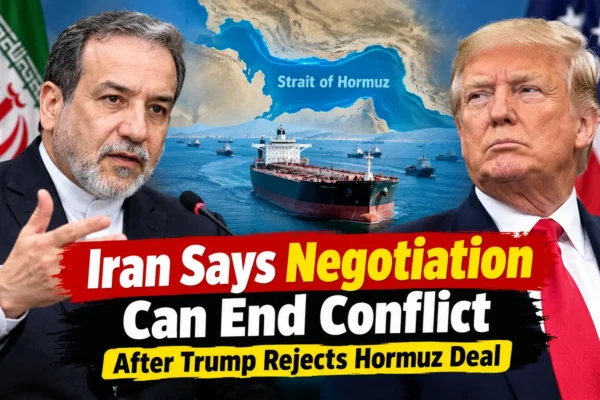
Iran sharply criticized the United States on Friday, accusing Washington of pursuing a “reckless military adventure” instead of diplomacy as tensions in the Middle East continued to rise. The remarks came from Iranian Foreign Minister Abbas Araghchi following renewed clashes involving US naval forces near the strategic Strait of Hormuz. According to Iranian officials, recent US military actions violated an already fragile ceasefire agreement reached after weeks of escalating conflict in the Gulf region. Tehran alleged that American strikes targeted civilian coastal areas and Iranian-linked vessels near the Strait of Hormuz, a vital global oil shipping route. Iranian military authorities described the attacks as “aggressive” and warned that the country would respond decisively to any further escalation. The United States, however, defended its operations as acts of self-defense. US Central Command stated that American naval destroyers came under missile, drone, and small-boat attacks from Iranian forces while transiting international waters. Washington said it responded by targeting Iranian missile launch sites and military infrastructure connected to the assaults. Araghchi argued that “every time a diplomatic solution is on the table, the US opts for a reckless military adventure,” adding that Iran would not surrender under pressure. His comments reflected Tehran’s growing frustration over stalled negotiations and ongoing military pressure from Washington and its regional allies. The escalating confrontation has fueled fears of wider instability across the Middle East, especially around the Strait of Hormuz, through which a major portion of the world’s oil supply passes. Global markets remain on edge as investors monitor the possibility of further military escalation, disruptions to shipping lanes, and rising energy prices. Meanwhile, diplomatic efforts led by regional mediators including Qatar continue in hopes of preventing a broader regional conflict.

Read More
Hantavirus outbreak

Hantavirus outbreak on cruise ship not start of pandemic, UN health agency says

The World Health Organization has said a recent hantavirus outbreak linked to a cruise ship should not be viewed as the beginning of a global pandemic, seeking to calm public fears after several passengers fell ill during a voyage in Asia. Health officials stressed that hantavirus infections are rare and are typically spread through exposure to rodents or their droppings rather than through sustained human-to-human transmission. According to the agency, investigators are examining sanitation conditions aboard the vessel after passengers reported flu-like symptoms including fever, fatigue, and respiratory complications. Several individuals were hospitalized for observation, while close contacts were monitored as a precaution. Authorities emphasized that there is currently no evidence the virus is spreading widely among travelers or communities beyond the ship. Hantavirus can cause severe respiratory disease in humans, but outbreaks are generally localized. Experts noted that unlike highly contagious viruses such as COVID-19, hantavirus does not usually spread easily between people. Most infections occur when individuals inhale particles contaminated by infected rodents. Public health officials therefore believe the incident can be contained through isolation measures, sanitation procedures, and medical monitoring. Cruise operators have reportedly increased cleaning operations and health screenings as investigations continue. Travelers were also advised to maintain hygiene precautions and report symptoms immediately if they experience fever or breathing difficulties after recent travel. The UN health agency urged the public not to panic or spread misinformation online, warning that exaggerated claims about a “new pandemic” could create unnecessary fear. Officials added that global surveillance systems remain active and that international health authorities are coordinating closely to monitor developments surrounding the outbreak.

Read More
US-Iran tensions

US says it has attacked Iranian-flagged ship as Israel launches air strike on Beirut

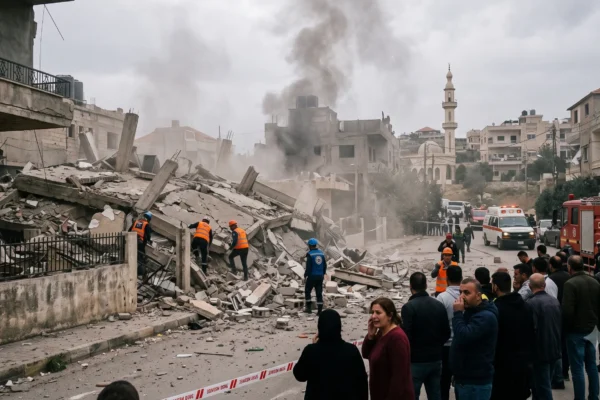
The United States has confirmed that it carried out an attack on an Iranian-flagged vessel in a significant escalation of tensions across the Middle East, while almost simultaneously, Israel launched a fresh airstrike on the Lebanese capital, Beirut. The developments underscore a rapidly intensifying regional crisis involving multiple flashpoints. According to officials from the United States Department of Defense, the targeted ship was believed to be involved in activities that posed a security threat, though specific operational details remain limited. The strike marks a notable expansion of direct US actions against assets linked to Iran amid ongoing maritime tensions in key shipping corridors. Meanwhile, Israel confirmed it conducted an airstrike on what it described as militant infrastructure in Beirut. Lebanese sources reported damage in parts of the city, raising concerns about civilian safety and the potential for further escalation. The strike is part of Israel’s broader campaign against groups it accuses of receiving Iranian backing. The dual developments highlight the increasingly interconnected nature of regional conflicts, where actions at sea and in urban centers are shaping a wider geopolitical confrontation. Analysts warn that the involvement of both US and Israeli forces in separate but related operations could provoke retaliatory responses from Iran or its allied groups. International reactions have begun to emerge, with calls for restraint from several global actors concerned about the risk of a broader war. The situation remains fluid, with military readiness reportedly heightened across multiple countries in the region. As tensions rise, the possibility of further strikes or countermeasures cannot be ruled out, making this one of the most volatile moments in Middle Eastern geopolitics in recent months.

Read More
Strait of Hormuz tensions

US strikes seven Iranian boats, Trump says, as tensions spike in Strait of Hormuz

Rising Strait of Hormuz tensions took a sharp turn after the United States carried out strikes on seven Iranian boats, according to statements from Donald Trump. The development marks a significant escalation in an already volatile region that is critical to global energy supplies. Speaking to reporters, Trump said the action was taken in response to what he described as “provocative maneuvers” by Iranian forces in the strategic waterway. The Strait of Hormuz handles roughly a fifth of the world’s oil shipments, making any disruption a serious concern for international markets and security. Officials from the U.S. Department of Defense indicated that the targeted boats were believed to be linked to Iran’s paramilitary naval units. The strikes, described as “defensive and proportionate,” were reportedly aimed at preventing further interference with commercial shipping lanes. Iran, however, strongly condemned the attacks, calling them an act of aggression and warning of consequences. Representatives of the Islamic Revolutionary Guard Corps stated that their vessels were operating within their अधिकार and accused the U.S. of escalating tensions deliberately. The incident comes amid heightened friction between Washington and Tehran over sanctions, regional influence, and maritime security. Analysts warn that continued military exchanges could lead to broader conflict, especially given the strategic importance of the waterway. Global oil markets reacted swiftly, with prices showing signs of volatility following the news. Energy analysts note that even limited disruptions in the Strait can trigger significant economic ripple effects worldwide. As diplomatic channels remain strained, international observers are urging restraint from both sides. The situation continues to evolve, with the risk of further escalation in the Strait of Hormuz tensions remaining a key concern for global stability.

Read More
Iran US peace proposal response

Iran says US has responded to its latest peace proposal

Iran has confirmed that the United States has responded to its latest peace proposal, signaling a fragile but ongoing diplomatic exchange amid heightened tensions in the Middle East. The development comes after Tehran submitted a new multi-point plan—reportedly a 14-point framework—through intermediaries, aiming to end hostilities and ease the standoff that has disrupted global energy markets. According to recent reports, Iranian officials indicated that Washington has reviewed and reacted to the proposal, though details of the U.S. response remain limited. The exchange follows weeks of indirect negotiations, often facilitated by third parties such as Pakistan, highlighting the absence of direct diplomatic engagement between the two sides. U.S. President Donald Trump has taken a cautious and skeptical stance. While acknowledging receipt of Iran’s proposal, he has suggested that the terms may not be acceptable, warning that military options—including renewed airstrikes—remain on the table if negotiations fail. Reports indicate Trump believes Iran has “not yet paid a big enough price,” underscoring the administration’s hardline posture. Iran’s proposal is believed to include key demands such as lifting U.S. sanctions, reopening the Strait of Hormuz, and reducing military pressure in the region. In return, Tehran has signaled willingness to engage in phased de-escalation, though it insists on preserving its strategic and nuclear interests. Despite this exchange, the situation remains volatile. Ongoing incidents in the Strait of Hormuz and continued military threats from both sides illustrate how fragile the diplomatic process is. Analysts note that while both countries appear interested in avoiding prolonged conflict, deep mistrust and conflicting demands continue to hinder a breakthrough. In summary, while Iran says the U.S. has responded to its latest peace proposal, the path to a comprehensive agreement remains uncertain, with diplomacy and military pressure unfolding simultaneously.

Read More
Trump Iran war deadline

Trump repeats that he is ‘not happy’ with Iran as deadline to seek approval for war looms

U.S. President Donald Trump has reiterated that he is “not happy” with Iran as a కీల moment approaches in Washington: the legal deadline requiring congressional approval for continued military involvement. The statement underscores rising tension between diplomatic efforts and domestic legal constraints tied to the ongoing conflict. Trump’s dissatisfaction centers on Iran’s latest proposals to end hostilities, which he has described as unacceptable and insufficient. According to recent reports, he believes Tehran’s leadership remains divided and unwilling to meet core U.S. demands, particularly on abandoning nuclear ambitions. Despite indirect negotiations through mediators, progress has stalled, leaving the situation in a fragile ceasefire rather than a lasting resolution. At the same time, the administration faces pressure under the War Powers Resolution, which mandates that a president must seek congressional authorization within 60 days of initiating military action. That deadline is now looming, placing Trump in a politically sensitive position. Rather than seeking approval, the White House argues that hostilities have effectively “terminated” due to an earlier ceasefire, a legal interpretation widely disputed by lawmakers and experts. Congress remains deeply divided. Efforts by Democrats to force a vote on ending or authorizing the war have repeatedly failed, while many Republicans continue to back Trump’s approach. This impasse increases the likelihood that the deadline will pass without clear legislative action, further intensifying constitutional questions over executive war powers. Meanwhile, Trump has kept military options open, signaling that further strikes remain possible if Iran does not shift its stance. His remarks suggest a dual-track strategy: maintaining pressure through both diplomacy and the threat of force. With no breakthrough in negotiations and legal uncertainty mounting, the coming days are critical. Whether the administration seeks authorization, ignores the deadline, or escalates tensions will significantly shape the trajectory of the U.S.–Iran conflict and broader regional stability.

Read More
Iran blockade oil price

Oil price soars above $118 after reports of ‘extended’ Iran blockade

Oil prices surged sharply on Wednesday, with Brent crude climbing above $118 a barrel after reports that the United States could extend its blockade on Iran, intensifying fears of a prolonged supply shock in global energy markets. The move pushed crude to its highest level in nearly a month and reignited concerns over inflation, transport costs, and fuel prices worldwide. According to market reports, traders reacted after new signals suggested the blockade on Iranian ports may continue longer than previously expected. Iran remains a key oil producer, and any disruption to exports from the Gulf region immediately impacts global supply expectations. Investors are especially concerned because the Strait of Hormuz, one of the world’s most important oil transit routes, remains under pressure amid ongoing tensions. Brent crude futures rose more than 6% to $118.33, while U.S. West Texas Intermediate (WTI) also jumped above $105. Analysts said the rally was driven not only by geopolitical risk but also by fresh U.S. inventory data showing a larger-than-expected drop in crude stockpiles, indicating tighter supply conditions. Higher oil prices could quickly translate into rising petrol and diesel costs for consumers, especially in import-dependent countries such as India and many European nations. Airlines, shipping firms, and manufacturing sectors may also face higher operating expenses if prices remain elevated. Markets are now watching whether diplomatic efforts between Washington and Tehran can resume. Any sign of easing tensions could cool prices, while an extended blockade or military escalation may send crude toward $120 or higher. The latest surge highlights how vulnerable global energy markets remain to geopolitical disruptions. With inflation already a concern in many economies, sustained high oil prices could create fresh challenges for central banks and policymakers in the weeks ahead.

Read More
Trump attempted assassination Washington dinner

Suspect charged with attempted assassination of Trump at Washington dinner

A suspect has been formally charged with the attempted assassination of former U.S. President Donald Trump after a dramatic security breach during a high-profile Washington dinner event. The incident took place at the annual White House Correspondents’ Association dinner held at the Washington Hilton, where Trump and several senior officials were in attendance. Federal prosecutors identified the suspect as Cole Tomas Allen, 31, from California. Authorities allege he arrived in Washington days before the event carrying multiple weapons, including a shotgun, handgun, and knives. Investigators say Allen attempted to force his way past a security checkpoint before being confronted by Secret Service officers. During the confrontation, shots were fired and at least one Secret Service officer was struck in the chest. Officials said the officer’s ballistic vest prevented serious injury. Trump was immediately removed from the venue by security personnel as guests and staff took cover inside the ballroom. Allen now faces multiple federal charges, including attempted assassination of a former president, illegal transportation of firearms, and use of a weapon during a violent crime. If convicted on the most serious count, he could face life imprisonment. A judge ordered him held in custody pending further court proceedings. Investigators are also reviewing writings and communications allegedly linked to the suspect to determine motive and whether others were involved. Officials described the case as active and said additional charges remain possible. The incident has reignited debate over political violence and security surrounding major U.S. public events. Despite the breach, authorities stated that rapid intervention by security teams likely prevented a far more serious outcome.

Read More