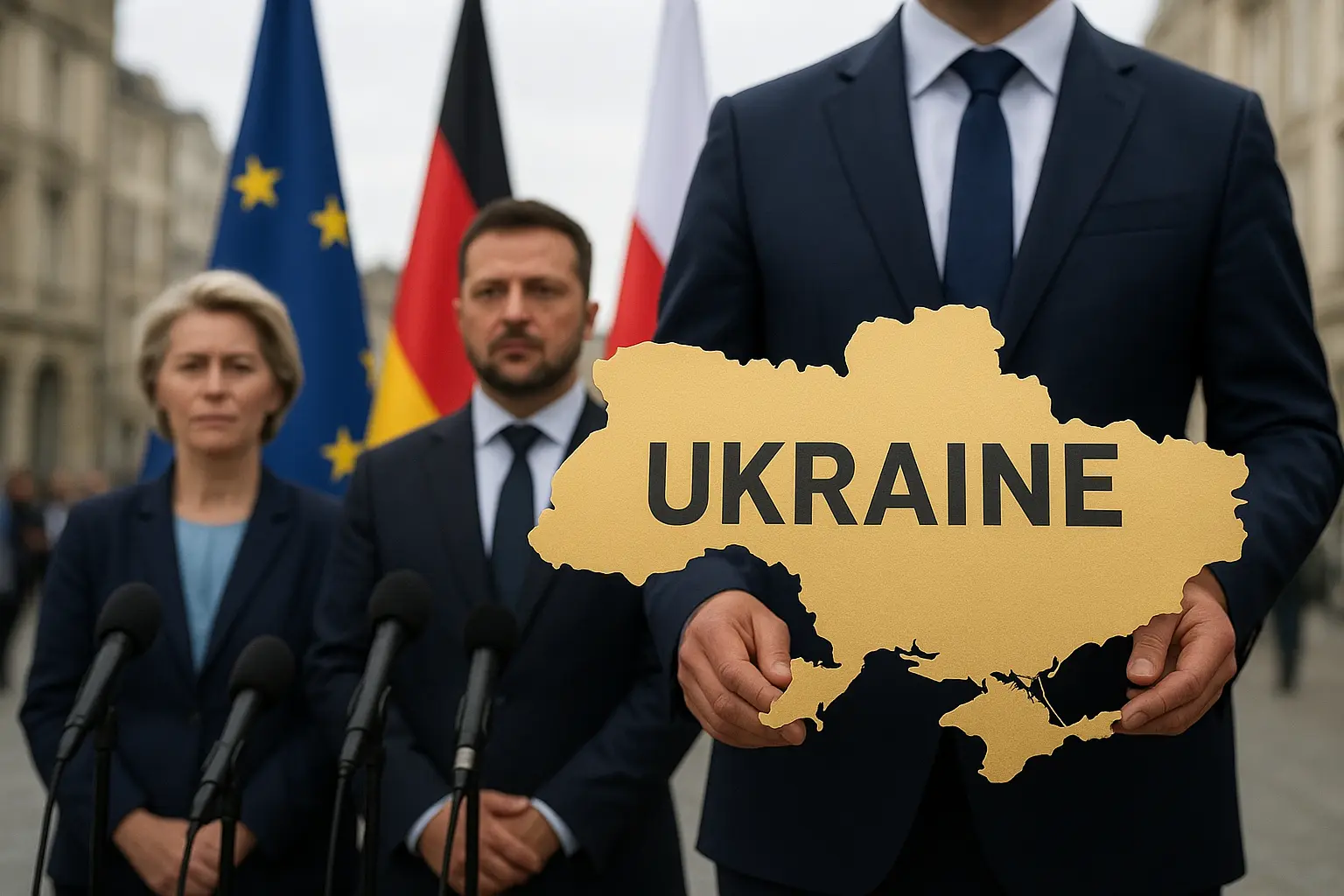
European support for Ukraine is entering a new phase as several EU member states intensify calls for stronger and more clearly defined security guarantees. Amid ongoing Russian offensives and mounting pressure on the Ukrainian front lines, European leaders are seeking long-term commitments that go beyond financial assistance and short-term military aid. Their message is increasingly unified: Ukraine needs durable assurances that it will not be left vulnerable in the years ahead.
At recent high-level meetings across Brussels, Warsaw, Berlin, and Paris, European officials emphasized that the current security environment demands a more structured approach. Many countries argue that the patchwork system of bilateral aid packages, though vital, is not sufficient to stabilise Ukraine’s strategic position. Instead, they are pushing for a collective guarantee framework—one that would signal Europe’s readiness to stand with Kyiv well into the future.
A major point of discussion among European policymakers is how far these guarantees should go. Some nations, particularly in Eastern Europe, support commitments that resemble NATO-style assurance mechanisms, including rapid military assistance, long-term weapons contracts, and joint training programs. Countries closer to the conflict zone insist that without such measures, Russia may continue to test the limits of European resolve.
However, Western European capitals are balancing political caution with strategic necessity. While they agree on strengthening Ukraine’s defensive capacity, some governments remain wary of creating obligations that could be interpreted as a direct path to NATO membership. Instead, they advocate for legally binding bilateral agreements—similar to those signed between Ukraine and the UK, Germany, and France—that outline long-term arms deliveries, intelligence sharing, and industrial cooperation.
Another key element of the debate involves Europe’s defence production capacity. Leaders acknowledge that security guarantees must be matched with the ability to deliver ammunition, air defences, and armoured vehicles on a predictable schedule. Several EU states are urging accelerated investment in the continent’s defence industries, warning that Europe must be able to support Ukraine without relying excessively on external partners.
For Ukraine, the push from its European allies offers both reassurance and urgency. Kyiv has repeatedly stressed that credible security guarantees are essential not only for its wartime endurance but also for future reconstruction and stability. President Volodymyr Zelensky has highlighted that Ukraine’s path toward EU and NATO integration is inseparable from these commitments.
As Europe debates the final shape of its support architecture, momentum is clearly shifting toward a more coordinated and long-term strategy. While disagreements remain, the overarching trend is undeniable: European nations are moving to ensure that Ukraine’s security is treated not as a temporary challenge, but as a lasting priority with consequences for the entire continent.