
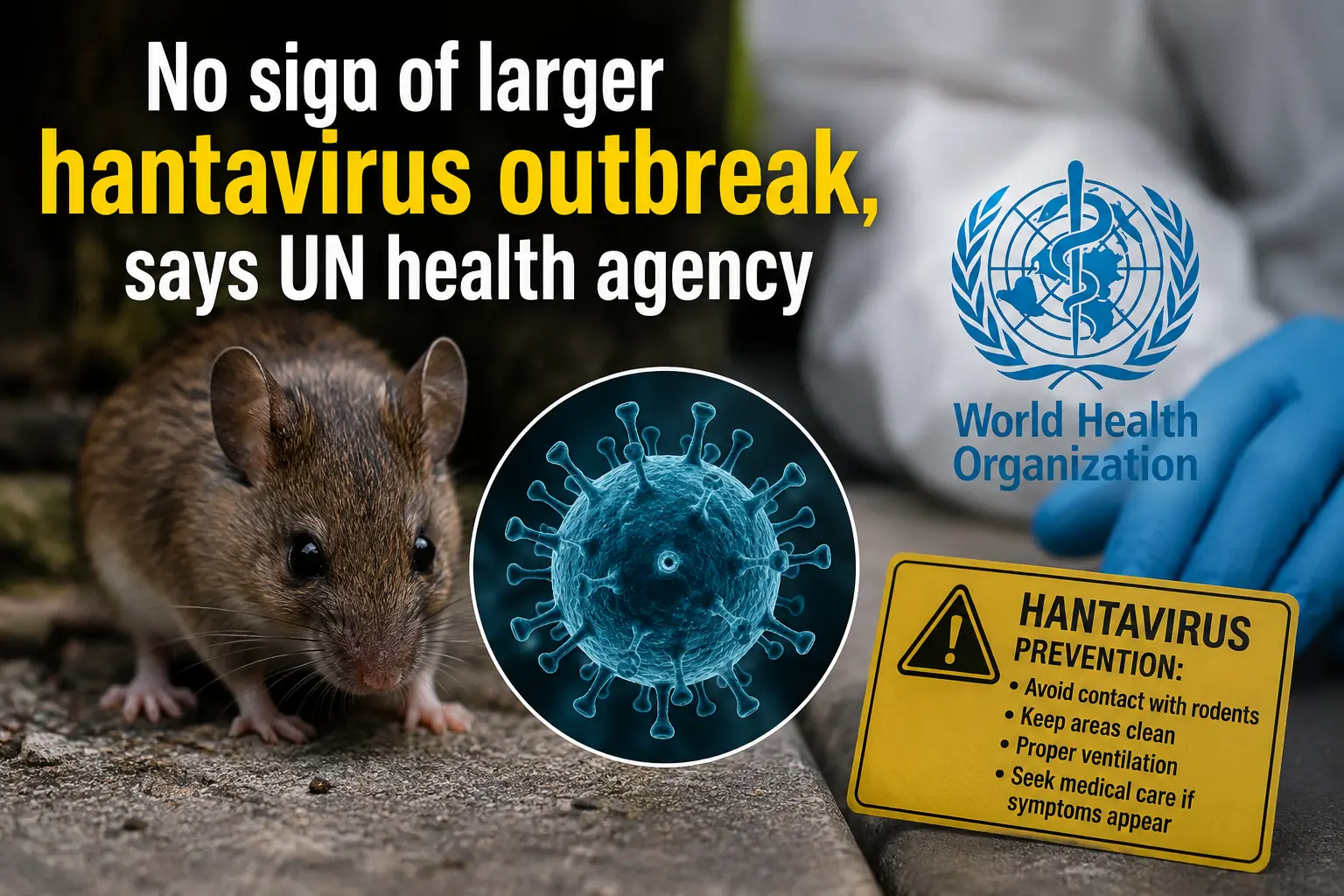
The World Health Organization has said there is currently no evidence that recent hantavirus cases indicate the beginning of a larger global outbreak. Health officials stressed that hantavirus infections remain rare and are typically linked to contact with infected rodents rather than widespread human-to-human transmission.
Concerns increased after isolated hantavirus cases were reported in several regions, prompting public discussion about the possibility of another pandemic. However, the UN health agency stated that available data does not suggest unusual transmission patterns or rapidly increasing infection rates. Experts noted that hantavirus is fundamentally different from airborne viruses such as COVID-19 because it usually spreads through exposure to rodent urine, droppings, or saliva.
According to health authorities, most infections occur in rural or forested areas where people may come into contact with contaminated dust or poorly ventilated spaces inhabited by rodents. Symptoms often begin with fever, fatigue, muscle aches, and headaches before potentially developing into severe respiratory complications in some patients.
The WHO urged governments and the public to remain cautious but avoid panic. Officials advised maintaining good hygiene practices, safely cleaning rodent-infested areas, sealing homes against rodents, and using protective equipment when handling contaminated materials. Early medical attention is also important, as prompt treatment can improve survival rates.
Public health experts continue to monitor cases worldwide, but they emphasized that hantavirus outbreaks are generally localized and limited. Surveillance systems remain active to detect any unusual developments quickly.
The agency added that while hantavirus can be dangerous, there is no indication at this stage of sustained international spread. Health authorities are continuing research and monitoring efforts to ensure rapid response if the situation changes, while reassuring the public that the current risk of a major hantavirus outbreak remains low.