Afham

Trump Venezuela transition

Trump says US will ‘run’ Venezuela until ‘safe transition can take place’

Donald Trump has said the United States will “run” Venezuela until a “safe transition can take place,” marking one of his most forceful statements yet on the future of the crisis-hit South American nation. Speaking at a campaign-style event, Trump framed the comments as part of a broader strategy to restore stability, democracy, and economic order in Venezuela, which has been mired in political turmoil, sanctions, and economic collapse for years. Trump accused Venezuela’s current leadership of destroying the country’s economy, driving millions to flee, and turning the nation into what he described as a hub for crime and instability that affects the wider region. He argued that US involvement would be temporary and focused on overseeing a transition that ensures free elections, institutional reform, and the return of basic governance. According to Trump, the objective would be to hand control back to Venezuelans once conditions are deemed secure and democratic norms restored. The remarks immediately sparked controversy, with critics saying they suggest an unprecedented level of direct US control over another sovereign nation. Opponents argue that such language risks escalating tensions in Latin America and could revive memories of past US interventions in the region. They also warn that any perception of foreign rule could undermine the legitimacy of a future Venezuelan government. Supporters, however, say Trump’s comments reflect frustration with years of failed diplomatic efforts and sanctions that have not dislodged entrenched leadership or improved living conditions. They argue that a managed transition, backed by international partners, could help stabilize the country, revive oil production, and stem migration flows that have affected neighboring states and the United States. Venezuela remains one of the world’s most complex political crises, with deep divisions at home and competing interests abroad. Trump’s statement signals that, if returned to office, he may pursue a far more assertive approach, reshaping US policy toward Venezuela and potentially redefining Washington’s role in the region during any future transition.

Read More
New Year celebrations Asia

China, Thailand and the Philippines ring in new year with a blaze of colour

China, Thailand and the Philippines welcomed the New Year with spectacular displays of colour, sound and tradition, as millions gathered to mark fresh beginnings with fireworks, festivals and cultural rituals. In China, major cities lit up the night sky with elaborate fireworks and lantern displays, blending modern celebrations with centuries-old customs. Families came together for reunion dinners, while public squares hosted countdown events filled with music, light shows and traditional performances. Red decorations dominated streets and homes, symbolising luck, prosperity and happiness for the year ahead. Authorities in several cities also organised large-scale light festivals, turning landmarks into glowing symbols of renewal and national pride. Thailand’s New Year celebrations were equally vibrant, particularly in Bangkok and popular tourist destinations. Fireworks illuminated the Chao Phraya River as crowds gathered along riverbanks and at temples to usher in the New Year. Many Thais combined celebration with spirituality, visiting temples to make merit, offer prayers and seek blessings from monks. Cultural shows, concerts and street festivities added to the atmosphere, reflecting Thailand’s balance of modern entertainment and deep-rooted traditions. In the Philippines, the New Year was marked by loud, colourful and joyful festivities rooted in the belief that noise and brightness drive away bad luck. Fireworks displays filled city skylines, while families celebrated at home with traditional round fruits, symbolising prosperity and continuity. Children and adults alike wore polka-dotted clothing, another symbol of good fortune. Public celebrations featured concerts, countdown events and communal gatherings that highlighted the country’s strong sense of family and community. Across Asia, these New Year celebrations showcased a shared optimism and cultural richness. Despite economic challenges and global uncertainties, the blaze of colour, music and tradition reflected a collective hope for peace, prosperity and renewal in the year ahead.

Read More
US security guarantee for Ukraine

US offered Ukraine 15-year security guarantee, Zelensky says

The United States offered Ukraine a 15-year security guarantee as part of ongoing discussions over long-term support and post-war stability, President Volodymyr Zelensky has said. The proposal, according to Zelensky, is intended to provide Kyiv with sustained military, political, and strategic backing as the country continues to defend itself against Russia’s invasion and plan for future security arrangements. Zelensky described the offer as a significant signal of Washington’s commitment to Ukraine’s sovereignty and territorial integrity. He noted that the guarantee would extend well beyond the immediate conflict, covering a period in which Ukraine would focus on rebuilding its armed forces, strengthening institutions, and integrating more deeply with Western security frameworks. While the precise legal and military details have not been made public, Zelensky emphasized that the duration itself reflects a shift toward longer-term thinking among Ukraine’s partners. Ukrainian officials have consistently argued that temporary aid packages are not sufficient to deter future aggression. From Kyiv’s perspective, a multi-year security guarantee could help ensure continuity of military assistance, intelligence cooperation, and training, while also reassuring investors and allies that Ukraine will not be left exposed once active hostilities subside. Zelensky said such guarantees are critical for preventing a repeat of past scenarios in which Ukraine found itself without enforceable security assurances. The proposed 15-year framework is also seen as a bridge toward broader security integration, including eventual NATO membership, which remains Ukraine’s strategic objective. Zelensky reiterated that any guarantees offered now should complement, not replace, Ukraine’s long-term goal of joining the alliance. Discussions over the guarantee come amid intensified diplomatic efforts to shape Ukraine’s future security architecture. While negotiations are ongoing and no final agreement has been announced, Zelensky said the US proposal demonstrates growing recognition that Ukraine’s security is closely linked to wider European and transatlantic stability.

Read More
Russian attack

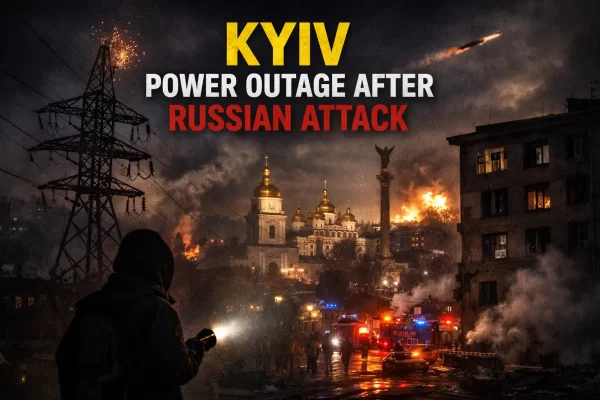
Thousands without power in Kyiv after massive Russian attack

Thousands of residents in Kyiv were left without electricity after a massive Russian attack targeted critical infrastructure across Ukraine, once again plunging the capital into emergency conditions. Ukrainian officials said the overnight assault involved a combination of missiles and drones aimed primarily at energy facilities, worsening an already fragile power supply as winter conditions strain the national grid. Kyiv’s mayor confirmed that large sections of the city experienced blackouts following the strikes, with emergency crews working throughout the day to restore electricity and heating. While air defense systems intercepted a significant number of incoming threats, several projectiles managed to penetrate defenses, causing damage to substations and transmission lines. Authorities warned that rolling outages could continue as repairs remain ongoing. The attack also disrupted water supply and mobile communications in some districts, highlighting the cascading impact of strikes on civilian infrastructure. Hospitals, metro stations, and critical services were switched to backup generators to maintain operations. Residents were urged to conserve electricity once supply is restored and to prepare for potential further outages. Ukrainian energy officials described the assault as one of the most severe attacks on Kyiv’s power network in recent months. They said Russia appears to be renewing its strategy of targeting energy systems to weaken civilian morale and economic stability. Similar strikes were reported in several other regions, compounding pressure on the national energy system. President Volodymyr Zelensky condemned the attack, calling it a deliberate act of terror against civilians. He reiterated appeals to Western allies for additional air defense systems and faster delivery of energy support equipment. According to government estimates, repeated attacks have already destroyed or damaged a significant portion of Ukraine’s energy infrastructure since the start of the war. Despite the disruption, city officials emphasized that Kyiv remains functional and resilient. Repair teams, supported by international partners, continue to work around the clock to stabilize the grid. For many residents, however, the latest Kyiv power outage after Russian attack is a stark reminder that the conflict’s impact is felt far beyond the front lines, directly affecting daily life in the capital.

Read More
Zelensky Trump talks

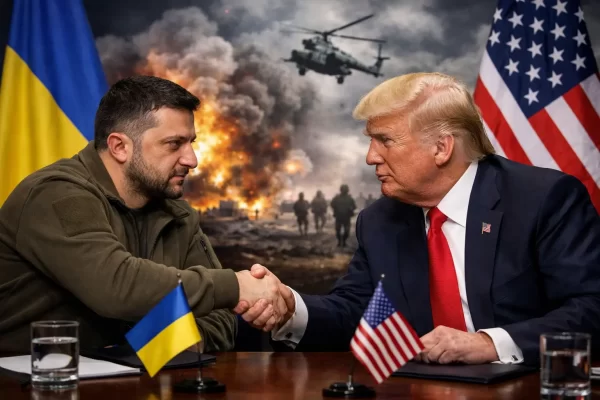
Zelensky plans to meet Trump on Sunday for talks on ending Russian war

Ukrainian President Volodymyr Zelensky has announced plans to meet former U.S. President Donald Trump on Sunday for high-level discussions aimed at ending the ongoing Russian war against Ukraine. The proposed meeting comes at a critical moment in the conflict, as fighting continues along multiple фронts and diplomatic efforts intensify ahead of key political developments in the United States and Europe. According to officials close to Kyiv, the talks will focus on potential pathways toward a negotiated settlement, security guarantees for Ukraine, and the future role of the United States in supporting Kyiv militarily and economically. Zelensky has repeatedly stressed that any peace initiative must respect Ukraine’s sovereignty and territorial integrity, signaling that Kyiv will not accept compromises that legitimize Russian control over occupied regions. The planned Zelensky Trump talks are significant because Trump has publicly claimed that he could end the war quickly if returned to office, though he has not provided detailed proposals. His statements have sparked concern among some Western allies, who fear a possible reduction in U.S. support for Ukraine. At the same time, Trump’s influence within American politics makes the meeting strategically important for Zelensky, who is seeking assurances that bipartisan backing for Ukraine will continue regardless of future political shifts in Washington. For Zelensky, the meeting also serves a broader diplomatic purpose. Ukraine is attempting to maintain momentum behind international efforts to pressure Moscow through sanctions while keeping open the possibility of dialogue under conditions acceptable to Kyiv. Ukrainian officials argue that Russia must demonstrate genuine willingness to end hostilities, including halting missile attacks and withdrawing troops, before meaningful negotiations can proceed. Trump, for his part, has positioned himself as a deal-maker capable of leveraging U.S. influence to bring both sides to the table. Supporters of his approach argue that prolonged war risks further destabilizing global energy markets and European security. Critics, however, warn that pushing for a rapid settlement without firm guarantees could leave Ukraine vulnerable to future aggression. The outcome of the Zelensky Trump talks remains uncertain, but analysts agree the meeting underscores the growing intersection between global diplomacy and domestic U.S. politics. With the war entering another protracted phase, Ukraine is working to ensure that its interests remain central to any discussion involving major powers. As Sunday’s meeting approaches, expectations are cautious. Ukrainian officials emphasize that dialogue does not equal concession, while observers note that any credible plan to end the Russian war will require coordination with European allies and clear terms that uphold international law. Regardless of immediate results, the talks highlight Ukraine’s continued efforts to engage all influential actors in pursuit of a just and lasting peace.

Read More
Demilitarised Zones in Ukraine Peace Plan

Zelensky moves towards demilitarised zones in latest peace plan for Ukraine

Ukrainian President Volodymyr Zelensky has unveiled a new 20-point peace plan that places strong emphasis on the creation of demilitarised zones as a pathway to ending the ongoing war with Russia. The proposal, developed in coordination with U.S. negotiators, seeks to freeze the current front line while gradually facilitating troop withdrawals and establishing neutral areas free of military presence. At the heart of this plan is the idea that demilitarised zones could serve as buffers, reducing the risk of renewed clashes and fostering conditions for dialogue. Zelensky explained that while some aspects of the plan remain contentious, Ukraine has successfully shifted negotiations away from earlier drafts that heavily favored Russian demands. The revised framework now reflects a more balanced Ukrainian-American position, though Moscow’s response is still pending. The peace plan also includes security guarantees from Western allies, modeled on NATO’s Article Five, to ensure Ukraine’s protection in case of future aggression. These guarantees are designed to reassure Kyiv that any compromise on territorial or military issues will not leave the country vulnerable. Zelensky acknowledged that compromises are difficult, but he stressed that the plan represents progress toward a diplomatic solution. Critics argue that Russia may resist the demilitarised zones concept, given its insistence on territorial control. However, Zelensky’s move signals a pragmatic approach: freezing the battlefield, reducing immediate violence, and opening space for longer-term negotiations. For Ukraine, the establishment of demilitarised zones is not just a tactical measure but a strategic attempt to secure peace while safeguarding sovereignty. In summary, Zelensky’s latest peace initiative highlights demilitarised zones as a cornerstone of conflict resolution, aiming to balance military realities with diplomatic aspirations and international secu

Read More
Brain drain

Brain Drain in India: For Every 1 Foreign Student, 25 Indians Study Abroad | NITI Aayog

India is witnessing a growing brain drain, especially in the field of higher education. According to NITI Aayog, for every one foreign student studying in India, nearly 25 Indian students go abroad for education. This stark imbalance highlights a serious challenge for India’s education system and its long-term economic growth. Understanding Brain Drain in India Brain drain refers to the migration of educated, skilled, and talented individuals from their home country to other nations in search of better education, improved career opportunities, higher income, and a better quality of life. In the Indian context, this phenomenon is most visible in higher education, where a growing number of students choose to pursue undergraduate, postgraduate, and research programs abroad. Every year, lakhs of Indian students move to countries such as the United States, Canada, the United Kingdom, Australia, and Germany. While many initially go for education, a significant proportion later settle overseas due to attractive job prospects, advanced research ecosystems, and favorable immigration policies. As a result, India experiences a continuous loss of highly skilled human capital, including future scientists, engineers, doctors, and entrepreneurs. Recent observations by NITI Aayog confirm that brain drain in India is no longer just a theoretical concern—it is a measurable and growing reality. The widening gap between Indian students going abroad and foreign students coming to India highlights structural challenges in the domestic education system. If left unaddressed, this trend could weaken India’s innovation capacity, slow economic growth, and reduce its global competitiveness in the long term. Key Findings Highlighted by NITI Aayog Why Are Indian Students Going Abroad? 1. Better Quality of Education Many foreign universities offer advanced research facilities, updated curricula, and global exposure that attract Indian students. 2. Strong Career Opportunities Countries like the US, Canada, and the UK provide post-study work visas and long-term employment options, making them more appealing. 3. Limited Research Infrastructure in India While India has top institutions like IITs and IISc, overall research funding, innovation support, and global collaboration remain limited in many universities. 4. International Exposure Foreign education provides multicultural exposure, global networks, and better recognition in international job markets. Economic Impact of Brain Drain The economic impact of brain drain on India is both significant and long-term. Every year, Indian families spend thousands of crores of rupees on foreign education, covering tuition fees, accommodation, living expenses, and other related costs. This massive outflow of money could otherwise be invested in strengthening India’s own higher education system, improving research infrastructure, and creating world-class universities within the country. Beyond financial loss, the permanent settlement of Indian students abroad leads to a serious loss of human capital. When talented students choose to build their careers overseas, India loses skilled professionals such as engineers, doctors, scientists, and management experts. Additionally, the country misses out on future researchers and innovators who could have contributed to technological advancement, scientific discovery, and industrial growth. Brain drain also reduces the number of potential entrepreneurs and leaders who could have created jobs, launched startups, and driven economic development within India. Over time, this talent loss directly impacts economic growth, innovation capacity, and India’s global competitiveness. Without effective policy intervention, the continued migration of skilled youth may weaken India’s ambition to become a knowledge-driven and innovation-led economy. Why India Attracts Fewer Foreign Students Despite having rich culture, affordable education, and growing universities, India struggles to attract international students due to: What Can Be Done to Reduce Brain Drain? Strengthening Higher Education India must invest more in world-class universities, research centers, and faculty development. Internationalisation of Education Introducing more global collaborations, exchange programs, and international-standard courses can help. Attracting Foreign Students Simpler visa policies, scholarships, English-taught programs, and better campus facilities can make India a global education hub. Creating Opportunities at Home High-quality jobs, innovation ecosystems, and startup support can encourage students to return after studying abroad. Conclusion The fact that 25 Indian students go abroad for every one foreign student coming to India is a wake-up call. As NITI Aayog highlights, brain drain is real and growing. To turn this challenge into an opportunity, India must reform its higher education system, improve research infrastructure, and position itself as a global education destination. India’s youth is its greatest strength. Retaining and attracting talent is no longer optional—it is essential for the country’s future.

Read More
India–New Zealand Free

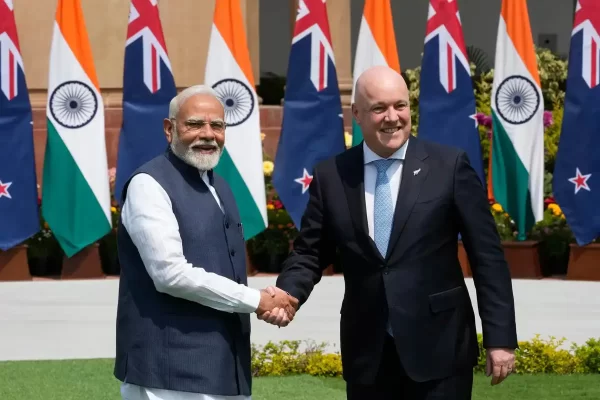
India–New Zealand Free Trade Agreement 2025 | Key Benefits & Impact

India Signs Free Trade Agreement with New Zealand: Third Major FTA in 2025India has successfully concluded its third Free Trade Agreement (FTA) in 2025, this time with New Zealand, marking another significant milestone in the country’s global trade expansion strategy. The agreement strengthens bilateral economic ties and opens new opportunities for exporters, investors, professionals, and businesses in both nations.This FTA comes after India’s recent trade pacts with the United Kingdom and Oman, highlighting India’s aggressive push toward deeper global economic integration. What Is the India–New Zealand Free Trade Agreement?The India–New Zealand Free Trade Agreement aims to reduce or eliminate tariffs, improve market access, boost investments, and enhance cooperation across goods, services, and skilled mobility.Under this agreement:New Zealand will offer duty-free access to 100% of Indian exports India will reduce tariffs on nearly 70% of tariff lines, covering around 95% of New Zealand’s trade value Both countries aim to double bilateral trade within the next five years New Zealand has proposed long-term investments worth nearly $20 billion in India Key Benefits for India Why This FTA Is Strategically Important for IndiaThe India–New Zealand FTA aligns with India’s long-term vision of becoming a global manufacturing and export hub. It supports key national initiatives such as:Make in India Atmanirbhar Bharat Viksit Bharat 2047 By signing three FTAs in a single year, India has sent a strong message that it is open for business, investment, and global partnerships. Impact on Bilateral Trade RelationsCurrently, trade between India and New Zealand remains underutilized despite strong diplomatic relations. This agreement is expected to:Increase two-way trade volume Strengthen supply chains Encourage joint ventures and startups Enhance cooperation in renewable energy, education, and innovation ConclusionThe India–New Zealand Free Trade Agreement is more than just a trade deal — it is a strategic partnership that will deliver long-term economic benefits. It opens doors for Indian exporters, attracts foreign investment, supports skilled professionals, and reinforces India’s growing role in the global economy.As India continues to expand its FTA network, agreements like this will play a crucial role in shaping the country’s trade-driven growth story.

Read More
Imran Khan state gift fraud case

Imran Khan and wife given further jail terms after state gift fraud case

Former Pakistan Prime Minister Imran Khan and his wife Bushra Bibi have been handed additional jail sentences in the Imran Khan state gift fraud case, deepening the legal troubles facing the former leader amid an already volatile political climate. The verdict was delivered by a special accountability court, which found Imran Khan and Bushra Bibi guilty of illegally retaining and selling state gifts received during Khan’s tenure as prime minister. The court ruled that the couple violated established rules governing the declaration, purchase, and disposal of gifts received from foreign dignitaries, causing financial loss to the national exchequer. According to prosecutors, Imran Khan failed to properly disclose several high-value gifts and did not pay the required amount to retain them legally. Bushra Bibi was charged as an accomplice for her alleged role in facilitating the concealment and sale of these items. The court rejected defense arguments that the gifts were lawfully obtained and dismissed claims that the case was politically motivated. The latest sentences will run alongside Khan’s existing prison terms in other cases, further reducing any immediate prospect of his release. Imran Khan has been incarcerated since 2023 and faces multiple convictions related to corruption, misuse of authority, and breaches of official conduct. His legal team has announced plans to challenge the ruling in higher courts, arguing that due process was not followed and evidence was selectively presented. The decision has sparked strong reactions from Khan’s Pakistan Tehreek-e-Insaf party, which condemned the judgment as part of a broader campaign to sideline the former prime minister ahead of future political developments. Supporters staged protests in several cities, while authorities increased security to prevent unrest. The Imran Khan state gift fraud case is widely seen as a significant chapter in Pakistan’s ongoing accountability drive, highlighting the strict scrutiny faced by former officeholders. As appeals proceed, the case is expected to remain a focal point in Pakistan’s legal and political discourse. Former EU top diplomat Mogherini accused in fraud investigation WabsTalk Spoken English and Public Speaking Institute

Read More
Putin vows no more wars

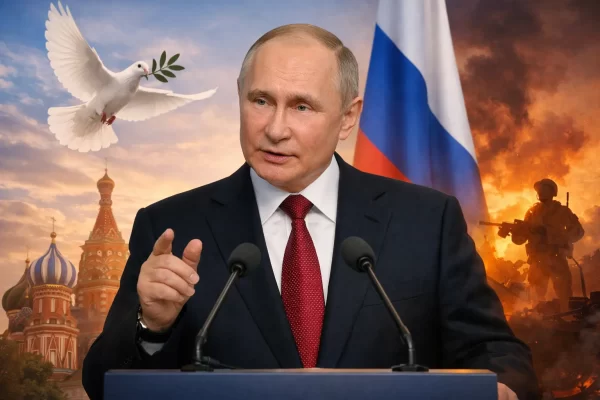
Putin vows no more wars if West treats Russia with respect

Russian President Vladimir Putin has declared that Russia would have no need to engage in further wars if Western nations treated Moscow with what he described as “basic respect” and acknowledged its security interests. Speaking at a public forum, Putin framed Russia’s recent confrontations with the West as the result of prolonged disregard for Russian concerns rather than deliberate expansionism. Putin argued that Russia has repeatedly sought dialogue on European security, NATO enlargement, and strategic stability, but said those efforts were dismissed or ignored. According to him, the continued expansion of Western military alliances toward Russia’s borders created an environment in which conflict became inevitable. He insisted that Moscow’s actions should be viewed as defensive responses to pressure rather than aggressive ambitions. The Russian leader emphasized that his government does not seek perpetual confrontation. He stated that Russia’s primary goal is stability, economic development, and predictable relations with major powers. “If Russia is respected and its interests are taken seriously, there will be no reason for wars,” Putin said, adding that cooperation would benefit both Russia and the wider international system. Western governments, however, remain skeptical of such assurances. Many argue that Russia’s actions in Ukraine and its broader military posture contradict claims of purely defensive intent. They maintain that respect in international relations must be grounded in adherence to sovereignty, territorial integrity, and international law. Despite these differences, Putin signaled that Moscow remains open to renewed dialogue, particularly on arms control and regional security arrangements. He suggested that a multipolar world order, where no single bloc dominates global decision-making, could reduce tensions and lower the risk of future conflicts. The remarks come at a time of heightened geopolitical strain, with relations between Russia and the West at their lowest point in decades. Whether Putin’s statement marks a genuine opening for diplomacy or a rhetorical effort to shift responsibility remains uncertain. Still, the message underscores Russia’s consistent position that recognition and respect, rather than pressure and isolation, are key to avoiding further wars.

Read More