
Social Media Addiction Trial

Meta and YouTube found liable in landmark social media addiction trial give me 300 words and focus keyword

In a landmark legal decision, tech giants Meta Platforms and YouTube have been found liable in a groundbreaking social media addiction trial, marking a pivotal moment in the regulation of digital platforms. The ruling comes after years of growing concern over the psychological impact of social media usage, particularly among teenagers and young adults. The case centered on allegations that both companies knowingly designed their platforms to be addictive, using algorithms that promote prolonged engagement at the expense of user well-being. Plaintiffs argued that features such as endless scrolling, personalized content feeds, and targeted notifications contributed to compulsive usage patterns, ultimately leading to mental health issues including anxiety, depression, and reduced attention spans. During the trial, internal documents revealed that executives at both companies were aware of the potential harms but continued to prioritize user growth and advertising revenue. Expert witnesses highlighted how dopamine-driven feedback loops embedded within these platforms can reinforce habitual behavior, especially in younger users whose cognitive control systems are still developing. The court’s decision to hold Meta Platforms and YouTube accountable sets a legal precedent that could reshape the digital landscape. It opens the door for further lawsuits and may compel tech companies to implement stricter safeguards, such as screen time limits, age-appropriate design, and increased transparency around algorithms. Legal analysts suggest this ruling could influence policymakers worldwide, accelerating efforts to regulate social media platforms more aggressively. For families affected by excessive social media use, the verdict represents a significant step toward accountability. As the debate over digital responsibility intensifies, this social media addiction trial underscores a broader societal shift—one that demands a balance between technological innovation and the mental well-being of users in an increasingly connected world.

Read More
Trump Iran negotiations

Trump says negotiations to end war happening ‘right now’ and Iran is ‘talking sense’

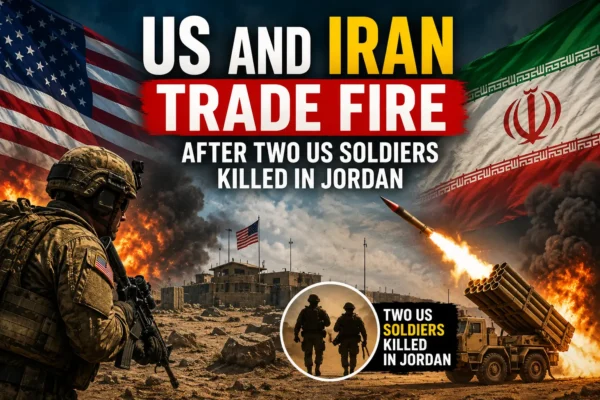
U.S. President Donald Trump has claimed that negotiations to end the ongoing conflict with Iran are actively underway, saying talks are happening “right now” and that Tehran is “talking sense.” His remarks suggest a possible diplomatic opening after weeks of escalating military tensions in the Middle East. According to Trump, recent discussions have been “productive” and involve senior U.S. officials working through intermediaries to reach a broader agreement that could bring a “complete resolution” to hostilities. He indicated that Iran appears increasingly willing to negotiate, even describing the tone of communication as constructive and encouraging. However, the situation remains highly complex and contested. Iranian officials have publicly denied that any direct negotiations with Washington are taking place, acknowledging only indirect contacts via mediators such as Pakistan, Turkey, and Egypt. This contradiction highlights a familiar pattern in U.S.–Iran relations, where backchannel diplomacy often occurs alongside public denials. Key sticking points persist. Iran is reportedly demanding guarantees against future attacks, compensation for war damages, and no restrictions on its missile program. Meanwhile, the United States is pushing for stricter conditions, particularly concerning security and regional stability. Despite Trump’s optimism, skepticism remains among analysts and officials. Ongoing military exchanges and deep mistrust between both sides continue to undermine confidence in a swift resolution. Still, the emergence of diplomatic engagement—even indirect—signals a potential shift from confrontation toward negotiation. Whether these talks evolve into a formal agreement will depend on bridging significant geopolitical and strategic differences.

Read More

Iran says it will show ‘zero restraint’ if oil sites struck again as Qatar demands end to attacks

Iran has issued a stark warning that it will show “zero restraint” if its oil and gas infrastructure is targeted again, signaling a dangerous escalation in the ongoing regional conflict. The statement came after recent strikes on Iran’s critical energy facilities, including the massive South Pars gas field, which is central to the country’s economy and energy supply. Tehran has already responded with retaliatory attacks on energy infrastructure across the Gulf, including strikes on Qatar’s Ras Laffan industrial hub—one of the world’s largest liquefied natural gas (LNG) facilities. Iranian officials emphasized that these actions represent only a limited use of their military capabilities, warning that future responses could be far more severe. Qatar has strongly condemned the attacks, calling for an immediate halt to the violence and warning that continued escalation could destabilize global energy markets. The Gulf nation, heavily reliant on LNG exports, described the strikes as a direct threat to international energy security and economic stability. The broader conflict has increasingly drawn energy infrastructure into its core, with both Iran and its adversaries targeting oil and gas assets. Iran’s leadership argues that such strikes are part of a coordinated effort by the United States and Israel to weaken its economy, while urging regional countries to take collective action against further escalation. Meanwhile, the situation has rattled global markets, with fears growing over supply disruptions in a region that accounts for a significant share of the world’s oil and gas exports. Analysts warn that continued attacks on energy sites could trigger sharp price spikes and long-term instability in global supply chains. As tensions rise, diplomatic calls for restraint are intensifying, but Iran’s latest warning suggests that any further strikes on its energy sector could push the conflict into a far more destructive phase.

Read More

‘Extensive damage’ at Qatar industrial site as Iran retaliates for strike on gas field

Iran has reportedly caused extensive damage to a major industrial energy site in Qatar, marking a sharp escalation in the ongoing Middle East conflict and raising serious concerns about global energy security. The attack targeted facilities in Ras Laffan, a critical industrial hub and home to the world’s largest liquefied natural gas (LNG) export infrastructure. Iranian missile and drone strikes were launched in retaliation for earlier attacks on Iran’s South Pars gas field, a key energy asset jointly shared with Qatar. According to reports, the strikes disrupted operations at the Qatari site, forcing shutdowns and halting portions of LNG production. Ras Laffan is central to Qatar’s role as one of the world’s top LNG exporters, supplying energy to major markets across Asia and Europe. Any damage to this facility has immediate ripple effects on global supply chains. The Iranian response follows an earlier strike on South Pars, which is responsible for a large share of Iran’s domestic gas production. The attack on that field triggered fires and temporarily reduced output, prompting Tehran to warn that it would retaliate against energy infrastructure across the Gulf region. This tit-for-tat escalation has significantly heightened tensions, with multiple Gulf countries now on alert. Saudi Arabia and other regional players have reportedly intercepted additional drones and missiles, indicating the potential for a broader regional conflict. The economic impact has been immediate. Global oil and gas prices surged amid fears of prolonged disruption, particularly as the Strait of Hormuz—a vital energy transit route—faces increasing risk of closure. Analysts warn that continued attacks on energy infrastructure could destabilize markets and push the global economy into further uncertainty. Overall, the strike on Qatar’s industrial site represents a dangerous expansion of the conflict, shifting focus toward critical energy assets and increasing the likelihood of sustained global energy shocks.

Read More

Top US counterterrorism official resigns over Iran war, urging Trump to ‘reverse course’

The resignation of Joe Kent, director of the National Counterterrorism Center, has exposed deep divisions within the administration of Donald Trump over the ongoing Iran war. Kent stepped down on March 17, 2026, becoming the first senior official to resign in protest since the conflict began. In his resignation letter, Kent argued that Iran did not pose an “imminent threat” to the United States, directly contradicting the administration’s justification for military action. He urged Trump to “reverse course,” warning that continued escalation could lead to unnecessary loss of life and long-term instability. Kent also suggested that the decision to go to war was influenced by external pressure and flawed intelligence assessments. Kent, a former Army Special Forces officer and CIA paramilitary operative, had been a key figure in shaping U.S. counterterrorism strategy. His departure is particularly significant because it comes from within Trump’s own political and ideological camp, highlighting internal disagreement rather than partisan opposition. The White House swiftly rejected Kent’s claims, maintaining that the president acted on credible intelligence indicating a serious threat from Iran. Trump dismissed Kent as “weak on security” and defended the military campaign as necessary to protect U.S. interests and allies in the region. Kent’s resignation has triggered mixed reactions in Washington. Some lawmakers and analysts view his move as a principled stand against what they see as an unjustified conflict, while others criticize his assessment and question his motivations. The episode underscores growing concern over the strategic rationale behind the war and the potential consequences of further escalation.

Read More

Trump says he’s ‘not happy’ with UK after Starmer says it won’t be drawn into wider Iran war

U.S. President Donald Trump has said he is “not happy” with the United Kingdom after Prime Minister Keir Starmer declared that Britain would not be drawn into a wider conflict with Iran. The disagreement highlights growing strain between Washington and London as the crisis in the Middle East intensifies. Speaking amid the escalating confrontation involving the United States, Israel, and Iran, Trump criticized the UK’s reluctance to join military operations or provide stronger support. He argued that Britain’s hesitation complicated American military planning and suggested that a key ally had failed to act decisively during a critical moment. At one point, Trump remarked that he was surprised by the UK’s stance and expressed disappointment that the country had not moved more quickly to back U.S. operations. The comments followed Starmer’s firm statement that Britain would not be dragged into a broader war. The British prime minister emphasized that the UK’s priority is to protect national interests and avoid unnecessary escalation in the region. He also stressed that any military action must have a clear legal basis and a well-defined strategy before British forces could become involved. Instead of direct participation in offensive operations, Starmer said the UK would focus on diplomatic efforts and practical support with allies. Britain has indicated it may assist international partners in protecting shipping routes and stabilizing the region but remains cautious about committing to combat roles in the expanding conflict. The disagreement comes as tensions around Iran continue to rise and global leaders debate how far they should go in supporting U.S.-led actions. Trump has urged allies to contribute more military resources, including naval forces, while several European governments have shown reluctance to become involved in a wider war. Analysts say the dispute reflects deeper divisions among Western allies about how to handle the Iran crisis. While the United States is pushing for a stronger coalition response, Britain’s leadership appears determined to pursue a more restrained approach focused on de-escalation and diplomatic solutions.

Read More
Trump Iran unconditional surrender

Trump demands Iran’s ‘unconditional surrender’ as Israel says it hit leadership bunker ‘with 50 jets’

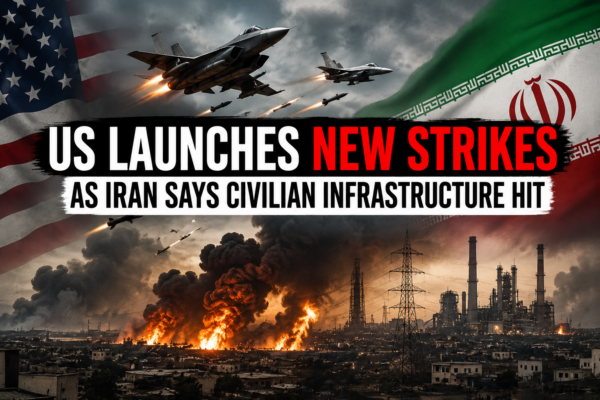
U.S. President Donald Trump has demanded Iran’s “unconditional surrender”, dramatically escalating rhetoric as the conflict between Iran and Israel intensifies across the Middle East. The statement came as Israel claimed it had launched a massive airstrike using around 50 fighter jets to destroy a key underground bunker believed to be used by senior Iranian leadership in Tehran. Posting on his Truth Social platform, Trump said there would be “no deal with Iran except unconditional surrender,” signaling that Washington would not pursue negotiations unless Tehran fully capitulates. He also suggested that once Iran surrendered and installed what he described as a “great and acceptable leader,” the United States and its allies would help rebuild the country’s economy and restore stability. The remarks came amid a rapidly expanding regional war. Israeli military officials said their air force conducted a large-scale strike on a fortified underground command bunker beneath Iran’s leadership compound in Tehran. According to the Israel Defense Forces (IDF), about 50 warplanes dropped dozens of bombs on the site, targeting infrastructure believed to be used by senior regime figures following the death of Iran’s supreme leader earlier in the conflict. Israeli officials described the bunker as a secure command center spanning multiple streets beneath the capital, designed to protect leadership during wartime. The strike was part of a broader wave of Israeli attacks on Iranian and allied targets across the region. Meanwhile, Iran has continued retaliatory missile and drone attacks against Israeli positions and U.S. bases in the Gulf, raising fears of a wider regional confrontation. International leaders and humanitarian groups have urged de-escalation as casualties rise and displacement spreads across affected areas. Diplomatic efforts are reportedly underway by several countries to mediate the crisis, but Trump’s demand for unconditional surrender suggests the path to negotiations remains uncertain as the conflict deepens.

Read More
Trump Iran

Trump says ‘everything’s been knocked out in Iran’ as he criticises UK and Starmer

US President Donald Trump claimed on Tuesday that US-Israeli military operations have inflicted “virtually everything … knocked out” of Iran’s defence capabilities, asserting that Iran’s navy, air force, radar and air-defence systems have been disabled amid escalating conflict in the Middle East. Trump made the remarks in the Oval Office during a press session with German Chancellor Friedrich Merz, defending the strikes as necessary to pre-empt what he described as an imminent threat from Iran. He denied that Israel had forced the United States into war, insisting that he acted to prevent a potentially planned Iranian attack on the United States. Trump admitted uncertainty about Iran’s post-conflict leadership and acknowledged the absence of a clear “day-after” plan. Trump’s comments came amid soaring tensions with European allies, particularly the UK. He openly criticised UK Prime Minister Sir Keir Starmer, saying he was “not happy with the UK” and that Starmer was “not Winston Churchill” for initially resisting US requests to use British military bases in support of offensive operations against Iran. Trump said Starmer had been “very uncooperative” and lamented that the “special relationship” between the US and UK was “not what it was,” highlighting London’s hesitancy over involvement and legal concerns. Starmer later allowed limited UK base use for defensive strikes against Iranian missile infrastructure but stopped short of broader offensive participation. The diplomatic spat underscores the growing strain between Washington and London as the Middle East conflict deepens. While Trump’s narrative emphasises military success, critics question both the legality and strategic planning of the campaign, and allies like Starmer have insisted on adherence to international law and careful strategic considerations.

Read More
Israeli strikes Lebanon

Israeli attacks kill 31 in Lebanon, Iran strikes across region, and US warplanes crash in Kuwait

Israeli military forces carried out intense airstrikes across southern Lebanon, hitting Hezbollah-controlled areas including the southern suburbs of Beirut, the Bekaa Valley, and zones near Tyre, in response to a barrage of missiles and drones launched by the Iran-aligned group toward northern Israel. At least 31 people were killed and scores injured, according to Lebanon’s health authorities, as residential and militant positions were struck. Israeli officials said they targeted senior Hezbollah figures and infrastructure, and warned civilians to evacuate from frontline areas. The broader conflict stems from a joint US-Israeli offensive on Iran after the killing of Iran’s Supreme Leader, which triggered massive Iranian retaliation across the Middle East. Tehran’s Revolutionary Guards launched missiles and drones at Israeli territory, Gulf states, and Western military installations. Regional capitals including Kuwait City, Riyadh, Doha, Abu Dhabi, and Manama reported incoming strikes, damage to airports and oil infrastructure, and civilian casualties. Multiple Gulf airspaces were closed, prompting thousands of flight cancellations and delays. Amid the ongoing hostilities, the Kuwait Ministry of Defence confirmed that several US warplanes crashed on Kuwaiti soil during operations. While exact causes remain unclear, all crew members survived and were reported in stable condition. The incidents underline the high operational tempo and risks faced by coalition air missions in contested airspace. The expanding violence has not only intensified Lebanon’s front but also raised alarm across the Gulf, with diplomatic protests and regional powers bracing for further retaliation. Civilian displacement and international transit disruptions are escalating alongside military confrontations.

Read More
Russian soldiers executions

Russian soldiers tell BBC they saw fellow troops executed on commanders’ orders

Reports from Russian soldiers claiming they witnessed fellow troops being executed on commanders’ orders have raised serious allegations about battlefield discipline and potential war crimes during the ongoing conflict in Ukraine. In interviews with BBC, several servicemen described incidents in which soldiers accused of retreating or refusing orders were allegedly shot by their own side. The accounts, while difficult to independently verify, add to a growing body of testimony suggesting harsh enforcement tactics within parts of the Russian military structure. According to the soldiers, some executions were carried out as warnings to others, particularly during intense fighting when units were under pressure to hold positions. One interviewee claimed that commanders framed such actions as necessary to maintain order and prevent panic among troops facing Ukrainian advances. These statements, if accurate, could indicate violations of international humanitarian law, which prohibits extrajudicial killings and summary executions. Authorities in Russia have not publicly acknowledged the allegations and have repeatedly denied accusations of misconduct by their forces. Meanwhile, officials in Ukraine argue that the testimonies reflect systemic problems within Russian command structures, including poor morale and coercive discipline measures. Independent human rights investigators have previously documented claims of abuse, though confirming incidents in active combat zones remains challenging. The allegations come amid continued scrutiny of Russia’s military leadership and strategy under President Vladimir Putin, as the war enters another prolonged phase with heavy casualties reported on both sides. Analysts note that internal discipline problems often emerge in prolonged conflicts, particularly where communication breakdowns and logistical shortages create stress within units. WABS TALK If corroborated, the claims could increase international calls for investigations into potential war crimes and accountability mechanisms related to the conflict. However, experts caution that testimonies alone are not sufficient proof and require independent verification through forensic evidence and multiple sources. US wants Russia and Ukraine to end war by June, says Zelensky

Read More