
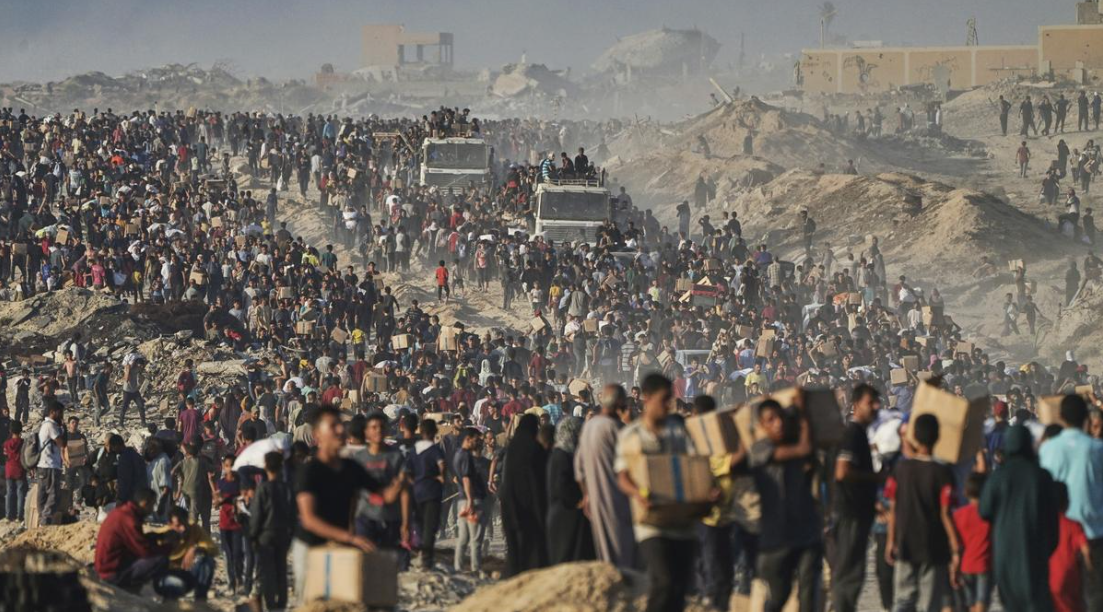
On July 27, 2025, the Israel Defense Forces (IDF) announced a daily 10-hour tactical pause in military operations across three densely populated regions of Gaza—al‑Mawasi, Deir al‑Balah, and Gaza City—aimed at enabling the delivery of humanitarian aid amid a worsening hunger crisis.
The pause is scheduled from 10 a.m. to 8 p.m. local time each day, pending further notice, and accompanies new secure land routes designated for UN and aid agency convoys
According to Reuters, these measures follow mounting reports of severe food shortages across the enclave and images of severely malnourished children that have spurred intense international criticism . Aid officials indicate that Gaza needs approximately 500–600 aid-truck deliveries daily, but so far only around 69 trucks per day have been entering the territory—a fraction of what is required.
Simultaneously, aid airdrops have resumed, including joint efforts by Jordan and the UAE, delivering limited supplies of flour, sugar, and canned foods However, humanitarian experts caution that air drops pose logistical risks and are inadequate to meet widespread needs.
The United Nations welcomed the newly opened corridors but emphasized that sustained and unrestricted aid access would likely require a broader ceasefire. UN officials warned that without it, many more lives—particularly of children—are at risk as famine looms across the strip.
Despite the temporary pauses, Israeli military operations continue in other parts of Gaza. Recent strikes have reportedly killed dozens of civilians, including several seeking food at distribution points Climate change News
In summary, while Israel’s daily pauses and designated humanitarian corridors reflect an attempt to reduce civilian suffering amid international pressure, aid agencies and observers stress that these steps fall short. A full ceasefire and reliable, large-scale aid access remain essential to avoid catastrophic starvation and further loss of life. WabsTalk