
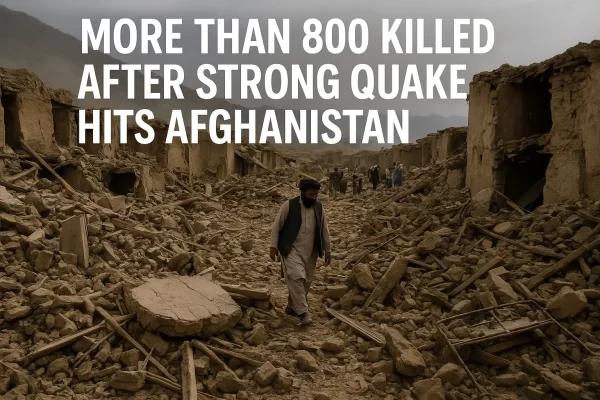
A devastating Afghanistan earthquake has left the nation in mourning, with more than 800 people reported dead and thousands injured after a powerful tremor struck late on Saturday night. The quake, measured at a magnitude of 6.8, shook large parts of the western and central provinces, reducing villages to rubble and forcing survivors to search desperately for loved ones buried under collapsed homes. The Afghan government has declared a state of emergency and appealed for urgent international aid. Rescue efforts remain severely hampered by difficult terrain, poor infrastructure, and limited resources, particularly in remote districts where roads and communication lines were destroyed. Local officials warn that the death toll may rise significantly as many areas remain inaccessible. Witnesses described terrifying scenes as houses made of mud and brick crumbled instantly. “Everything was shaking, the walls collapsed on my family, and I could hear screams from every direction,” said Abdul Karim, a resident of Herat province, one of the hardest-hit areas. Entire communities have been flattened, with satellite images showing vast stretches of rubble where once stood tightly packed neighborhoods. Hospitals in western Afghanistan are overwhelmed with casualties. Medical staff are treating the injured in open fields due to a lack of beds and supplies. The World Health Organization and the Red Crescent have already mobilized emergency teams, sending medicines, tents, and food to the affected regions. However, relief organizations highlight that Afghanistan’s ongoing humanitarian crisis—caused by conflict, drought, and economic collapse—has made the disaster response even more challenging. The United Nations expressed deep concern, with Secretary-General António Guterres urging the world to act swiftly: “The people of Afghanistan are facing yet another tragedy. International solidarity is not just necessary—it is urgent.” Neighboring countries, including Pakistan and Iran, have offered rescue teams and medical support, while international aid agencies are preparing for a long-term recovery mission. Experts warn that Afghanistan is highly vulnerable to natural disasters due to its mountainous geography and fragile infrastructure. Earthquakes often hit the region, but this recent disaster is one of the deadliest in years. Many homes, built with traditional materials and lacking seismic safety standards, collapsed within seconds of the tremor, leaving families with little chance to escape. For survivors, the struggle has only just begun. Thousands have been displaced, left without shelter as night temperatures drop. Clean water and food supplies are running dangerously low, raising fears of disease outbreaks. Aid workers stress the urgent need for tents, blankets, and emergency medical supplies. As Afghanistan grieves for its dead, the tragedy underscores the urgent necessity for stronger disaster preparedness, regional cooperation, and humanitarian support. The Afghanistan earthquake has not only destroyed homes and lives but also deepened an already dire humanitarian crisis in the country.