Blair and Rubio among names on Gaza ‘Board of Peace’
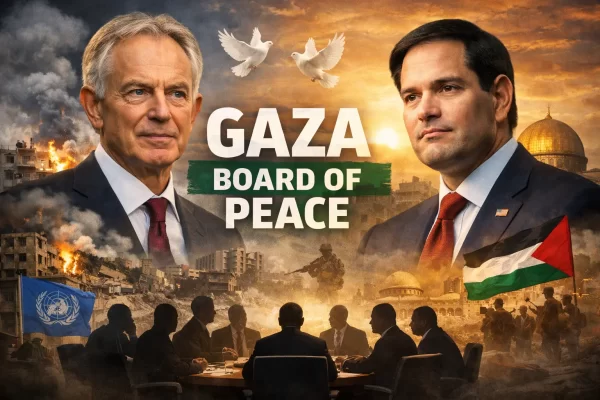
Former UK prime minister Tony Blair and US senator Marco Rubio are among a list of prominent international figures reportedly associated with a proposed “Gaza Board of Peace,” an initiative aimed at shaping a post-war political and security framework for the Palestinian territory. The concept of a Gaza Board of Peace has emerged amid intense international debate over how Gaza should be governed and rebuilt once active hostilities subside. According to officials familiar with the discussions, the proposed body would bring together senior political figures, security experts, and regional stakeholders to oversee stabilization, humanitarian coordination, and the early stages of reconstruction, while also advising on longer-term governance arrangements. Tony Blair’s name has drawn particular attention given his previous role as the Middle East Quartet’s special envoy, a position that placed him at the center of diplomatic efforts following earlier rounds of conflict. Supporters argue that his experience navigating complex regional politics could lend credibility and institutional memory to the initiative. Critics, however, contend that past diplomatic frameworks failed to deliver lasting solutions and question whether familiar figures can produce different outcomes. Marco Rubio’s inclusion signals continued US interest in shaping the post-conflict order in Gaza. As a senior Republican voice on foreign policy, Rubio has consistently emphasized Israel’s security concerns while also calling for measures to prevent Gaza from becoming a persistent source of regional instability. His reported involvement suggests that any Gaza Board of Peace would seek bipartisan visibility in Washington, particularly as debates intensify over aid, security guarantees, and regional alliances. Proponents of the Gaza Board of Peace describe it as a temporary mechanism designed to avoid a power vacuum and prevent the re-emergence of militant control. They stress that the body would not replace Palestinian self-governance but instead act as a bridge toward a more stable and internationally supported administration. Skeptics remain wary, warning that externally driven governance models risk lacking local legitimacy. As discussions continue, the proposed Gaza Board of Peace underscores the scale of diplomatic maneuvering underway as the international community searches for a viable path forward in Gaza.