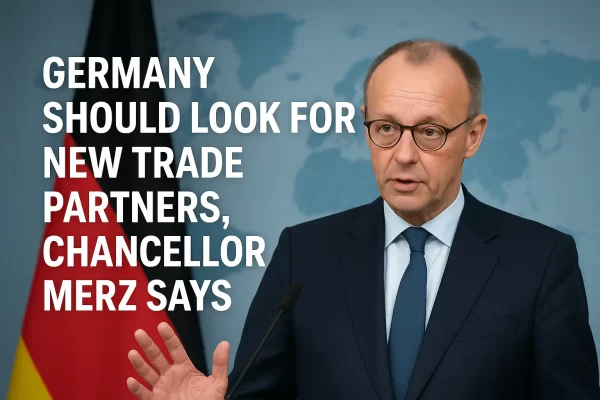

German Chancellor Merz calls state election a ‘disaster’ for his party but vows to stay on
German Chancellor Friedrich Merz has described a damaging state election result as a “disaster” for his conservative Christian Democratic Union (CDU), while insisting that he will remain in office and continue with his government’s reform plans. The setback came in Mecklenburg-Western Pomerania, where exit projections showed the CDU receiving only about 5% of the vote. That marked the party’s weakest result in a German state election since the Federal Republic was founded after the Second World War. The Alternative for Germany (AfD) emerged as the strongest party, with roughly 37% of the vote, narrowly ahead of the centre-left Social Democrats. The results also brought difficulties for the CDU in Berlin, where the party was projected to finish behind the left-wing Die Linke. The outcomes came only two weeks after the AfD secured a major victory in Saxony-Anhalt, adding to pressure on Merz and his government. Merz acknowledged the seriousness of the result but rejected suggestions that he should step aside. He said Germany’s economic and political challenges made reforms more necessary rather than less urgent. His government has been pursuing measures involving economic growth, pensions, taxation and reducing bureaucracy. The chancellor also defended his position as CDU leader and said he intended to continue serving as Germany’s chancellor. The election results are likely to fuel debate inside the CDU over its political strategy and response to the growing strength of the AfD. For Merz, the immediate challenge will be maintaining support within his party and coalition while delivering on promised reforms amid voter dissatisfaction and increasing political competition.