Jeffrey Epstein documents

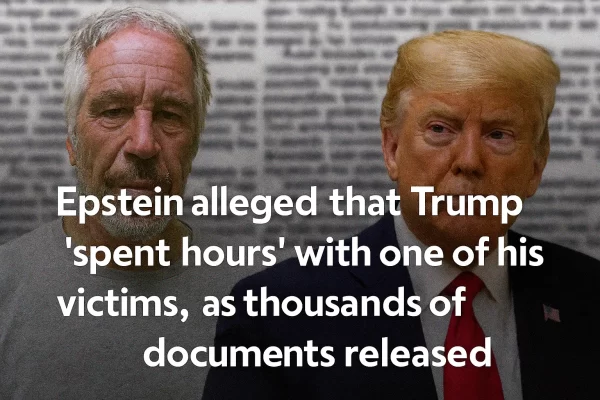
Epstein alleged that Trump ‘spent hours’ with one of his victims, as thousands of documents released

Thousands of pages of newly unsealed court documents related to the late financier Jeffrey Epstein have revealed fresh details about his network of associates and alleged interactions with powerful figures, including former U.S. President Donald Trump. The files, which stem from a long-running civil case against Epstein’s associate Ghislaine Maxwell, include depositions, witness statements, and correspondence that shed light on the scale of Epstein’s operations and the alleged involvement of several high-profile individuals. Among the revelations, one of Epstein’s alleged victims claimed that Trump had “spent hours” with her at Epstein’s Palm Beach residence. The woman, whose identity remains confidential in the documents, did not accuse Trump of sexual misconduct but described his presence at gatherings organized by Epstein in the early 2000s. The allegations add to the growing scrutiny surrounding Epstein’s connections with influential figures from politics, business, and entertainment. Trump has repeatedly denied any wrongdoing or inappropriate relationship with Epstein or his associates. He has acknowledged knowing Epstein “like everybody in Palm Beach,” but insisted he was “not a fan” of the financier and severed ties with him long before his 2019 arrest. Epstein, who was charged with sex trafficking of minors, died in jail that same year in what was officially ruled a suicide. The newly released files also mention other prominent names, including Prince Andrew, Bill Clinton, and several former officials and celebrities. While the documents contain numerous allegations, much of the material remains unverified or based on witness testimony, and no additional criminal charges have been filed as a result of the disclosures. Legal experts say the release of these records underscores the far-reaching nature of Epstein’s influence and the need for continued transparency. Victims’ advocates have welcomed the disclosures, saying they help expose the scale of Epstein’s alleged abuse and the systems that enabled it to persist for years. The Epstein case continues to be one of the most controversial scandals involving sexual exploitation, wealth, and power. As investigators and journalists sift through the newly unsealed evidence, questions remain about who else may have known about or participated in Epstein’s activities—and whether justice can ever be fully served for his victims.
Read More
Elon Musk’s $1 trn pay deal

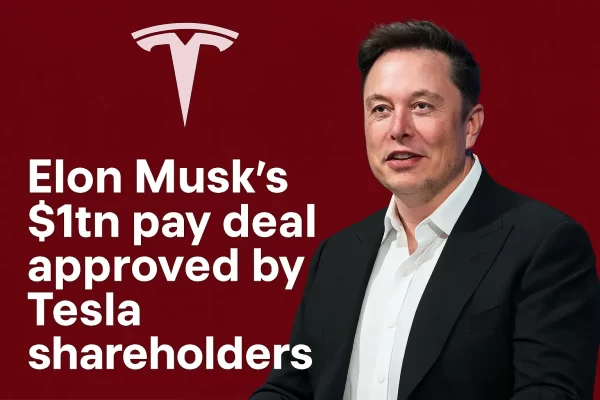
Elon Musk’s $1tn pay deal approved by Tesla shareholders

At Tesla’s annual shareholders meeting in Austin, Texas, more than 75% of shareholders voted in favour of a new compensation plan for Elon Musk. The package, potentially worth up to around $1 trillion, would be the largest corporate CEO compensation award ever if all performance conditions are achieved. The deal is structured largely as stock-based incentives rather than a fixed salary, linking Musk’s potential earnings to Tesla’s long-term performance. If successful, Musk’s ownership stake in Tesla could increase from roughly 13% to about 25%, further cementing his control over the company. Key Performance Conditions The massive payout depends on Tesla achieving a series of ambitious goals over the coming years. These include reaching a market capitalization of about $8.5 trillion, delivering 20 million vehicles annually, and deploying 1 million robotaxis alongside selling 1 million humanoid robots, such as Tesla’s “Optimus” models. Additionally, Tesla must record sustained annual profits in the hundreds of billions of dollars and Musk must remain as CEO for a defined period while guiding the company through these milestones. Why Supporters Backed It Supporters argue that Musk is the driving force behind Tesla’s transformation from an electric carmaker to a broader AI and robotics powerhouse. They believe the plan aligns Musk’s personal incentives with Tesla’s long-term growth rather than short-term profit. For many investors, the potential benefits justify the risk. Musk’s proven record with Tesla, SpaceX, and other ventures gives confidence that he can push the company toward extraordinary achievements in automation, energy, and self-driving technology. Why It’s Controversial Despite the strong vote in favour, the deal has attracted significant criticism. The sheer scale of the potential payout—$1 trillion—has been labelled excessive by critics who question its fairness and impact on corporate governance. Some institutional investors and governance experts warned that such a plan could dilute shareholder value and place too much power in the hands of a single individual. Sceptics also argue that achieving all the performance targets is unlikely. Tesla faces mounting challenges, including intensifying EV competition, slowing demand, supply chain risks, and regulatory scrutiny. Entrusting so much influence to one figure raises concerns about oversight and succession planning. What This Means Going Forward If Musk meets all conditions, he could become the first person in history to receive a corporate payout of this magnitude, potentially making him the world’s first trillionaire. For Tesla, it represents a daring bet on future dominance across multiple sectors—EVs, robotics, and AI. The vote signals strong investor faith in Musk’s leadership and Tesla’s long-term vision. Yet, it also sets towering expectations that may prove difficult to meet. The outcome will define not only Musk’s personal wealth but also Tesla’s position in the global technology landscape. Read this also Inside Gaza, BBC sees total devastation after two years of war Bottom line: Tesla shareholders have handed Musk a colossal opportunity—and an equally colossal challenge. The $1 trillion plan embodies both Tesla’s ambition and the immense risks that come with placing so much of its future in one man’s hands.

Read More
Gaza devastation

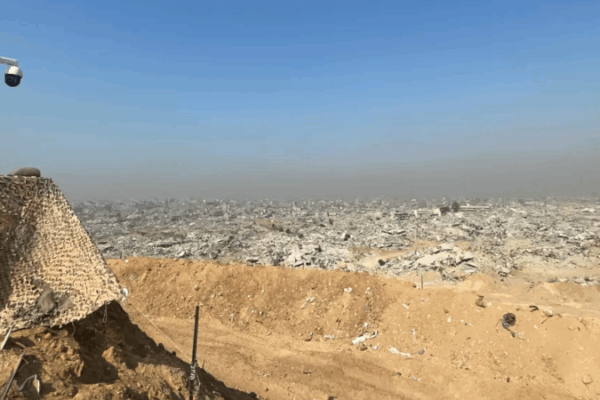
Inside Gaza, BBC sees total devastation after two years of war

Two years after the war between Israel and Hamas began, the Gaza Strip has been reduced to ruins, with once-thriving neighborhoods now resembling ghost towns. A BBC team granted rare access to the territory describes a landscape of total devastation — homes flattened, hospitals barely functioning, and thousands of displaced families struggling to survive amid the wreckage. Entire districts that were once crowded with markets, schools, and apartment blocks now lie in rubble. In northern Gaza, what used to be Gaza City’s commercial heart is now a sea of collapsed concrete and twisted metal. The BBC crew reported seeing children playing amid debris, their laughter echoing in streets that have no running water, electricity, or sanitation. “It’s like time stopped here,” one resident told reporters. “We are alive, but everything around us is dead.” The humanitarian situation remains dire. The United Nations estimates that more than 1.7 million people — nearly 80 percent of Gaza’s population — are still displaced. Many live in makeshift shelters or tents built from scrap metal and plastic sheets. Food shortages are chronic, with aid deliveries continuing to face restrictions at border crossings. Hospitals, already crippled by years of blockade, are overwhelmed. Doctors work without adequate supplies, and power cuts force surgeries to be done under flashlights. The BBC also visited Al-Shifa Hospital in Gaza City, once the territory’s largest medical facility. Its corridors are dark, lined with patients on stretchers, while generators rumble outside. “We’ve lost colleagues, we’ve lost equipment, and we’re losing patients we could have saved,” said one exhausted doctor. Israel’s government maintains that its military operations were aimed at dismantling Hamas’s military infrastructure, following the deadly attacks that triggered the war in 2023. Officials say rebuilding can only begin once Hamas’s influence is completely removed. However, international aid agencies argue that ordinary civilians have borne the brunt of the destruction, with entire families wiped out and public infrastructure obliterated. Despite calls from global powers for a long-term ceasefire and reconstruction plan, progress has been painfully slow. Many foreign donors remain hesitant to fund rebuilding projects without assurances of stability. Meanwhile, Gazans face another winter with little shelter and minimal hope. At the Rafah crossing on the Egyptian border, crowds gather daily, hoping for rare permits to leave. “We just want to live somewhere safe,” said a young mother holding her child. “We have nothing left here.” Two years on, the BBC’s report paints a bleak picture: a territory trapped between the ruins of war and the uncertainty of peace. For Gaza’s people, survival has become the only measure of victory.

Read More
Trump Putin sanctions

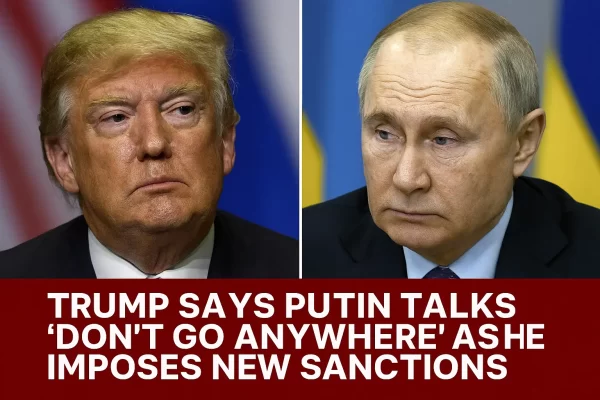
Trump says Putin talks ‘don’t go anywhere’ as he imposes new sanctions

Former U.S. President Donald Trump announced on Wednesday that planned talks with Russian President Vladimir Putin “didn’t go anywhere,” as his administration imposed a fresh round of sanctions on Moscow over its continued military involvement in Ukraine. The statement marks a sharp turn in tone just days after Trump had expressed optimism about brokering a peace deal between Russia and Ukraine. Speaking to reporters at the White House, Trump said his team had “made every effort” to prepare for constructive talks with the Kremlin, but that “the Russian side was not ready to make meaningful commitments.” He added that he would not pursue another meeting “until there’s a real change in attitude from Moscow.” The two leaders had been expected to meet in Budapest later this month to discuss potential steps toward ending the war. The sanctions announced by the U.S. Treasury target more than 40 Russian entities and individuals, including defense manufacturers, energy companies, and senior officials close to the Kremlin. According to Trump, the measures are aimed at “pressuring Russia to engage seriously in peace negotiations” while maintaining support for Ukraine’s sovereignty. “We are not walking away from diplomacy,” Trump said. “But we are not going to waste time when the other side refuses to move toward peace.” Kremlin spokesperson Dmitry Peskov criticized the new sanctions, calling them “unfriendly and counterproductive.” He said Moscow viewed Washington’s move as “a continuation of pressure politics” and reiterated that Russia would not negotiate “under threats.” Russian state media also downplayed Trump’s comments, suggesting the U.S. was using sanctions to strengthen its negotiating position. In Kyiv, Ukrainian President Volodymyr Zelensky welcomed the new U.S. sanctions, saying they demonstrated continued American commitment to Ukraine’s defense. “Every step that isolates Russia’s war machine helps us bring peace closer,” Zelensky said in a televised address. Analysts say the collapse of the planned Trump–Putin meeting underscores the ongoing difficulty in finding common ground on Ukraine, even as both sides face mounting pressure to end the war. “Trump’s decision to suspend talks sends a message that the U.S. expects concrete concessions before engaging further,” said Rachel Kim, a senior fellow at the Atlantic Policy Institute. Read This Also Trump says he did not want ‘wasted meeting’ after plan for Putin talks shelved For now, Washington appears to be balancing a dual strategy of deterrence and diplomacy — maintaining economic and political pressure on Moscow while keeping open the possibility of future talks. Whether these sanctions will push Russia toward meaningful engagement remains uncertain, but Trump’s latest move signals that patience with Putin’s approach is wearing thin.

Read More
Sébastien Lecornu no-confidence votes

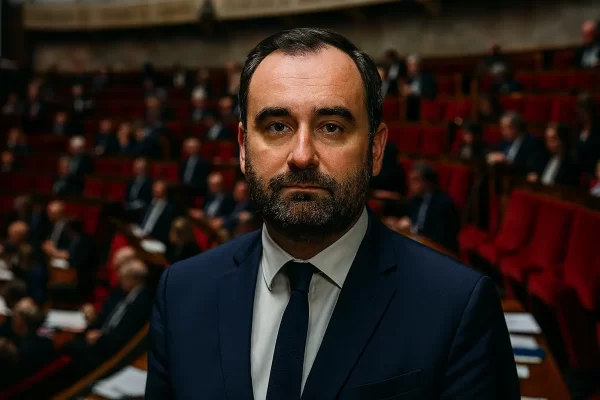
French PM Sébastien Lecornu survives two no-confidence votes by MPs

French Prime Minister Sébastien Lecornu has survived two separate no-confidence motions in the National Assembly, allowing his month-old government to remain in power despite growing political turbulence. The motions, brought by opposition lawmakers from both the left-wing and far-right blocs, were triggered by discontent over Lecornu’s controversial economic reforms and his handling of nationwide protests. The first no-confidence motion was tabled by the leftist coalition La France Insoumise (LFI), accusing the government of “authoritarian methods” and “ignoring the voice of workers.” The second, introduced by the far-right National Rally (RN), criticized Lecornu for what it described as “weak leadership” and “failure to address France’s security and cost-of-living crises.” Both motions were decisively defeated, with the government securing a clear majority of votes in its favor. Lecornu, who was appointed prime minister in September following the resignation of Gabriel Attal, has faced mounting challenges in his short tenure. His proposed labor market reforms, aimed at increasing flexibility for employers and reducing public spending, have been met with fierce opposition from trade unions and student groups. Demonstrations across major French cities have intensified, with protesters accusing the government of pursuing austerity at the expense of social welfare. In a speech following the votes, Lecornu thanked lawmakers who supported his administration and pledged to continue his reform agenda. “France cannot afford paralysis,” he said. “We must move forward with courage and dialogue to secure our economy and restore trust in our institutions.” He also extended an olive branch to opposition parties, calling for “constructive engagement” on key issues such as energy policy, immigration, and public services. Political analysts say Lecornu’s survival offers only temporary stability. While his victory in the Assembly prevents an immediate collapse of the government, deep divisions persist within the political landscape. The National Rally, led by Marine Le Pen, continues to gain popularity ahead of the upcoming regional elections, while the left-wing alliance remains determined to block future government initiatives through parliamentary tactics. President Emmanuel Macron, who appointed Lecornu in a bid to rejuvenate his administration, has also seen his approval ratings decline amid the unrest. Observers note that Lecornu’s resilience in parliament will now depend on his ability to deliver tangible results and restore public confidence in Macron’s centrist platform. China seizes 60,000 maps over ‘mislabelled’ Taiwan For now, Lecornu’s government remains intact—but the dual rejection of the no-confidence motions highlights the fragility of France’s political climate and the growing disillusionment among voters with traditional parties.

Read More
released hostages

Who are the released hostages? Hamas Released

As of October 13, 2025, all 20 living Israeli hostages who were held by Hamas in Gaza since October 7, 2023, have been released and have returned to Israel. This marked the conclusion of a two-year-long ordeal for dozens of Israeli families who had been waiting for their loved ones’ return. These 20 released hostages include:Bar Abraham Kupershtein, Evyatar David, Yosef-Chaim Ohana, Segev Kalfon, Avinatan Or, Elkana Bohbot, Maxim Herkin, Nimrod Cohen, Matan Angrest, Matan Zangauker, Eitan Horn, Eitan Abraham Mor, Gali Berman, Ziv Berman, Omri Miran, Alon Ohel, Guy Gilboa-Dalal, Rom Braslavski, Ariel Cunio, and David Cunio. Their release followed months of indirect negotiations and mediation efforts led by international actors, including Qatar, Egypt, and the United States. Many of these hostages were abducted during the early stages of the October 2023 Hamas attack and had been held in various locations across Gaza. Their return was seen as a major breakthrough in the long and complex ceasefire process. Earlier Releases Before this final group, several hostages had already been freed during earlier phases of exchange deals. Among the first to return home were Romi Gonen, Emily Damari, and Doron Steinbrecher, who were released in January 2025 under a temporary ceasefire agreement. Following that, Liri Albag, Karina Ariev, Daniella Gilboa, and Naama Levy were released in a subsequent exchange phase. Their release, which came after months of uncertainty, brought immense relief to their families and highlighted the humanitarian side of the ceasefire negotiations. A later January 2025 exchange saw the return of Arbel Yehud, Agam Berger, and Gadi Moshe Moses, who were also among those kidnapped during the October 7 attacks. Eli Sharabi was freed on February 8, 2025, after spending more than a year in Hamas captivity. On February 22, 2025, six additional hostages were released: Omer Shem Tov, Eliya Cohen, Omer Wenkert, Tal Shoham, Avera Mengistu, and Hisham al-Sayed. In addition to negotiated releases, one hostage, Qaid Farhan al-Qadi, a Bedouin Israeli, was rescued through a special Israeli operation after spending 326 days in captivity. Overview of Phases and Numbers Phase 1 of the ceasefire and prisoner exchange deal began around January 19, 2025. It primarily involved the release of women, children, and elderly hostages, along with the return of the remains of several who had died in captivity. Over the following months, more hostages were freed in a series of phased agreements and rescues. Finally, in October 2025, the last group of 20 living hostages was released, bringing home those who had remained alive in Gaza. The moment was widely celebrated across Israel, marking a symbolic end to one of the most painful chapters of the conflict.

Read More
Israel and Hamas

Jeremy Bowen: Two years on, will Israel and Hamas seize the chance to end the war?

Two years after the devastating conflict between Israel and Hamas erupted, the question now dominating diplomatic circles is whether both sides are finally ready to end the war. The toll — human, political, and regional — has been immense. According to BBC Middle East Editor Jeremy Bowen, there are tentative signs that exhaustion on both sides might open a narrow window for negotiation, but mistrust and political calculation continue to overshadow peace efforts. The war has left Gaza in ruins, with much of its infrastructure destroyed and millions displaced. Israel, despite its military advantage, faces growing international isolation and domestic pressure over the war’s economic and moral costs. Prime Minister Benjamin Netanyahu’s government, already weakened by internal divisions, struggles to balance its hardline coalition demands with international calls for restraint. Hamas, meanwhile, has seen its leadership decimated and its military capabilities significantly weakened. Yet the group remains a potent political force in Gaza, maintaining control over key areas despite Israeli bombardments and a worsening humanitarian crisis. According to Bowen’s analysis, Hamas believes survival itself is a form of victory — a message it continues to project to a population weary of destruction but fearful of losing sovereignty. International mediators, led by Egypt, Qatar, and the United States, are once again attempting to revive a ceasefire framework. A proposal circulating in recent weeks reportedly involves phased prisoner releases, humanitarian corridors, and limited reconstruction aid under UN supervision. But both Israel and Hamas remain wary. Israel demands disarmament guarantees and the return of all hostages, while Hamas insists on a permanent end to Israeli military operations and the lifting of the blockade. Jeremy Bowen notes that both sides are trapped by the politics of survival. Netanyahu fears that any perceived concession could fracture his coalition, while Hamas risks losing credibility if it appears to compromise under pressure. Yet, after two years of relentless warfare, public opinion in both Israel and Gaza shows signs of fatigue — a critical factor that could push leaders toward a pragmatic truce. Whether this moment becomes a turning point or another missed opportunity will depend on leadership and timing. For now, the guns have not fallen silent, but the diplomatic machinery is beginning to hum once more. As Bowen observes, “Wars often end not when sides are ready to forgive, but when they simply can’t go on.”

Read More
Donald Trump deployment

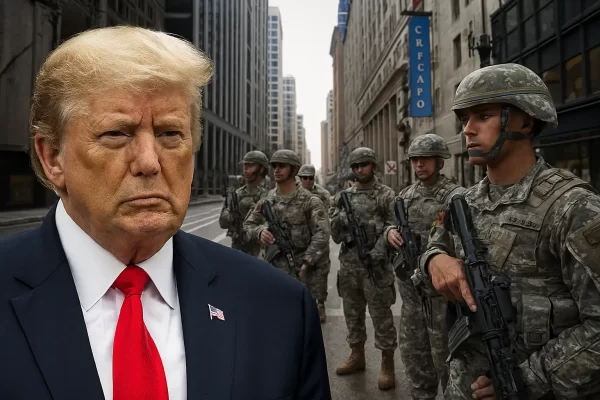
Trump authorises deployment of 300 National Guard troops to Chicago

In a move aimed at curbing escalating violence and unrest, former U.S. President Donald Trump has authorised the deployment of 300 National Guard troops to Chicago, citing a “breakdown of law and order” in the city. The decision, announced from his Florida residence, comes after weeks of mounting pressure from local leaders, police unions, and community groups alarmed by rising gun violence and social tensions. According to White House officials, the National Guard units will assist Chicago police in “stabilising critical areas” and protecting public infrastructure. Trump described the move as “a necessary step to restore peace and protect innocent lives,” adding that federal support was essential in cities “where local leadership has failed to maintain security.” Chicago has faced a surge in violent incidents over the past month, with several neighbourhoods reporting record numbers of shootings. City officials have struggled to contain the unrest, which has been linked to gang-related crime, economic hardship, and political discontent. Although some local leaders welcomed the deployment as a short-term measure, others criticised it as federal overreach that could inflame tensions further. Mayor Brandon Johnson responded cautiously, stating that while the city appreciates federal assistance, the focus must remain on addressing the root causes of violence. “What Chicago needs is investment in communities, not just boots on the ground,” Johnson said. He emphasised the importance of collaboration between federal, state, and local agencies to prevent further escalation. The National Guard troops are expected to begin operations within 48 hours, focusing primarily on transportation hubs, commercial districts, and areas identified as high-risk. Officials stressed that the deployment is temporary and will operate under strict coordination with local law enforcement to avoid clashes or confusion. This is not the first time Trump has used the National Guard to address urban unrest. During his presidency, he authorised similar deployments in cities such as Portland and Minneapolis amid protests and violence. Supporters argue that these measures demonstrated decisive leadership, while critics view them as political theatre intended to project strength during moments of domestic crisis. Analysts suggest that the move could have broader political implications as Trump continues to position himself as a “law-and-order” figure ahead of the next election cycle. By highlighting violence in major cities, he reinforces his campaign narrative that Democratic-led urban centres have failed to maintain safety and discipline. For many Chicago residents, however, the immediate concern is whether this latest federal intervention will bring relief or further strain community relations. As the National Guard prepares to take to the streets, the city remains on edge—caught between the need for security and the fear of deeper division.

Read More
$100,000 skilled worker visa fee

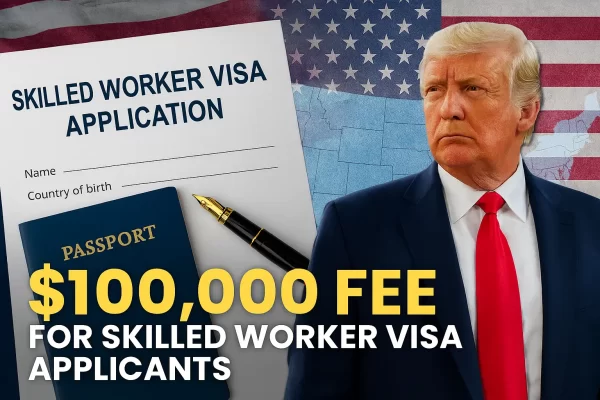
Trump adds $100,000 fee for skilled worker visa applicants

In a dramatic policy shift, former U.S. President Donald Trump has announced the introduction of a $100,000 fee for skilled worker visa applicants, sparking intense debate both at home and abroad. The measure, aimed at what Trump describes as “protecting American workers,” represents one of the most restrictive steps taken in the U.S. immigration system in recent years. According to Trump, the new fee will apply to high-skilled visas, such as the H-1B program, which is widely used by technology firms, medical institutions, and research organizations to bring in global talent. Proponents argue that the fee will reduce dependency on foreign workers, encourage companies to prioritize American employees, and generate significant revenue for the federal government. However, critics warn that the policy could severely damage the U.S. economy. The $100,000 visa fee is far higher than any existing immigration charge in the world, and experts believe it will deter talented professionals from applying. Companies in Silicon Valley, Wall Street, and leading universities rely heavily on international expertise, and many business leaders fear this move will drive talent toward other global hubs such as Canada, the United Kingdom, and Australia. Immigration advocates also caution that the measure unfairly targets skilled professionals who contribute billions to the U.S. economy annually. A coalition of tech firms and advocacy groups has already signaled plans to challenge the fee in court, arguing it is discriminatory and unconstitutional. Trump, however, defended the plan as part of his broader “America First” strategy. At a rally, he claimed that the fee would “make foreign workers pay their fair share” and ensure that U.S. citizens do not lose jobs to overseas professionals willing to work for less. He added that the revenue from the new fees would be invested in training programs for American workers, especially in the technology and healthcare sectors. International reaction has been swift. India, one of the largest sources of H-1B applicants, expressed “deep concern” over the impact of the new rule. Industry groups in India estimate that thousands of skilled workers, particularly in IT and engineering, will be priced out of the U.S. market. Similarly, European leaders warned that such policies could isolate the U.S. from global innovation networks. The policy, if fully implemented, could reshape global migration patterns. Analysts suggest that Canada and other nations with more welcoming immigration systems may emerge as beneficiaries, attracting talent that the U.S. risks losing. For now, the $100,000 skilled worker visa fee remains one of Trump’s most controversial immigration moves, with long-term consequences that could redefine America’s role in the global workforce.

Read More
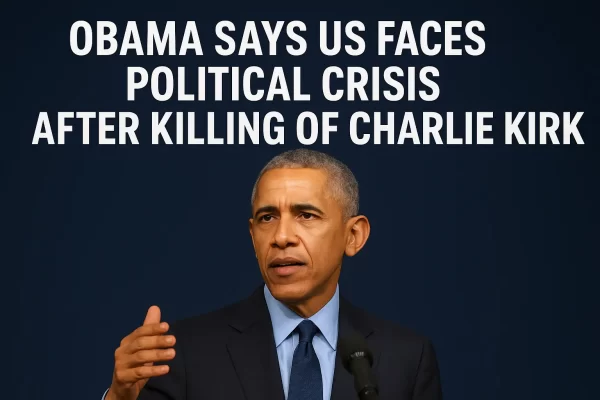
Obama says US faces political crisis after killing of Charlie Kirk

Obama says US faces ‘political crisis’ after killing of Charlie Kirk

Former President Barack Obama has warned that the United States is at a dangerous turning point following the killing of conservative activist Charlie Kirk, describing the moment as nothing less than a “political crisis.” His comments come amid intensifying fears that political violence is no longer an exception but is becoming an alarming trend in America’s democracy. Charlie Kirk, the 31-year-old founder of Turning Point USA, was assassinated earlier this month while addressing students at a Utah college. Authorities have charged a 22-year-old suspect, Tyler Robinson, with aggravated murder, and prosecutors are seeking the death penalty. The killing has shaken the political landscape, sparking condemnation across party lines but also further inflaming partisan divides. Speaking at a civic event, Obama strongly denounced the attack and linked it to a broader decline in democratic norms. He said that while passionate disagreements are natural in a democracy, resorting to violence against political opponents crosses a dangerous line. “The central premise of our democratic system,” he noted, “is that we have to be able to disagree, sometimes strongly, without resorting to violence.” Obama also criticized the way some political leaders responded to Kirk’s killing, suggesting that a rush to label enemies and inflame divisions is worsening the crisis. Without naming him directly, Obama pointed to former President Donald Trump’s reaction, which immediately placed blame on the “radical left” before investigators had released detailed information. According to Obama, this rhetoric deepens polarization and feeds a cycle of hostility. Analysts say Obama’s remarks highlight a growing concern that the United States is entering a period of normalized political violence. Experts warn that the breakdown of long-standing democratic “guardrails” — unwritten rules of civility and restraint — makes the system more vulnerable. By framing opponents as existential threats, politicians create an atmosphere where violent actions can seem justified in the eyes of extremists. Obama described the nation as being at an “inflection point,” a moment when the country can either recommit to democratic values or slide further toward chaos and division. He urged Americans to reject dehumanizing language, stand against political violence, and hold leaders accountable for protecting institutions and norms. The killing of Charlie Kirk has become more than a tragic act of violence; it has sparked a fierce debate over the future of U.S. politics. For Obama, it is evidence that the country must act decisively to preserve democracy. “This is a political crisis,” he warned, “and how we respond will shape the future of America.” Wabstalk

Read More