Israel Lebanon ceasefire

Trump says Israel and Lebanon to begin 10-day ceasefire within hours

U.S. President Donald Trump announced that Israel and Lebanon have agreed to begin a 10-day ceasefire within hours, marking a potentially significant pause in the latest cross-border conflict. According to Trump, the temporary truce is set to start at 5 p.m. Eastern Time after what he described as “excellent conversations” with Israeli Prime Minister Benjamin Netanyahu and Lebanese President Joseph Aoun. The proposed ceasefire comes after weeks of heightened military tensions involving Israeli strikes in Lebanon and retaliatory attacks linked to Hezbollah. The conflict has increased fears of a broader regional escalation, especially amid ongoing instability across the Middle East. Analysts say even a short-term halt in fighting could provide an opportunity for humanitarian aid deliveries and diplomatic talks. Trump also said he has directed senior U.S. officials, including Vice President JD Vance and Secretary of State Marco Rubio, to work with both sides toward a more lasting peace arrangement. He indicated that leaders from Israel and Lebanon could be invited to Washington for future discussions if the ceasefire holds. While the announcement has drawn cautious optimism, questions remain over whether all armed groups involved will fully comply. Hezbollah had not immediately issued formal confirmation at the time of the announcement, and previous ceasefires in the region have often faced violations soon after taking effect. International observers say the next 10 days will be crucial. If the ceasefire is respected, it could open the door to wider negotiations on border security, military disengagement, and long-term regional stability. If it collapses, however, the risk of renewed violence would remain high. The Israel Lebanon ceasefire announcement is already being seen as an important diplomatic test for the Trump administration’s Middle East strategy.
Read More
Israeli strike Lebanon journalists

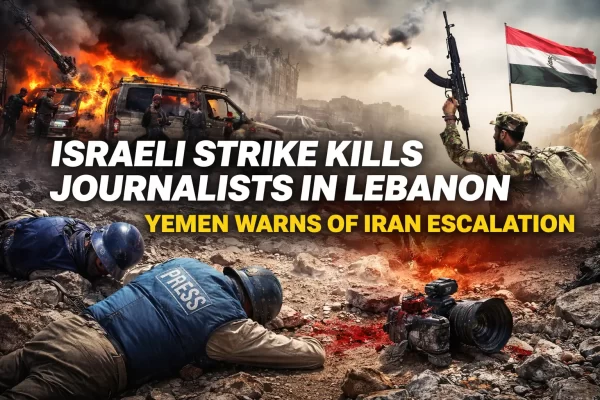
Israeli strike kills journalists in Lebanon, as Yemen says Iran ‘dragging country into war’

An Israeli airstrike in southern Lebanon has killed three journalists, intensifying global concern over the safety of media workers in conflict zones and raising fears of a wider regional war. The victims included reporters and a cameraman from Lebanese outlets, who were covering ongoing hostilities between Israel and Hezbollah when their vehicle was struck. Israel stated that the strike targeted one individual it accused of being linked to Hezbollah intelligence, though it did not provide evidence and did not address the deaths of the other journalists. Lebanese authorities strongly condemned the attack, calling it a violation of international law and protections afforded to journalists in war zones. The incident comes amid a sharp escalation in the broader Middle East conflict, particularly following joint U.S.-Israeli strikes on Iran. Journalists have increasingly found themselves in harm’s way, with multiple fatalities reported across Lebanon, Gaza, and Iran since the conflict intensified. Meanwhile, tensions have expanded beyond Lebanon. Yemen’s Houthi movement, aligned with Iran, has warned that continued attacks could drag the region deeper into war. Officials signaled readiness to intervene militarily, accusing external powers of escalating the conflict and destabilizing the region. In parallel developments, missile and drone attacks across the Gulf, along with strikes on infrastructure and military bases, indicate that the conflict is no longer contained to a single front. Analysts warn that involvement from additional regional actors could transform the situation into a full-scale multi-country war. The killing of journalists has added urgency to calls from international organizations for accountability and protection of civilians. As the conflict widens, the risks to media personnel—and the broader civilian population—continue to grow.

Read More
Iran US-Israel conflict

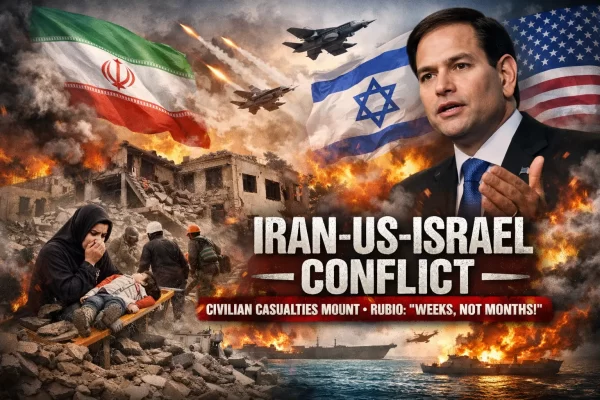
Iran claims US-Israeli strikes targeting civilian sites as Rubio expects war to end ‘in weeks, not months’

Tensions in the Middle East continue to escalate as Iran accuses the United States and Israel of deliberately targeting civilian infrastructure, while U.S. Secretary of State Marco Rubio insists the conflict will be short-lived, predicting it will end “in weeks, not months.” Iranian officials and multiple human rights groups claim that recent U.S.-Israeli airstrikes have hit non-military sites, including schools, hospitals, and residential areas. A new report estimates that nearly 1,500 civilians, including over 200 children, have been killed since the conflict began in late February 2026. Tehran has strongly condemned the strikes, calling them violations of international humanitarian law and warning of continued retaliation if attacks persist. The United States and Israel, however, deny deliberately targeting civilians. Washington maintains that the strikes are focused on dismantling Iran’s military infrastructure, including missile systems, drone capabilities, and naval assets. Rubio stated that the campaign is progressing “ahead of schedule” and does not require a ground invasion. Despite intensifying violence, Rubio has expressed confidence that the war will conclude soon. Speaking after diplomatic meetings with G7 allies, he indicated that the conflict is expected to last only a few more weeks, emphasizing that U.S. objectives can be achieved within that timeframe. He reiterated that the timeline remains “weeks, not months,” even as fighting continues across multiple fronts. Meanwhile, the broader consequences of the conflict are becoming increasingly severe. Global oil prices have surged, and disruptions in the Strait of Hormuz are affecting international trade. Iran has also carried out retaliatory strikes and cyberattacks, raising fears of further regional escalation. As diplomatic channels remain open but fragile, the coming weeks are likely to determine whether the conflict de-escalates—or expands into a wider regional war. Join Our Personality Development and Spoken English Course

Read More
Trump Iran negotiations

Trump says negotiations to end war happening ‘right now’ and Iran is ‘talking sense’

U.S. President Donald Trump has claimed that negotiations to end the ongoing conflict with Iran are actively underway, saying talks are happening “right now” and that Tehran is “talking sense.” His remarks suggest a possible diplomatic opening after weeks of escalating military tensions in the Middle East. According to Trump, recent discussions have been “productive” and involve senior U.S. officials working through intermediaries to reach a broader agreement that could bring a “complete resolution” to hostilities. He indicated that Iran appears increasingly willing to negotiate, even describing the tone of communication as constructive and encouraging. However, the situation remains highly complex and contested. Iranian officials have publicly denied that any direct negotiations with Washington are taking place, acknowledging only indirect contacts via mediators such as Pakistan, Turkey, and Egypt. This contradiction highlights a familiar pattern in U.S.–Iran relations, where backchannel diplomacy often occurs alongside public denials. Key sticking points persist. Iran is reportedly demanding guarantees against future attacks, compensation for war damages, and no restrictions on its missile program. Meanwhile, the United States is pushing for stricter conditions, particularly concerning security and regional stability. Despite Trump’s optimism, skepticism remains among analysts and officials. Ongoing military exchanges and deep mistrust between both sides continue to undermine confidence in a swift resolution. Still, the emergence of diplomatic engagement—even indirect—signals a potential shift from confrontation toward negotiation. Whether these talks evolve into a formal agreement will depend on bridging significant geopolitical and strategic differences.

Read More
Trump Iran unconditional surrender

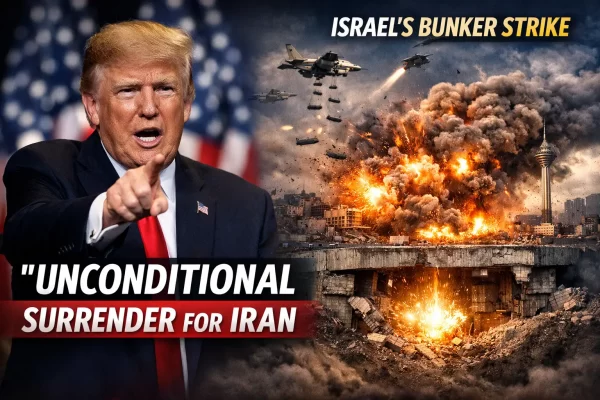
Trump demands Iran’s ‘unconditional surrender’ as Israel says it hit leadership bunker ‘with 50 jets’

U.S. President Donald Trump has demanded Iran’s “unconditional surrender”, dramatically escalating rhetoric as the conflict between Iran and Israel intensifies across the Middle East. The statement came as Israel claimed it had launched a massive airstrike using around 50 fighter jets to destroy a key underground bunker believed to be used by senior Iranian leadership in Tehran. Posting on his Truth Social platform, Trump said there would be “no deal with Iran except unconditional surrender,” signaling that Washington would not pursue negotiations unless Tehran fully capitulates. He also suggested that once Iran surrendered and installed what he described as a “great and acceptable leader,” the United States and its allies would help rebuild the country’s economy and restore stability. The remarks came amid a rapidly expanding regional war. Israeli military officials said their air force conducted a large-scale strike on a fortified underground command bunker beneath Iran’s leadership compound in Tehran. According to the Israel Defense Forces (IDF), about 50 warplanes dropped dozens of bombs on the site, targeting infrastructure believed to be used by senior regime figures following the death of Iran’s supreme leader earlier in the conflict. Israeli officials described the bunker as a secure command center spanning multiple streets beneath the capital, designed to protect leadership during wartime. The strike was part of a broader wave of Israeli attacks on Iranian and allied targets across the region. Meanwhile, Iran has continued retaliatory missile and drone attacks against Israeli positions and U.S. bases in the Gulf, raising fears of a wider regional confrontation. International leaders and humanitarian groups have urged de-escalation as casualties rise and displacement spreads across affected areas. Diplomatic efforts are reportedly underway by several countries to mediate the crisis, but Trump’s demand for unconditional surrender suggests the path to negotiations remains uncertain as the conflict deepens.

Read More
Israeli strikes Lebanon

Israeli attacks kill 31 in Lebanon, Iran strikes across region, and US warplanes crash in Kuwait

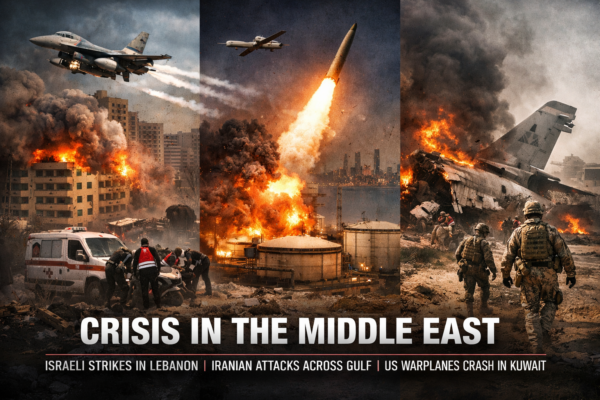
Israeli military forces carried out intense airstrikes across southern Lebanon, hitting Hezbollah-controlled areas including the southern suburbs of Beirut, the Bekaa Valley, and zones near Tyre, in response to a barrage of missiles and drones launched by the Iran-aligned group toward northern Israel. At least 31 people were killed and scores injured, according to Lebanon’s health authorities, as residential and militant positions were struck. Israeli officials said they targeted senior Hezbollah figures and infrastructure, and warned civilians to evacuate from frontline areas. The broader conflict stems from a joint US-Israeli offensive on Iran after the killing of Iran’s Supreme Leader, which triggered massive Iranian retaliation across the Middle East. Tehran’s Revolutionary Guards launched missiles and drones at Israeli territory, Gulf states, and Western military installations. Regional capitals including Kuwait City, Riyadh, Doha, Abu Dhabi, and Manama reported incoming strikes, damage to airports and oil infrastructure, and civilian casualties. Multiple Gulf airspaces were closed, prompting thousands of flight cancellations and delays. Amid the ongoing hostilities, the Kuwait Ministry of Defence confirmed that several US warplanes crashed on Kuwaiti soil during operations. While exact causes remain unclear, all crew members survived and were reported in stable condition. The incidents underline the high operational tempo and risks faced by coalition air missions in contested airspace. The expanding violence has not only intensified Lebanon’s front but also raised alarm across the Gulf, with diplomatic protests and regional powers bracing for further retaliation. Civilian displacement and international transit disruptions are escalating alongside military confrontations.

Read More
Israel Gaza Hostage Remains

Israel says it has retrieved remains of final Gaza hostage

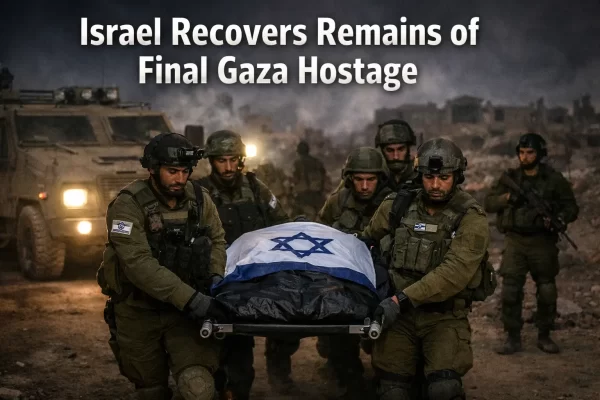
Israel has announced that it has recovered the remains of what it says was the final Israeli hostage held in Gaza, marking a grim milestone in the aftermath of the October 7 attacks and the prolonged war that followed. Israeli officials confirmed the operation was carried out by the military and domestic security services during a targeted mission in southern Gaza. The remains were transferred back to Israel for forensic identification, after which authorities notified the victim’s family. The individual had been presumed dead for months, but confirmation only came following the recovery process. The announcement brings symbolic closure to Israel’s hostage recovery efforts, which have been ongoing alongside intense military operations across Gaza. According to Israeli leaders, the mission reflects a continued commitment to returning every captive, living or deceased, to their families. Prime Minister Benjamin Netanyahu said the country “bows its head in mourning” and reaffirmed Israel’s pledge to account for all those taken during the Hamas-led assault. Defense officials described the recovery as both operationally complex and emotionally significant, emphasizing that intelligence gathering and ground coordination played a critical role. Families of hostages have expressed mixed emotions, combining relief at finally receiving answers with deep grief over the loss of their loved ones. Advocacy groups representing relatives said the moment underscores the human cost of the conflict and renewed calls for accountability. The development comes amid ongoing fighting and mounting international pressure for a ceasefire and expanded humanitarian access to Gaza. Palestinian health authorities continue to report heavy civilian casualties, while aid agencies warn of worsening conditions across the enclave. With the confirmation of the Israel Gaza hostage remains, attention now shifts to broader diplomatic efforts aimed at ending the war and addressing the future governance of Gaza. For many Israelis, the recovery closes one painful chapter, even as the wider conflict shows few signs of resolution.

Read More
Gaza devastation

Inside Gaza, BBC sees total devastation after two years of war

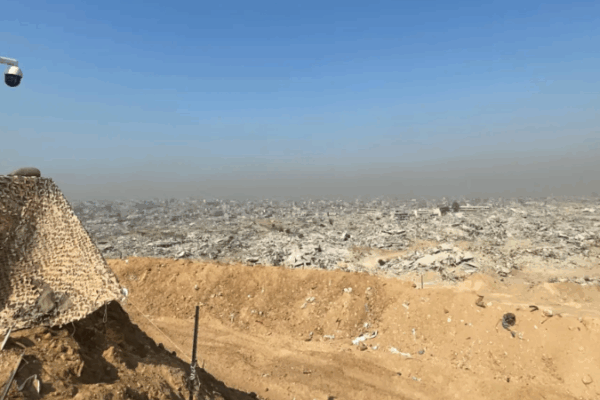
Two years after the war between Israel and Hamas began, the Gaza Strip has been reduced to ruins, with once-thriving neighborhoods now resembling ghost towns. A BBC team granted rare access to the territory describes a landscape of total devastation — homes flattened, hospitals barely functioning, and thousands of displaced families struggling to survive amid the wreckage. Entire districts that were once crowded with markets, schools, and apartment blocks now lie in rubble. In northern Gaza, what used to be Gaza City’s commercial heart is now a sea of collapsed concrete and twisted metal. The BBC crew reported seeing children playing amid debris, their laughter echoing in streets that have no running water, electricity, or sanitation. “It’s like time stopped here,” one resident told reporters. “We are alive, but everything around us is dead.” The humanitarian situation remains dire. The United Nations estimates that more than 1.7 million people — nearly 80 percent of Gaza’s population — are still displaced. Many live in makeshift shelters or tents built from scrap metal and plastic sheets. Food shortages are chronic, with aid deliveries continuing to face restrictions at border crossings. Hospitals, already crippled by years of blockade, are overwhelmed. Doctors work without adequate supplies, and power cuts force surgeries to be done under flashlights. The BBC also visited Al-Shifa Hospital in Gaza City, once the territory’s largest medical facility. Its corridors are dark, lined with patients on stretchers, while generators rumble outside. “We’ve lost colleagues, we’ve lost equipment, and we’re losing patients we could have saved,” said one exhausted doctor. Israel’s government maintains that its military operations were aimed at dismantling Hamas’s military infrastructure, following the deadly attacks that triggered the war in 2023. Officials say rebuilding can only begin once Hamas’s influence is completely removed. However, international aid agencies argue that ordinary civilians have borne the brunt of the destruction, with entire families wiped out and public infrastructure obliterated. Despite calls from global powers for a long-term ceasefire and reconstruction plan, progress has been painfully slow. Many foreign donors remain hesitant to fund rebuilding projects without assurances of stability. Meanwhile, Gazans face another winter with little shelter and minimal hope. At the Rafah crossing on the Egyptian border, crowds gather daily, hoping for rare permits to leave. “We just want to live somewhere safe,” said a young mother holding her child. “We have nothing left here.” Two years on, the BBC’s report paints a bleak picture: a territory trapped between the ruins of war and the uncertainty of peace. For Gaza’s people, survival has become the only measure of victory.

Read More
Israel Hamas ceasefire deal

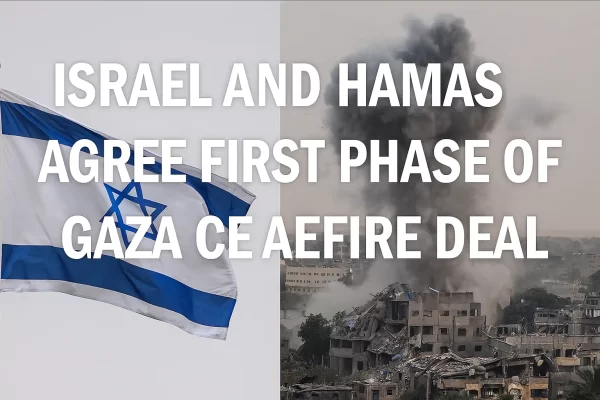
Israel and Hamas agree first phase of Gaza ceasefire deal

In a major breakthrough toward ending nearly a year of bloodshed, Israel and Hamas have agreed to the first phase of a Gaza ceasefire deal, marking a cautious but significant step toward lasting peace in the region. The deal, brokered through Egyptian and Qatari mediation with strong backing from the United States, outlines an initial cessation of hostilities and the exchange of prisoners and hostages, while setting the stage for future negotiations on Gaza’s political future. According to Israeli and Palestinian officials, the agreement was signed after days of intensive talks in Sharm el-Sheikh. Under the terms of the first phase, Hamas will release all remaining Israeli hostages believed to be alive within 72 hours of the deal’s ratification. In return, Israel will withdraw its forces from several key positions inside Gaza, easing military pressure on densely populated areas. Additionally, Israel has agreed to release hundreds of Palestinian prisoners, many of whom have been detained without trial during the conflict. The ceasefire is expected to take effect within 24 hours of final cabinet approval in Jerusalem. U.S. President Donald Trump, who has played a key role in promoting the wider peace framework, described the deal as “a historic opportunity for both sides to end the suffering and rebuild Gaza.” The agreement is reportedly part of a broader 20-point peace plan that envisions gradual disarmament of militant factions and the creation of a joint Israeli-Palestinian reconstruction authority. Despite the optimism, the deal faces considerable challenges. Hardline factions within both Israel and Hamas have expressed skepticism about the plan’s longevity. In Israel, far-right ministers have criticized the decision to release Palestinian prisoners, while Hamas leaders have warned that any delay in Israel’s troop pullback could trigger renewed hostilities. Analysts note that the first phase addresses only the immediate humanitarian crisis and hostage situation, leaving thornier issues—such as Gaza’s governance and Hamas’s military capabilities—for later stages. Regional powers have cautiously welcomed the development. Egypt praised the accord as a “vital first step toward de-escalation,” while Qatar emphasized the need for international monitoring to ensure both sides uphold their commitments. The United Nations has offered logistical support for aid delivery and reconstruction efforts once the truce takes hold. If successfully implemented, this first phase could pave the way for phase two, involving a full Israeli withdrawal, the establishment of a demilitarized Gaza, and potential normalization talks. Yet, with mistrust running deep, the path to a durable peace remains uncertain. For now, the agreement provides a rare moment of hope amid one of the region’s most protracted and devastating conflicts.

Read More
Famine in Gaza City

Famine confirmed in Gaza City is ‘failure of humanity’, UN chief says

The United Nations has confirmed that famine is now taking hold in Gaza City, with Secretary-General António Guterres calling it a “failure of humanity” and an urgent wake-up call for the international community. The declaration follows weeks of mounting evidence of widespread hunger, collapsing food systems, and mass displacement in the war-torn territory. According to the UN’s latest food security assessment, more than half of Gaza’s population is experiencing catastrophic levels of food insecurity. In Gaza City, the devastation is most acute, with children and vulnerable groups facing the brunt of starvation. Humanitarian organizations report that many families have gone days without food, relying on unsafe water and whatever scraps they can find for survival. Guterres described the situation as both “entirely preventable” and “man-made,” stressing that aid convoys have faced repeated blockages, delays, and security risks. “This famine in Gaza City is not the result of drought or natural disaster—it is the result of relentless conflict, restrictions, and a breakdown in basic humanitarian law,” he said during a press briefing in New York. Aid agencies have long warned that Gaza was on the brink of famine due to continued military operations, damaged infrastructure, and restricted access to life-saving supplies. The confirmation by the UN’s Integrated Food Security Phase Classification (IPC) means the crisis has reached the most severe level on its scale, indicating extreme hunger and high mortality rates. The World Food Programme (WFP) has called for immediate and unrestricted humanitarian access, while UNICEF has warned of irreversible consequences for children, including stunted growth, disease, and death. “Children are paying the highest price of this war,” said Catherine Russell, UNICEF’s Executive Director. International reaction has been swift but divided. Some world leaders have urged for an immediate humanitarian ceasefire to allow aid deliveries, while others maintain that security conditions must be addressed first. Human rights groups argue that political disagreements cannot justify the starvation of civilians. Meanwhile, health officials in Gaza City report that hospitals are overwhelmed with malnourished patients, many of whom arrive too late to receive effective treatment. Medical supplies remain critically low, compounding the crisis and increasing preventable deaths. The famine declaration underscores the urgent need for coordinated international action. The UN chief reiterated his call for an immediate ceasefire, safe humanitarian corridors, and accountability for those obstructing aid. “History will judge us harshly if we fail to act,” Guterres warned. As famine grips Gaza City, the world faces a defining moral test: whether to prioritize political agendas or the survival of millions trapped in an unfolding humanitarian catastrophe.

Read More