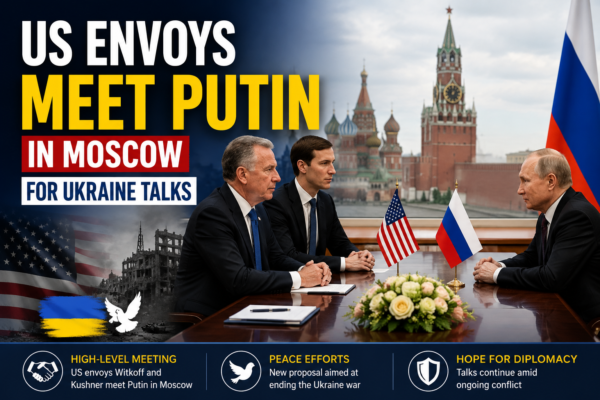
Putin says no point meeting Zelensky

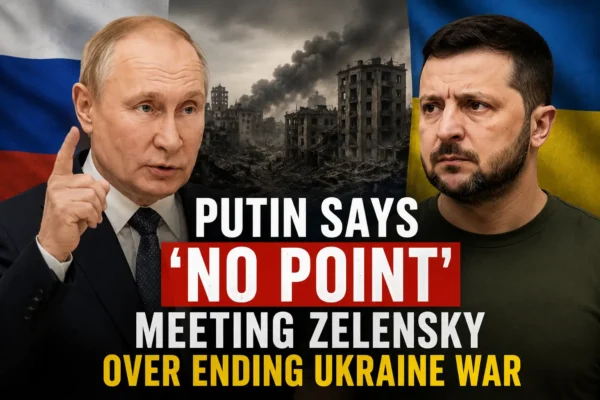
Putin says there is ‘no point’ meeting Zelensky over ending Ukraine war

Russian President Vladimir Putin has dismissed a proposal from Ukrainian President Volodymyr Zelenskyy for a face-to-face meeting aimed at ending the war in Ukraine, saying he currently sees “no point” in holding direct talks. The remarks come as diplomatic efforts to find a resolution to the conflict remain stalled after more than four years of fighting. Zelensky recently sent an open letter urging Putin to meet on neutral ground and discuss a pathway to peace. The Ukrainian leader proposed measures including a ceasefire during negotiations and other confidence-building steps intended to reduce tensions between the two countries. However, speaking at the St. Petersburg International Economic Forum, Putin rejected the idea, arguing that meaningful negotiations should be based on detailed agreements prepared by experts rather than public appeals. He stated that long-term solutions are needed and suggested that lower-level negotiators should first work out the framework for any future settlement. The Kremlin leader maintained that Russia’s military campaign is continuing and reiterated his position that any peace agreement would require significant compromises from Ukraine. Kyiv, meanwhile, has accused Moscow of prolonging the conflict by refusing to engage in genuine negotiations. The exchange highlights the deep divisions that continue to block progress toward a peace deal. While both sides publicly express support for ending the war, they remain far apart on key issues including territory, security guarantees, and the future political status of occupied regions. With fighting continuing along the front lines and diplomatic channels producing little progress, prospects for a direct meeting between Putin and Zelensky appear increasingly uncertain. For now, the possibility of a breakthrough in peace talks remains remote as both governments maintain their existing positions.

Read More
Putin denounces NATO at Victory Day parade

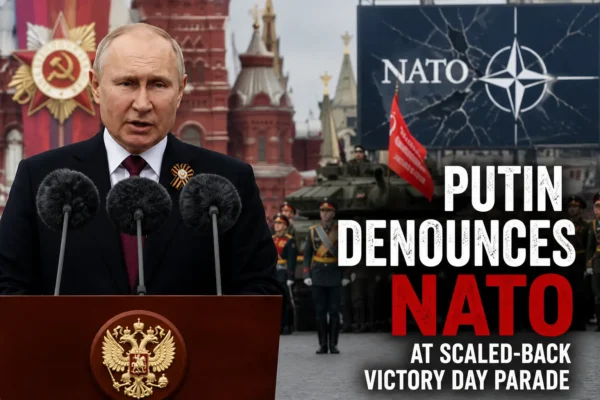
Putin denounces Nato at scaled-back Victory Day parade

Russian President Vladimir Putin used a scaled-back Victory Day parade in Moscow to deliver a sharp criticism of NATO, accusing the alliance of fueling global instability and escalating tensions near Russia’s borders. Speaking during the annual May 9 celebrations marking the Soviet Union’s victory over Nazi Germany in World War II, Putin said the West was attempting to “rewrite history” and weaken Russia through military pressure and sanctions. This year’s parade appeared smaller than previous editions, with fewer military vehicles and limited public participation. Analysts linked the reduced scale to ongoing military commitments and economic pressures caused by the war in Ukraine. Despite the toned-down event, the Kremlin sought to project strength and national unity through patriotic speeches, flyovers, and displays of military symbolism. Putin praised Russian troops fighting in Ukraine, describing them as defenders of the nation and heirs to the sacrifices made during World War II. He also repeated claims that NATO expansion threatens Russian security, a narrative Moscow has consistently used since the beginning of the conflict. Western leaders, however, reject those accusations and argue that Russia’s invasion of Ukraine is the main cause of instability in Europe. Several foreign allies attended the ceremony, though attendance from international leaders was noticeably lower than in previous years. Security across Moscow remained extremely tight amid fears of potential drone attacks and sabotage attempts. Victory Day remains one of Russia’s most important national holidays, blending remembrance of wartime sacrifice with displays of political and military power. This year’s event highlighted both Russia’s efforts to maintain a strong image on the global stage and the growing strains caused by its confrontation with the West.

Read More
Ukraine peace talks

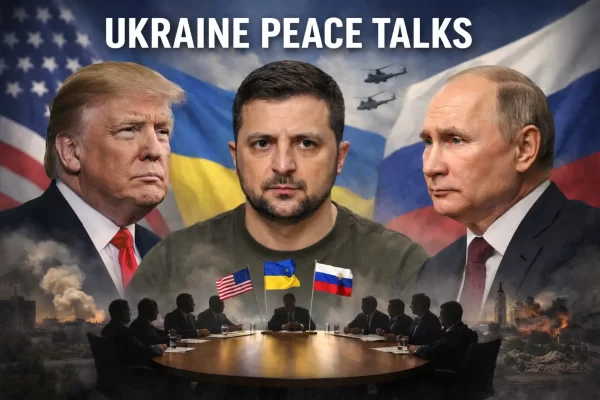
US optimistic on end to war as Zelensky says Ukraine to talk to US and Russia

The United States has expressed cautious optimism that the war in Ukraine could move closer to an end, as President Volodymyr Zelensky confirmed that Kyiv is preparing to engage in talks involving both Washington and Moscow. The comments signal a potential diplomatic opening after months of intense fighting, stalled negotiations, and growing international concern over the long-term costs of the conflict. US officials say recent diplomatic contacts and behind-the-scenes discussions have created a window for dialogue, even as military operations continue on the ground. Washington has stressed that any peace process must respect Ukraine’s sovereignty and territorial integrity, while also being grounded in realistic security guarantees that can prevent a renewed conflict in the future. American officials have framed their optimism carefully, acknowledging that previous attempts at talks have failed and that trust between the parties remains extremely low. Zelensky, speaking to reporters, said Ukraine is ready to participate in discussions that include both the United States and Russia, but made clear that Kyiv’s core principles have not changed. He emphasized that Ukraine will not accept any settlement imposed without its consent and that talks must focus on ending hostilities while ensuring long-term stability. According to Zelensky, US involvement is critical to balancing negotiations and ensuring that Ukraine’s interests are fully represented. Russia has not publicly detailed its position on the proposed talks, though officials in Moscow have repeatedly said they are open to dialogue under what they describe as “new realities” on the ground. Analysts warn that this gap in expectations could complicate negotiations, particularly on sensitive issues such as territorial control, sanctions, and security arrangements. For now, the prospect of Ukraine peace talks has raised cautious hopes among allies and international observers. While major obstacles remain, the willingness of Kyiv, Washington, and potentially Moscow to re-engage diplomatically suggests that efforts to end the war are entering a new, if uncertain, phase.

Read More
Trump Putin sanctions

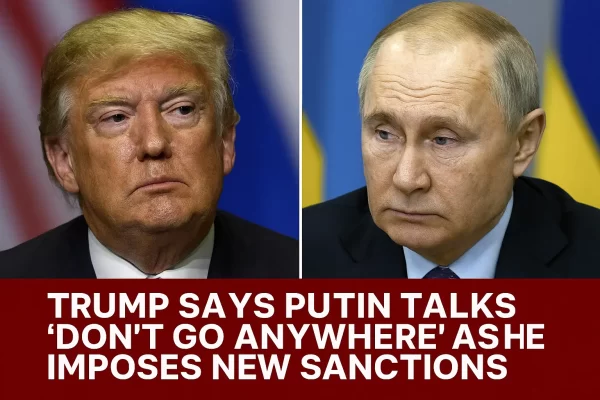
Trump says Putin talks ‘don’t go anywhere’ as he imposes new sanctions

Former U.S. President Donald Trump announced on Wednesday that planned talks with Russian President Vladimir Putin “didn’t go anywhere,” as his administration imposed a fresh round of sanctions on Moscow over its continued military involvement in Ukraine. The statement marks a sharp turn in tone just days after Trump had expressed optimism about brokering a peace deal between Russia and Ukraine. Speaking to reporters at the White House, Trump said his team had “made every effort” to prepare for constructive talks with the Kremlin, but that “the Russian side was not ready to make meaningful commitments.” He added that he would not pursue another meeting “until there’s a real change in attitude from Moscow.” The two leaders had been expected to meet in Budapest later this month to discuss potential steps toward ending the war. The sanctions announced by the U.S. Treasury target more than 40 Russian entities and individuals, including defense manufacturers, energy companies, and senior officials close to the Kremlin. According to Trump, the measures are aimed at “pressuring Russia to engage seriously in peace negotiations” while maintaining support for Ukraine’s sovereignty. “We are not walking away from diplomacy,” Trump said. “But we are not going to waste time when the other side refuses to move toward peace.” Kremlin spokesperson Dmitry Peskov criticized the new sanctions, calling them “unfriendly and counterproductive.” He said Moscow viewed Washington’s move as “a continuation of pressure politics” and reiterated that Russia would not negotiate “under threats.” Russian state media also downplayed Trump’s comments, suggesting the U.S. was using sanctions to strengthen its negotiating position. In Kyiv, Ukrainian President Volodymyr Zelensky welcomed the new U.S. sanctions, saying they demonstrated continued American commitment to Ukraine’s defense. “Every step that isolates Russia’s war machine helps us bring peace closer,” Zelensky said in a televised address. Analysts say the collapse of the planned Trump–Putin meeting underscores the ongoing difficulty in finding common ground on Ukraine, even as both sides face mounting pressure to end the war. “Trump’s decision to suspend talks sends a message that the U.S. expects concrete concessions before engaging further,” said Rachel Kim, a senior fellow at the Atlantic Policy Institute. Read This Also Trump says he did not want ‘wasted meeting’ after plan for Putin talks shelved For now, Washington appears to be balancing a dual strategy of deterrence and diplomacy — maintaining economic and political pressure on Moscow while keeping open the possibility of future talks. Whether these sanctions will push Russia toward meaningful engagement remains uncertain, but Trump’s latest move signals that patience with Putin’s approach is wearing thin.

Read More