Trump Iran deal pressure

Trump denies being ‘under pressure’ to make Iran deal ahead of ceasefire deadline

U.S. President Donald Trump has denied claims that he is facing pressure to finalize a deal with Iran as the deadline for a temporary ceasefire approaches. Speaking to reporters, Trump insisted negotiations are progressing on Washington’s terms and said he remains confident that Tehran wants an agreement more urgently than the United States does. The ceasefire, brokered earlier this month after weeks of heightened tensions, is set to expire on April 22 unless both sides agree to extend it or reach a broader settlement. Trump rejected suggestions that the White House is rushing to secure a diplomatic breakthrough, saying he is under “no pressure whatsoever” and that the U.S. has multiple options if talks fail. Recent comments from Trump have mixed optimism with warnings. He previously said a deal with Iran was “looking very good,” while also stating that military measures remain available if negotiations collapse. Analysts say the administration is trying to balance pressure tactics with diplomacy as oil markets remain sensitive to developments around the Strait of Hormuz. Iranian officials have publicly disputed some U.S. claims regarding progress in the talks, signaling that major disagreements still remain. Tehran has demanded stronger guarantees and a permanent end to wartime restrictions, while Washington continues to seek security and nuclear-related concessions. With the ceasefire deadline hours away, global attention is now focused on whether both sides can avoid renewed conflict. Any failure in negotiations could quickly raise tensions again and impact global energy prices, while a successful agreement could stabilize the region and ease market concerns.

Read More
US negotiators Pakistan Iran talks

US negotiators to return to Pakistan for talks as Trump repeats threat to Iran’s infrastructure

U.S. negotiators are expected to return to Pakistan for another round of talks aimed at easing tensions with Iran, as President Donald Trump repeated threats against Iranian infrastructure if diplomacy fails. The planned discussions are reportedly set to take place in Islamabad, with senior American officials expected to attend. According to multiple reports, Trump said the United States is offering what he described as a “fair and reasonable deal,” but warned that if Iran rejects the proposal, Washington could target bridges, power plants, and other critical facilities. The remarks have added pressure to already fragile negotiations and raised concerns about further escalation in the region. Iran has not officially confirmed its participation in the new talks. State-linked media reports indicated Tehran remains unhappy with U.S. demands and the ongoing naval blockade affecting Iranian ports. Iranian officials have argued that continued economic and military pressure undermines trust needed for successful diplomacy. The diplomatic push comes as the Strait of Hormuz remains a major flashpoint. Iran recently tightened shipping restrictions again after briefly easing them, disrupting one of the world’s most important oil transit routes. Global energy markets are closely watching developments, as any prolonged disruption could affect fuel prices worldwide. Pakistan has emerged as a key mediator in the crisis, hosting previous meetings between both sides. Whether the latest talks produce a breakthrough remains uncertain, but the renewed effort suggests both Washington and Tehran still see diplomacy as preferable to a wider conflict

Read More
Strait of Hormuz attacks

Ships report attacks after Iran closes Strait of Hormuz, as Trump says US ‘won’t be blackmailed’

Ships crossing the strategic Strait of Hormuz have reported multiple attacks after Iran announced a renewed closure of the vital waterway, sharply escalating tensions in the Gulf. Maritime security agencies said tankers and commercial vessels near the strait faced gunfire and suspicious projectile incidents, though early reports indicated crews were safe. The latest developments have raised fears of a wider disruption to global shipping and oil supplies. Iran said the strait had returned to its “previous state” and would remain under strict military control, blaming a continuing U.S. blockade and accusing Washington of maritime aggression. The Strait of Hormuz is one of the world’s most important energy chokepoints, handling a large share of global crude oil exports. Any prolonged closure could trigger higher fuel prices and supply chain pressure worldwide. President Donald Trump responded forcefully, saying the United States “won’t be blackmailed” by Iran and insisting American naval operations would continue. He also claimed talks with Tehran were still possible, suggesting diplomacy had not fully collapsed despite the renewed crisis. The United Kingdom Maritime Trade Operations center reported further suspicious activity near the strait, while several governments closely monitored vessel movements. Analysts warn that even isolated attacks can cause insurers to raise shipping premiums, forcing some carriers to avoid the route altogether. Oil markets are expected to remain volatile as traders assess whether the confrontation is temporary or the start of a longer standoff. If hostilities intensify, the Strait of Hormuz attacks could become a major flashpoint affecting both regional security and the global economy.

Read More
Strait of Hormuz open

Iran says Strait of Hormuz is ‘open’ as Trump says US blockade will continue until deal reached

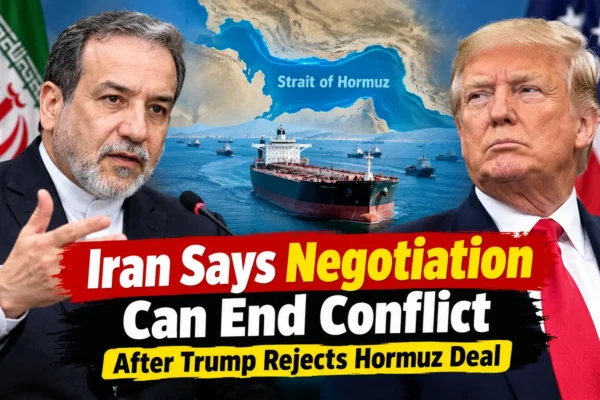
Iran announced that the Strait of Hormuz is open for commercial shipping, signaling a possible easing of tensions in one of the world’s most critical energy routes. The statement came as U.S. President Donald Trump said the American naval blockade targeting Iran would remain in place until a final agreement is reached with Tehran. The Strait of Hormuz is a narrow waterway between Iran and Oman through which a large share of global oil and gas shipments pass each day. Any disruption in the route can quickly affect international energy markets, shipping costs, and fuel prices worldwide. Iran’s move to reopen the passage was welcomed by traders, with oil prices reportedly falling after the announcement. Trump said the waterway was “ready for full passage,” but clarified that U.S. restrictions on Iranian ports and vessels would stay active until negotiations are fully completed. The White House appears to be using continued economic and naval pressure as leverage to secure a broader diplomatic settlement. Despite the reopening, uncertainty remains. Some reports indicate ships may still need coordination with Iranian authorities for safe passage, while military vessels remain restricted. Shipping companies are also cautious because of earlier security threats, including mines and tanker attacks during the recent conflict. The development is being viewed as a tentative step toward de-escalation after weeks of conflict and disruption in the Gulf region. However, analysts warn that without a full political agreement between Washington and Tehran, tensions could rise again quickly. For global markets, the key issue now is whether commercial traffic through the Strait of Hormuz returns to normal levels and whether ongoing talks can produce a lasting deal. Until then, the region remains a major geopolitical flashpoint.

Read More
Iran US peace talks Strait of Hormuz navy clearing

Iran-US peace talks take place as Trump claims navy ‘clearing out’ Strait of Hormuz

Iran–US peace talks are underway amid heightened tensions in the Middle East, as U.S. President Donald Trump claims that American naval forces are actively “clearing out” the Strait of Hormuz. The negotiations, taking place in Islamabad under a fragile ceasefire, mark the highest-level direct engagement between Washington and Tehran in decades. The Strait of Hormuz—through which a significant portion of global oil supply passes—has become a central point of contention. Trump has asserted that U.S. forces have begun removing sea mines and securing the waterway to restore safe passage for international shipping. He also claimed that Iranian capabilities in the region have been significantly weakened, framing the naval operations as a necessary step to stabilize global energy markets. At the same time, U.S. naval movements in the strait have underscored the seriousness of the situation. American warships have recently transited the waterway for the first time since the conflict began, signaling a show of force and commitment to freedom of navigation. However, Iran has disputed aspects of these operations and warned that uncoordinated military activity could violate the ceasefire, raising the risk of renewed confrontation. The ongoing peace talks face significant challenges. Iran is reportedly seeking greater control over the strait, as well as broader concessions, while the United States insists on unrestricted maritime access and security guarantees. These competing demands highlight the deep mistrust between the two sides, even as diplomacy continues. Despite the tensions, both nations appear to be pursuing a dual-track strategy—combining military positioning with diplomatic engagement. Analysts warn that while the talks offer a potential path to de-escalation, any miscalculation in the Strait of Hormuz could quickly unravel the fragile ceasefire. Overall, the situation remains volatile, with the outcome of the negotiations likely to shape not only regional stability but also global energy security in the weeks ahead.

Read More
Trump Iran Strait of Hormuz agreement dispute

Trump says Iran’s handling of Strait of Hormuz is ‘not the agreement we have’

U.S. President Donald Trump has sharply criticized Iran’s handling of the Strait of Hormuz, stating that Tehran’s actions are “not the agreement we have,” signaling growing strain in an already fragile ceasefire. The remarks come as global concern intensifies over disruptions to one of the world’s most critical النفط shipping routes. Trump’s comments follow reports that maritime traffic through the strait has slowed significantly, with Iran imposing strict controls and limiting the number of vessels allowed to pass. In some cases, oil tankers have reportedly avoided the route altogether due to fears of confrontation, effectively reducing the flow of global energy supplies. The U.S. administration maintains that any ceasefire agreement with Iran was contingent on the immediate and full reopening of the Strait of Hormuz. Trump had earlier agreed to pause military escalation on the condition that safe and unrestricted navigation would resume. However, current developments suggest a gap between what Washington expected and what Tehran is implementing. Iran, on the other hand, appears to be asserting tighter control over the waterway, framing its actions as part of a broader strategic shift in regional policy. Iranian leadership has indicated plans to bring the management of the strait “into a new stage,” further complicating diplomatic efforts. The disagreement highlights deeper ambiguities within the ceasefire framework, with both sides interpreting key terms differently. Analysts warn that such misalignment increases the risk of renewed confrontation, especially as tensions linked to Israeli military operations in Lebanon continue to escalate. Meanwhile, international partners including the UK are working with the United States to develop a coordinated strategy to reopen the strait and restore normal shipping operations. Overall, Trump’s statement underscores mounting frustration in Washington and raises concerns that the ceasefire could unravel if disputes over the Strait of Hormuz are not quickly resolved.

Read More
Trump Iran Strait of Hormuz threat

Trump issues expletive-laden threat to Iran demanding Strait of Hormuz be opened

U.S. President Donald Trump has issued an expletive-laden warning to Iran, demanding the immediate reopening of the strategically critical Strait of Hormuz, in what marks one of the most aggressive rhetorical escalations in the ongoing conflict. In a fiery social media post published on April 5, Trump used unusually explicit language to pressure Tehran, warning that failure to reopen the vital shipping lane would result in severe military retaliation. He set a firm deadline, stating that if the strait is not reopened by Tuesday evening, the United States would launch strikes targeting Iranian infrastructure, including power plants and major bridges. The Strait of Hormuz is one of the world’s most important النفط transit chokepoints, handling a significant portion of global oil shipments. Its closure—triggered amid escalating U.S.-Iran hostilities—has already disrupted global energy markets and driven oil prices higher. Trump’s remarks come after weeks of intensifying conflict between U.S. and Iranian forces, as well as a recent high-risk rescue operation involving a downed American airman inside Iranian territory. The president framed the situation as urgent, suggesting that Iran’s continued blockade of the strait is unacceptable and poses a threat to global economic stability. Critics across the political spectrum have condemned Trump’s rhetoric as inflammatory and potentially dangerous, warning that targeting civilian infrastructure could violate international law and further destabilize the region. Meanwhile, Iranian officials have shown no indication of backing down, instead signaling possible retaliation against U.S. and allied economic interests.

Read More
Missing US airman Iran

Search for missing US airman continues as Trump threatens ‘hell’ if Iran does not reach deal

The search for a missing American airman in Iran has intensified as the conflict between Washington and Tehran enters a dangerous new phase. The airman was part of a crew aboard an F-15E Strike Eagle that was shot down over Iranian territory during ongoing military operations. While one crew member was successfully rescued shortly after the incident, the second remains unaccounted for, triggering a high-risk search-and-rescue mission in hostile terrain. U.S. forces have deployed helicopters, special operations teams, and surveillance aircraft to locate the missing airman, operating under the constant threat of enemy fire. Reports indicate that Iranian authorities have urged civilians to help find the pilot, even offering rewards, which has further complicated the rescue effort and increased the urgency of the situation. The incident marks a significant escalation, as it is among the first confirmed cases of a U.S. combat aircraft being downed inside Iran during the ongoing war. Military analysts warn that if the airman is captured, it could become a major geopolitical flashpoint and a bargaining tool in negotiations. Amid this unfolding crisis, Donald Trump has issued a stark warning to Iran, giving the country a 48-hour deadline to reach a deal or face severe consequences. In a social media post, he threatened that “all hell” would be unleashed if Tehran fails to comply, signaling a potential escalation in U.S. military action. The situation remains highly volatile, with ongoing airstrikes, regional instability, and rising casualties. As the search continues, the fate of the missing airman has become a focal point of the broader conflict, underscoring the human stakes behind the escalating geopolitical confrontation.

Read More
Iran bridge airstrike

Iranian bridge cut in half by strike as Trump warns of ‘much more to follow’

A major bridge in Iran has reportedly been cut in half following a targeted airstrike, intensifying fears of a broader regional escalation. The strike, which Iranian officials say severely damaged a key transportation link, is being viewed as both a tactical and symbolic blow. The structure connected critical مناطق used for civilian and logistical movement, raising concerns about humanitarian and economic fallout in the affected area. Authorities in Tehran condemned the attack, calling it a violation of sovereignty and an act of aggression that could provoke further retaliation. Emergency crews were deployed to assess the damage and assist any casualties, though official figures on injuries or deaths remain unclear. Satellite imagery circulating online appears to confirm that a large section of the bridge collapsed into the river below. Meanwhile, Donald Trump issued a stark warning, stating that the strike could be “just the beginning” and that “much more [is] to follow” if tensions are not addressed. His remarks have added to speculation that additional military actions may be imminent, either directly or through allied forces in the region. The incident comes amid already heightened tensions involving Iran, the United States, and regional actors. Analysts warn that infrastructure strikes like this one risk widening the conflict, particularly if they disrupt civilian life or provoke retaliatory attacks. Strategic assets such as bridges are often targeted to hinder movement and supply chains, but they also carry significant political consequences. International calls for restraint are growing louder, with several countries urging de-escalation to prevent a full-scale conflict. However, with rhetoric hardening and military actions intensifying, the situation remains volatile and unpredictable.

Read More
Donald Trump

Trump tells the UK and other countries ‘go get your own oil’ from Strait of Hormuz

Former U.S. President Donald Trump has sparked fresh geopolitical debate after telling the United Kingdom and other allied nations to “go get your own oil” from the strategically critical Strait of Hormuz. His remarks come amid escalating tensions in the Middle East, where threats to maritime security have raised concerns about global energy supplies and economic stability. The Strait of Hormuz, a narrow waterway between Iran and Oman, handles roughly a fifth of the world’s oil shipments. Any disruption in this corridor can send shockwaves through global markets, pushing up oil prices and increasing inflationary pressures worldwide. Trump’s comments suggest a more isolationist stance, implying that the U.S. may reduce its traditional role in securing international shipping lanes, a responsibility it has long upheld through its naval presence in the region. The statement has drawn mixed reactions from global leaders. Officials in the UK, including representatives of UK Government, have emphasized the importance of collective security and cooperation in safeguarding critical infrastructure. Analysts argue that a fragmented approach could embolden regional actors and increase the risk of conflict, particularly involving Iran, which has previously threatened to restrict passage through the strait during periods of heightened tension. Energy experts warn that any shift in U.S. policy could have significant implications for global oil markets. European and Asian economies, heavily reliant on Middle Eastern oil, may face increased costs and supply uncertainty if security responsibilities are redistributed. Meanwhile, countries may be forced to boost their own naval capabilities or seek alternative energy routes and suppliers. Trump’s remarks underscore a broader debate about burden-sharing among Western allies and the future of global security commitments. As tensions continue to simmer, the stability of the Strait of Hormuz remains a focal point for policymakers, with far-reaching consequences for international trade, energy security, and geopolitical balance.

Read More