Venezuela quake survivor

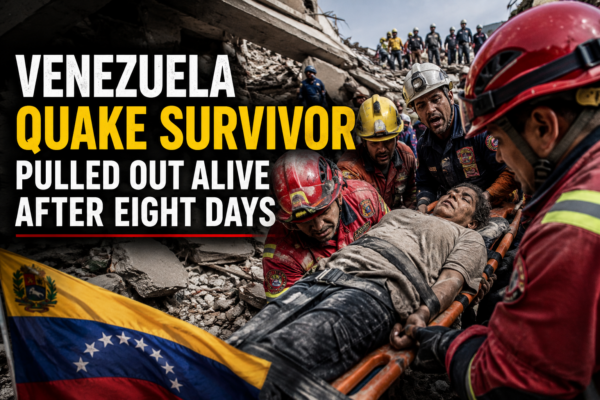
Venezuela quake survivor pulled out alive after eight days

A remarkable rescue operation in Venezuela has brought hope amid tragedy after emergency crews pulled a survivor from the rubble eight days after a devastating earthquake struck the country. The dramatic rescue has lifted the spirits of rescue workers and families who have spent days searching for missing loved ones despite fading hopes of finding anyone alive. The survivor, whose identity has not yet been officially released, was discovered trapped beneath the remains of a collapsed residential building. Rescue teams used specialized listening devices and search cameras to detect signs of life before carefully removing layers of concrete and debris. After several hours of delicate work, the individual was safely brought to the surface and immediately transferred to a nearby hospital for medical treatment. The powerful earthquake caused widespread destruction across several Venezuelan cities, reducing homes, schools, and public buildings to rubble. Authorities say hundreds of people have been killed, while thousands remain displaced. Emergency shelters have been established to provide food, clean water, and temporary accommodation for affected families. International rescue teams continue working alongside Venezuelan emergency services, using heavy equipment, rescue dogs, and advanced technology to search for anyone still trapped. Officials have warned that the chances of finding additional survivors diminish with each passing day, making the latest rescue even more extraordinary. Humanitarian organizations are also stepping up relief efforts by delivering medical supplies, emergency food, and sanitation equipment to communities hardest hit by the disaster. Concerns remain over damaged infrastructure, disrupted electricity, and limited access to clean drinking water. The rescue of the Venezuela quake survivor has become a symbol of resilience and determination during one of the country’s worst natural disasters in recent years. While the nation continues to mourn those who lost their lives, this extraordinary survival story offers a rare moment of hope and reminds the world of the dedication of rescue teams working tirelessly to save lives in the aftermath of the devastating earthquake.
Read More
Venezuelan earthquake displaced people

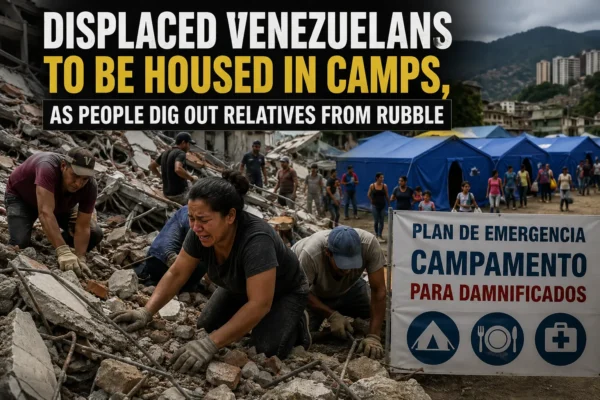
Displaced Venezuelans to be housed in camps, president says, as people dig out relatives from rubble

Venezuela’s government has announced plans to house thousands of people displaced by the devastating earthquakes in temporary camps as rescue efforts continue across the country. The powerful twin earthquakes, which struck northern Venezuela last week, have left entire neighborhoods destroyed, forcing families to abandon their homes and seek shelter. Interim President Delcy Rodríguez said emergency camps would be established to accommodate those who lost their homes, particularly in the hard-hit state of La Guaira. Authorities are also distributing food, water, and medical supplies while international aid continues to arrive. More than 1,600 foreign rescuers have joined local teams in the search for survivors trapped beneath collapsed buildings. Despite the government’s efforts, many residents remain focused on finding missing relatives. Across affected communities, families have been digging through rubble with shovels, pickaxes, and even their bare hands, hoping to locate loved ones. Rescue workers say the emotional toll has been immense as survivors wait anxiously for news. The death toll has continued to rise as emergency crews gain access to heavily damaged areas. Thousands of people have been injured, while many others remain unaccounted for. Officials warn that the number of casualties could increase further as rescue operations progress. Meanwhile, aftershocks have complicated recovery efforts, forcing rescuers and residents to remain on alert. Nevertheless, occasional rescues of survivors from the rubble have provided moments of hope amid the tragedy. International aid organizations and neighboring countries have pledged assistance, sending rescue teams, medical personnel, and humanitarian supplies. As Venezuela confronts one of the worst natural disasters in its recent history, the challenge now extends beyond rescue operations to providing long-term shelter and support for the thousands of people displaced by the catastrophe.

Read More
Venezuela Earthquake Death Toll

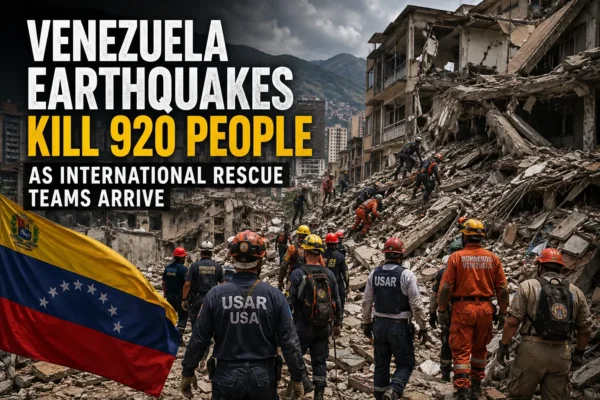
Venezuela earthquakes kill 920 people as international rescue teams arrive

The death toll from the devastating earthquakes that struck Venezuela has risen to at least 920, as international rescue teams race against time to find survivors trapped beneath collapsed buildings. The twin earthquakes, measuring 7.2 and 7.5 in magnitude, hit northern Venezuela on June 24, causing widespread destruction across Caracas, La Guaira, and surrounding regions. Authorities report that more than 3,300 people have been injured, while tens of thousands remain missing. Rescue efforts have entered a critical phase, with emergency workers focusing on the first 72 hours after the disaster, a period considered crucial for locating survivors under rubble. International assistance has begun arriving from several countries, including the United States, European nations, and neighboring Latin American states. Specialized search-and-rescue teams, canine units, medical personnel, and heavy equipment have been deployed to support overwhelmed local responders. More than 500 emergency responders from across Europe have also joined the operation. Many residents have expressed frustration over the slow initial response, with volunteers and family members often digging through debris by hand while waiting for professional rescue crews. Significant damage to roads, communications networks, and public infrastructure has complicated rescue efforts and delayed access to some of the hardest-hit areas. Acting President Delcy Rodríguez has pledged to save as many lives as possible and welcomed international aid arriving in the country. Humanitarian organizations, including United Nations agencies, are coordinating relief efforts, providing emergency shelter, medical supplies, food, and clean water to affected communities. As aftershocks continue to shake the region, fears remain that the Venezuela earthquake death toll could rise further. Rescue teams continue their urgent search for survivors, while thousands of displaced families face an uncertain future amid one of the country’s worst natural disasters in more than a century.

Read More
Maduro court hearing

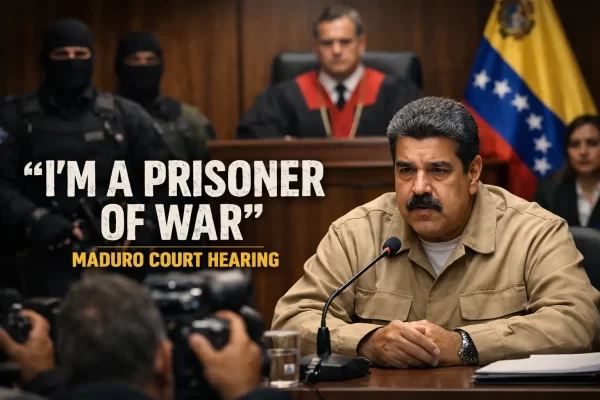
‘I’m a prisoner of war’ – In the room for Maduro’s dramatic court hearing

Venezuela’s political tensions reached a dramatic peak as President Nicolás Maduro appeared before a court in a hearing that quickly became a stage for defiance, symbolism, and international messaging. Declaring “I’m a prisoner of war,” Maduro framed the proceedings not as a legal process but as part of a broader geopolitical confrontation, casting himself as a target of foreign pressure rather than a defendant subject to judicial scrutiny. Inside the courtroom, the atmosphere was tightly controlled. Security was heavy, access was restricted, and the audience was carefully selected, underscoring the sensitivity of the moment. Maduro, composed yet combative, used his remarks to reinforce a narrative long central to his leadership: that Venezuela is under siege from external forces seeking regime change. His words were clearly aimed beyond the room, intended for supporters at home and observers abroad. The Maduro court hearing unfolded against a backdrop of economic strain, sanctions, and ongoing disputes over legitimacy and governance. For critics, the spectacle reinforced concerns about the independence of Venezuela’s judiciary and the blurring of lines between political power and legal institutions. For supporters, Maduro’s rhetoric reaffirmed his image as a leader resisting what he describes as imperial interference. Observers noted that the hearing was less about legal arguments and more about political positioning. Maduro’s “prisoner of war” statement echoed past claims that sanctions and diplomatic isolation amount to collective punishment, a theme frequently invoked by his government to rally domestic backing and justify hardline policies. International reaction has been cautious but attentive. The courtroom drama is likely to influence ongoing negotiations, sanctions discussions, and regional diplomacy. Whether the hearing marks a turning point or merely another chapter in Venezuela’s prolonged crisis remains unclear. What is certain is that the Maduro court hearing was designed to be seen and remembered—not just as a legal event, but as a political message crafted for a global audience.

Read More