
Trump Iran deal pressure

Trump denies being ‘under pressure’ to make Iran deal ahead of ceasefire deadline

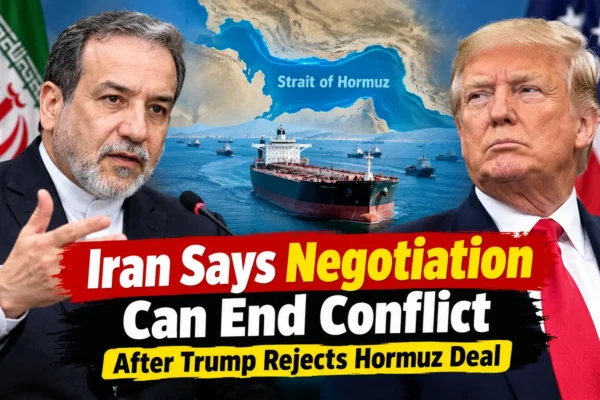
U.S. President Donald Trump has denied claims that he is facing pressure to finalize a deal with Iran as the deadline for a temporary ceasefire approaches. Speaking to reporters, Trump insisted negotiations are progressing on Washington’s terms and said he remains confident that Tehran wants an agreement more urgently than the United States does. The ceasefire, brokered earlier this month after weeks of heightened tensions, is set to expire on April 22 unless both sides agree to extend it or reach a broader settlement. Trump rejected suggestions that the White House is rushing to secure a diplomatic breakthrough, saying he is under “no pressure whatsoever” and that the U.S. has multiple options if talks fail. Recent comments from Trump have mixed optimism with warnings. He previously said a deal with Iran was “looking very good,” while also stating that military measures remain available if negotiations collapse. Analysts say the administration is trying to balance pressure tactics with diplomacy as oil markets remain sensitive to developments around the Strait of Hormuz. Iranian officials have publicly disputed some U.S. claims regarding progress in the talks, signaling that major disagreements still remain. Tehran has demanded stronger guarantees and a permanent end to wartime restrictions, while Washington continues to seek security and nuclear-related concessions. With the ceasefire deadline hours away, global attention is now focused on whether both sides can avoid renewed conflict. Any failure in negotiations could quickly raise tensions again and impact global energy prices, while a successful agreement could stabilize the region and ease market concerns.

Read More
Strait of Hormuz open

Iran says Strait of Hormuz is ‘open’ as Trump says US blockade will continue until deal reached

Iran announced that the Strait of Hormuz is open for commercial shipping, signaling a possible easing of tensions in one of the world’s most critical energy routes. The statement came as U.S. President Donald Trump said the American naval blockade targeting Iran would remain in place until a final agreement is reached with Tehran. The Strait of Hormuz is a narrow waterway between Iran and Oman through which a large share of global oil and gas shipments pass each day. Any disruption in the route can quickly affect international energy markets, shipping costs, and fuel prices worldwide. Iran’s move to reopen the passage was welcomed by traders, with oil prices reportedly falling after the announcement. Trump said the waterway was “ready for full passage,” but clarified that U.S. restrictions on Iranian ports and vessels would stay active until negotiations are fully completed. The White House appears to be using continued economic and naval pressure as leverage to secure a broader diplomatic settlement. Despite the reopening, uncertainty remains. Some reports indicate ships may still need coordination with Iranian authorities for safe passage, while military vessels remain restricted. Shipping companies are also cautious because of earlier security threats, including mines and tanker attacks during the recent conflict. The development is being viewed as a tentative step toward de-escalation after weeks of conflict and disruption in the Gulf region. However, analysts warn that without a full political agreement between Washington and Tehran, tensions could rise again quickly. For global markets, the key issue now is whether commercial traffic through the Strait of Hormuz returns to normal levels and whether ongoing talks can produce a lasting deal. Until then, the region remains a major geopolitical flashpoint.

Read More
Trump Strait of Hormuz blockade threat risks

Trump Strait of Hormuz blockade threat risks

Donald Trump’s renewed threat to impose a blockade on the Strait of Hormuz has heightened geopolitical risks while doing little to resolve the underlying tensions in the region. The strategic waterway, through which nearly a fifth of the world’s oil supply passes, remains a focal point of confrontation between the United States and Iran, with both sides maintaining hardline positions. Trump’s rhetoric signals a willingness to escalate economic and military pressure on Tehran, framing the potential blockade as a means to enforce compliance with existing agreements and ensure freedom of navigation. However, analysts warn that such a move could backfire, triggering retaliatory actions from Iran and further destabilizing global energy markets. Even the suggestion of restricting access to the strait has already contributed to volatility in oil prices and shipping routes. Iran, for its part, has consistently warned that any attempt to block or control the Strait of Hormuz would be met with a strong response. Iranian officials argue that the waterway is vital to their national security and economic survival, and they have demonstrated both the capability and intent to disrupt maritime traffic if provoked. This creates a high-stakes standoff where miscalculation could quickly escalate into direct conflict. Despite the aggressive posturing, the fundamental issues between Washington and Tehran remain unresolved. Disputes over sanctions, regional influence, and security guarantees continue to stall meaningful progress. Trump’s blockade threat, rather than advancing negotiations, appears to reinforce entrenched positions on both sides. International stakeholders, including major oil-importing nations, are increasingly concerned about the potential fallout. A prolonged disruption in the Strait of Hormuz would have far-reaching consequences for global trade and energy security, amplifying the urgency for diplomatic solutions. In essence, while Trump’s threat underscores the seriousness of the situation, it leaves the core predicaments unchanged—highlighting a cycle of pressure and resistance with no clear path to resolution. Join our courses

Read More
Iran US peace talks Strait of Hormuz navy clearing

Iran-US peace talks take place as Trump claims navy ‘clearing out’ Strait of Hormuz

Iran–US peace talks are underway amid heightened tensions in the Middle East, as U.S. President Donald Trump claims that American naval forces are actively “clearing out” the Strait of Hormuz. The negotiations, taking place in Islamabad under a fragile ceasefire, mark the highest-level direct engagement between Washington and Tehran in decades. The Strait of Hormuz—through which a significant portion of global oil supply passes—has become a central point of contention. Trump has asserted that U.S. forces have begun removing sea mines and securing the waterway to restore safe passage for international shipping. He also claimed that Iranian capabilities in the region have been significantly weakened, framing the naval operations as a necessary step to stabilize global energy markets. At the same time, U.S. naval movements in the strait have underscored the seriousness of the situation. American warships have recently transited the waterway for the first time since the conflict began, signaling a show of force and commitment to freedom of navigation. However, Iran has disputed aspects of these operations and warned that uncoordinated military activity could violate the ceasefire, raising the risk of renewed confrontation. The ongoing peace talks face significant challenges. Iran is reportedly seeking greater control over the strait, as well as broader concessions, while the United States insists on unrestricted maritime access and security guarantees. These competing demands highlight the deep mistrust between the two sides, even as diplomacy continues. Despite the tensions, both nations appear to be pursuing a dual-track strategy—combining military positioning with diplomatic engagement. Analysts warn that while the talks offer a potential path to de-escalation, any miscalculation in the Strait of Hormuz could quickly unravel the fragile ceasefire. Overall, the situation remains volatile, with the outcome of the negotiations likely to shape not only regional stability but also global energy security in the weeks ahead.

Read More
Missing US airman Iran

Search for missing US airman continues as Trump threatens ‘hell’ if Iran does not reach deal

The search for a missing American airman in Iran has intensified as the conflict between Washington and Tehran enters a dangerous new phase. The airman was part of a crew aboard an F-15E Strike Eagle that was shot down over Iranian territory during ongoing military operations. While one crew member was successfully rescued shortly after the incident, the second remains unaccounted for, triggering a high-risk search-and-rescue mission in hostile terrain. U.S. forces have deployed helicopters, special operations teams, and surveillance aircraft to locate the missing airman, operating under the constant threat of enemy fire. Reports indicate that Iranian authorities have urged civilians to help find the pilot, even offering rewards, which has further complicated the rescue effort and increased the urgency of the situation. The incident marks a significant escalation, as it is among the first confirmed cases of a U.S. combat aircraft being downed inside Iran during the ongoing war. Military analysts warn that if the airman is captured, it could become a major geopolitical flashpoint and a bargaining tool in negotiations. Amid this unfolding crisis, Donald Trump has issued a stark warning to Iran, giving the country a 48-hour deadline to reach a deal or face severe consequences. In a social media post, he threatened that “all hell” would be unleashed if Tehran fails to comply, signaling a potential escalation in U.S. military action. The situation remains highly volatile, with ongoing airstrikes, regional instability, and rising casualties. As the search continues, the fate of the missing airman has become a focal point of the broader conflict, underscoring the human stakes behind the escalating geopolitical confrontation.

Read More
Iran bridge airstrike

Iranian bridge cut in half by strike as Trump warns of ‘much more to follow’

A major bridge in Iran has reportedly been cut in half following a targeted airstrike, intensifying fears of a broader regional escalation. The strike, which Iranian officials say severely damaged a key transportation link, is being viewed as both a tactical and symbolic blow. The structure connected critical مناطق used for civilian and logistical movement, raising concerns about humanitarian and economic fallout in the affected area. Authorities in Tehran condemned the attack, calling it a violation of sovereignty and an act of aggression that could provoke further retaliation. Emergency crews were deployed to assess the damage and assist any casualties, though official figures on injuries or deaths remain unclear. Satellite imagery circulating online appears to confirm that a large section of the bridge collapsed into the river below. Meanwhile, Donald Trump issued a stark warning, stating that the strike could be “just the beginning” and that “much more [is] to follow” if tensions are not addressed. His remarks have added to speculation that additional military actions may be imminent, either directly or through allied forces in the region. The incident comes amid already heightened tensions involving Iran, the United States, and regional actors. Analysts warn that infrastructure strikes like this one risk widening the conflict, particularly if they disrupt civilian life or provoke retaliatory attacks. Strategic assets such as bridges are often targeted to hinder movement and supply chains, but they also carry significant political consequences. International calls for restraint are growing louder, with several countries urging de-escalation to prevent a full-scale conflict. However, with rhetoric hardening and military actions intensifying, the situation remains volatile and unpredictable.

Read More
Donald Trump

Trump tells the UK and other countries ‘go get your own oil’ from Strait of Hormuz

Former U.S. President Donald Trump has sparked fresh geopolitical debate after telling the United Kingdom and other allied nations to “go get your own oil” from the strategically critical Strait of Hormuz. His remarks come amid escalating tensions in the Middle East, where threats to maritime security have raised concerns about global energy supplies and economic stability. The Strait of Hormuz, a narrow waterway between Iran and Oman, handles roughly a fifth of the world’s oil shipments. Any disruption in this corridor can send shockwaves through global markets, pushing up oil prices and increasing inflationary pressures worldwide. Trump’s comments suggest a more isolationist stance, implying that the U.S. may reduce its traditional role in securing international shipping lanes, a responsibility it has long upheld through its naval presence in the region. The statement has drawn mixed reactions from global leaders. Officials in the UK, including representatives of UK Government, have emphasized the importance of collective security and cooperation in safeguarding critical infrastructure. Analysts argue that a fragmented approach could embolden regional actors and increase the risk of conflict, particularly involving Iran, which has previously threatened to restrict passage through the strait during periods of heightened tension. Energy experts warn that any shift in U.S. policy could have significant implications for global oil markets. European and Asian economies, heavily reliant on Middle Eastern oil, may face increased costs and supply uncertainty if security responsibilities are redistributed. Meanwhile, countries may be forced to boost their own naval capabilities or seek alternative energy routes and suppliers. Trump’s remarks underscore a broader debate about burden-sharing among Western allies and the future of global security commitments. As tensions continue to simmer, the stability of the Strait of Hormuz remains a focal point for policymakers, with far-reaching consequences for international trade, energy security, and geopolitical balance.

Read More
Trump Iran threat

Trump threatens to ‘obliterate’ Iran’s energy facilities if deal not reached ‘shortly’

U.S. President Donald Trump has sharply escalated tensions with Iran by warning that he could “obliterate” the country’s energy infrastructure if a deal to end the ongoing conflict is not reached soon. The threat specifically targets critical assets such as oil fields, power plants, and water facilities—systems that are essential to both Iran’s economy and civilian life. The warning comes amid negotiations aimed at reopening the Strait of Hormuz, a vital global النفط shipping route through which a significant portion of the world’s oil supply passes. Trump has indicated that progress is being made with what he described as a “more reasonable” Iranian leadership, but he set a short timeline for results, signaling that military escalation remains on the table. Iran, however, has pushed back strongly, reportedly rejecting U.S. proposals and denying that meaningful direct negotiations are underway. Tehran has also warned that any attack on its infrastructure would trigger retaliatory strikes across the region, potentially targeting energy facilities in neighboring countries and escalating the conflict into a broader regional war. The stakes are particularly high because energy infrastructure is deeply tied to civilian survival. Analysts and human rights organizations have cautioned that deliberate attacks on such facilities could have catastrophic humanitarian consequences and may violate international law. Meanwhile, global markets are already reacting. Oil prices have surged amid fears of disruption, and economists warn that a prolonged conflict could fuel inflation and slow global economic growth. The situation remains fluid, with diplomatic efforts continuing behind the scenes, but the rhetoric signals that the crisis may be approaching a critical tipping point

Read More
Israeli strike Lebanon journalists

Israeli strike kills journalists in Lebanon, as Yemen says Iran ‘dragging country into war’

An Israeli airstrike in southern Lebanon has killed three journalists, intensifying global concern over the safety of media workers in conflict zones and raising fears of a wider regional war. The victims included reporters and a cameraman from Lebanese outlets, who were covering ongoing hostilities between Israel and Hezbollah when their vehicle was struck. Israel stated that the strike targeted one individual it accused of being linked to Hezbollah intelligence, though it did not provide evidence and did not address the deaths of the other journalists. Lebanese authorities strongly condemned the attack, calling it a violation of international law and protections afforded to journalists in war zones. The incident comes amid a sharp escalation in the broader Middle East conflict, particularly following joint U.S.-Israeli strikes on Iran. Journalists have increasingly found themselves in harm’s way, with multiple fatalities reported across Lebanon, Gaza, and Iran since the conflict intensified. Meanwhile, tensions have expanded beyond Lebanon. Yemen’s Houthi movement, aligned with Iran, has warned that continued attacks could drag the region deeper into war. Officials signaled readiness to intervene militarily, accusing external powers of escalating the conflict and destabilizing the region. In parallel developments, missile and drone attacks across the Gulf, along with strikes on infrastructure and military bases, indicate that the conflict is no longer contained to a single front. Analysts warn that involvement from additional regional actors could transform the situation into a full-scale multi-country war. The killing of journalists has added urgency to calls from international organizations for accountability and protection of civilians. As the conflict widens, the risks to media personnel—and the broader civilian population—continue to grow.

Read More
Iran US-Israel conflict

Iran claims US-Israeli strikes targeting civilian sites as Rubio expects war to end ‘in weeks, not months’

Tensions in the Middle East continue to escalate as Iran accuses the United States and Israel of deliberately targeting civilian infrastructure, while U.S. Secretary of State Marco Rubio insists the conflict will be short-lived, predicting it will end “in weeks, not months.” Iranian officials and multiple human rights groups claim that recent U.S.-Israeli airstrikes have hit non-military sites, including schools, hospitals, and residential areas. A new report estimates that nearly 1,500 civilians, including over 200 children, have been killed since the conflict began in late February 2026. Tehran has strongly condemned the strikes, calling them violations of international humanitarian law and warning of continued retaliation if attacks persist. The United States and Israel, however, deny deliberately targeting civilians. Washington maintains that the strikes are focused on dismantling Iran’s military infrastructure, including missile systems, drone capabilities, and naval assets. Rubio stated that the campaign is progressing “ahead of schedule” and does not require a ground invasion. Despite intensifying violence, Rubio has expressed confidence that the war will conclude soon. Speaking after diplomatic meetings with G7 allies, he indicated that the conflict is expected to last only a few more weeks, emphasizing that U.S. objectives can be achieved within that timeframe. He reiterated that the timeline remains “weeks, not months,” even as fighting continues across multiple fronts. Meanwhile, the broader consequences of the conflict are becoming increasingly severe. Global oil prices have surged, and disruptions in the Strait of Hormuz are affecting international trade. Iran has also carried out retaliatory strikes and cyberattacks, raising fears of further regional escalation. As diplomatic channels remain open but fragile, the coming weeks are likely to determine whether the conflict de-escalates—or expands into a wider regional war. Join Our Personality Development and Spoken English Course

Read More