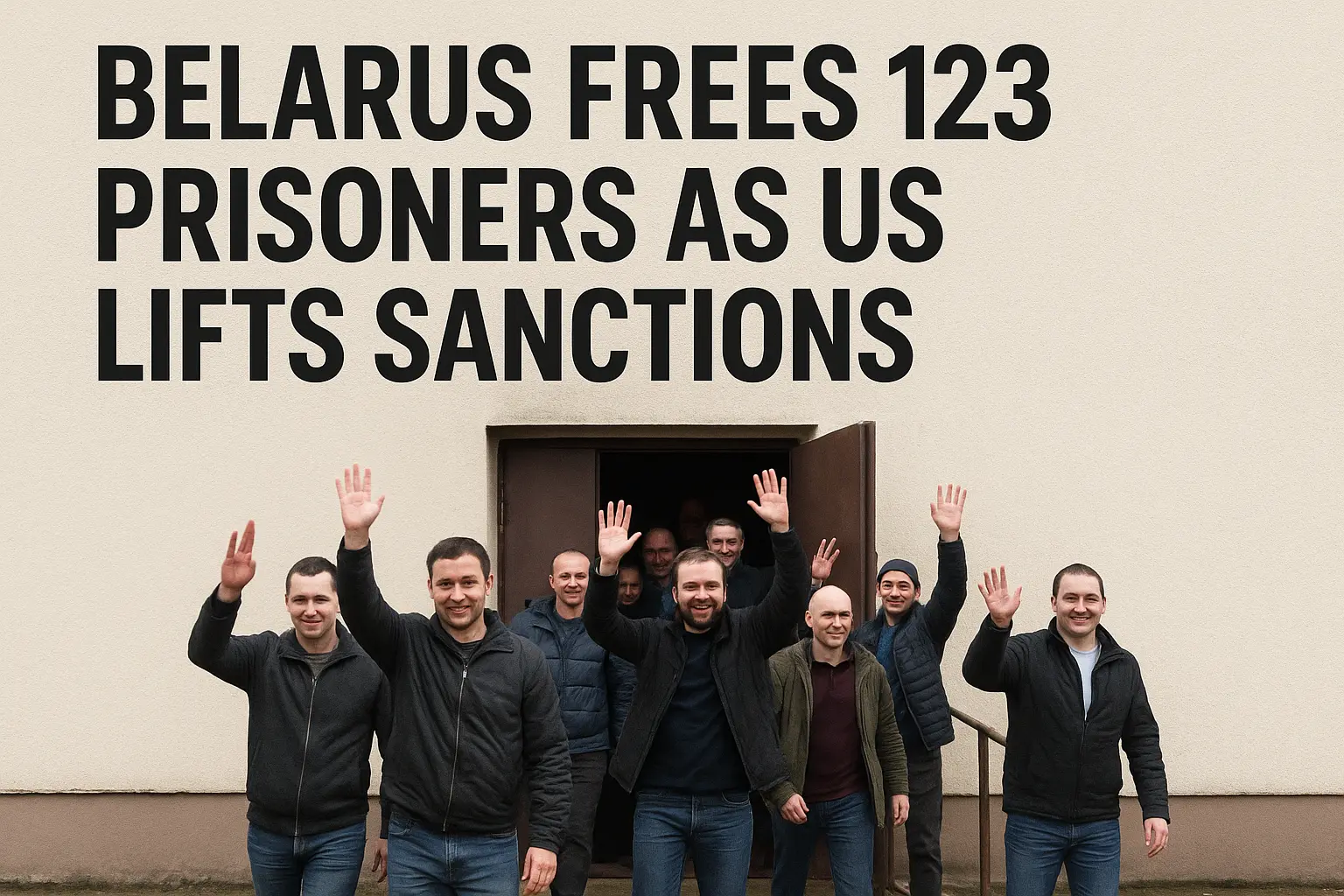
Belarus has freed 123 prisoners in a move that coincides with the United States lifting a set of sanctions, signaling a rare moment of diplomatic recalibration between Minsk and Washington. The prisoner release, confirmed by Belarusian authorities, has drawn cautious international attention, with officials and analysts debating whether the development marks a substantive policy shift or a tactical gesture aimed at easing external pressure.
The freed individuals reportedly include political detainees, civil society activists, and people convicted on charges widely criticized by Western governments and human rights organizations as politically motivated. For years, Belarus has faced sustained sanctions from the United States and the European Union over its handling of protests, restrictions on media freedom, and the jailing of opposition figures following disputed elections. The release of such a significant number of prisoners is therefore viewed as an unusual and potentially strategic move by President Alexander Lukashenko’s government.
Simultaneously, the United States announced the lifting of certain sanctions targeting Belarusian entities and individuals. US officials framed the decision as a calibrated response designed to encourage further steps by Minsk, rather than a full normalization of relations. The sanctions relief is understood to be limited in scope, focusing on specific economic and financial restrictions while leaving broader punitive measures in place.
Diplomats familiar with the matter suggest the parallel timing of the Belarus prisoner release and sanctions easing reflects quiet negotiations conducted through intermediaries. Washington has long argued that sanctions are a tool to change behavior, not an end in themselves, and the latest development is being presented as evidence that pressure can yield concessions. However, US officials have emphasized that future engagement will depend on Belarus taking additional, verifiable actions, including halting new arrests and improving conditions for political expression.
In Minsk, state media portrayed the releases as a humanitarian decision made in the national interest, rather than a concession to foreign demands. Belarusian officials reiterated claims that the country’s judicial system operates independently, a position consistently rejected by international rights monitors. Nevertheless, the government also welcomed the easing of sanctions, arguing that economic restrictions have harmed ordinary citizens more than political elites.
Human rights groups responded with guarded optimism. While welcoming the freedom of the 123 prisoners, they stressed that hundreds of others remain behind bars and warned against interpreting the move as systemic reform. Activists argue that without legal changes and guarantees against future repression, the releases risk being temporary or symbolic.
The Belarus prisoner release sanctions episode highlights the transactional nature of current US–Belarus relations. It underscores how geopolitical pressures, economic constraints, and diplomatic leverage intersect in shaping decisions by authoritarian governments. Whether this moment leads to sustained de-escalation or proves to be a short-lived tactical exchange will depend on the actions that follow on both sides.