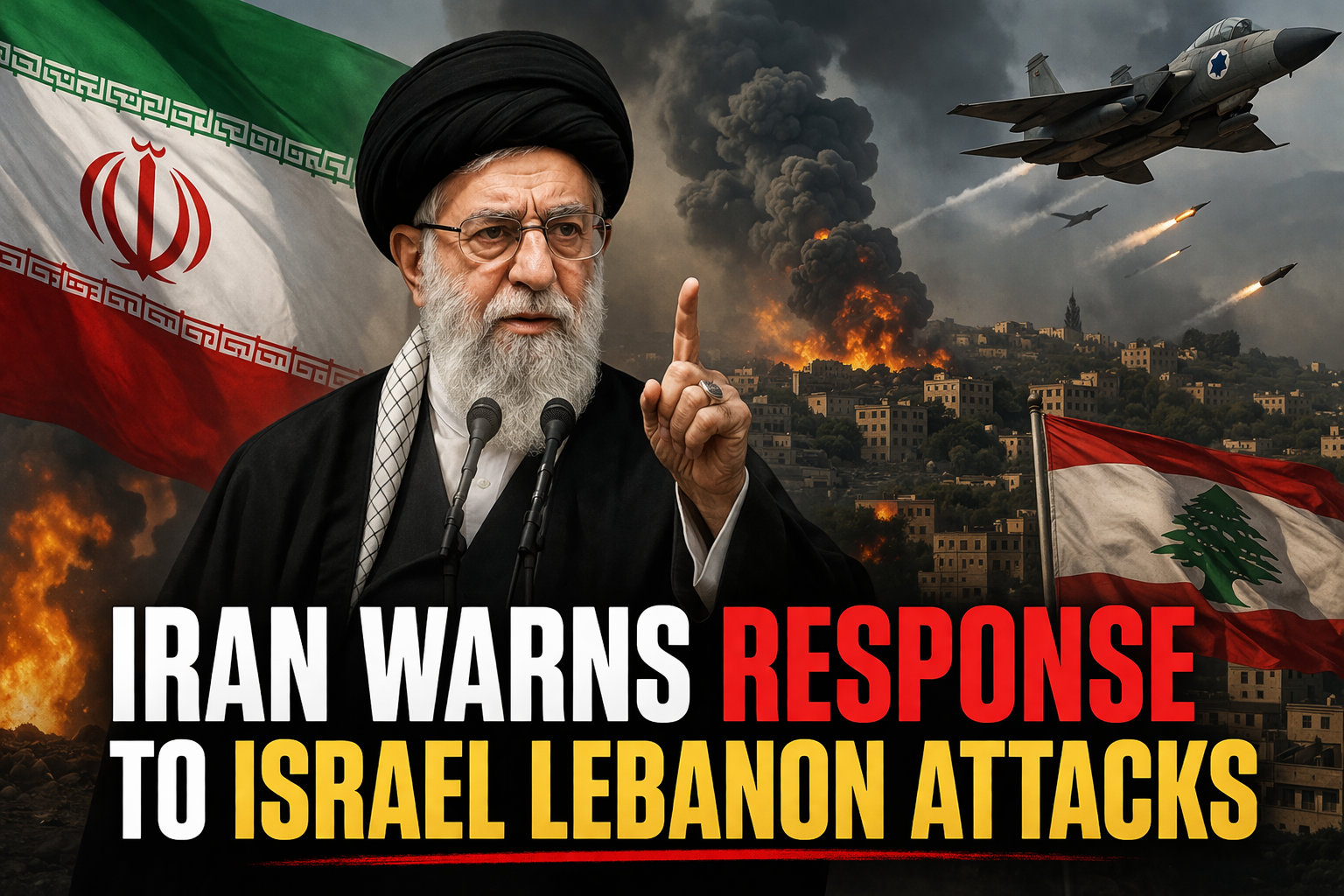
Iran has issued a stark warning that it will respond if Israeli military attacks on Lebanon do not stop immediately, raising fears of a broader regional escalation. The warning comes amid an intensifying Israeli campaign targeting Hezbollah positions across Lebanon, including airstrikes on Beirut, the Bekaa Valley, and southern regions.
According to recent reports, Israeli strikes have caused significant casualties and widespread destruction, with hundreds killed and critical infrastructure damaged. Lebanese authorities have condemned the attacks as violations of sovereignty, while calling on international actors to intervene and prevent further escalation.
Tehran has positioned itself as a key backer of Hezbollah and has made clear that continued Israeli operations in Lebanon could trigger direct or indirect retaliation. Iranian officials have warned that ongoing attacks risk undermining fragile diplomatic arrangements, including a recently announced ceasefire involving the United States and Iran. Iran has even threatened to withdraw from the ceasefire framework entirely if Israeli operations persist.
The situation is further complicated by conflicting interpretations of the ceasefire. While some mediators suggested it could extend to Lebanon, both Israel and the United States have clarified that the agreement does not cover Israeli actions against Hezbollah. This ambiguity has fueled tensions and increased the likelihood of miscalculation.
In a dramatic move highlighting the stakes, Iran has also taken steps such as disrupting shipping routes in the Strait of Hormuz, linking these actions directly to Israeli strikes in Lebanon. Such measures threaten global energy supplies and underscore how quickly the conflict could expand beyond the immediate battlefield.
Israeli leadership, meanwhile, has signaled readiness to continue military operations, describing the current pause in wider hostilities as temporary and conditional.
Overall, Iran’s warning reflects a rapidly deteriorating security environment in the Middle East, where ongoing Israeli attacks in Lebanon risk triggering a wider confrontation involving multiple regional powers.