
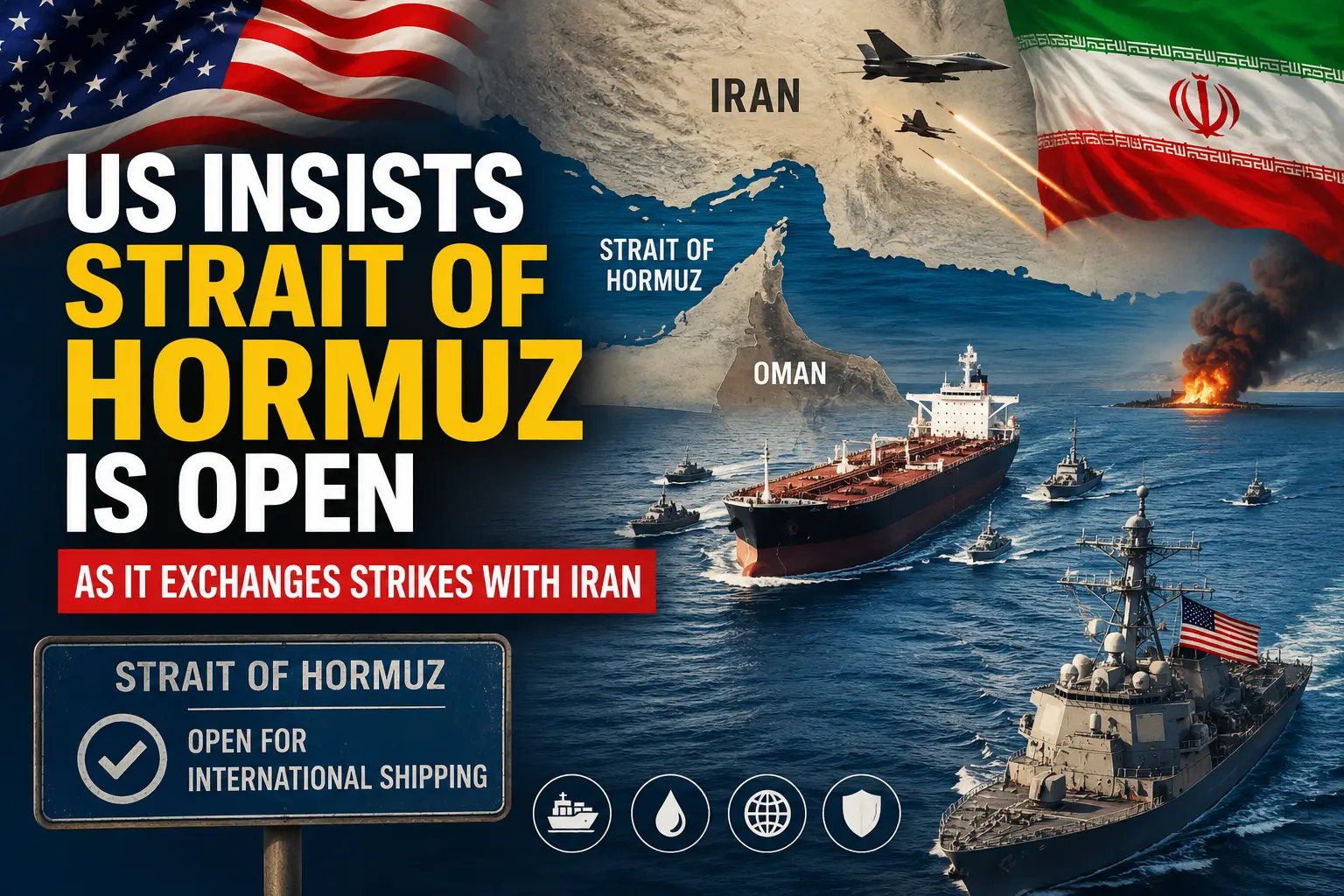
The United States has reaffirmed that the Strait of Hormuz remains open to international shipping despite a fresh exchange of military strikes with Iran, raising concerns about regional security and global energy supplies. Washington said it is committed to protecting freedom of navigation through one of the world’s most strategically important maritime routes.
The latest escalation followed reported Iranian attacks targeting U.S. military assets in the Gulf, prompting retaliatory strikes by American forces against what officials described as military infrastructure linked to Iran. While both sides have exchanged forceful rhetoric, U.S. authorities stressed that commercial vessels continue to transit the Strait of Hormuz without disruption.
The Strait of Hormuz handles roughly one-fifth of the world’s oil shipments, making any threat to the waterway a major concern for global markets. Energy traders are closely monitoring developments, with oil prices experiencing increased volatility amid fears that the conflict could expand.
U.S. officials stated that naval assets remain deployed across the region to ensure the safe passage of merchant ships and deter further attacks. They emphasized that freedom of navigation is a core international principle and warned that any attempt to block or disrupt maritime traffic would face a coordinated response.
Iran, meanwhile, has accused the United States of escalating tensions through its military presence and airstrikes, insisting that it will defend its territorial interests. Diplomatic efforts by regional and international partners continue in an attempt to prevent the conflict from spiraling into a broader confrontation.
Despite the heightened military activity, shipping companies have not announced a widespread suspension of operations through the Strait. However, several firms are reviewing security protocols and monitoring official advisories before sending vessels through the area.
Analysts warn that prolonged hostilities could have significant economic consequences, affecting global oil prices, shipping costs, and international trade. As tensions persist, governments worldwide are urging restraint while keeping a close watch on developments in the Strait of Hormuz, a vital artery for global commerce.