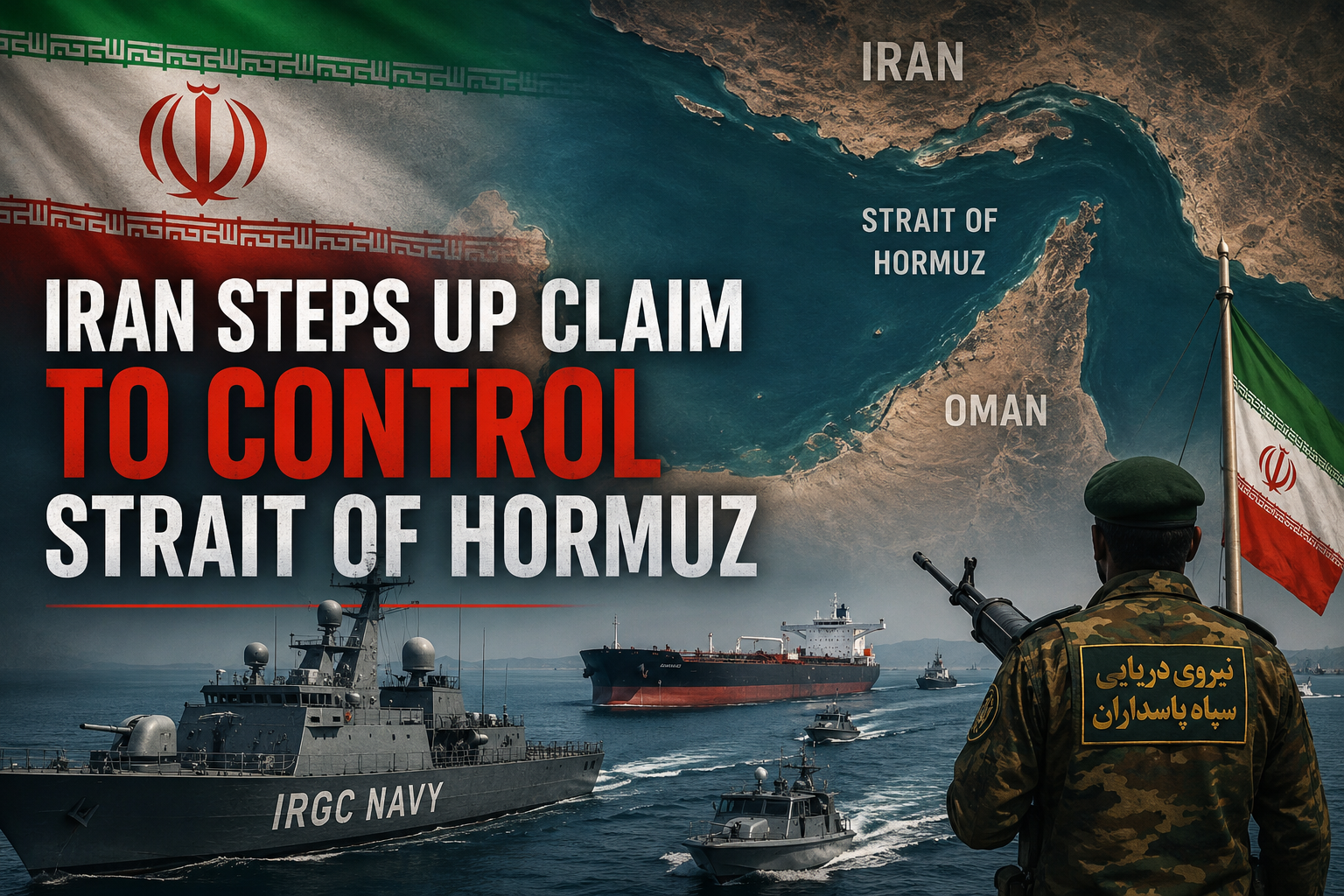
Iran has intensified its claims of authority over the strategically vital Strait of Hormuz, escalating tensions across the Middle East and raising fears of prolonged disruption to global oil and shipping markets. Iranian officials and the Islamic Revolutionary Guard Corps (IRGC) now insist that all vessels passing through the narrow waterway must coordinate directly with Iranian naval authorities, signaling a major shift in regional power dynamics.
The latest statements from Tehran come as shipping traffic through the strait remains severely reduced amid ongoing conflict and diplomatic deadlock between Iran and the United States. Iran recently claimed it coordinated the safe passage of 26 vessels within 24 hours, arguing that maritime traffic is operating “with permission and in coordination with the IRGC Navy.”
The Strait of Hormuz is one of the world’s most important energy chokepoints, carrying nearly 20% of global oil shipments under normal conditions. Iran’s tightening grip has triggered alarm among global energy producers, shipping firms, and Western governments. Analysts warn that Tehran’s attempts to formalize control over the route could set a dangerous precedent for international shipping and freedom of navigation.
Iran has also unveiled what it calls a new “area of control” inside the strait, while warning ships that failure to comply with Iranian directives could expose them to missile, drone, or naval threats. Commercial shipping companies remain cautious, with many merchants unwilling to risk transit despite military escort proposals from the United States and its allies.
The growing standoff has already fueled volatility in global oil prices and heightened fears of a wider regional confrontation. Diplomatic negotiations aimed at reopening unrestricted traffic through the waterway remain stalled, leaving the future of the Strait of Hormuz uncertain.