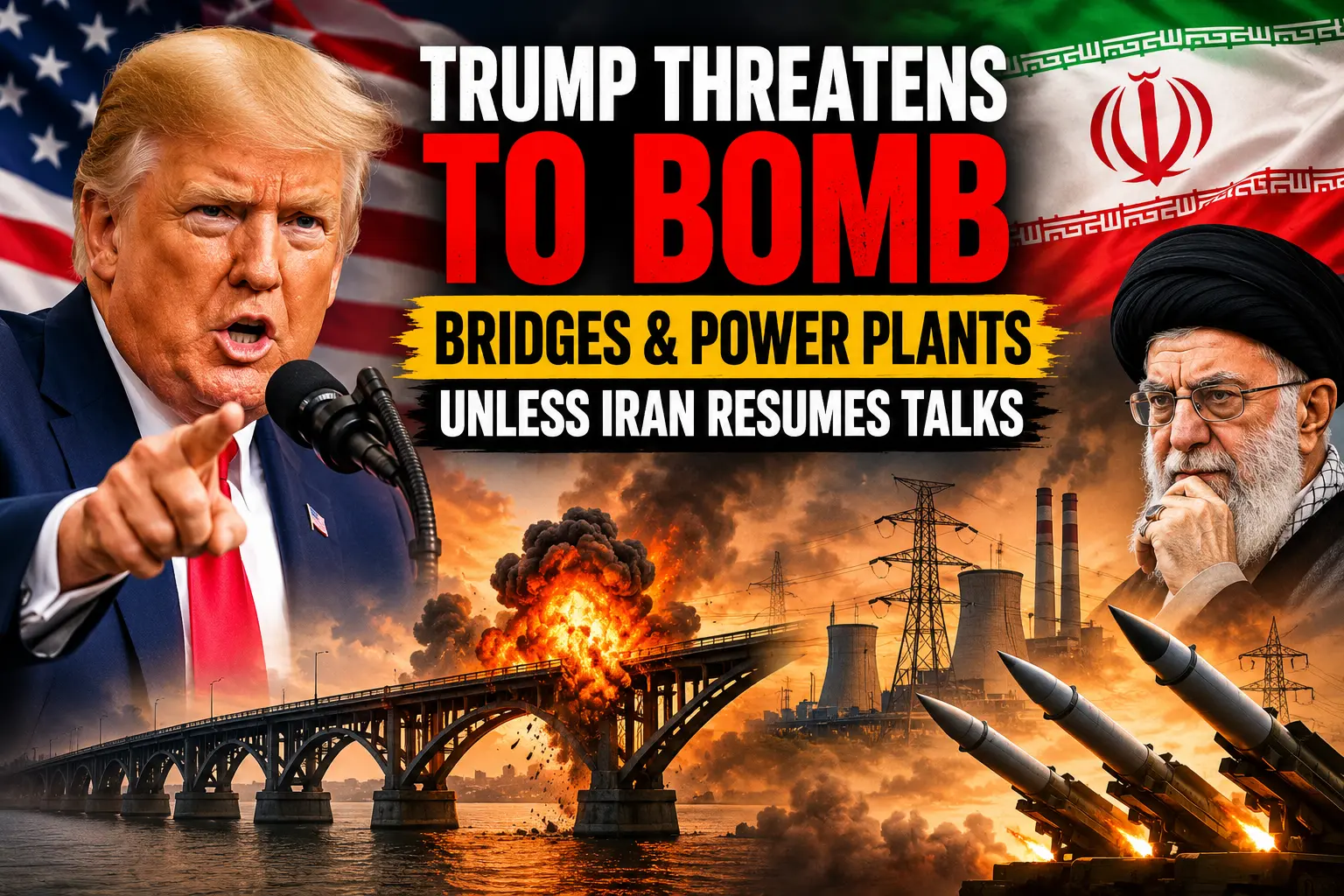
Former U.S. President Donald Trump has intensified pressure on Iran, warning that key infrastructure, including bridges and power plants, could become military targets if Tehran refuses to return to negotiations. The remarks come amid heightened tensions between the two countries, raising concerns about the possibility of a broader regional conflict.
According to reports, Trump argued that renewed diplomatic talks are the quickest way to avoid further escalation. He claimed that Iran must agree to resume negotiations over its nuclear program and regional security issues or face severe consequences. The comments have drawn sharp criticism from Iranian officials, who dismissed the threats and insisted that the country would not negotiate under military pressure.
Iran’s government reiterated that it is prepared to defend its sovereignty against any attack. Senior officials warned that strikes on civilian infrastructure would provoke a strong response and could destabilize the Middle East. The country’s military has also maintained a heightened state of readiness following recent exchanges of hostile rhetoric.
International leaders have expressed concern over the escalating war of words. Several European governments and the United Nations have called for restraint, urging both sides to pursue diplomacy instead of military confrontation. Analysts warn that attacks on critical infrastructure could disrupt energy supplies, damage civilian services, and increase instability across the Gulf region.
The latest developments follow months of strained relations involving sanctions, maritime security, and disagreements over Iran’s nuclear activities. While diplomatic channels remain open through international mediators, significant differences continue to hinder progress toward a new agreement.
Financial markets are closely monitoring the situation, particularly global oil prices, as any disruption in the Gulf could affect international energy supplies. Security experts believe that renewed negotiations remain the best path to reducing tensions and preventing a wider conflict.
For now, uncertainty continues as both Washington and Tehran maintain firm positions, leaving the international community watching closely for signs of either renewed diplomacy or further escalation.