
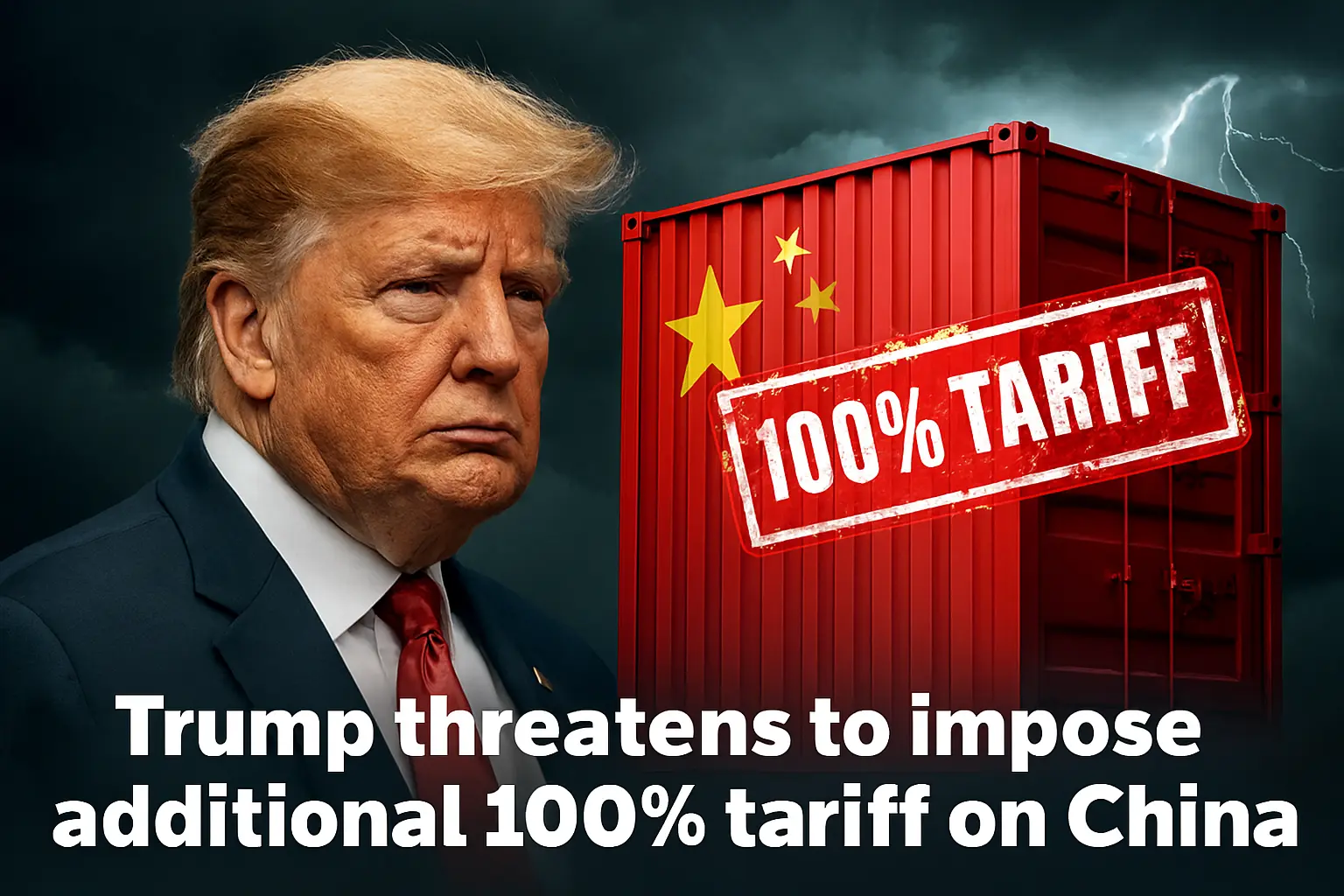
Former U.S. President Donald Trump has issued a fresh warning to China, vowing to impose an additional 100% tariff on Chinese imports if the United States does not achieve what he calls “fair and reciprocal trade.” The declaration, made during a campaign rally in Michigan, marks the latest escalation in Trump’s long-standing criticism of China’s trade practices, intellectual property theft, and currency manipulation.
Trump accused China of taking advantage of the U.S. economy for decades, claiming that the country’s export-driven growth came at the expense of American workers and manufacturers. “China has been ripping us off for years,” he said, adding that if Beijing does not agree to “real trade fairness,” his administration would double the existing tariffs.
During his first term, Trump’s administration had already imposed hundreds of billions of dollars’ worth of tariffs on Chinese goods, sparking a prolonged trade war between the two global powers. That conflict disrupted global supply chains and raised costs for both businesses and consumers. However, Trump argued that his hardline stance was necessary to force China to renegotiate unfair trade deals.
Economic analysts suggest that Trump’s new proposal could have significant consequences for the global economy if enacted. A 100% tariff would likely hit industries such as electronics, automobiles, textiles, and consumer goods, many of which rely heavily on Chinese manufacturing. Experts warn that such a move could further strain U.S.-China relations and potentially trigger retaliatory measures from Beijing.
Chinese officials have so far refrained from direct response, but state media outlets have criticized Trump’s remarks as “economic blackmail.” The Chinese government has repeatedly urged Washington to resolve trade differences through dialogue rather than confrontation.
Meanwhile, Trump’s supporters argue that his strong stance on China is necessary to protect American jobs and reduce dependency on foreign imports. They claim that a tougher trade policy could help revive domestic manufacturing and promote economic self-reliance.
However, critics fear that escalating tariffs could backfire by raising consumer prices and provoking inflation at home. Economists also note that previous tariffs imposed during Trump’s presidency led to retaliatory duties on American exports, particularly affecting farmers and small businesses.
As the U.S. presidential election nears, Trump’s remarks highlight his intent to make China policy a central campaign issue. His threats signal a potential return to aggressive economic nationalism, emphasizing his promise to put “America First” in trade negotiations. Whether such policies will ultimately strengthen or destabilize the global economy remains a deeply debated question.