Afham

Trump Putin meeting shelved

Trump says he did not want ‘wasted meeting’ after plan for Putin talks shelved

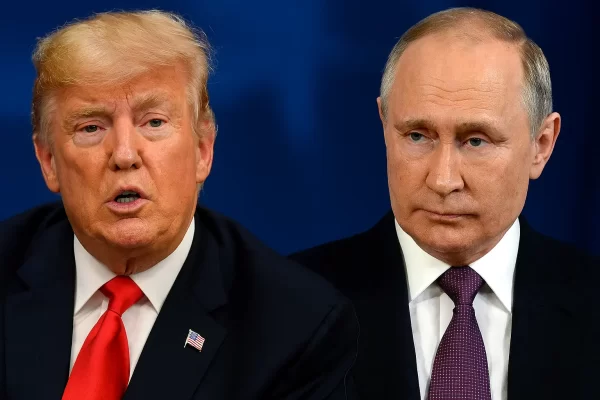
Donald Trump has said that he did not want a “wasted meeting” with Vladimir Putin, after plans for a face-to-face summit in Budapest were put on hold. The context: Trump had announced last week that he intended to meet Putin “within two weeks” in Budapest to try to help bring an end to the war in Ukraine. But on Tuesday he told reporters that the meeting is not going ahead “in the immediate future,” after Moscow signalled strong refusal to accept an immediate cease-fire. In his remarks, Trump said:“I don’t want to have a wasted meeting. I don’t want to have a waste of time, so we’ll see what happens.” This signals that he believes the pre-conditions for meaningful talks are not yet in place, especially since Sergei Lavrov, Russia’s foreign minister, made clear that Russia’s negotiating position remains unchanged. From the Russian side, spokesman Dmitry Peskov affirmed that preparation is still required before any summit:“Preparation is needed, serious preparation,” he said.He also added, “No one wants to waste time, neither President Trump nor President Putin.” Hungary — where the meeting was due to take place — also weighed in. Viktor Orbán, the Hungarian prime minister, confirmed that although the date is not set, “preparations … are continuing,” suggesting the summit is not formally cancelled, just deferred. One major obstacle remains: Russia recently sent a private diplomatic communication — a “non-paper” — to the United States, restating its long-standing peace terms for Ukraine. These terms are seen as maximalist and incompatible with what Ukraine and its European allies are prepared to accept. In short, Russia is staying firm, making it difficult to arrange a meeting worth having from the U.S. side. Meanwhile, behind these diplomatic moves, Russia launched a major overnight missile and drone attack on Ukraine — killing civilians, including children, and striking key energy infrastructure. That escalation further complicates prospects for diplomacy and puts pressure on both sides over whether any talks can succeed. Trump’s shift in tone is also noteworthy. Earlier this year, he had suggested that he wanted to bring an end to the war quickly and had appeared open to the idea of territorial compromises by Ukraine. But now he seems to be aligning with the idea of freezing the war along current frontlines — a position also tentatively echoed by Ukrainian President Volodymyr Zelenskyy, who called Trump’s recent proposal “a good compromise,” though he expressed doubt that Russia would accept it. Why this matters Trump’s insistence on avoiding a “wasted meeting” underscores how difficult it is to achieve meaningful diplomacy when both sides’ positions remain far apart. For Ukraine and its Western allies, the pause in the planned summit may actually be a relief, as they fear that a poorly prepared meeting could legitimize Russian territorial gains or pressure Kyiv into concessions. On the other hand, the suspension of the summit may also be viewed as a missed opportunity to re-energize diplomatic efforts at a time when the war continues to drag on and the human and economic costs keep rising.

Read More
Hong Kong cargo plane crash

Two dead after cargo plane skids off Hong Kong runway into sea

A cargo aircraft skidded off the runway at Hong Kong International Airport early Monday and plunged into the sea, killing two airport security staff, officials have confirmed. What happened Around 3:50 a.m. HKT, the Boeing 747 freighter—operated by Turkish carrier ACT Airlines under lease for Emirates SkyCargo—was landing on the airport’s north runway after arriving from Dubai’s Al Maktoum International Airport. After touchdown, the aircraft veered sharply to the left, broke through the perimeter fence, and collided with a security patrol car stationed outside the runway’s fencing. The plane and patrol car ended up in the water. Both men in the car—a 30-year-old and a 41-year-old, long-time airport workers—were trapped when the vehicle sank into shallow sea. One was pronounced dead at the scene, while the other died after being taken to hospital. The four crew members on board the aircraft escaped with no major injuries. Status & response The north runway was temporarily closed while the investigation and emergency measures were carried out, but the airport’s two other runways remained operational and normal flights continued. Emergency teams mobilised significant resources: according to reports, 213 firefighters and emergency crew, along with 45 vehicles and vessels, responded to the incident. Investigators from the Air Accident Investigation Authority and the Hong Kong Civil Aviation Department are now examining operational, technical, and environmental causes. Both the flight data recorder and the cockpit voice recorder are being recovered. Key uncertainty & background Importantly, weather and runway conditions at the time of landing were reported as normal, and no distress call was made by the aircraft prior to the excursion. The aircraft involved was a 32-year-old Boeing 747, originally a passenger aircraft later converted to freighter use. This marks the deadliest incident at Hong Kong International Airport in more than a quarter-century, reviving concerns over the airport’s operational safety and ground coordination. Wabstalk Significance The tragedy raises critical questions about runway excursions—when aircraft leave the intended landing path—and the interaction between aircraft operations and ground-vehicle safety zones. The fact that the patrol car was outside the runway fence and performing routine duties underscores the severity of the plane’s deviation. As one of the world’s busiest air-cargo hubs, any disruption or serious incident at Hong Kong International Airport carries significant implications for global logistics, safety standards, and operator procedures. Authorities are now under pressure to review ground-access protocols and aircraft approach guidelines to prevent a repeat of such a devastating accident. Israel launches air strikes in Gaza, accusing Hamas of ‘blatant violation of ceasefire’

Read More
Israel Gaza ceasefire violation

Israel launches air strikes in Gaza, accusing Hamas of ‘blatant violation of ceasefire’

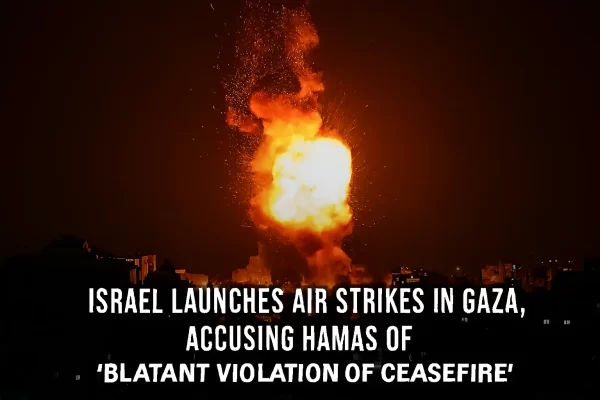
Israel launched a series of air strikes on the Gaza Strip late Sunday, accusing Hamas of breaching the fragile ceasefire that has held since the end of major hostilities earlier this year. The Israeli military said the strikes targeted what it described as “terror infrastructure” belonging to Hamas, following what it called “a blatant violation of the ceasefire agreement.” According to the Israel Defense Forces (IDF), the strikes hit several sites across northern and central Gaza, including alleged rocket manufacturing facilities and command posts. “Hamas fired multiple projectiles toward Israeli territory in clear violation of the ceasefire terms,” the IDF said in a statement. “In response, we have targeted key sites used by the organization to prepare further attacks.” Local sources in Gaza reported multiple explosions overnight, with plumes of smoke rising above residential areas. The Gaza Health Ministry said at least eight people were injured, including two children, though there were no immediate reports of fatalities. Hospitals in Gaza, already under strain due to shortages of medical supplies, struggled to treat the wounded. Hamas condemned the strikes as an “unprovoked act of aggression” and denied responsibility for any rocket fire. In a statement, the group said, “The Israeli occupation bears full responsibility for the escalation and its consequences. This aggression is part of Israel’s ongoing attempts to undermine the stability of Gaza and impose new conditions on the ceasefire.” The ceasefire, brokered by Egypt and supported by the United States and Qatar, had largely held since July, following months of indirect talks between Israel and Hamas. It was seen as a crucial step toward easing humanitarian conditions in Gaza and allowing reconstruction efforts to continue. However, tensions have remained high, particularly over the slow pace of aid delivery and restrictions on imports. Regional mediators expressed concern over the renewed violence. Egyptian officials reportedly contacted both sides overnight, urging restraint and warning that further escalation could unravel months of diplomatic progress. “The situation is extremely fragile,” one Egyptian diplomat said. “Both parties must avoid actions that could reignite a broader conflict.” The United Nations also called for calm, emphasizing that civilians should not pay the price of renewed hostilities. “We urge all sides to return to dialogue and respect the ceasefire commitments,” said a spokesperson for the UN Middle East envoy. Analysts say the latest flare-up underscores the difficulty of maintaining long-term stability in Gaza, where recurring cycles of violence have repeatedly derailed peace efforts. Whether this incident leads to another full-scale conflict will depend on the coming days and the willingness of both sides to step back from confrontation.

Read More
Zelensky Tomahawk missiles

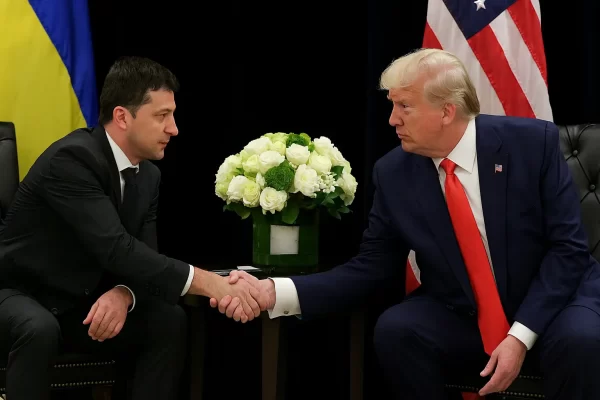
Zelensky fails to secure Tomahawk missiles at talks with Trump

Ukrainian President Volodymyr Zelensky’s highly anticipated meeting with U.S. President Donald Trump at the White House has ended without an agreement on the transfer of Tomahawk cruise missiles, dealing a blow to Kyiv’s hopes of acquiring advanced long-range weaponry to bolster its defenses against Russian forces. According to U.S. and Ukrainian officials, the discussions between the two leaders were “constructive but inconclusive.” Zelensky had arrived in Washington seeking approval for the sale or transfer of Tomahawk missiles, capable of striking targets up to 1,600 kilometers away, arguing that such systems were vital to Ukraine’s ability to deter Russian attacks on critical infrastructure and logistics hubs. However, President Trump reportedly declined to approve the request, citing concerns that providing such high-precision, long-range weapons could escalate the conflict and draw the United States deeper into the war. Instead, Trump proposed increasing U.S. intelligence sharing and offering a new package of defensive systems, including Patriot interceptors and counter-drone technologies. In a joint press conference following the meeting, Zelensky said he appreciated Washington’s continued support but admitted that “Ukraine had hoped for more tangible commitments.” He added that Kyiv would continue discussions with American defense officials and Congress in hopes of securing “the tools necessary to end the war on fair terms.” Trump emphasized his administration’s focus on “peace through strength” and suggested that further negotiations between Russia and Ukraine could take place “under the right conditions.” He also reiterated his belief that a diplomatic settlement remains possible if both sides “show flexibility and put national interest above pride.” Analysts say the outcome highlights the ongoing tension between Kyiv’s urgent battlefield needs and Washington’s cautious approach to escalation. While the U.S. remains Ukraine’s largest supplier of aid and weaponry, the Trump administration has increasingly framed its support in the context of a potential peace deal rather than open-ended military assistance. The failure to secure Tomahawk missiles is likely to frustrate Ukrainian commanders, who argue that long-range precision weapons are essential for targeting Russian supply lines deep inside occupied territories. Without them, Ukraine remains largely dependent on shorter-range systems like ATACMS and Storm Shadow missiles provided by other Western allies. Despite the setback, Zelensky vowed to keep pushing for stronger defense partnerships. “Ukraine will not stop fighting for its freedom and independence,” he said. “We will continue to work with our partners to ensure our country’s security and future.” The talks mark a pivotal moment in U.S.-Ukraine relations, as Kyiv balances gratitude for continued support with growing pressure to achieve decisive results on the battlefield before winter sets in.

Read More
Zelensky White House missile request

Zelensky to make case for missiles at White House, after Trump and Putin agree meeting

Ukrainian President Volodymyr Zelensky is set to visit the White House next week to press his case for advanced missile systems as Kyiv faces mounting pressure on the battlefield. The high-stakes meeting comes just days after U.S. President Donald Trump and Russian President Vladimir Putin agreed to hold a bilateral summit — a move that has raised fresh concerns in Kyiv about Washington’s long-term commitment to Ukraine’s defense. Zelensky is expected to seek approval for the delivery of long-range ATACMS missiles, which Ukraine has long requested to strike key Russian military targets deep behind the front lines. The visit marks one of Zelensky’s most critical diplomatic missions since Trump returned to office earlier this year, as Ukraine struggles to sustain momentum in a war that has dragged on for over two and a half years. U.S. officials have confirmed that discussions will include “defense cooperation and strategic security,” though they stopped short of confirming any specific weapons package. Analysts say Zelensky’s primary goal will be to convince Trump that bolstering Ukraine’s firepower serves U.S. interests by deterring Russian aggression and maintaining stability in Europe. Trump’s stance on continued aid to Ukraine has been notably cautious. While he has reiterated support for “peace through strength,” he has also emphasized the need for negotiations with Moscow — a position that contrasts sharply with Kyiv’s insistence on reclaiming all occupied territories. The recent announcement of a forthcoming Trump-Putin meeting has further heightened Ukrainian anxieties about being sidelined in future talks. According to Ukrainian officials, Zelensky will underscore the growing threat posed by Russia’s intensified missile and drone strikes, which have targeted energy infrastructure and major cities ahead of the winter season. He will also highlight the success of past Western-supplied weaponry, such as HIMARS systems, in slowing Russian advances, arguing that long-range missiles could be decisive in shifting the conflict’s trajectory. French PM Sébastien Lecornu survives two no-confidence votes by MPs White House aides have described the meeting as part of ongoing consultations with U.S. allies, emphasizing that Washington remains committed to Ukraine’s sovereignty. However, domestic debates in Congress over foreign aid have complicated the picture, with some lawmakers calling for tighter oversight and limits on new arms transfers. For Zelensky, the White House meeting represents both an opportunity and a test — a chance to reaffirm U.S. backing while navigating the uncertainties of a shifting geopolitical landscape. His ability to secure missile support may not only shape Ukraine’s military prospects but also signal how far Trump is willing to go in confronting Putin as the war enters another crucial phase. Wabstalk

Read More
Sébastien Lecornu no-confidence votes

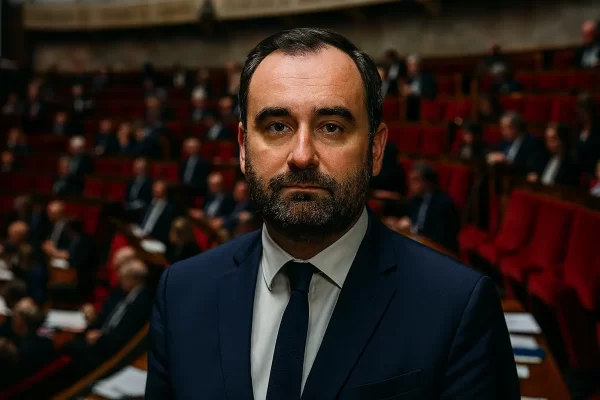
French PM Sébastien Lecornu survives two no-confidence votes by MPs

French Prime Minister Sébastien Lecornu has survived two separate no-confidence motions in the National Assembly, allowing his month-old government to remain in power despite growing political turbulence. The motions, brought by opposition lawmakers from both the left-wing and far-right blocs, were triggered by discontent over Lecornu’s controversial economic reforms and his handling of nationwide protests. The first no-confidence motion was tabled by the leftist coalition La France Insoumise (LFI), accusing the government of “authoritarian methods” and “ignoring the voice of workers.” The second, introduced by the far-right National Rally (RN), criticized Lecornu for what it described as “weak leadership” and “failure to address France’s security and cost-of-living crises.” Both motions were decisively defeated, with the government securing a clear majority of votes in its favor. Lecornu, who was appointed prime minister in September following the resignation of Gabriel Attal, has faced mounting challenges in his short tenure. His proposed labor market reforms, aimed at increasing flexibility for employers and reducing public spending, have been met with fierce opposition from trade unions and student groups. Demonstrations across major French cities have intensified, with protesters accusing the government of pursuing austerity at the expense of social welfare. In a speech following the votes, Lecornu thanked lawmakers who supported his administration and pledged to continue his reform agenda. “France cannot afford paralysis,” he said. “We must move forward with courage and dialogue to secure our economy and restore trust in our institutions.” He also extended an olive branch to opposition parties, calling for “constructive engagement” on key issues such as energy policy, immigration, and public services. Political analysts say Lecornu’s survival offers only temporary stability. While his victory in the Assembly prevents an immediate collapse of the government, deep divisions persist within the political landscape. The National Rally, led by Marine Le Pen, continues to gain popularity ahead of the upcoming regional elections, while the left-wing alliance remains determined to block future government initiatives through parliamentary tactics. President Emmanuel Macron, who appointed Lecornu in a bid to rejuvenate his administration, has also seen his approval ratings decline amid the unrest. Observers note that Lecornu’s resilience in parliament will now depend on his ability to deliver tangible results and restore public confidence in Macron’s centrist platform. China seizes 60,000 maps over ‘mislabelled’ Taiwan For now, Lecornu’s government remains intact—but the dual rejection of the no-confidence motions highlights the fragility of France’s political climate and the growing disillusionment among voters with traditional parties.

Read More
China map seizure Taiwan

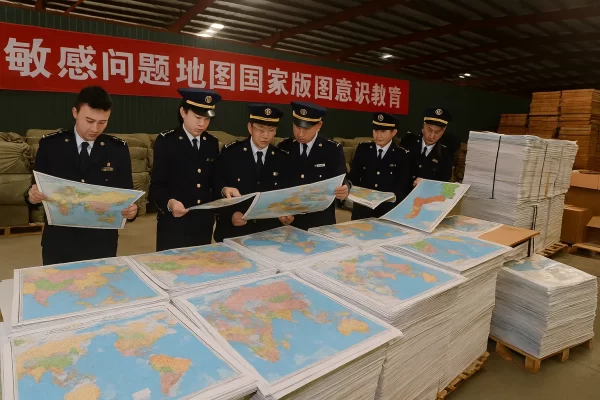
China seizes 60,000 maps over ‘mislabelled’ Taiwan

China has recently seized 60,000 maps in an export inspection, citing errors such as “mislabelling” the Taiwan region and omitting key territories. According to the Qingdao Customs authority, the confiscated maps lacked the mandatory map-review number issued by China’s Ministry of Natural Resources and contained serious deviations from the official Chinese territorial representation. What Went Wrong in the Maps The authorities flagged multiple violations, including: According to Chinese regulation, such “problematic maps” are classified as goods that threaten national unity, sovereignty, and territorial integrity, and are strictly banned from import or export. The Political and Symbolic Stakes Maps are not merely geographical tools — they are powerful instruments of political messaging. China treats representation of geographic boundaries as central to its diplomatic and domestic narrative. Strict control over how Taiwan is depicted reflects its insistence that Taiwan is part of China. In past incidents, Chinese customs have also intercepted books or publications whose maps mischaracterized China’s border claims — for example, books that labeled Taiwan as a separate “country” have been confiscated. Trump threatens to impose additional 100% tariff on China Such seizures are in line with Beijing’s broader effort to eliminate “incorrect maps” worldwide, reinforcing the narrative that any depiction of Taiwan as independent is invalid. Reaction & International Implications Internationally, such moves may draw criticism on grounds of censorship or overreach. However, from Beijing’s perspective, ensuring that exports conform to its cartographic and territorial norms is nonnegotiable. For countries or publishers outside China, this presents a diplomatic tightrope. Many global mapping and publishing entities must navigate conflicting pressures: represent contested regions according to international conventions while avoiding triggers in major markets like China. For Taiwan, this episode reiterates Beijing’s commitment to asserting sovereignty through nonmilitary tools — in this case, cartographic control. The map seizure can also be read as a signal: China will penalize not only military or diplomatic dissent, but even perceived symbolic or visual deviations.

Read More
released hostages

Who are the released hostages? Hamas Released

As of October 13, 2025, all 20 living Israeli hostages who were held by Hamas in Gaza since October 7, 2023, have been released and have returned to Israel. This marked the conclusion of a two-year-long ordeal for dozens of Israeli families who had been waiting for their loved ones’ return. These 20 released hostages include:Bar Abraham Kupershtein, Evyatar David, Yosef-Chaim Ohana, Segev Kalfon, Avinatan Or, Elkana Bohbot, Maxim Herkin, Nimrod Cohen, Matan Angrest, Matan Zangauker, Eitan Horn, Eitan Abraham Mor, Gali Berman, Ziv Berman, Omri Miran, Alon Ohel, Guy Gilboa-Dalal, Rom Braslavski, Ariel Cunio, and David Cunio. Their release followed months of indirect negotiations and mediation efforts led by international actors, including Qatar, Egypt, and the United States. Many of these hostages were abducted during the early stages of the October 2023 Hamas attack and had been held in various locations across Gaza. Their return was seen as a major breakthrough in the long and complex ceasefire process. Earlier Releases Before this final group, several hostages had already been freed during earlier phases of exchange deals. Among the first to return home were Romi Gonen, Emily Damari, and Doron Steinbrecher, who were released in January 2025 under a temporary ceasefire agreement. Following that, Liri Albag, Karina Ariev, Daniella Gilboa, and Naama Levy were released in a subsequent exchange phase. Their release, which came after months of uncertainty, brought immense relief to their families and highlighted the humanitarian side of the ceasefire negotiations. A later January 2025 exchange saw the return of Arbel Yehud, Agam Berger, and Gadi Moshe Moses, who were also among those kidnapped during the October 7 attacks. Eli Sharabi was freed on February 8, 2025, after spending more than a year in Hamas captivity. On February 22, 2025, six additional hostages were released: Omer Shem Tov, Eliya Cohen, Omer Wenkert, Tal Shoham, Avera Mengistu, and Hisham al-Sayed. In addition to negotiated releases, one hostage, Qaid Farhan al-Qadi, a Bedouin Israeli, was rescued through a special Israeli operation after spending 326 days in captivity. Overview of Phases and Numbers Phase 1 of the ceasefire and prisoner exchange deal began around January 19, 2025. It primarily involved the release of women, children, and elderly hostages, along with the return of the remains of several who had died in captivity. Over the following months, more hostages were freed in a series of phased agreements and rescues. Finally, in October 2025, the last group of 20 living hostages was released, bringing home those who had remained alive in Gaza. The moment was widely celebrated across Israel, marking a symbolic end to one of the most painful chapters of the conflict.

Read More
China accuses US of double standards over tariff threat

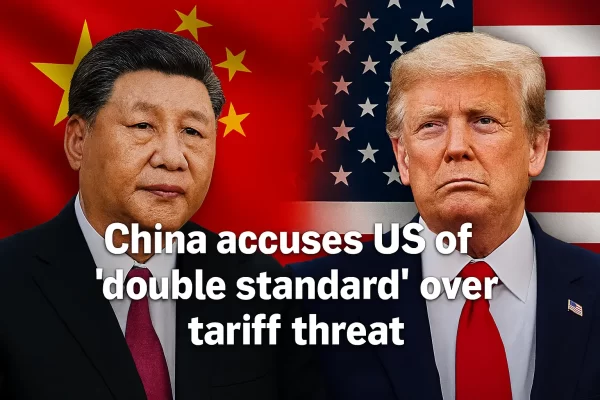
China accuses US of ‘double standards’ over tariff threat

China has sharply criticised the United States for what it calls “double standards” following Washington’s latest threat to impose steep new tariffs on Chinese goods. The accusation came after former U.S. President Donald Trump, now seeking re-election, announced plans to introduce a 100% tariff on all Chinese imports if he returns to office. Beijing has denounced the move as politically motivated and damaging to global trade stability. In a statement released by the Chinese Ministry of Commerce, officials said that the U.S. is “violating the principles of fair competition and international economic order.” The ministry accused Washington of exploiting trade measures for political gain while preaching free trade and global cooperation. “The United States cannot demand openness from others while closing its own doors,” the statement read. The tension marks the latest escalation in the long-running U.S.-China trade dispute, which began during Trump’s first term in 2018. That trade war led to hundreds of billions of dollars in tariffs on both sides, disrupting supply chains and affecting global markets. Economists warn that a renewed round of tariffs could reignite inflationary pressures, slow global growth, and intensify geopolitical friction between the world’s two largest economies. Chinese state media has also accused Washington of using “economic bullying tactics” to suppress China’s technological and industrial development. Commentaries in the Global Times said the U.S. was “weaponizing trade policy” to maintain its dominance, while ignoring its own protectionist measures such as subsidies to American manufacturers under the Inflation Reduction Act. In response, U.S. officials have argued that tougher trade policies are necessary to protect domestic industries and national security. They insist that Chinese companies receive unfair advantages through state subsidies, intellectual property theft, and market manipulation. Trump’s allies claim that higher tariffs would bring back American jobs and reduce dependency on Chinese goods. However, analysts suggest that the proposed tariffs could have far-reaching economic consequences. American consumers might face higher prices for everyday products, from electronics to clothing, while U.S. exporters could suffer retaliatory measures from Beijing. China has previously responded to tariff escalations with its own import taxes and restrictions on key U.S. industries such as agriculture. Despite rising tensions, Chinese officials have urged dialogue and mutual respect. “Cooperation is the only correct choice,” the commerce ministry said, calling on Washington to “stop politicising trade issues and return to rational discussion.” As the 2024 U.S. presidential race heats up, trade relations with China are once again at the centre of global attention — underscoring how deeply intertwined economics and politics have become between the two superpowers.

Read More
Trump threatens China

Trump threatens to impose additional 100% tariff on China

Former U.S. President Donald Trump has issued a fresh warning to China, vowing to impose an additional 100% tariff on Chinese imports if the United States does not achieve what he calls “fair and reciprocal trade.” The declaration, made during a campaign rally in Michigan, marks the latest escalation in Trump’s long-standing criticism of China’s trade practices, intellectual property theft, and currency manipulation. Trump accused China of taking advantage of the U.S. economy for decades, claiming that the country’s export-driven growth came at the expense of American workers and manufacturers. “China has been ripping us off for years,” he said, adding that if Beijing does not agree to “real trade fairness,” his administration would double the existing tariffs. During his first term, Trump’s administration had already imposed hundreds of billions of dollars’ worth of tariffs on Chinese goods, sparking a prolonged trade war between the two global powers. That conflict disrupted global supply chains and raised costs for both businesses and consumers. However, Trump argued that his hardline stance was necessary to force China to renegotiate unfair trade deals. Economic analysts suggest that Trump’s new proposal could have significant consequences for the global economy if enacted. A 100% tariff would likely hit industries such as electronics, automobiles, textiles, and consumer goods, many of which rely heavily on Chinese manufacturing. Experts warn that such a move could further strain U.S.-China relations and potentially trigger retaliatory measures from Beijing. Chinese officials have so far refrained from direct response, but state media outlets have criticized Trump’s remarks as “economic blackmail.” The Chinese government has repeatedly urged Washington to resolve trade differences through dialogue rather than confrontation. Meanwhile, Trump’s supporters argue that his strong stance on China is necessary to protect American jobs and reduce dependency on foreign imports. They claim that a tougher trade policy could help revive domestic manufacturing and promote economic self-reliance. However, critics fear that escalating tariffs could backfire by raising consumer prices and provoking inflation at home. Economists also note that previous tariffs imposed during Trump’s presidency led to retaliatory duties on American exports, particularly affecting farmers and small businesses. As the U.S. presidential election nears, Trump’s remarks highlight his intent to make China policy a central campaign issue. His threats signal a potential return to aggressive economic nationalism, emphasizing his promise to put “America First” in trade negotiations. Whether such policies will ultimately strengthen or destabilize the global economy remains a deeply debated question.

Read More