France Israeli Settler Violence Terrorism: Escalating Condemnations Over West Bank Murder

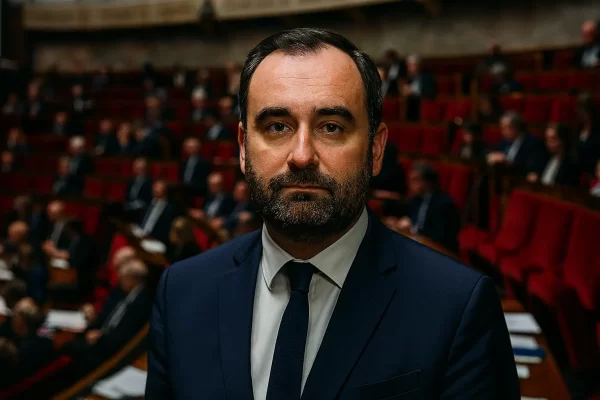
In a strong rebuke, France has officially labeled Israeli settler violence in the West Bank as “terrorism”, following the killing of Palestinian activist and teacher Odeh (Awdah) Hathaleen. Hathaleen was shot dead by an Israeli settler in the village of Umm al‑Khair near Hebron on July 28, prompting widespread international outrage A foreign ministry spokesperson in Paris condemned the murder as “acts of terrorism,” warning that extremist settler violence is mounting across the occupied territory. The statement demanded that Israeli authorities “immediately sanction the perpetrators of these acts of violence, which continue with complete impunity, and protect Palestinian civilians” The victim, Hathaleen, had contributed to the Oscar‑winning documentary No Other Land, which documented the residents of Masafer Yatta resisting home demolitions. His death has become emblematic of the dangers faced by activists and civilians amid rising settler attacks Eyewitness footage released from the scene reportedly showed the settler, identified as Yinon Levi—subject to U.S., UK, and EU sanctions—firing indiscriminately at village residents during an escalating confrontation that included the use of a bulldozer to raze property France’s latest condemnation follows an earlier stance from November 2023 when it referred to settler violence as a “policy of terror” aimed at displacing Palestinians . In February 2024, Paris imposed sanctions on 28 extremist settlers, barring their entry into French territory as part of broader EU measures French authorities assert that settler attacks not only violate international humanitarian law but also threaten the viability of the two‑state solution. On multiple occasions, France has pressed Israel to distinguish between sovereign Israeli territory and occupied settlements, urging compliance with UN resolutions and treaty obligations As the crisis in Gaza unfolds and West Bank violence intensifies, France’s labeling of settler brutality as terrorism signals a notable escalation in diplomatic pressure on Israel to address settler impunity and protect Palestinian civilians. Wabstalk

Read More
China U.S. trade talks Sweden

China U.S. Trade Talks Sweden: Revisiting the Tariff Truce

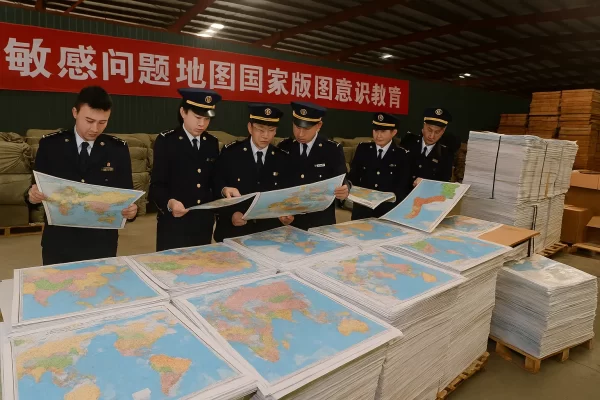
China U.S. trade talks Sweden resumed in Stockholm on July 28–29, as top Chinese and U.S. trade officials met for a second day of high-stakes negotiations over existing tariffs. The aim: defuse tensions and cement a new trade truce before the current one expires on August 12, 2025 During the talks held at Rosenbad—the Swedish prime minister’s office—U.S. Treasury Secretary Scott Bessent, Trade Representative Jamieson Greer, China’s Vice Premier He Lifeng, and top trade official Li Chenggang engaged in “constructive” and “candid” dialogue. Much of the discussion centered on avoiding a return to triple-digit tariffs that had disrupted global markets earlier in the year. Under the existing arrangement, the U.S. imposes a 30% tariff on Chinese goods, while China applies a 10% tariff on U.S. exports. Both sides agreed to maintain these levels at least through the current truce period . Reports describe the tone as hopeful yet cautious, without any major breakthroughs on structural issues like market access, tech export controls, and rare earth supply regulations Looking ahead, U.S. officials will brief President Trump, who holds the final authority on whether to extend the pause. A further 90‑day extension is under consideration—for now, markets are watching closely as the deadline approaches In addition to tariff levels, the negotiating agenda covered sensitive topics: Chinese restrictions on rare‑earth exports, the fentanyl‑related tariff linked to precursor chemicals, Chinese investment in the U.S., and export controls on AI‑related chip technology Analysts welcomed the Stockholm meetings as at least a temporary stabilizer in Sino‑U.S. trade relations. However, experts caution that any substantive agreement may require deeper concessions from Beijing and structural changes in China’s economy—something that could take much longer to materialize than another 90‑day pause. Wabstalk

Read More
Coca-Cola

The Man Who Accidentally Built $300 Billion Dollar Empire | Coca-Cola | John Pemberton

In the annals of business history, few stories are as ironic and fascinating as that of John Stith Pemberton, the man who inadvertently founded what would become one of the most valuable and recognizable brands in the world—Coca-Cola, now valued at over $300 billion. John Pemberton was not a businessman or entrepreneur in the traditional sense. Born in 1831 in Georgia, he was a pharmacist and chemist by trade. Like many of his peers during the post-Civil War era, Pemberton was experimenting with medicinal concoctions in hopes of discovering a miracle cure. Ironically, his own motivation came from a personal need—he was severely wounded during the Civil War and became addicted to morphine. Seeking a less dangerous alternative, he began experimenting with various formulas. In 1886, Pemberton developed a syrup made from coca leaves and kola nuts, combining it with carbonated water to create a refreshing, energizing tonic. He initially marketed it as a remedy for headaches, nervous disorders, and even impotence. It was first sold at Jacob’s Pharmacy in Atlanta for five cents a glass. He called it Coca-Cola, with the name and elegant script branding suggested by his bookkeeper, Frank M. Robinson. At the time, neither Pemberton nor anyone else could have predicted the massive commercial success that Coca-Cola would eventually achieve. Tragically, Pemberton’s financial instincts did not match his scientific ones. He sold portions of his formula to various local businessmen, and shortly before his death in 1888, he sold the remaining rights to Asa Griggs Candler for just $1,750. It was Candler, a visionary marketer, who transformed Coca-Cola from a medicinal tonic into a global consumer product. He invested in massive advertising campaigns, built bottling plants, and distributed coupons, embedding Coca-Cola into American culture. By the early 20th century, Coca-Cola had become a national icon. Today, Coca-Cola is worth over $300 billion, operates in more than 200 countries, and sells 1.9 billion servings per day. The iconic red and white logo, the contoured glass bottle, and the classic jingle have all become deeply ingrained in global culture. Yet, the man who started it all never saw this success. Pemberton died in poverty, unaware that his humble concoction would evolve into a symbol of modern capitalism and brand dominance. What makes this story truly remarkable is the unintentional nature of the empire’s origin. Pemberton was solving a personal problem, not trying to build a company. But through a mixture of ingenuity, accident, and shrewd business by others, his invention became the cornerstone of one of the greatest consumer empires in history. John Pemberton may not have lived to see his legacy, but his accidental creation laid the foundation for what we now know as one of the most successful brands the world has ever seen. WABSTALK

Read More
Trump India Pakistan ceasefire

India, Pakistan would still be at war if not for his intervention, Trump repeats ceasefire claim

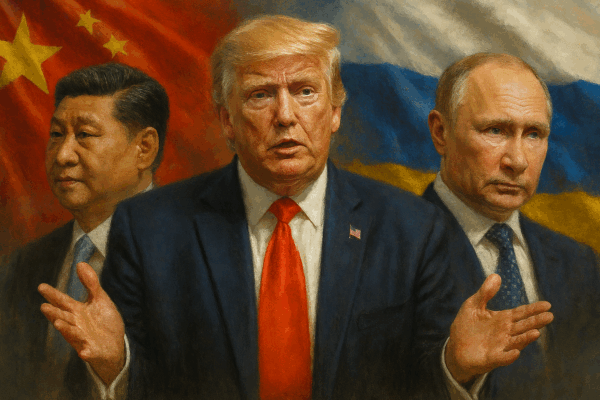
Former U.S. President Donald Trump has again asserted that his intervention prevented war between India and Pakistan, reiterating claims he first made in May. Speaking in Scotland, Trump said global conflict “would have erupted” without his involvement, specifically citing his use of trade leverage to force both nuclear‑armed nations into a ceasefire agreement. “India would be fighting Pakistan… I said I’m not doing a trade deal if you guys are going to war,” Trump remarked, claiming credit for halting hostilities and averting a potential nuclear escalation. Trump described a frantic back‑and‑forth exchange during the conflict, in which he alleged that “five planes were shot down” before he stepped in. He made clear that his demands for a ceasefire were tied to trade negotiations with both countries. In response, External Affairs Minister S. Jaishankar delivered a categorical rebuttal in India’s Parliament. He clarified that there were no calls between Trump and Prime Minister Narendra Modi from April 22 to June 17, the critical window during which the crisis unfolded. Jaishankar underlined that no linkage was made between trade and diplomacy at any stage of India’s dealings with the United States regarding the conflict. India’s Defence Minister Rajnath Singh echoed this position, stating that India did not succumb to external pressure and ended the operation after achieving its military and political objectives—not because of any mediation. Meanwhile, Pakistan’s Foreign Minister Ishaq Dar has publicly praised Trump and U.S. Secretary of State Marco Rubio for playing a “pivotal” role in securing the ceasefire. However, India continues to maintain that the truce was brokered directly through established military channels. According to official accounts, the ceasefire came about when Pakistan’s Director General of Military Operations initiated contact with his Indian counterpart on May 10—not through Washington’s influence. The dispute has sparked domestic political firestorms. Opposition parties in India have demanded a clear stance from the government, while some critics have urged tougher diplomatic pushback against Trump’s repeated claims. In summary, while Trump repeats ceasefire claim—asserting he used trade leverage to intervene—the Indian government firmly refutes any U.S. mediation, asserting that the ceasefire was the result of direct bilateral military dialogue, unlinked to trade and U.S. involvement.WABSTALK

Read More
Michigan Walmart stabbing 2025

Michigan Walmart stabbing incident: At least 11 people wounded, six critically; suspect in custody

On July 26, 2025, at approximately 4:43 p.m. local time, a 42‑year‑old Michigan man entered a Walmart in Traverse City, a popular northern Michigan resort town, and carried out a random stabbing spree using a folding knife near the checkout area. In total, 11 people were injured, with six reportedly in critical condition and five in serious condition immediately afterward, according to authorities. Law enforcement officials say the suspect acted alone and had no prior criminal record. A sheriff’s deputy arrived within minutes of the first emergency calls. Notably, several bystanders—some unarmed, one even carrying a firearm—confronted and subdued the attacker in the parking lot before he was taken into custody. The victims were rushed to Munson Medical Center, the region’s primary hospital. As of Sunday morning, four remained in serious condition while seven had improved to fair condition, with no patients still listed as critical. Hospital officials noted “encouraging signs of recovery. Local and state officials responded swiftly. Grand Traverse County Sheriff Michael Shea described the stabbings as “random acts” and acknowledged that “eleven victims is 11 too many,” while emphasizing the rarity of such violence in the tight‑knit community.Michigan Governor Gretchen Whitmer expressed her sympathy for the victims and gratitude for public and law enforcement response. Former Transportation Secretary Pete Buttigieg, a local resident, also voiced his support. Federal authorities, including the FBI, are assisting with the investigation. While no motive has yet been identified, officials continue to examine possible triggers behind the attack. Citizens are urged to remain vigilant as the inquiry proceeds. WabsTalk

Read More
Israel Gaza military pause humanitarian aid"

Israel announces military pause in three Gaza areas to address surging hunger

On July 27, 2025, the Israel Defense Forces (IDF) announced a daily 10-hour tactical pause in military operations across three densely populated regions of Gaza—al‑Mawasi, Deir al‑Balah, and Gaza City—aimed at enabling the delivery of humanitarian aid amid a worsening hunger crisis. The pause is scheduled from 10 a.m. to 8 p.m. local time each day, pending further notice, and accompanies new secure land routes designated for UN and aid agency convoys According to Reuters, these measures follow mounting reports of severe food shortages across the enclave and images of severely malnourished children that have spurred intense international criticism . Aid officials indicate that Gaza needs approximately 500–600 aid-truck deliveries daily, but so far only around 69 trucks per day have been entering the territory—a fraction of what is required. Simultaneously, aid airdrops have resumed, including joint efforts by Jordan and the UAE, delivering limited supplies of flour, sugar, and canned foods However, humanitarian experts caution that air drops pose logistical risks and are inadequate to meet widespread needs. The United Nations welcomed the newly opened corridors but emphasized that sustained and unrestricted aid access would likely require a broader ceasefire. UN officials warned that without it, many more lives—particularly of children—are at risk as famine looms across the strip. Despite the temporary pauses, Israeli military operations continue in other parts of Gaza. Recent strikes have reportedly killed dozens of civilians, including several seeking food at distribution points Climate change News In summary, while Israel’s daily pauses and designated humanitarian corridors reflect an attempt to reduce civilian suffering amid international pressure, aid agencies and observers stress that these steps fall short. A full ceasefire and reliable, large-scale aid access remain essential to avoid catastrophic starvation and further loss of life. WabsTalk

Read More
"NATO Ukraine security pact"

NATO Agrees to Long-Term Security Pact with Ukraine Amid Ongoing Conflict

In a major development for European security, NATO has finalized a long-term security pact with Ukraine, pledging continued military and financial support as the war with Russia shows no sign of ending. Announced during the NATO summit in Brussels, the agreement signals the alliance’s enduring commitment to Ukraine’s sovereignty and its path toward eventual NATO membership. The pact includes multi-year military assistance, enhanced intelligence sharing, and coordination on weapons production and delivery. It also promises sustained training for Ukrainian forces and increased integration with NATO standards. While the agreement stops short of offering full membership during wartime, it represents a formalized framework of support designed to bolster Ukraine’s defense capabilities over the long haul. NATO Secretary General Jens Stoltenberg stated that the pact demonstrates unity and resolve among allies: “Ukraine’s future is in NATO, and our long-term support sends a clear message to Moscow—aggression will not be rewarded.” The alliance has also reiterated its intention to maintain sanctions on Russia and called on all member states to meet their defense spending commitments to sustain collective support. Ukrainian President Volodymyr Zelenskyy welcomed the pact, calling it a “strategic shield” and a step closer to securing Ukraine’s place in the Euro-Atlantic family. He emphasized that while NATO membership remains the ultimate goal, the agreement offers crucial resources to strengthen Ukraine’s position on the battlefield and at the negotiating table. The pact comes amid renewed Russian offensives in eastern Ukraine and growing concerns about war fatigue among Western nations. By institutionalizing aid and coordination, NATO hopes to prevent wavering support and ensure stability across Europe. Critics argue the deal could provoke further escalation by Russia, which views NATO’s growing involvement as a threat. However, proponents insist that a clear and unified front is essential to deter further aggression and maintain global order. International Court of Justice climate ruling Overall, the NATO-Ukraine security pact marks a turning point in the West’s approach to the war, solidifying Ukraine as a strategic partner and reshaping Europe’s security architecture for the foreseeable future.WabsTalk

Read More
International Court of Justice climate ruling

UN’s top court rules: Climate inaction may violate international law

The International Court of Justice (ICJ) has issued a landmark advisory opinion addressing the obligations of states under international law to combat climate change. This ruling comes amid growing global pressure for accountability and action on the climate crisis, and is seen as a pivotal moment in the intersection of environmental and international law. Requested by the United Nations General Assembly and supported by a coalition of small island nations and vulnerable states, the ICJ ruling provides legal clarity on whether countries are acting in accordance with their responsibilities to protect the environment and uphold human rights in the face of climate change. Although advisory in nature and not legally binding, ICJ opinions carry significant moral and political weight, often influencing national courts, international agreements, and diplomatic negotiations. In its ruling, the Court affirmed that states have obligations to prevent significant environmental harm, both to their own populations and to other nations. It emphasized the duty of all nations—especially industrialized ones—to reduce greenhouse gas emissions, transition to renewable energy, and provide financial and technical support to developing countries disproportionately affected by climate impacts. The ruling also highlighted the connection between climate change and fundamental human rights, including the right to life, health, and a healthy environment. Legal experts have hailed the decision as a major step forward in using international legal frameworks to address climate injustice. It reinforces the idea that failure to act on climate change could constitute a breach of international obligations, potentially opening the door to future litigation or sanctions in other legal venues. While the ICJ cannot enforce compliance, its ruling adds momentum to global efforts like the Paris Agreement and provides a powerful tool for climate activists and vulnerable nations to demand stronger action. It marks a historic moment where law, justice, and environmental stewardship converge on the world stage, pushing the boundaries of how international institutions can be leveraged to safeguard the planet for future generations. WabsTalk

Read More