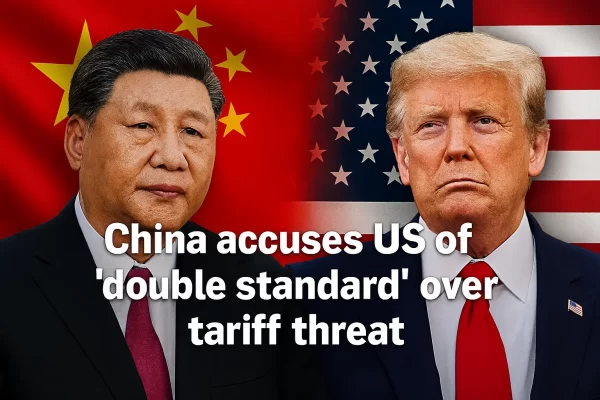
China accuses US of double standards over tariff threat

China accuses US of ‘double standards’ over tariff threat

China has sharply criticised the United States for what it calls “double standards” following Washington’s latest threat to impose steep new tariffs on Chinese goods. The accusation came after former U.S. President Donald Trump, now seeking re-election, announced plans to introduce a 100% tariff on all Chinese imports if he returns to office. Beijing has denounced the move as politically motivated and damaging to global trade stability. In a statement released by the Chinese Ministry of Commerce, officials said that the U.S. is “violating the principles of fair competition and international economic order.” The ministry accused Washington of exploiting trade measures for political gain while preaching free trade and global cooperation. “The United States cannot demand openness from others while closing its own doors,” the statement read. The tension marks the latest escalation in the long-running U.S.-China trade dispute, which began during Trump’s first term in 2018. That trade war led to hundreds of billions of dollars in tariffs on both sides, disrupting supply chains and affecting global markets. Economists warn that a renewed round of tariffs could reignite inflationary pressures, slow global growth, and intensify geopolitical friction between the world’s two largest economies. Chinese state media has also accused Washington of using “economic bullying tactics” to suppress China’s technological and industrial development. Commentaries in the Global Times said the U.S. was “weaponizing trade policy” to maintain its dominance, while ignoring its own protectionist measures such as subsidies to American manufacturers under the Inflation Reduction Act. In response, U.S. officials have argued that tougher trade policies are necessary to protect domestic industries and national security. They insist that Chinese companies receive unfair advantages through state subsidies, intellectual property theft, and market manipulation. Trump’s allies claim that higher tariffs would bring back American jobs and reduce dependency on Chinese goods. However, analysts suggest that the proposed tariffs could have far-reaching economic consequences. American consumers might face higher prices for everyday products, from electronics to clothing, while U.S. exporters could suffer retaliatory measures from Beijing. China has previously responded to tariff escalations with its own import taxes and restrictions on key U.S. industries such as agriculture. Despite rising tensions, Chinese officials have urged dialogue and mutual respect. “Cooperation is the only correct choice,” the commerce ministry said, calling on Washington to “stop politicising trade issues and return to rational discussion.” As the 2024 U.S. presidential race heats up, trade relations with China are once again at the centre of global attention — underscoring how deeply intertwined economics and politics have become between the two superpowers.

Read More
returning to Gaza’s north

Palestinians begin returning to Gaza’s north as Netanyahu thanks Trump for securing ceasefire

Thousands of Palestinians have begun returning to Gaza’s north after a long and devastating war, following the announcement of a ceasefire between Israel and Hamas. The truce, brokered with the help of former U.S. President Donald Trump, has brought a moment of cautious relief and hope to a region shattered by years of conflict. Israeli Prime Minister Benjamin Netanyahu publicly thanked Trump for his crucial role in securing the ceasefire, calling it “a step toward peace and stability after immense suffering.” The ceasefire, which took effect at noon local time, marks the first phase of a broader peace initiative aimed at ending hostilities and initiating reconstruction efforts in Gaza. Thousands of displaced families began moving northward, many on foot, as news of the truce spread. They carried what little they had left, walking through roads lined with debris and collapsed buildings. For many, returning home means facing the painful sight of destruction — entire neighborhoods flattened and basic services such as water and electricity still cut off. Under the terms of the agreement, Israel will gradually withdraw its forces from several areas of Gaza while maintaining security positions in key zones. In return, Hamas is expected to release twenty Israeli hostages within the next three days. Israel, in turn, has agreed to free hundreds of Palestinian prisoners and detainees as part of the exchange deal. The ceasefire also paves the way for increased humanitarian access, with hundreds of aid trucks expected to enter Gaza daily carrying food, medicine, and fuel. In a televised address, Netanyahu praised Trump’s diplomatic efforts, saying, “We thank President Trump for his steadfast support, leadership, and determination in helping secure this ceasefire. His intervention has made a difference when it mattered most.” The Israeli leader added that while the truce provides temporary relief, Israel remains committed to ensuring Hamas’s disarmament and preventing future attacks. For many Palestinians, the ability to start returning to Gaza’s north is both emotional and symbolic. It represents a small victory for survival and resilience amid enormous loss. However, challenges remain immense — with hospitals overwhelmed, infrastructure in ruins, and thousands still missing. Humanitarian agencies have warned that rebuilding Gaza will require a sustained international effort and political stability to prevent a relapse into violence. The ceasefire is widely viewed as a diplomatic success for Trump, who framed it as a milestone toward a comprehensive peace plan for the region. Yet analysts caution that without addressing deeper political grievances and ensuring lasting security guarantees, the fragile peace could easily collapse. For now, as families return to the ruins of their homes and attempt to rebuild their lives, the ceasefire offers a rare moment of hope — and a reminder that even amid devastation, the desire for peace endures.

Read More
Israel Hamas ceasefire deal

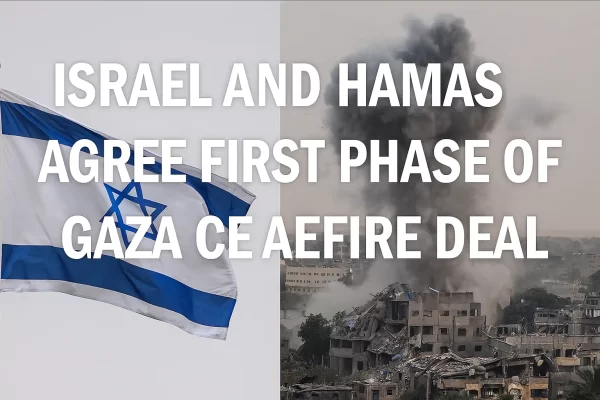
Israel and Hamas agree first phase of Gaza ceasefire deal

In a major breakthrough toward ending nearly a year of bloodshed, Israel and Hamas have agreed to the first phase of a Gaza ceasefire deal, marking a cautious but significant step toward lasting peace in the region. The deal, brokered through Egyptian and Qatari mediation with strong backing from the United States, outlines an initial cessation of hostilities and the exchange of prisoners and hostages, while setting the stage for future negotiations on Gaza’s political future. According to Israeli and Palestinian officials, the agreement was signed after days of intensive talks in Sharm el-Sheikh. Under the terms of the first phase, Hamas will release all remaining Israeli hostages believed to be alive within 72 hours of the deal’s ratification. In return, Israel will withdraw its forces from several key positions inside Gaza, easing military pressure on densely populated areas. Additionally, Israel has agreed to release hundreds of Palestinian prisoners, many of whom have been detained without trial during the conflict. The ceasefire is expected to take effect within 24 hours of final cabinet approval in Jerusalem. U.S. President Donald Trump, who has played a key role in promoting the wider peace framework, described the deal as “a historic opportunity for both sides to end the suffering and rebuild Gaza.” The agreement is reportedly part of a broader 20-point peace plan that envisions gradual disarmament of militant factions and the creation of a joint Israeli-Palestinian reconstruction authority. Despite the optimism, the deal faces considerable challenges. Hardline factions within both Israel and Hamas have expressed skepticism about the plan’s longevity. In Israel, far-right ministers have criticized the decision to release Palestinian prisoners, while Hamas leaders have warned that any delay in Israel’s troop pullback could trigger renewed hostilities. Analysts note that the first phase addresses only the immediate humanitarian crisis and hostage situation, leaving thornier issues—such as Gaza’s governance and Hamas’s military capabilities—for later stages. Regional powers have cautiously welcomed the development. Egypt praised the accord as a “vital first step toward de-escalation,” while Qatar emphasized the need for international monitoring to ensure both sides uphold their commitments. The United Nations has offered logistical support for aid delivery and reconstruction efforts once the truce takes hold. If successfully implemented, this first phase could pave the way for phase two, involving a full Israeli withdrawal, the establishment of a demilitarized Gaza, and potential normalization talks. Yet, with mistrust running deep, the path to a durable peace remains uncertain. For now, the agreement provides a rare moment of hope amid one of the region’s most protracted and devastating conflicts.

Read More
paraglider bombing Myanmar festival

At least 24 killed as army paraglider bombs Myanmar Buddhist festival

At least 24 people were killed and more than 50 others injured after a military paraglider bombing Myanmar festival targeted a Buddhist religious gathering in the country’s northwestern Sagaing Region, witnesses and local media reported. The deadly strike, one of the most shocking attacks in Myanmar’s ongoing civil conflict, has sparked international outrage and renewed calls for accountability. The attack occurred on Monday evening in Bon To village, Chaung-U township, as hundreds of residents attended a Buddhist Lent celebration. The event, which also featured a candlelight vigil demanding the release of detained democracy leader Aung San Suu Kyi, turned tragic when a motorized paraglider aircraft appeared overhead. According to eyewitnesses, the aircraft dropped two powerful bombs directly onto the festival grounds. Videos and photos shared by local sources showed scenes of devastation — scattered debris, blood-stained robes, and stunned villagers searching for survivors. Among the victims were monks, women, and children. Locals said the paraglider circled back hours later and released more explosives, though no further casualties were confirmed. Humanitarian groups condemned the assault as another example of the Myanmar junta’s deliberate targeting of civilians. Amnesty International called it “a war crime that exemplifies the military’s cruelty and disregard for human life.” The organization urged the United Nations and ASEAN to increase pressure on Myanmar’s generals, who have faced limited consequences since the 2021 coup. The Sagaing Region has become a stronghold of anti-junta resistance, where armed civilian militias known as People’s Defense Forces (PDFs) operate. In recent months, the military has resorted to low-cost aerial attacks using drones and improvised aircraft like paragliders to strike rebel-held territories. Analysts say the shift reflects the army’s struggle to maintain control amid heavy resistance and mounting territorial losses. Residents described the bombing as unprecedented. “We heard the sound of an engine like a motorbike in the sky. Then the bombs fell,” said one survivor, who lost several relatives in the blast. “They killed us during prayer. There were no soldiers here — only villagers.” International observers fear such attacks signal an escalation in the junta’s campaign to crush dissent before next year’s planned election, widely dismissed as illegitimate. Despite mounting civilian casualties, the military leadership has shown little concern for global condemnation, relying instead on support from key allies such as Russia and China. As the world reacts to the paraglider bombing Myanmar festival, survivors continue to bury their loved ones and brace for further violence. The tragedy serves as a grim reminder that, nearly five years after the coup, Myanmar’s struggle for democracy remains mired in bloodshed and impunity.

Read More
Israel and Hamas

Jeremy Bowen: Two years on, will Israel and Hamas seize the chance to end the war?

Two years after the devastating conflict between Israel and Hamas erupted, the question now dominating diplomatic circles is whether both sides are finally ready to end the war. The toll — human, political, and regional — has been immense. According to BBC Middle East Editor Jeremy Bowen, there are tentative signs that exhaustion on both sides might open a narrow window for negotiation, but mistrust and political calculation continue to overshadow peace efforts. The war has left Gaza in ruins, with much of its infrastructure destroyed and millions displaced. Israel, despite its military advantage, faces growing international isolation and domestic pressure over the war’s economic and moral costs. Prime Minister Benjamin Netanyahu’s government, already weakened by internal divisions, struggles to balance its hardline coalition demands with international calls for restraint. Hamas, meanwhile, has seen its leadership decimated and its military capabilities significantly weakened. Yet the group remains a potent political force in Gaza, maintaining control over key areas despite Israeli bombardments and a worsening humanitarian crisis. According to Bowen’s analysis, Hamas believes survival itself is a form of victory — a message it continues to project to a population weary of destruction but fearful of losing sovereignty. International mediators, led by Egypt, Qatar, and the United States, are once again attempting to revive a ceasefire framework. A proposal circulating in recent weeks reportedly involves phased prisoner releases, humanitarian corridors, and limited reconstruction aid under UN supervision. But both Israel and Hamas remain wary. Israel demands disarmament guarantees and the return of all hostages, while Hamas insists on a permanent end to Israeli military operations and the lifting of the blockade. Jeremy Bowen notes that both sides are trapped by the politics of survival. Netanyahu fears that any perceived concession could fracture his coalition, while Hamas risks losing credibility if it appears to compromise under pressure. Yet, after two years of relentless warfare, public opinion in both Israel and Gaza shows signs of fatigue — a critical factor that could push leaders toward a pragmatic truce. Whether this moment becomes a turning point or another missed opportunity will depend on leadership and timing. For now, the guns have not fallen silent, but the diplomatic machinery is beginning to hum once more. As Bowen observes, “Wars often end not when sides are ready to forgive, but when they simply can’t go on.”

Read More
French Prime Minister

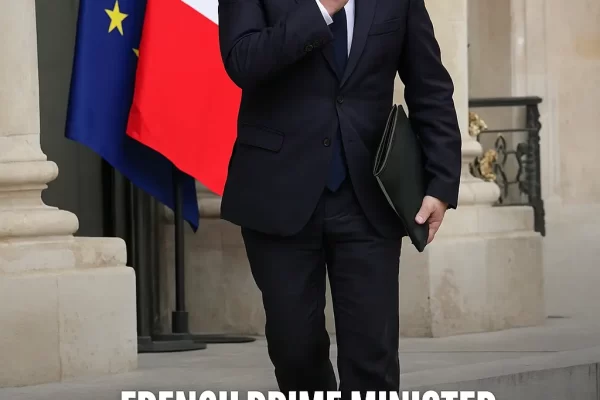
French Prime Minister Sébastien Lecornu resigns after less than a month

In a stunning political development, French Prime Minister Sébastien Lecornu has resigned from office less than a month after assuming power, plunging France into renewed political uncertainty. The Élysée Palace confirmed Lecornu’s resignation on Monday, citing “irreconcilable differences” within the cabinet and mounting pressure from both the opposition and members of President Emmanuel Macron’s party. Lecornu, 38, was appointed Prime Minister in early September, succeeding Gabriel Attal in what was seen as an effort by President Macron to bring stability and fresh energy to his centrist government. However, his brief tenure was marked by growing tensions over economic reforms, social unrest, and divisions within the ruling coalition. His resignation underscores the deepening challenges facing Macron’s administration as it struggles to maintain political control amid declining approval ratings. According to French media reports, Lecornu’s decision came after several high-level disputes over budgetary priorities and France’s energy policy. He reportedly clashed with key ministers over spending cuts and green transition targets, which drew criticism from trade unions and environmental groups alike. The controversy intensified after a wave of protests erupted in Paris and other major cities last week, demanding better living conditions and opposing austerity measures. Political analysts say Lecornu’s departure could further weaken Macron’s ability to govern effectively. With parliamentary elections looming in 2026, the president faces mounting pressure to reassert authority and restore public confidence. “This resignation reflects a government in disarray,” said political analyst Jean-Pierre Moreau. “Macron’s attempt to project renewal through Lecornu has backfired, leaving him scrambling for a credible replacement.” In a brief statement outside the Hôtel de Matignon, Lecornu thanked the president and his cabinet colleagues but hinted at frustration with the constraints of the role. “I have served France with loyalty and conviction,” he said. “But under the current circumstances, it is impossible to pursue the agenda that our citizens were promised.” President Macron is expected to appoint a new prime minister within days, with several names already circulating in French political circles. Interior Minister Gérald Darmanin and former Prime Minister Élisabeth Borne are rumored contenders, though no official announcement has been made. The resignation marks yet another blow to Macron’s leadership as France grapples with economic stagnation, labor unrest, and widespread voter disillusionment. Many observers view Lecornu’s abrupt exit as symptomatic of a broader crisis within the French political establishment—one that could shape the country’s trajectory for years to come.

Read More
Donald Trump deployment

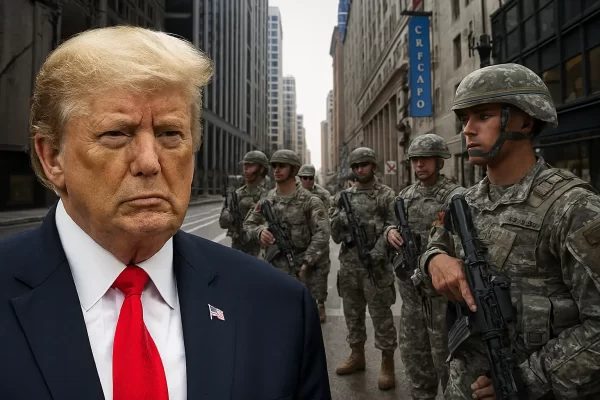
Trump authorises deployment of 300 National Guard troops to Chicago

In a move aimed at curbing escalating violence and unrest, former U.S. President Donald Trump has authorised the deployment of 300 National Guard troops to Chicago, citing a “breakdown of law and order” in the city. The decision, announced from his Florida residence, comes after weeks of mounting pressure from local leaders, police unions, and community groups alarmed by rising gun violence and social tensions. According to White House officials, the National Guard units will assist Chicago police in “stabilising critical areas” and protecting public infrastructure. Trump described the move as “a necessary step to restore peace and protect innocent lives,” adding that federal support was essential in cities “where local leadership has failed to maintain security.” Chicago has faced a surge in violent incidents over the past month, with several neighbourhoods reporting record numbers of shootings. City officials have struggled to contain the unrest, which has been linked to gang-related crime, economic hardship, and political discontent. Although some local leaders welcomed the deployment as a short-term measure, others criticised it as federal overreach that could inflame tensions further. Mayor Brandon Johnson responded cautiously, stating that while the city appreciates federal assistance, the focus must remain on addressing the root causes of violence. “What Chicago needs is investment in communities, not just boots on the ground,” Johnson said. He emphasised the importance of collaboration between federal, state, and local agencies to prevent further escalation. The National Guard troops are expected to begin operations within 48 hours, focusing primarily on transportation hubs, commercial districts, and areas identified as high-risk. Officials stressed that the deployment is temporary and will operate under strict coordination with local law enforcement to avoid clashes or confusion. This is not the first time Trump has used the National Guard to address urban unrest. During his presidency, he authorised similar deployments in cities such as Portland and Minneapolis amid protests and violence. Supporters argue that these measures demonstrated decisive leadership, while critics view them as political theatre intended to project strength during moments of domestic crisis. Analysts suggest that the move could have broader political implications as Trump continues to position himself as a “law-and-order” figure ahead of the next election cycle. By highlighting violence in major cities, he reinforces his campaign narrative that Democratic-led urban centres have failed to maintain safety and discipline. For many Chicago residents, however, the immediate concern is whether this latest federal intervention will bring relief or further strain community relations. As the National Guard prepares to take to the streets, the city remains on edge—caught between the need for security and the fear of deeper division.

Read More
Trump’s Gaza peace plan.

Leaders in Middle East and Europe welcome Trump’s Gaza peace plan

U.S. President Donald Trump’s recently unveiled Gaza peace plan has drawn cautious but notable support from both Middle Eastern and European leaders, marking what some analysts see as a potential turning point in efforts to stabilize the region. The plan, announced in Washington earlier this week, proposes a multi-stage roadmap to end hostilities, address humanitarian needs, and lay the groundwork for a negotiated political settlement. At the core of Trump’s Gaza peace plan is a ceasefire agreement brokered with the support of Egypt and Qatar, two nations that have long acted as intermediaries between Israel and Palestinian groups. Trump emphasized that the deal is designed to stop cycles of violence and redirect resources toward reconstruction and economic development. “This plan gives hope to the people of Gaza and ensures security for Israel,” Trump declared during his speech. In the Middle East, reactions were cautiously optimistic. Egyptian President Abdel Fattah el-Sisi praised the initiative, noting that Egypt has consistently sought stability along its border with Gaza. Qatar’s Emir Sheikh Tamim bin Hamad Al Thani echoed this sentiment, saying that the plan could open doors for renewed trust and cooperation if both sides commit. Even Jordan, often critical of U.S. approaches to the conflict, welcomed what it described as “a step that acknowledges humanitarian realities.” European leaders also offered measured endorsements. French President Emmanuel Macron said the proposal “creates a framework that Europe can support in pursuit of long-term peace.” German Chancellor Olaf Scholz highlighted the humanitarian provisions, including billions of dollars in aid and reconstruction funding, calling them “essential to building durable stability.” The European Union signaled readiness to mobilize financial support if the plan gains traction on the ground. While the plan has been met with diplomatic approval, challenges remain. Palestinian factions, including Hamas and Islamic Jihad, have voiced skepticism, warning that past agreements collapsed due to lack of enforcement and trust. Israel’s leadership has cautiously welcomed the plan, though some right-wing members of its government have expressed concerns about potential concessions. Analysts note that Trump’s Gaza peace plan stands out for placing equal emphasis on humanitarian aid and security guarantees. By involving key regional powers and securing at least tentative European backing, the proposal could achieve broader legitimacy than previous U.S. efforts. However, much will depend on implementation, particularly the ability of all parties to maintain a ceasefire in the face of provocations. As negotiations move forward, the international community is expected to play a critical role in monitoring, financing, and enforcing agreements. For now, Trump has succeeded in rallying a diverse set of allies behind a vision that, if realized, could alter the trajectory of one of the world’s most intractable conflicts.

Read More
Netanyahu attacks Palestinian recognition

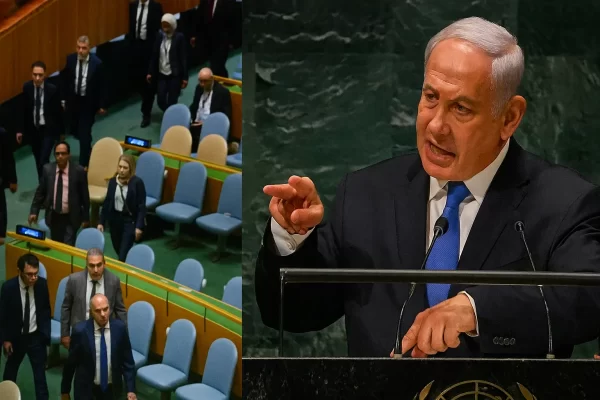
Netanyahu attacks Palestinian recognition as dozens walk out of UN speech

Israeli Prime Minister Benjamin Netanyahu delivered a fiery speech at the United Nations General Assembly this week, strongly condemning international efforts to recognize Palestinian statehood. His address sparked controversy as dozens of diplomats walked out in protest, underscoring the deep divisions within the global community over the Israeli-Palestinian conflict. Netanyahu’s remarks came amid growing momentum among UN member states to grant broader recognition to Palestine as an independent state. Several European and Latin American countries have recently voiced support for Palestinian membership in the UN system, arguing it is a necessary step toward a two-state solution. However, Netanyahu rejected such moves outright, calling them “a reward for terror and rejectionism.” “The recognition of a Palestinian state at this time is not a step toward peace—it is a step away from it,” Netanyahu said. “Peace cannot be imposed by resolutions, declarations, or diplomatic shortcuts. It must be achieved through direct negotiations without preconditions.” The speech quickly drew visible pushback inside the General Assembly hall. Representatives from Arab, Muslim-majority, and some non-aligned countries stood up and exited as Netanyahu spoke, a coordinated demonstration of disapproval. Palestinian officials later described his address as “an assault on international legitimacy” and evidence that Israel’s government “remains entrenched in occupation.” The timing of Netanyahu’s remarks is significant. Over the past year, the Palestinian leadership has intensified lobbying for full UN membership, buoyed by support from nations frustrated with the lack of progress in peace talks. The United States, a close ally of Israel, has continued to block such efforts at the Security Council, insisting negotiations are the only path forward. Still, the growing number of countries willing to recognize Palestine reflects mounting international impatience. Analysts note that Netanyahu’s combative tone was aimed not only at the UN audience but also at his domestic base. His right-wing coalition has faced pressure from hardline parties demanding a firm stance against Palestinian aspirations. By framing Palestinian recognition as a threat to Israel’s security, Netanyahu reinforced his position as a defender of national interests, even if it risked diplomatic backlash. Critics argue that Israel’s hardline approach only isolates it further. European diplomats stressed after the speech that unilateral rejection of Palestinian statehood undermines prospects for dialogue. “Recognition is not an obstacle to peace,” one EU representative said. “The real obstacle is the ongoing expansion of settlements and the absence of negotiations.” The walkout at the UN underscored how polarized the international community remains on the issue. While Netanyahu vowed that Israel would “stand alone if necessary,” the diplomatic rift suggests growing pressure on his government to engage in meaningful talks. Trump urges Erdogan to stop buying Russian oil as they meet at White House

Read More
Trump urges Erdogan to stop buying Russian oil

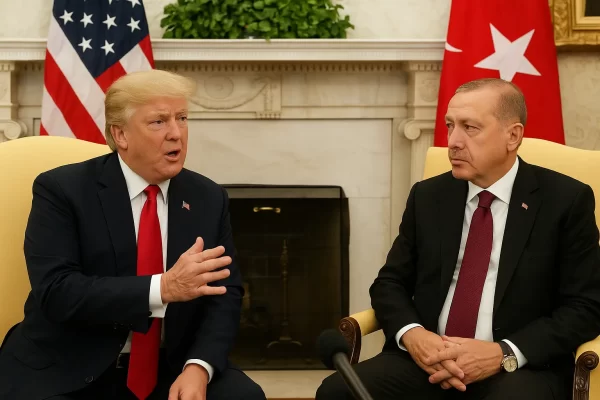
Trump urges Erdogan to stop buying Russian oil as they meet at White House

U.S. President Donald Trump pressed Turkish President Recep Tayyip Erdogan to halt Ankara’s continued purchase of Russian oil during a bilateral meeting at the White House on Wednesday. The talks, which were expected to cover defense cooperation, NATO commitments, and regional conflicts, quickly turned into a sharp exchange over Turkey’s energy ties with Moscow. According to officials familiar with the discussions, Trump reiterated his administration’s growing frustration that a NATO ally like Turkey has deepened its economic relationship with Russia, particularly in the energy sector. He stressed that continued purchases of Russian crude directly undercut Western sanctions and weaken collective efforts to limit Moscow’s influence following its ongoing military actions in Ukraine. “Turkey is an important ally, but allies must stand together,” Trump said during a brief press appearance alongside Erdogan. “The United States cannot look away when NATO countries help fund Russia’s war machine. We are asking Turkey to diversify its energy sources and stop buying Russian oil.” Erdogan, while acknowledging the concerns, defended his country’s energy policy. He argued that Turkey’s heavy reliance on foreign imports leaves it with limited options and that stability in energy supply remains a national priority. “Our economy and our people depend on affordable energy,” Erdogan stated. “We are open to cooperation with the United States and other partners, but we cannot risk shortages that would harm Turkish households and businesses.” Behind closed doors, U.S. officials reportedly offered Ankara greater access to American liquefied natural gas (LNG) and increased support for alternative energy infrastructure. Washington has also signaled that Turkey could face potential sanctions if it continues large-scale Russian purchases, though no formal measures were announced at the meeting. The tense exchange underscores the widening fault lines within NATO, as Turkey often pursues an independent foreign policy that puts it at odds with Western allies. In addition to energy, disputes remain over Ankara’s acquisition of Russian S-400 missile systems and its military operations in northern Syria. Still, both leaders emphasized the importance of maintaining dialogue. Trump praised Turkey’s role in regional stability and hinted at expanding trade ties if Ankara shifts its energy strategy. Erdogan, meanwhile, said Turkey values its partnership with the United States but must balance national interests. Analysts believe the U.S. push is part of a broader campaign to isolate Russia economically, but they caution that Turkey’s geographic position and energy dependence make any sudden change unlikely. For now, Washington and Ankara appear locked in a delicate negotiation — one that could test the limits of their alliance in the months ahead.

Read More