Hezbollah rejects renewed ceasefire

Hezbollah rejects renewed ceasefire agreed by Israel and Lebanon

Hezbollah has rejected a renewed ceasefire agreement reached between Israel and Lebanon, casting doubt on efforts to end months of fighting along the border. The deal, brokered with strong support from the United States, aimed to halt hostilities and create conditions for broader peace negotiations. However, Hezbollah leaders dismissed the agreement, arguing that it fails to address what they describe as Israel’s continued military presence in southern Lebanon. Hezbollah Secretary-General Naim Qassem said the group would not accept terms requiring its fighters to withdraw from southern Lebanon while Israeli forces remain in the area. He described the proposal as unacceptable and insisted that any ceasefire must include a complete Israeli withdrawal before Hezbollah considers ending its military operations. The agreement had been endorsed by the governments of Israel and Lebanon. It called for a cessation of hostilities, the creation of security zones under the control of the Lebanese Armed Forces, and the removal of armed non-state groups from areas south of the Litani River. Lebanese President Joseph Aoun supported the deal, describing it as an opportunity to move toward lasting stability. Despite the announcement, violence has continued. Israeli airstrikes reportedly targeted Hezbollah positions in southern Lebanon, while Hezbollah maintained rocket and drone attacks against Israeli forces. The ongoing clashes have resulted in additional casualties and further displacement of civilians on both sides of the border. The rejection of the ceasefire highlights the challenges facing diplomatic efforts in the region. With Hezbollah refusing to accept the terms and Israel continuing military operations, prospects for a lasting peace remain uncertain. Regional and international mediators are expected to continue negotiations in hopes of preventing a wider escalation of the conflict.

Read More
Israeli strikes in Lebanon

Israeli strikes kill nine in Lebanon as Hezbollah fires rockets over border

Israeli strikes in Lebanon killed at least nine people as cross-border fighting between Israel and Hezbollah intensified, raising concerns about a broader escalation in the region. The latest violence comes despite ongoing diplomatic efforts aimed at reducing tensions along the Israel-Lebanon border. According to Lebanese officials, several Israeli air and drone strikes targeted areas in southern Lebanon, resulting in civilian and military casualties and causing significant damage to infrastructure. The strikes followed a fresh wave of rocket fire launched from Lebanon into northern Israel. Hezbollah and allied groups have continued to exchange attacks with Israeli forces, maintaining a cycle of retaliation that has persisted for months. Israeli authorities reported intercepting several incoming threats, while warning that any attacks on Israeli territory would trigger a strong military response. Among the targets struck by Israel were vehicles and locations suspected of being linked to Hezbollah operations. Lebanese security sources said some attacks occurred near major population centers, increasing fears among civilians already displaced by months of conflict. Health officials in Lebanon reported additional injuries beyond the nine fatalities, while emergency crews continued rescue operations in affected areas. The renewed hostilities have complicated international efforts to secure a lasting ceasefire. Recent U.S.-mediated discussions sought to reduce attacks by both sides, but continued rocket launches and retaliatory strikes have threatened those diplomatic initiatives. Analysts warn that any further escalation could destabilize the broader Middle East, particularly as regional tensions involving Iran and its allies remain high. Since fighting intensified earlier this year, thousands of people in Lebanon have been killed or displaced, while communities in northern Israel have also faced repeated rocket and drone threats. With neither side showing signs of backing down, the situation along the border remains highly volatile, and international observers continue to call for restraint to prevent a wider regional conflict.

Read More
Ukraine Russian strikes

Ukraine rescuers pull dead from rubble after Russian strikes kill 22 people

Ukrainian emergency crews continued search-and-rescue operations on Tuesday after one of the largest Russian missile and drone attacks in recent months left at least 22 people dead and more than 100 injured across the country. The overnight assault targeted several major cities, including Kyiv, Dnipro, Kharkiv, Zaporizhzhia, and Poltava, causing widespread destruction to residential neighborhoods and civilian infrastructure. Rescuers worked through piles of concrete and twisted metal to recover victims trapped beneath collapsed apartment buildings. In Kyiv, emergency teams searched damaged high-rise residential blocks where explosions sparked fires and left dozens injured. Authorities reported that several bodies were pulled from the rubble as crews raced to locate survivors. The attacks involved dozens of missiles and hundreds of drones, making them among the most extensive aerial assaults since the war began. Ukrainian officials said air defense systems intercepted many incoming threats, but numerous missiles and drones still reached their targets, striking homes, medical facilities, and energy infrastructure. In the city of Dnipro, the deadliest-hit area, multiple residential buildings suffered severe damage. Local officials confirmed that children were among the victims, while hospitals treated scores of wounded residents. Thousands of civilians sought shelter in underground metro stations and bomb shelters during the attack. Ukrainian President Volodymyr Zelenskyy condemned the strikes and renewed calls for additional air-defense support from Western allies. Ukrainian officials warned that Russia’s intensified missile and drone campaign poses a growing threat to civilian populations as the conflict continues. The latest attack underscores the ongoing humanitarian toll of the war, with rescue teams still searching damaged buildings and authorities fearing that the casualty count could rise as recovery operations continue.

Read More
Poison seller online suicides

‘Poison seller’ who sold toxic chemicals online to people across world admits aiding suicides

A Canadian man accused of operating one of the world’s most notorious online toxic chemical businesses has admitted in court to aiding suicides by supplying lethal substances to customers across multiple countries. Prosecutors say the man sold sodium nitrite, a chemical commonly used in food preservation, through websites that targeted vulnerable individuals seeking ways to end their lives. Authorities allege that hundreds of packages containing the toxic substance were shipped internationally, reaching customers in countries including the United Kingdom, the United States, Canada, New Zealand, and several European nations. Investigators linked the chemical sales to numerous deaths over the past few years, sparking global concern over the ease of obtaining dangerous substances online. According to court documents, the accused acknowledged helping people obtain the chemicals despite knowing many intended to use them for suicide. Law enforcement agencies from several countries cooperated in a lengthy investigation that uncovered online forums and websites promoting self-harm methods while directing users to the seller’s business. Health experts have warned that sodium nitrite can be fatal even in small quantities when consumed improperly, causing oxygen deprivation in the body. Governments and online marketplaces have faced mounting pressure to tighten controls on the sale of potentially deadly chemicals and improve monitoring of suspicious online activity. Families of victims have called for stronger international regulations and better mental health support systems to prevent similar tragedies. Advocacy groups argue that vulnerable individuals can easily access harmful content online, making intervention more difficult for authorities and loved ones. The case has drawn widespread international attention because of its scale and the number of deaths potentially linked to the operation. Sentencing proceedings are expected later this year, while investigators continue examining whether additional individuals or networks were involved in distributing the chemicals globally.

Read More
Gaza City hospital strike

Gaza City hospitals say several killed in strike, as Israel targets Hamas leaders

Hospitals in Gaza City reported that several people were killed following a new round of air strikes as Israel intensified operations targeting senior leaders of Hamas. The strikes came amid escalating violence in the region, with civilians once again caught in the middle of the conflict. Medical officials in Gaza said emergency teams rushed wounded residents to overcrowded hospitals after explosions hit residential areas overnight. Witnesses described scenes of destruction, damaged buildings, and panic among families seeking shelter. Local authorities claimed that women and children were among the casualties, though exact figures remain unclear. The Israeli military stated that the operation was aimed at Hamas command centers and senior operatives believed to be coordinating attacks against Israeli targets. According to Israeli officials, intelligence reports identified several strategic locations allegedly linked to militant activity inside Gaza City. Israel has repeatedly argued that Hamas operates within densely populated civilian areas, making military operations more complicated. The latest escalation follows weeks of rising tensions, including rocket fire from Gaza and Israeli retaliatory strikes. International organizations and humanitarian agencies have expressed concern over the worsening humanitarian situation in the Gaza Strip, where hospitals are struggling with shortages of medicine, fuel, and medical supplies. Global leaders have urged restraint and called for efforts to prevent further civilian casualties. The United Nations renewed demands for humanitarian access and protection for noncombatants trapped in the conflict zone. The ongoing fighting has deepened fears of a broader regional crisis, while diplomatic efforts to secure a ceasefire continue. Residents in Gaza City remain uncertain about what comes next as air raid sirens, explosions, and emergency evacuations continue across the territory.

Read More
Iran-US deal talks

Deal with US not imminent, Iran says

Iran has said that a final agreement with the United States is “not imminent,” despite reports of progress in ongoing negotiations aimed at easing regional tensions and ending months of conflict in the Middle East. Iranian Foreign Ministry spokesperson Esmaeil Baghaei stated that Tehran and Washington had reached understandings on several major issues, but warned that significant differences still remain between the two sides. The comments came after senior US officials, including Secretary of State Marco Rubio, suggested that a breakthrough could happen soon. However, Iranian officials accused Washington of sending mixed signals and changing positions during negotiations, making it difficult to finalize a deal quickly. The discussions are believed to involve extending the current ceasefire, reopening the Strait of Hormuz to global shipping, and creating a framework for future talks over Iran’s nuclear programme. Iran has insisted that the current negotiations are focused mainly on ending hostilities and reducing military tensions, not directly on nuclear matters. The Strait of Hormuz remains one of the key issues in the talks because it is a vital route for global oil shipments. Continued uncertainty over the waterway has already pushed energy markets into volatility and increased concerns about global supply disruptions. Analysts say any delay in reaching a deal could keep oil prices elevated and prolong instability across the region. US President Donald Trump has also said negotiators should not rush into an agreement, stressing that Washington would only accept a “strong and meaningful” deal. Meanwhile, regional powers including Qatar, Oman and Pakistan continue diplomatic efforts to mediate between Tehran and Washington.

Read More
China coal mine explosion

At least 82 killed in Chinese coal mine explosion

A devastating coal mine explosion in northern China has killed at least 82 people, making it one of the country’s deadliest mining disasters in recent years. The blast occurred late Friday at a large underground coal facility in Shanxi province, a region heavily dependent on coal production and mining operations. Rescue teams worked through the night to search for survivors trapped beneath the surface as thick smoke and unstable tunnels hampered emergency efforts. Chinese state media reported that several miners were still missing, while dozens of injured workers were rushed to nearby hospitals for treatment. Authorities have launched a full investigation into the cause of the explosion, with early reports suggesting that a buildup of gas inside the mine may have triggered the deadly blast. Safety inspectors and government officials have been dispatched to the site as pressure grows over working conditions in China’s mining sector. Witnesses described scenes of panic as families gathered outside the mine waiting for updates about their loved ones. Emergency crews used heavy machinery and ventilation systems in an attempt to clear dangerous gases from the tunnels. Local officials vowed to hold those responsible accountable if safety violations are discovered. China’s mining industry has long faced criticism over inadequate safety standards despite repeated government promises to improve conditions. While accidents have declined in recent years due to tighter regulations, coal mines remain among the country’s most hazardous workplaces. Experts say many smaller or high-output mines continue to prioritize production over worker safety. The tragedy has reignited national debate over industrial safety and oversight in China’s energy sector. Messages of condolence poured in across social media, while President Xi Jinping called for “all-out rescue efforts” and stronger enforcement of mining safety laws to prevent similar disasters in the future.

Read More
Iran control of Strait of Hormuz

Iran steps up claim to control Strait of Hormuz

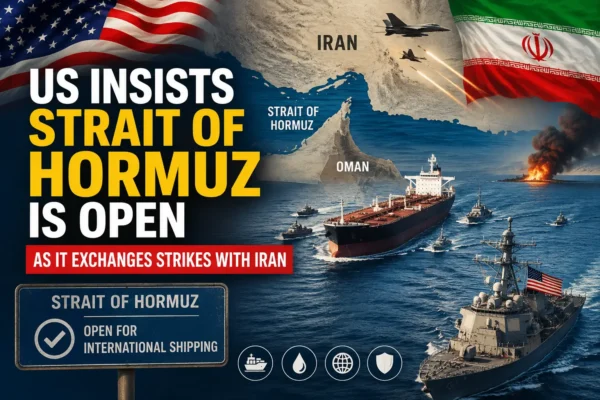
Iran has intensified its claims of authority over the strategically vital Strait of Hormuz, escalating tensions across the Middle East and raising fears of prolonged disruption to global oil and shipping markets. Iranian officials and the Islamic Revolutionary Guard Corps (IRGC) now insist that all vessels passing through the narrow waterway must coordinate directly with Iranian naval authorities, signaling a major shift in regional power dynamics. The latest statements from Tehran come as shipping traffic through the strait remains severely reduced amid ongoing conflict and diplomatic deadlock between Iran and the United States. Iran recently claimed it coordinated the safe passage of 26 vessels within 24 hours, arguing that maritime traffic is operating “with permission and in coordination with the IRGC Navy.” The Strait of Hormuz is one of the world’s most important energy chokepoints, carrying nearly 20% of global oil shipments under normal conditions. Iran’s tightening grip has triggered alarm among global energy producers, shipping firms, and Western governments. Analysts warn that Tehran’s attempts to formalize control over the route could set a dangerous precedent for international shipping and freedom of navigation. Iran has also unveiled what it calls a new “area of control” inside the strait, while warning ships that failure to comply with Iranian directives could expose them to missile, drone, or naval threats. Commercial shipping companies remain cautious, with many merchants unwilling to risk transit despite military escort proposals from the United States and its allies. The growing standoff has already fueled volatility in global oil prices and heightened fears of a wider regional confrontation. Diplomatic negotiations aimed at reopening unrestricted traffic through the waterway remain stalled, leaving the future of the Strait of Hormuz uncertain.

Read More
Raúl Castro indictment

Former Cuban president Raúl Castro indicted in US over 1996 fatal downing of two planes

Former Cuban president Raúl Castro has been indicted in the United States over the 1996 downing of two civilian aircraft operated by the Miami-based group Brothers to the Rescue, a decades-old incident that killed four people and sharply escalated tensions between Washington and Havana. US federal prosecutors announced that the indictment accuses Castro, who served as Cuba’s defense minister at the time, of involvement in authorizing or overseeing the operation that led Cuban fighter jets to shoot down the planes over international waters. The aircraft belonged to Brothers to the Rescue, an organization that searched for Cuban migrants attempting dangerous sea crossings to the United States. The February 1996 incident caused international outrage after Cuban MiG fighter jets destroyed the unarmed Cessna planes, killing three American citizens and one US resident. The US government long maintained that the planes were in international airspace when they were attacked, while Cuban authorities argued the aircraft had repeatedly violated Cuban airspace. According to US officials, the indictment is part of a broader effort to pursue accountability for acts that resulted in the deaths of American citizens. Legal experts note, however, that the case is largely symbolic because Castro remains in Cuba, where extradition to the United States is highly unlikely. The indictment has already triggered strong political reactions. Cuban officials condemned the move as politically motivated and accused Washington of reviving Cold War-era hostility. Analysts say the development could further strain already fragile relations between the US and Cuba, especially as diplomatic engagement between the two countries has remained limited in recent years. Raúl Castro, now retired from formal political leadership, succeeded his brother Fidel Castro as Cuba’s president in 2008 and remained one of the country’s most influential political figures for more than a decade.

Read More
Ebola outbreak in DR Congo

Ebola has tortured us’: Fear grips eastern DR Congo as deadly virus spreads

Fear and anxiety are spreading across eastern Democratic Republic of the Congo as communities confront another deadly outbreak of Ebola. Health officials report rising infections in several areas, with overwhelmed hospitals and frightened residents struggling to contain the fast-moving virus. Families in affected villages say the outbreak has revived painful memories of previous Ebola crises that devastated the region over the past decade. Residents in eastern Congo describe scenes of panic as health workers in protective suits move through communities tracing contacts and isolating suspected cases. Many people fear visiting clinics, worried they could become infected or separated from loved ones. “Ebola has tortured us,” one local resident said, reflecting the deep emotional and economic toll the disease continues to inflict on already vulnerable communities. Authorities and international aid agencies are intensifying emergency measures, including vaccination campaigns, border screenings, and public awareness drives. However, insecurity caused by armed groups in eastern Congo has complicated response efforts, making it difficult for medical teams to safely reach remote villages. Health experts warn that misinformation and distrust of authorities could further accelerate the spread of the virus if communities avoid treatment centers. The outbreak has also disrupted trade, schools, and daily life across parts of the region. Markets are quieter, travel has slowed, and many families are limiting social gatherings out of fear of infection. Neighboring countries remain on alert as officials monitor possible cross-border transmission. Despite the growing crisis, health authorities stress that Ebola can be contained through rapid testing, vaccination, isolation of patients, and community cooperation. International organizations are continuing to send medical supplies and specialists to support Congo’s response as fears rise that the outbreak could worsen in the coming weeks

Read More