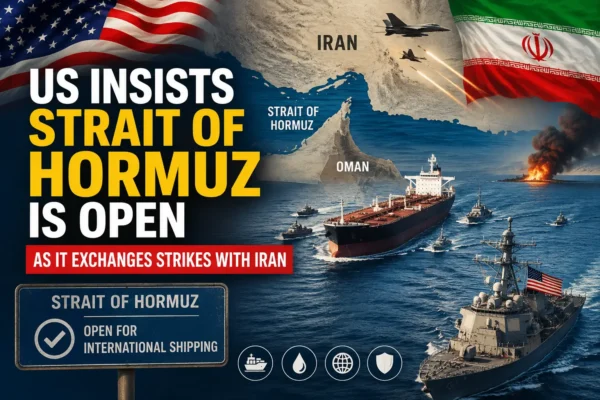
Trump warns Iran time is running out

Trump warns Iran ‘time is running out’ for nuclear deal as US military builds up in Gulf

President Donald Trump has issued a stark warning to Iran that “time is running out” for Tehran to negotiate a fresh nuclear deal, intensifying one of the most serious diplomatic standoffs between Washington and Tehran in years. Trump used his Truth Social platform to demand that Iran return to negotiations on its nuclear programme under terms that would completely bar nuclear weapons development. He framed the ultimatum as urgent, urging Tehran to “come to the table” before diplomatic avenues close and military action becomes unavoidable. Alongside this warning, the United States has deployed a significant military buildup in the Persian Gulf region, centred on a “massive armada” led by the aircraft carrier USS Abraham Lincoln. Trump described the force as “ready, willing, and able to rapidly fulfil its mission with speed and violence, if necessary,” underscoring that diplomatic pressure is being backed by a credible military posture. In his message, Trump referenced past U.S. strikes on Iranian nuclear facilities during the 2025 conflict and warned that “the next attack will be far worse” if Iran refuses to negotiate. Tehran has rebuffed what it calls diplomacy under threat, insisting that negotiations must occur without military pressure and that it will defend itself if attacked. Iranian officials have rejected recent U.S. overtures and described Washington’s approach as ineffective and confrontational. The current crisis is unfolding amid broader regional and global concern over Iran’s nuclear trajectory, internal unrest, and the growing risk that further escalation could ignite a wider Middle East conflict. U.S. allies in the region have urged restraint while quietly strengthening their own defences. Some governments remain reluctant to host American military operations, complicating Washington’s strategic options. With tensions rising, Trump has made clear that his administration prefers a negotiated settlement — but only on strict terms. As military forces gather in the Gulf and rhetoric hardens on both sides, the coming weeks may prove decisive in determining whether diplomacy prevails or the standoff slides toward open confrontation.

Read More
Trump Nato troops Afghanistan remarks

Trump remarks about Nato troops in Afghanistan are ‘insulting’, says Starmer

UK Labour leader Sir Keir Starmer has condemned remarks by former US president Donald Trump about Nato troops in Afghanistan, describing them as “insulting” and disrespectful to allied forces who served and died alongside American soldiers during the conflict. Starmer said Trump’s comments undermined the sacrifices made by British and other Nato personnel over two decades of operations in Afghanistan. He stressed that the mission was conducted collectively, under Nato command, and involved shared decision-making and shared risk. “British troops stood shoulder to shoulder with US forces,” Starmer said. “Any suggestion that allied contributions were secondary or unworthy is deeply offensive to the families of those who lost their lives.” Trump, who has repeatedly criticised the Afghanistan war and the chaotic withdrawal in 2021, has in recent remarks questioned the value of Nato involvement and accused allies of failing to meet their responsibilities. While Trump did not single out the UK by name, his broader comments about allied performance prompted a strong reaction in London. The UK lost 457 service personnel during the Afghanistan campaign, making it the second-largest contributor of troops after the United States. British forces played key roles in combat operations, training Afghan security forces, and reconstruction efforts, particularly in Helmand province. Starmer said it was legitimate to debate the political decisions that led to the war and the manner of the withdrawal, but argued that criticism should never be directed at the troops themselves. He warned that dismissive rhetoric risked damaging trust within Nato at a time of heightened global insecurity. The comments also drew criticism from senior military figures and veterans’ groups, who said allied unity was essential for the credibility of the alliance. With Trump campaigning for a return to the White House and questioning long-standing US security commitments, the row is likely to fuel further debate in Europe about the future of Nato and the reliability of US leadership within the alliance.

Read More
Ukraine peace talks

US optimistic on end to war as Zelensky says Ukraine to talk to US and Russia

The United States has expressed cautious optimism that the war in Ukraine could move closer to an end, as President Volodymyr Zelensky confirmed that Kyiv is preparing to engage in talks involving both Washington and Moscow. The comments signal a potential diplomatic opening after months of intense fighting, stalled negotiations, and growing international concern over the long-term costs of the conflict. US officials say recent diplomatic contacts and behind-the-scenes discussions have created a window for dialogue, even as military operations continue on the ground. Washington has stressed that any peace process must respect Ukraine’s sovereignty and territorial integrity, while also being grounded in realistic security guarantees that can prevent a renewed conflict in the future. American officials have framed their optimism carefully, acknowledging that previous attempts at talks have failed and that trust between the parties remains extremely low. Zelensky, speaking to reporters, said Ukraine is ready to participate in discussions that include both the United States and Russia, but made clear that Kyiv’s core principles have not changed. He emphasized that Ukraine will not accept any settlement imposed without its consent and that talks must focus on ending hostilities while ensuring long-term stability. According to Zelensky, US involvement is critical to balancing negotiations and ensuring that Ukraine’s interests are fully represented. Russia has not publicly detailed its position on the proposed talks, though officials in Moscow have repeatedly said they are open to dialogue under what they describe as “new realities” on the ground. Analysts warn that this gap in expectations could complicate negotiations, particularly on sensitive issues such as territorial control, sanctions, and security arrangements. For now, the prospect of Ukraine peace talks has raised cautious hopes among allies and international observers. While major obstacles remain, the willingness of Kyiv, Washington, and potentially Moscow to re-engage diplomatically suggests that efforts to end the war are entering a new, if uncertain, phase.

Read More
Trump Greenland negotiations

Trump wants ‘immediate negotiations’ to acquire Greenland but insists he ‘won’t use force’

Former US President Donald Trump has renewed his controversial interest in Greenland, calling for “immediate negotiations” to acquire the strategically vital Arctic island while insisting that the United States would not use military force to achieve the goal. The remarks have reignited international debate over sovereignty, security, and the future balance of power in the Arctic region. Trump framed his position as a matter of national and global security, arguing that Greenland’s location and natural resources make it critical at a time of rising competition among major powers. He stressed that his approach would rely on diplomacy and economic engagement rather than coercion, saying that negotiations could bring mutual benefits to both the United States and Greenland’s population. According to Trump, closer ties would lead to investment, infrastructure development, and enhanced security cooperation. Greenland, an autonomous territory within the Kingdom of Denmark, has repeatedly rejected the idea of being sold or transferred to another country. Danish officials have reaffirmed that Greenland is not for sale, while Greenlandic leaders have emphasized the island’s right to self-determination. Trump’s latest comments nevertheless place renewed pressure on Copenhagen and Nuuk, particularly as Arctic shipping routes open and interest in rare earth minerals intensifies. Analysts note that Trump’s insistence on non-forceful methods appears designed to soften criticism that his proposal undermines international norms. However, critics argue that even pushing for acquisition risks destabilizing relations with allies and sets a troubling precedent. Supporters counter that strategic realities require bold thinking and that negotiations do not automatically imply an outcome. The episode highlights the growing geopolitical importance of the Arctic, where climate change, security concerns, and resource competition intersect. Whether Trump’s call for talks gains traction or fades as diplomatic resistance hardens, the renewed focus on Greenland underscores how Arctic politics are moving closer to the center of global strategic discussions.

Read More
Trump Greenland Nobel Prize

Trump ties Greenland demands to Nobel Prize in message to Norway leader

Donald Trump has once again placed Greenland at the centre of global debate, this time linking US ambitions over the Arctic island to the Nobel Peace Prize in a message reportedly sent to Norway’s leader. The unusual communication has drawn sharp reactions across Europe, reviving tensions over sovereignty, diplomacy, and Trump’s unconventional approach to foreign policy. According to officials familiar with the matter, Trump argued that US control or decisive influence over Greenland would strengthen global security, reduce great-power rivalry in the Arctic, and contribute to long-term peace. He framed these claims within the context of Norway’s role as host of the Nobel Peace Prize, suggesting that such a geopolitical achievement would merit consideration for the prestigious award. The message was described as direct and characteristically provocative, reflecting Trump’s long-standing view of himself as a dealmaker capable of reshaping international order. The Trump Greenland Nobel Prize narrative has unsettled Nordic leaders, particularly Denmark, which retains sovereignty over Greenland. Danish officials have repeatedly stressed that Greenland is not for sale and that its future must be decided by its own people. Norwegian sources, meanwhile, emphasised that the Nobel Committee operates independently and does not consider political lobbying or territorial proposals when awarding the prize. Greenland’s strategic value has increased significantly in recent years due to climate change, melting ice, and expanded access to shipping routes and natural resources. Both China and Russia have stepped up Arctic engagement, a trend Trump has often cited as justification for stronger US involvement. Critics, however, argue that tying territorial ambitions to a peace prize undermines diplomatic norms and risks inflaming regional tensions rather than easing them. Political analysts note that Trump has previously linked his diplomatic initiatives to Nobel recognition, pointing to Middle East agreements and relations with North Korea. In this case, the Greenland remarks appear aimed at reinforcing his image as a leader willing to challenge traditional boundaries of diplomacy. As reactions continue, the episode underscores how Greenland remains a flashpoint in Arctic geopolitics—and how Trump continues to blend personal legacy with international strategy.

Read More
Pakistan shopping mall fire

Six killed in Pakistan shopping mall fire

A deadly Pakistan shopping mall fire has left at least six people dead and many others injured after a massive blaze tore through a busy commercial complex in Karachi, underscoring persistent concerns over fire safety in urban centers. The fire broke out late at night in a multi-storey shopping plaza located in the densely populated Saddar area, one of the city’s oldest and busiest districts. According to local authorities, the blaze spread rapidly through the building due to the presence of highly flammable materials stored inside shops, including textiles, plastics, and cosmetics. Thick smoke quickly filled the mall, trapping people inside and making evacuation extremely difficult. Firefighters battled the flames for several hours, facing intense heat and poor visibility as parts of the structure became unstable. Officials confirmed that six people lost their lives, including at least one firefighter who died while attempting to contain the fire and rescue those trapped. Several others were injured and rushed to nearby hospitals, with some reported to be in serious condition. Rescue teams continued search operations well into the next day amid fears that more victims could be buried under debris following partial structural collapse. Preliminary investigations suggest that an electrical short circuit may have triggered the fire, though authorities have stated that a full inquiry is underway to determine the exact cause. Government officials expressed condolences to the families of the victims and praised emergency responders for their efforts under dangerous conditions. The Pakistan shopping mall fire has reignited debate over inadequate fire safety measures, poor enforcement of building codes, and overcrowded commercial spaces in major cities. Safety experts warn that without stricter inspections, functional fire exits, and modern firefighting systems, similar tragedies are likely to recur. The incident serves as a grim reminder of the urgent need for improved safety standards to protect lives in Pakistan’s urban commercial hubs.

Read More
Gaza Board of Peace

Blair and Rubio among names on Gaza ‘Board of Peace’

Former UK prime minister Tony Blair and US senator Marco Rubio are among a list of prominent international figures reportedly associated with a proposed “Gaza Board of Peace,” an initiative aimed at shaping a post-war political and security framework for the Palestinian territory. The concept of a Gaza Board of Peace has emerged amid intense international debate over how Gaza should be governed and rebuilt once active hostilities subside. According to officials familiar with the discussions, the proposed body would bring together senior political figures, security experts, and regional stakeholders to oversee stabilization, humanitarian coordination, and the early stages of reconstruction, while also advising on longer-term governance arrangements. Tony Blair’s name has drawn particular attention given his previous role as the Middle East Quartet’s special envoy, a position that placed him at the center of diplomatic efforts following earlier rounds of conflict. Supporters argue that his experience navigating complex regional politics could lend credibility and institutional memory to the initiative. Critics, however, contend that past diplomatic frameworks failed to deliver lasting solutions and question whether familiar figures can produce different outcomes. Marco Rubio’s inclusion signals continued US interest in shaping the post-conflict order in Gaza. As a senior Republican voice on foreign policy, Rubio has consistently emphasized Israel’s security concerns while also calling for measures to prevent Gaza from becoming a persistent source of regional instability. His reported involvement suggests that any Gaza Board of Peace would seek bipartisan visibility in Washington, particularly as debates intensify over aid, security guarantees, and regional alliances. Proponents of the Gaza Board of Peace describe it as a temporary mechanism designed to avoid a power vacuum and prevent the re-emergence of militant control. They stress that the body would not replace Palestinian self-governance but instead act as a bridge toward a more stable and internationally supported administration. Skeptics remain wary, warning that externally driven governance models risk lacking local legitimacy. As discussions continue, the proposed Gaza Board of Peace underscores the scale of diplomatic maneuvering underway as the international community searches for a viable path forward in Gaza.

Read More
Maduro court hearing

‘I’m a prisoner of war’ – In the room for Maduro’s dramatic court hearing

Venezuela’s political tensions reached a dramatic peak as President Nicolás Maduro appeared before a court in a hearing that quickly became a stage for defiance, symbolism, and international messaging. Declaring “I’m a prisoner of war,” Maduro framed the proceedings not as a legal process but as part of a broader geopolitical confrontation, casting himself as a target of foreign pressure rather than a defendant subject to judicial scrutiny. Inside the courtroom, the atmosphere was tightly controlled. Security was heavy, access was restricted, and the audience was carefully selected, underscoring the sensitivity of the moment. Maduro, composed yet combative, used his remarks to reinforce a narrative long central to his leadership: that Venezuela is under siege from external forces seeking regime change. His words were clearly aimed beyond the room, intended for supporters at home and observers abroad. The Maduro court hearing unfolded against a backdrop of economic strain, sanctions, and ongoing disputes over legitimacy and governance. For critics, the spectacle reinforced concerns about the independence of Venezuela’s judiciary and the blurring of lines between political power and legal institutions. For supporters, Maduro’s rhetoric reaffirmed his image as a leader resisting what he describes as imperial interference. Observers noted that the hearing was less about legal arguments and more about political positioning. Maduro’s “prisoner of war” statement echoed past claims that sanctions and diplomatic isolation amount to collective punishment, a theme frequently invoked by his government to rally domestic backing and justify hardline policies. International reaction has been cautious but attentive. The courtroom drama is likely to influence ongoing negotiations, sanctions discussions, and regional diplomacy. Whether the hearing marks a turning point or merely another chapter in Venezuela’s prolonged crisis remains unclear. What is certain is that the Maduro court hearing was designed to be seen and remembered—not just as a legal event, but as a political message crafted for a global audience.

Read More
Nigeria village attack

At least 30 killed in attack on Nigeria village

At least 30 people have been killed in a deadly attack on a village in Nigeria, underscoring the persistent insecurity affecting parts of the country. The assault reportedly took place in a rural community where gunmen stormed the area, opening fire on residents and setting homes ablaze, according to local officials and community leaders. Witnesses described scenes of chaos as attackers arrived in large numbers, moving from house to house in the early hours. Many victims were civilians, including women and children, who were caught off guard while sleeping or attempting to flee. Survivors said the attackers used automatic weapons and acted with apparent coordination, suggesting a well-organised assault rather than a random act of violence. Local authorities confirmed that at least 30 bodies have been recovered so far, though the death toll may rise as search and rescue operations continue in surrounding areas. Several people were also injured and taken to nearby medical facilities, many of which are poorly equipped to handle mass casualty situations. Dozens of homes were destroyed, leaving families displaced and in urgent need of shelter, food, and medical assistance. The Nigeria village attack has renewed concerns about the government’s ability to protect vulnerable rural communities. In recent years, villages across different regions have faced repeated attacks linked to armed groups, banditry, and long-standing communal tensions. These incidents often occur in remote areas where security presence is limited and response times are slow. Security forces have been deployed to the affected area, and officials say an investigation is underway to identify and apprehend those responsible. Authorities have also promised increased patrols to prevent further violence. However, residents remain fearful, warning that without sustained security measures, similar attacks could happen again. The tragedy highlights the broader challenge Nigeria faces in addressing insecurity, restoring public confidence, and ensuring that civilians in rural communities are protected from escalating violence.

Read More
Zelensky Trump talks

Zelensky plans to meet Trump on Sunday for talks on ending Russian war

Ukrainian President Volodymyr Zelensky has announced plans to meet former U.S. President Donald Trump on Sunday for high-level discussions aimed at ending the ongoing Russian war against Ukraine. The proposed meeting comes at a critical moment in the conflict, as fighting continues along multiple фронts and diplomatic efforts intensify ahead of key political developments in the United States and Europe. According to officials close to Kyiv, the talks will focus on potential pathways toward a negotiated settlement, security guarantees for Ukraine, and the future role of the United States in supporting Kyiv militarily and economically. Zelensky has repeatedly stressed that any peace initiative must respect Ukraine’s sovereignty and territorial integrity, signaling that Kyiv will not accept compromises that legitimize Russian control over occupied regions. The planned Zelensky Trump talks are significant because Trump has publicly claimed that he could end the war quickly if returned to office, though he has not provided detailed proposals. His statements have sparked concern among some Western allies, who fear a possible reduction in U.S. support for Ukraine. At the same time, Trump’s influence within American politics makes the meeting strategically important for Zelensky, who is seeking assurances that bipartisan backing for Ukraine will continue regardless of future political shifts in Washington. For Zelensky, the meeting also serves a broader diplomatic purpose. Ukraine is attempting to maintain momentum behind international efforts to pressure Moscow through sanctions while keeping open the possibility of dialogue under conditions acceptable to Kyiv. Ukrainian officials argue that Russia must demonstrate genuine willingness to end hostilities, including halting missile attacks and withdrawing troops, before meaningful negotiations can proceed. Trump, for his part, has positioned himself as a deal-maker capable of leveraging U.S. influence to bring both sides to the table. Supporters of his approach argue that prolonged war risks further destabilizing global energy markets and European security. Critics, however, warn that pushing for a rapid settlement without firm guarantees could leave Ukraine vulnerable to future aggression. The outcome of the Zelensky Trump talks remains uncertain, but analysts agree the meeting underscores the growing intersection between global diplomacy and domestic U.S. politics. With the war entering another protracted phase, Ukraine is working to ensure that its interests remain central to any discussion involving major powers. As Sunday’s meeting approaches, expectations are cautious. Ukrainian officials emphasize that dialogue does not equal concession, while observers note that any credible plan to end the Russian war will require coordination with European allies and clear terms that uphold international law. Regardless of immediate results, the talks highlight Ukraine’s continued efforts to engage all influential actors in pursuit of a just and lasting peace.

Read More