
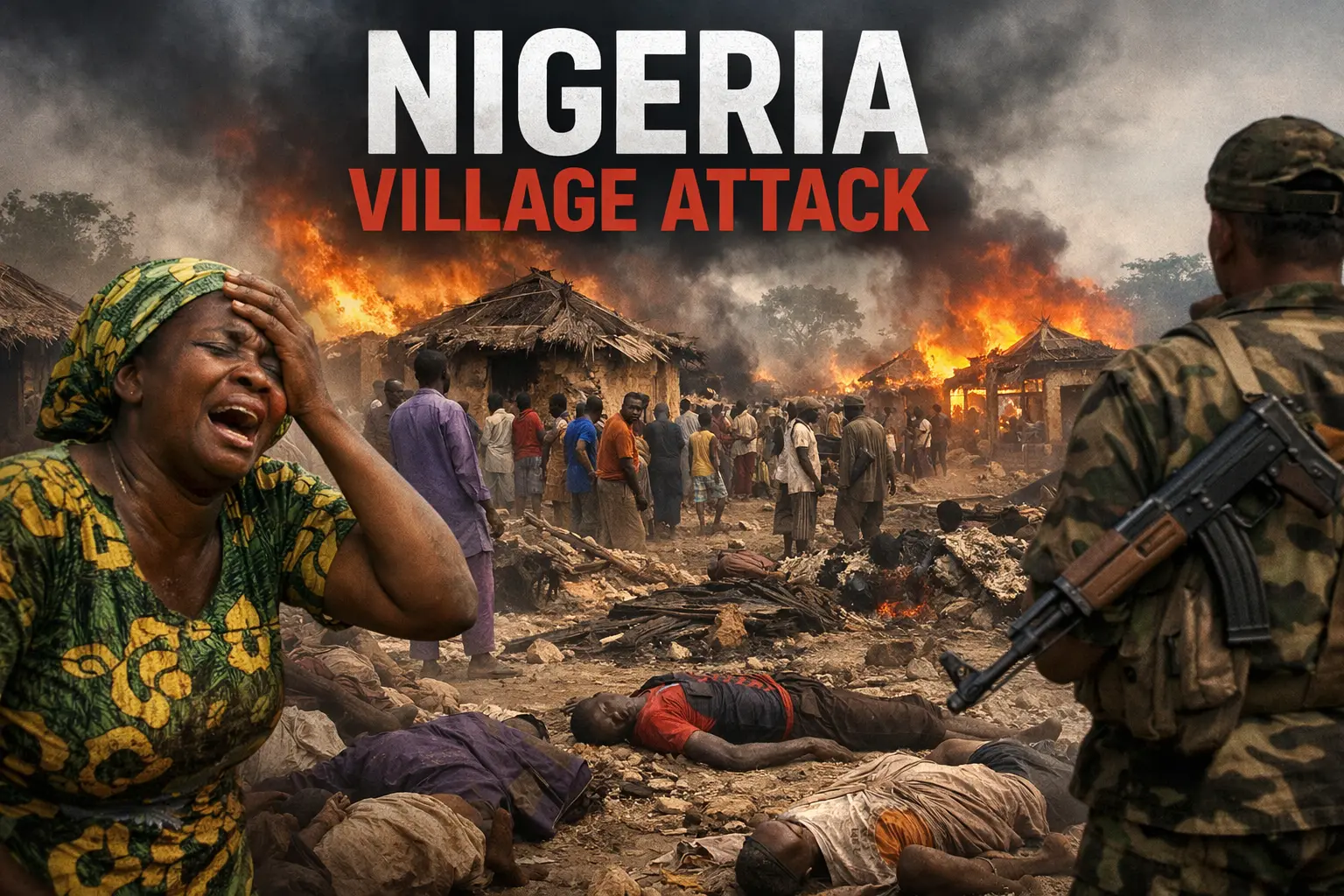
At least 30 people have been killed in a deadly attack on a village in Nigeria, underscoring the persistent insecurity affecting parts of the country. The assault reportedly took place in a rural community where gunmen stormed the area, opening fire on residents and setting homes ablaze, according to local officials and community leaders.
Witnesses described scenes of chaos as attackers arrived in large numbers, moving from house to house in the early hours. Many victims were civilians, including women and children, who were caught off guard while sleeping or attempting to flee. Survivors said the attackers used automatic weapons and acted with apparent coordination, suggesting a well-organised assault rather than a random act of violence.
Local authorities confirmed that at least 30 bodies have been recovered so far, though the death toll may rise as search and rescue operations continue in surrounding areas. Several people were also injured and taken to nearby medical facilities, many of which are poorly equipped to handle mass casualty situations. Dozens of homes were destroyed, leaving families displaced and in urgent need of shelter, food, and medical assistance.
The Nigeria village attack has renewed concerns about the government’s ability to protect vulnerable rural communities. In recent years, villages across different regions have faced repeated attacks linked to armed groups, banditry, and long-standing communal tensions. These incidents often occur in remote areas where security presence is limited and response times are slow.
Security forces have been deployed to the affected area, and officials say an investigation is underway to identify and apprehend those responsible. Authorities have also promised increased patrols to prevent further violence. However, residents remain fearful, warning that without sustained security measures, similar attacks could happen again.
The tragedy highlights the broader challenge Nigeria faces in addressing insecurity, restoring public confidence, and ensuring that civilians in rural communities are protected from escalating violence.