
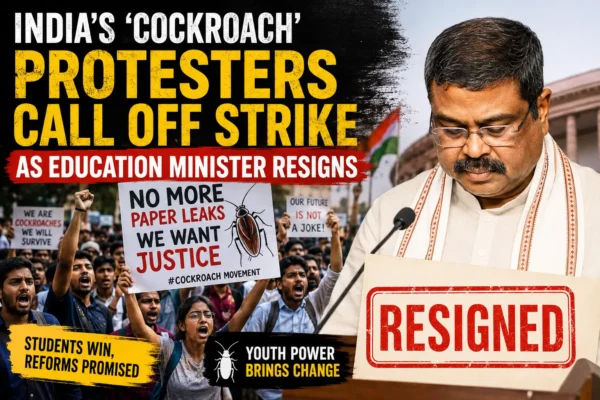
India’s ‘cockroach’ protesters call off strike as education minister resigns
India’s youth-led “Cockroach” protest movement has officially called off its nationwide demonstrations after Education Minister Dharmendra Pradhan resigned, marking a significant political victory for student activists. The protests, which began over alleged leaks in major competitive examination papers, evolved into a broader movement demanding accountability, education reforms, and better opportunities for young people. The movement gained momentum after millions of students were affected by repeated examination irregularities. Protesters argued that paper leaks had undermined the credibility of India’s education system and jeopardized the futures of countless young aspirants. Demonstrations spread across New Delhi and several other cities, drawing students, professionals, and civil society groups despite heavy police deployments and restrictions. Following weeks of sustained protests, Dharmendra Pradhan announced his resignation, stating that he respected the aspirations of India’s youth and wanted to prevent further unrest. His departure was welcomed by demonstrators, who celebrated the decision at New Delhi’s Jantar Mantar protest site with chants and emotional scenes. Protest leaders declared that the government had accepted their principal demands, leading them to end the agitation peacefully. Beyond the minister’s resignation, the government reportedly agreed to introduce reforms aimed at improving examination security, compensate families affected by the crisis, and review legal cases filed against protesters. While activists described the outcome as a victory for democracy and public accountability, they also stressed that they would continue monitoring the implementation of promised reforms. Political analysts say the success of the “Cockroach” movement represents one of the most significant public protest victories in India in recent years. It highlights growing frustration among young people over unemployment, education standards, and governance, while demonstrating the power of coordinated grassroots activism in shaping national policy. Whether the promised reforms restore confidence in India’s examination system remains to be seen, but the movement has already left a lasting mark on the country’s political landscape.