Zelensky Tomahawk missiles

Zelensky fails to secure Tomahawk missiles at talks with Trump

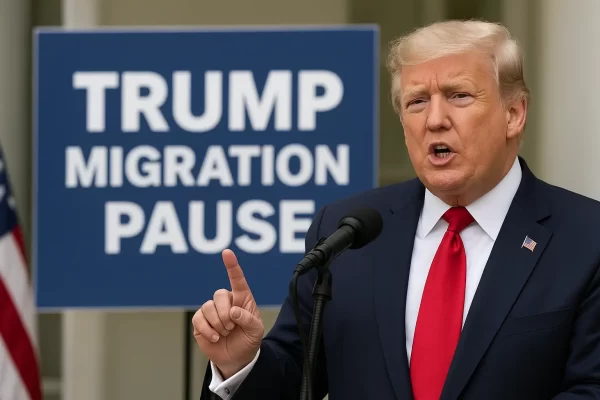
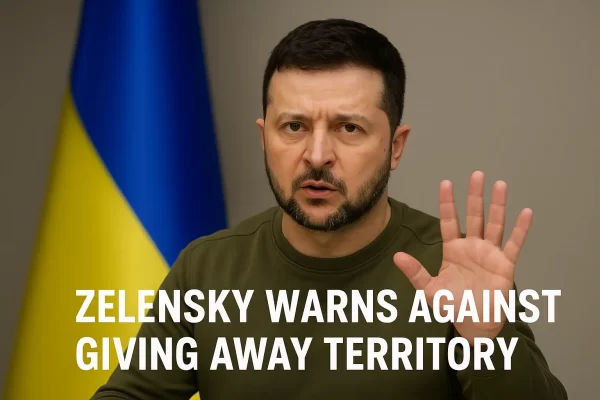
Ukrainian President Volodymyr Zelensky’s highly anticipated meeting with U.S. President Donald Trump at the White House has ended without an agreement on the transfer of Tomahawk cruise missiles, dealing a blow to Kyiv’s hopes of acquiring advanced long-range weaponry to bolster its defenses against Russian forces. According to U.S. and Ukrainian officials, the discussions between the two leaders were “constructive but inconclusive.” Zelensky had arrived in Washington seeking approval for the sale or transfer of Tomahawk missiles, capable of striking targets up to 1,600 kilometers away, arguing that such systems were vital to Ukraine’s ability to deter Russian attacks on critical infrastructure and logistics hubs. However, President Trump reportedly declined to approve the request, citing concerns that providing such high-precision, long-range weapons could escalate the conflict and draw the United States deeper into the war. Instead, Trump proposed increasing U.S. intelligence sharing and offering a new package of defensive systems, including Patriot interceptors and counter-drone technologies. In a joint press conference following the meeting, Zelensky said he appreciated Washington’s continued support but admitted that “Ukraine had hoped for more tangible commitments.” He added that Kyiv would continue discussions with American defense officials and Congress in hopes of securing “the tools necessary to end the war on fair terms.” Trump emphasized his administration’s focus on “peace through strength” and suggested that further negotiations between Russia and Ukraine could take place “under the right conditions.” He also reiterated his belief that a diplomatic settlement remains possible if both sides “show flexibility and put national interest above pride.” Analysts say the outcome highlights the ongoing tension between Kyiv’s urgent battlefield needs and Washington’s cautious approach to escalation. While the U.S. remains Ukraine’s largest supplier of aid and weaponry, the Trump administration has increasingly framed its support in the context of a potential peace deal rather than open-ended military assistance. The failure to secure Tomahawk missiles is likely to frustrate Ukrainian commanders, who argue that long-range precision weapons are essential for targeting Russian supply lines deep inside occupied territories. Without them, Ukraine remains largely dependent on shorter-range systems like ATACMS and Storm Shadow missiles provided by other Western allies. Despite the setback, Zelensky vowed to keep pushing for stronger defense partnerships. “Ukraine will not stop fighting for its freedom and independence,” he said. “We will continue to work with our partners to ensure our country’s security and future.” The talks mark a pivotal moment in U.S.-Ukraine relations, as Kyiv balances gratitude for continued support with growing pressure to achieve decisive results on the battlefield before winter sets in.

Read More
released hostages

Who are the released hostages? Hamas Released

As of October 13, 2025, all 20 living Israeli hostages who were held by Hamas in Gaza since October 7, 2023, have been released and have returned to Israel. This marked the conclusion of a two-year-long ordeal for dozens of Israeli families who had been waiting for their loved ones’ return. These 20 released hostages include:Bar Abraham Kupershtein, Evyatar David, Yosef-Chaim Ohana, Segev Kalfon, Avinatan Or, Elkana Bohbot, Maxim Herkin, Nimrod Cohen, Matan Angrest, Matan Zangauker, Eitan Horn, Eitan Abraham Mor, Gali Berman, Ziv Berman, Omri Miran, Alon Ohel, Guy Gilboa-Dalal, Rom Braslavski, Ariel Cunio, and David Cunio. Their release followed months of indirect negotiations and mediation efforts led by international actors, including Qatar, Egypt, and the United States. Many of these hostages were abducted during the early stages of the October 2023 Hamas attack and had been held in various locations across Gaza. Their return was seen as a major breakthrough in the long and complex ceasefire process. Earlier Releases Before this final group, several hostages had already been freed during earlier phases of exchange deals. Among the first to return home were Romi Gonen, Emily Damari, and Doron Steinbrecher, who were released in January 2025 under a temporary ceasefire agreement. Following that, Liri Albag, Karina Ariev, Daniella Gilboa, and Naama Levy were released in a subsequent exchange phase. Their release, which came after months of uncertainty, brought immense relief to their families and highlighted the humanitarian side of the ceasefire negotiations. A later January 2025 exchange saw the return of Arbel Yehud, Agam Berger, and Gadi Moshe Moses, who were also among those kidnapped during the October 7 attacks. Eli Sharabi was freed on February 8, 2025, after spending more than a year in Hamas captivity. On February 22, 2025, six additional hostages were released: Omer Shem Tov, Eliya Cohen, Omer Wenkert, Tal Shoham, Avera Mengistu, and Hisham al-Sayed. In addition to negotiated releases, one hostage, Qaid Farhan al-Qadi, a Bedouin Israeli, was rescued through a special Israeli operation after spending 326 days in captivity. Overview of Phases and Numbers Phase 1 of the ceasefire and prisoner exchange deal began around January 19, 2025. It primarily involved the release of women, children, and elderly hostages, along with the return of the remains of several who had died in captivity. Over the following months, more hostages were freed in a series of phased agreements and rescues. Finally, in October 2025, the last group of 20 living hostages was released, bringing home those who had remained alive in Gaza. The moment was widely celebrated across Israel, marking a symbolic end to one of the most painful chapters of the conflict.

Read More
Israel Hamas ceasefire deal

Israel and Hamas agree first phase of Gaza ceasefire deal

In a major breakthrough toward ending nearly a year of bloodshed, Israel and Hamas have agreed to the first phase of a Gaza ceasefire deal, marking a cautious but significant step toward lasting peace in the region. The deal, brokered through Egyptian and Qatari mediation with strong backing from the United States, outlines an initial cessation of hostilities and the exchange of prisoners and hostages, while setting the stage for future negotiations on Gaza’s political future. According to Israeli and Palestinian officials, the agreement was signed after days of intensive talks in Sharm el-Sheikh. Under the terms of the first phase, Hamas will release all remaining Israeli hostages believed to be alive within 72 hours of the deal’s ratification. In return, Israel will withdraw its forces from several key positions inside Gaza, easing military pressure on densely populated areas. Additionally, Israel has agreed to release hundreds of Palestinian prisoners, many of whom have been detained without trial during the conflict. The ceasefire is expected to take effect within 24 hours of final cabinet approval in Jerusalem. U.S. President Donald Trump, who has played a key role in promoting the wider peace framework, described the deal as “a historic opportunity for both sides to end the suffering and rebuild Gaza.” The agreement is reportedly part of a broader 20-point peace plan that envisions gradual disarmament of militant factions and the creation of a joint Israeli-Palestinian reconstruction authority. Despite the optimism, the deal faces considerable challenges. Hardline factions within both Israel and Hamas have expressed skepticism about the plan’s longevity. In Israel, far-right ministers have criticized the decision to release Palestinian prisoners, while Hamas leaders have warned that any delay in Israel’s troop pullback could trigger renewed hostilities. Analysts note that the first phase addresses only the immediate humanitarian crisis and hostage situation, leaving thornier issues—such as Gaza’s governance and Hamas’s military capabilities—for later stages. Regional powers have cautiously welcomed the development. Egypt praised the accord as a “vital first step toward de-escalation,” while Qatar emphasized the need for international monitoring to ensure both sides uphold their commitments. The United Nations has offered logistical support for aid delivery and reconstruction efforts once the truce takes hold. If successfully implemented, this first phase could pave the way for phase two, involving a full Israeli withdrawal, the establishment of a demilitarized Gaza, and potential normalization talks. Yet, with mistrust running deep, the path to a durable peace remains uncertain. For now, the agreement provides a rare moment of hope amid one of the region’s most protracted and devastating conflicts.

Read More
Israel and Hamas

Jeremy Bowen: Two years on, will Israel and Hamas seize the chance to end the war?

Two years after the devastating conflict between Israel and Hamas erupted, the question now dominating diplomatic circles is whether both sides are finally ready to end the war. The toll — human, political, and regional — has been immense. According to BBC Middle East Editor Jeremy Bowen, there are tentative signs that exhaustion on both sides might open a narrow window for negotiation, but mistrust and political calculation continue to overshadow peace efforts. The war has left Gaza in ruins, with much of its infrastructure destroyed and millions displaced. Israel, despite its military advantage, faces growing international isolation and domestic pressure over the war’s economic and moral costs. Prime Minister Benjamin Netanyahu’s government, already weakened by internal divisions, struggles to balance its hardline coalition demands with international calls for restraint. Hamas, meanwhile, has seen its leadership decimated and its military capabilities significantly weakened. Yet the group remains a potent political force in Gaza, maintaining control over key areas despite Israeli bombardments and a worsening humanitarian crisis. According to Bowen’s analysis, Hamas believes survival itself is a form of victory — a message it continues to project to a population weary of destruction but fearful of losing sovereignty. International mediators, led by Egypt, Qatar, and the United States, are once again attempting to revive a ceasefire framework. A proposal circulating in recent weeks reportedly involves phased prisoner releases, humanitarian corridors, and limited reconstruction aid under UN supervision. But both Israel and Hamas remain wary. Israel demands disarmament guarantees and the return of all hostages, while Hamas insists on a permanent end to Israeli military operations and the lifting of the blockade. Jeremy Bowen notes that both sides are trapped by the politics of survival. Netanyahu fears that any perceived concession could fracture his coalition, while Hamas risks losing credibility if it appears to compromise under pressure. Yet, after two years of relentless warfare, public opinion in both Israel and Gaza shows signs of fatigue — a critical factor that could push leaders toward a pragmatic truce. Whether this moment becomes a turning point or another missed opportunity will depend on leadership and timing. For now, the guns have not fallen silent, but the diplomatic machinery is beginning to hum once more. As Bowen observes, “Wars often end not when sides are ready to forgive, but when they simply can’t go on.”

Read More
Donald Trump deployment

Trump authorises deployment of 300 National Guard troops to Chicago

In a move aimed at curbing escalating violence and unrest, former U.S. President Donald Trump has authorised the deployment of 300 National Guard troops to Chicago, citing a “breakdown of law and order” in the city. The decision, announced from his Florida residence, comes after weeks of mounting pressure from local leaders, police unions, and community groups alarmed by rising gun violence and social tensions. According to White House officials, the National Guard units will assist Chicago police in “stabilising critical areas” and protecting public infrastructure. Trump described the move as “a necessary step to restore peace and protect innocent lives,” adding that federal support was essential in cities “where local leadership has failed to maintain security.” Chicago has faced a surge in violent incidents over the past month, with several neighbourhoods reporting record numbers of shootings. City officials have struggled to contain the unrest, which has been linked to gang-related crime, economic hardship, and political discontent. Although some local leaders welcomed the deployment as a short-term measure, others criticised it as federal overreach that could inflame tensions further. Mayor Brandon Johnson responded cautiously, stating that while the city appreciates federal assistance, the focus must remain on addressing the root causes of violence. “What Chicago needs is investment in communities, not just boots on the ground,” Johnson said. He emphasised the importance of collaboration between federal, state, and local agencies to prevent further escalation. The National Guard troops are expected to begin operations within 48 hours, focusing primarily on transportation hubs, commercial districts, and areas identified as high-risk. Officials stressed that the deployment is temporary and will operate under strict coordination with local law enforcement to avoid clashes or confusion. This is not the first time Trump has used the National Guard to address urban unrest. During his presidency, he authorised similar deployments in cities such as Portland and Minneapolis amid protests and violence. Supporters argue that these measures demonstrated decisive leadership, while critics view them as political theatre intended to project strength during moments of domestic crisis. Analysts suggest that the move could have broader political implications as Trump continues to position himself as a “law-and-order” figure ahead of the next election cycle. By highlighting violence in major cities, he reinforces his campaign narrative that Democratic-led urban centres have failed to maintain safety and discipline. For many Chicago residents, however, the immediate concern is whether this latest federal intervention will bring relief or further strain community relations. As the National Guard prepares to take to the streets, the city remains on edge—caught between the need for security and the fear of deeper division.

Read More
Trump urges Erdogan to stop buying Russian oil

Trump urges Erdogan to stop buying Russian oil as they meet at White House

U.S. President Donald Trump pressed Turkish President Recep Tayyip Erdogan to halt Ankara’s continued purchase of Russian oil during a bilateral meeting at the White House on Wednesday. The talks, which were expected to cover defense cooperation, NATO commitments, and regional conflicts, quickly turned into a sharp exchange over Turkey’s energy ties with Moscow. According to officials familiar with the discussions, Trump reiterated his administration’s growing frustration that a NATO ally like Turkey has deepened its economic relationship with Russia, particularly in the energy sector. He stressed that continued purchases of Russian crude directly undercut Western sanctions and weaken collective efforts to limit Moscow’s influence following its ongoing military actions in Ukraine. “Turkey is an important ally, but allies must stand together,” Trump said during a brief press appearance alongside Erdogan. “The United States cannot look away when NATO countries help fund Russia’s war machine. We are asking Turkey to diversify its energy sources and stop buying Russian oil.” Erdogan, while acknowledging the concerns, defended his country’s energy policy. He argued that Turkey’s heavy reliance on foreign imports leaves it with limited options and that stability in energy supply remains a national priority. “Our economy and our people depend on affordable energy,” Erdogan stated. “We are open to cooperation with the United States and other partners, but we cannot risk shortages that would harm Turkish households and businesses.” Behind closed doors, U.S. officials reportedly offered Ankara greater access to American liquefied natural gas (LNG) and increased support for alternative energy infrastructure. Washington has also signaled that Turkey could face potential sanctions if it continues large-scale Russian purchases, though no formal measures were announced at the meeting. The tense exchange underscores the widening fault lines within NATO, as Turkey often pursues an independent foreign policy that puts it at odds with Western allies. In addition to energy, disputes remain over Ankara’s acquisition of Russian S-400 missile systems and its military operations in northern Syria. Still, both leaders emphasized the importance of maintaining dialogue. Trump praised Turkey’s role in regional stability and hinted at expanding trade ties if Ankara shifts its energy strategy. Erdogan, meanwhile, said Turkey values its partnership with the United States but must balance national interests. Analysts believe the U.S. push is part of a broader campaign to isolate Russia economically, but they caution that Turkey’s geographic position and energy dependence make any sudden change unlikely. For now, Washington and Ankara appear locked in a delicate negotiation — one that could test the limits of their alliance in the months ahead.

Read More
$100,000 skilled worker visa fee

Trump adds $100,000 fee for skilled worker visa applicants

In a dramatic policy shift, former U.S. President Donald Trump has announced the introduction of a $100,000 fee for skilled worker visa applicants, sparking intense debate both at home and abroad. The measure, aimed at what Trump describes as “protecting American workers,” represents one of the most restrictive steps taken in the U.S. immigration system in recent years. According to Trump, the new fee will apply to high-skilled visas, such as the H-1B program, which is widely used by technology firms, medical institutions, and research organizations to bring in global talent. Proponents argue that the fee will reduce dependency on foreign workers, encourage companies to prioritize American employees, and generate significant revenue for the federal government. However, critics warn that the policy could severely damage the U.S. economy. The $100,000 visa fee is far higher than any existing immigration charge in the world, and experts believe it will deter talented professionals from applying. Companies in Silicon Valley, Wall Street, and leading universities rely heavily on international expertise, and many business leaders fear this move will drive talent toward other global hubs such as Canada, the United Kingdom, and Australia. Immigration advocates also caution that the measure unfairly targets skilled professionals who contribute billions to the U.S. economy annually. A coalition of tech firms and advocacy groups has already signaled plans to challenge the fee in court, arguing it is discriminatory and unconstitutional. Trump, however, defended the plan as part of his broader “America First” strategy. At a rally, he claimed that the fee would “make foreign workers pay their fair share” and ensure that U.S. citizens do not lose jobs to overseas professionals willing to work for less. He added that the revenue from the new fees would be invested in training programs for American workers, especially in the technology and healthcare sectors. International reaction has been swift. India, one of the largest sources of H-1B applicants, expressed “deep concern” over the impact of the new rule. Industry groups in India estimate that thousands of skilled workers, particularly in IT and engineering, will be priced out of the U.S. market. Similarly, European leaders warned that such policies could isolate the U.S. from global innovation networks. The policy, if fully implemented, could reshape global migration patterns. Analysts suggest that Canada and other nations with more welcoming immigration systems may emerge as beneficiaries, attracting talent that the U.S. risks losing. For now, the $100,000 skilled worker visa fee remains one of Trump’s most controversial immigration moves, with long-term consequences that could redefine America’s role in the global workforce.

Read More
Donald Trump UK state visit

Donald Trump and First Lady Melania depart UK as state visit ends

U.S. President Donald Trump and First Lady Melania Trump concluded their highly publicized UK state visit today, departing London after three days of official ceremonies, diplomatic meetings, and cultural events that underscored the enduring ties between the United States and the United Kingdom. The Donald Trump UK state visit began with a lavish welcome hosted by Queen Elizabeth II at Buckingham Palace, where the President and First Lady were greeted with full ceremonial honors. The visit featured a formal state banquet attended by members of the Royal Family and senior UK political leaders, symbolizing the depth of the Anglo-American alliance. During his stay, Trump held discussions with then-Prime Minister Theresa May, focusing on post-Brexit trade relations, defense cooperation, and global security. Both leaders emphasized the importance of a strong transatlantic partnership, though differences remained on certain issues such as climate policy and Iran. Trump reiterated his support for a “fair and ambitious” U.S.-UK trade deal, while May highlighted the need to protect British economic interests. The state visit also included a series of public appearances by First Lady Melania Trump, who engaged with schoolchildren and cultural institutions. She was praised for her elegant wardrobe choices and diplomatic presence throughout the trip. Her schedule highlighted the cultural and educational aspects of the U.S.-UK relationship, complementing the President’s political and economic focus. However, the visit was not without controversy. Thousands of protesters gathered in central London, voicing opposition to Trump’s policies and leadership style. The now-iconic “Trump baby blimp,” which first appeared during his previous UK trip, returned to the skies as a symbol of public dissent. Despite the demonstrations, Trump described the visit as a “tremendous success” and expressed gratitude for the hospitality extended by the Queen and the British government. In his farewell remarks, Trump emphasized the “unbreakable bond” between the United States and the United Kingdom, stressing that shared history, values, and security interests would continue to guide the relationship. He also thanked the Royal Family for what he called “a magnificent and historic welcome.” The Trumps boarded Air Force One at Stansted Airport, concluding what has been one of the most closely watched foreign visits of his presidency. The Donald Trump UK state visit highlighted both the enduring strength and the modern complexities of the U.S.-UK alliance. While political disagreements and protests drew attention, the ceremonial grandeur and official discussions reflected the importance of maintaining strong ties between the two nations as they navigate shifting global dynamics.

Read More
Obama says US faces political crisis after killing of Charlie Kirk

Obama says US faces ‘political crisis’ after killing of Charlie Kirk

Former President Barack Obama has warned that the United States is at a dangerous turning point following the killing of conservative activist Charlie Kirk, describing the moment as nothing less than a “political crisis.” His comments come amid intensifying fears that political violence is no longer an exception but is becoming an alarming trend in America’s democracy. Charlie Kirk, the 31-year-old founder of Turning Point USA, was assassinated earlier this month while addressing students at a Utah college. Authorities have charged a 22-year-old suspect, Tyler Robinson, with aggravated murder, and prosecutors are seeking the death penalty. The killing has shaken the political landscape, sparking condemnation across party lines but also further inflaming partisan divides. Speaking at a civic event, Obama strongly denounced the attack and linked it to a broader decline in democratic norms. He said that while passionate disagreements are natural in a democracy, resorting to violence against political opponents crosses a dangerous line. “The central premise of our democratic system,” he noted, “is that we have to be able to disagree, sometimes strongly, without resorting to violence.” Obama also criticized the way some political leaders responded to Kirk’s killing, suggesting that a rush to label enemies and inflame divisions is worsening the crisis. Without naming him directly, Obama pointed to former President Donald Trump’s reaction, which immediately placed blame on the “radical left” before investigators had released detailed information. According to Obama, this rhetoric deepens polarization and feeds a cycle of hostility. Analysts say Obama’s remarks highlight a growing concern that the United States is entering a period of normalized political violence. Experts warn that the breakdown of long-standing democratic “guardrails” — unwritten rules of civility and restraint — makes the system more vulnerable. By framing opponents as existential threats, politicians create an atmosphere where violent actions can seem justified in the eyes of extremists. Obama described the nation as being at an “inflection point,” a moment when the country can either recommit to democratic values or slide further toward chaos and division. He urged Americans to reject dehumanizing language, stand against political violence, and hold leaders accountable for protecting institutions and norms. The killing of Charlie Kirk has become more than a tragic act of violence; it has sparked a fierce debate over the future of U.S. politics. For Obama, it is evidence that the country must act decisively to preserve democracy. “This is a political crisis,” he warned, “and how we respond will shape the future of America.” Wabstalk

Read More
Trump Russia sanctions

Trump ‘ready’ to sanction Russia if Nato nations stop buying its oil

Former U.S. President Donald Trump has issued a strong warning that he is prepared to impose new sanctions on Russia if NATO member states agree to cut down on their purchases of Russian oil. The statement underscores Washington’s ongoing efforts to reduce Moscow’s economic influence amid its prolonged war in Ukraine. Speaking to reporters, Trump said the West must present a united front against Russia’s use of energy exports as a financial weapon. He emphasized that NATO nations remain heavily dependent on Russian oil and gas, which continues to provide the Kremlin with billions in revenue despite existing sanctions. According to him, the only way to significantly weaken Russia’s war chest is by targeting its oil trade more aggressively. Trump’s remarks come at a time when European countries are divided on how to handle their energy needs. While some NATO members have made strides in reducing Russian imports, others remain reliant due to geographic proximity, infrastructure limitations, and economic concerns. Analysts note that this split has weakened the overall impact of Western sanctions and left Moscow with a steady stream of income. Trump’s proposed sanctions could include restrictions on financial transactions, secondary sanctions on companies doing business with Russia, and penalties aimed at shipping firms that transport Russian crude. These measures, he argues, would not only pressure Moscow but also push NATO allies to accelerate their energy diversification plans. Critics, however, caution that such a move might trigger an energy crisis in parts of Europe, especially ahead of winter. Some NATO nations have already faced rising fuel prices, which have strained households and businesses. Experts warn that further disruptions could cause political backlash within European governments that are already under pressure from domestic voters. Despite the risks, Trump insists that decisive action is necessary. He framed the issue as not only an economic matter but also a strategic one, suggesting that every barrel of oil purchased from Russia effectively funds the continuation of the war in Ukraine. The Kremlin has yet to officially respond to Trump’s comments, but Russian officials have previously dismissed Western threats as “economic blackmail.” Moscow has sought to expand its oil exports to Asian markets, particularly China and India, in an effort to offset declining sales to Europe. As the debate intensifies, NATO faces a crucial test of unity. Whether member states will align behind Trump’s push for tougher energy sanctions remains uncertain. What is clear, however, is that the issue of Russian oil remains central to the broader struggle over the future of Europe’s security and stability Wabstalk

Read More