Trump Iran Strait of Hormuz threat

Trump issues expletive-laden threat to Iran demanding Strait of Hormuz be opened

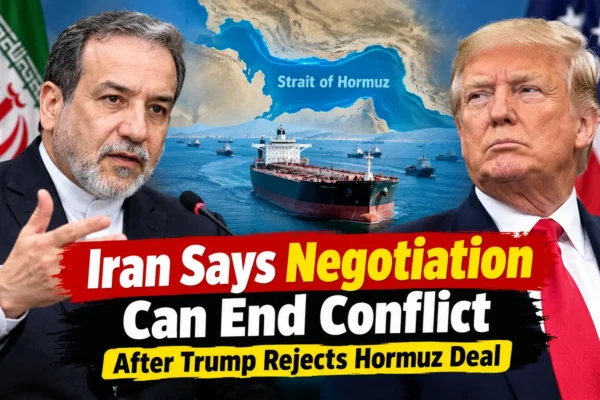
U.S. President Donald Trump has issued an expletive-laden warning to Iran, demanding the immediate reopening of the strategically critical Strait of Hormuz, in what marks one of the most aggressive rhetorical escalations in the ongoing conflict. In a fiery social media post published on April 5, Trump used unusually explicit language to pressure Tehran, warning that failure to reopen the vital shipping lane would result in severe military retaliation. He set a firm deadline, stating that if the strait is not reopened by Tuesday evening, the United States would launch strikes targeting Iranian infrastructure, including power plants and major bridges. The Strait of Hormuz is one of the world’s most important النفط transit chokepoints, handling a significant portion of global oil shipments. Its closure—triggered amid escalating U.S.-Iran hostilities—has already disrupted global energy markets and driven oil prices higher. Trump’s remarks come after weeks of intensifying conflict between U.S. and Iranian forces, as well as a recent high-risk rescue operation involving a downed American airman inside Iranian territory. The president framed the situation as urgent, suggesting that Iran’s continued blockade of the strait is unacceptable and poses a threat to global economic stability. Critics across the political spectrum have condemned Trump’s rhetoric as inflammatory and potentially dangerous, warning that targeting civilian infrastructure could violate international law and further destabilize the region. Meanwhile, Iranian officials have shown no indication of backing down, instead signaling possible retaliation against U.S. and allied economic interests.

Read More
Missing US airman Iran

Search for missing US airman continues as Trump threatens ‘hell’ if Iran does not reach deal

The search for a missing American airman in Iran has intensified as the conflict between Washington and Tehran enters a dangerous new phase. The airman was part of a crew aboard an F-15E Strike Eagle that was shot down over Iranian territory during ongoing military operations. While one crew member was successfully rescued shortly after the incident, the second remains unaccounted for, triggering a high-risk search-and-rescue mission in hostile terrain. U.S. forces have deployed helicopters, special operations teams, and surveillance aircraft to locate the missing airman, operating under the constant threat of enemy fire. Reports indicate that Iranian authorities have urged civilians to help find the pilot, even offering rewards, which has further complicated the rescue effort and increased the urgency of the situation. The incident marks a significant escalation, as it is among the first confirmed cases of a U.S. combat aircraft being downed inside Iran during the ongoing war. Military analysts warn that if the airman is captured, it could become a major geopolitical flashpoint and a bargaining tool in negotiations. Amid this unfolding crisis, Donald Trump has issued a stark warning to Iran, giving the country a 48-hour deadline to reach a deal or face severe consequences. In a social media post, he threatened that “all hell” would be unleashed if Tehran fails to comply, signaling a potential escalation in U.S. military action. The situation remains highly volatile, with ongoing airstrikes, regional instability, and rising casualties. As the search continues, the fate of the missing airman has become a focal point of the broader conflict, underscoring the human stakes behind the escalating geopolitical confrontation.

Read More
Donald Trump

Trump tells the UK and other countries ‘go get your own oil’ from Strait of Hormuz

Former U.S. President Donald Trump has sparked fresh geopolitical debate after telling the United Kingdom and other allied nations to “go get your own oil” from the strategically critical Strait of Hormuz. His remarks come amid escalating tensions in the Middle East, where threats to maritime security have raised concerns about global energy supplies and economic stability. The Strait of Hormuz, a narrow waterway between Iran and Oman, handles roughly a fifth of the world’s oil shipments. Any disruption in this corridor can send shockwaves through global markets, pushing up oil prices and increasing inflationary pressures worldwide. Trump’s comments suggest a more isolationist stance, implying that the U.S. may reduce its traditional role in securing international shipping lanes, a responsibility it has long upheld through its naval presence in the region. The statement has drawn mixed reactions from global leaders. Officials in the UK, including representatives of UK Government, have emphasized the importance of collective security and cooperation in safeguarding critical infrastructure. Analysts argue that a fragmented approach could embolden regional actors and increase the risk of conflict, particularly involving Iran, which has previously threatened to restrict passage through the strait during periods of heightened tension. Energy experts warn that any shift in U.S. policy could have significant implications for global oil markets. European and Asian economies, heavily reliant on Middle Eastern oil, may face increased costs and supply uncertainty if security responsibilities are redistributed. Meanwhile, countries may be forced to boost their own naval capabilities or seek alternative energy routes and suppliers. Trump’s remarks underscore a broader debate about burden-sharing among Western allies and the future of global security commitments. As tensions continue to simmer, the stability of the Strait of Hormuz remains a focal point for policymakers, with far-reaching consequences for international trade, energy security, and geopolitical balance.

Read More
Trump Iran threat

Trump threatens to ‘obliterate’ Iran’s energy facilities if deal not reached ‘shortly’

U.S. President Donald Trump has sharply escalated tensions with Iran by warning that he could “obliterate” the country’s energy infrastructure if a deal to end the ongoing conflict is not reached soon. The threat specifically targets critical assets such as oil fields, power plants, and water facilities—systems that are essential to both Iran’s economy and civilian life. The warning comes amid negotiations aimed at reopening the Strait of Hormuz, a vital global النفط shipping route through which a significant portion of the world’s oil supply passes. Trump has indicated that progress is being made with what he described as a “more reasonable” Iranian leadership, but he set a short timeline for results, signaling that military escalation remains on the table. Iran, however, has pushed back strongly, reportedly rejecting U.S. proposals and denying that meaningful direct negotiations are underway. Tehran has also warned that any attack on its infrastructure would trigger retaliatory strikes across the region, potentially targeting energy facilities in neighboring countries and escalating the conflict into a broader regional war. The stakes are particularly high because energy infrastructure is deeply tied to civilian survival. Analysts and human rights organizations have cautioned that deliberate attacks on such facilities could have catastrophic humanitarian consequences and may violate international law. Meanwhile, global markets are already reacting. Oil prices have surged amid fears of disruption, and economists warn that a prolonged conflict could fuel inflation and slow global economic growth. The situation remains fluid, with diplomatic efforts continuing behind the scenes, but the rhetoric signals that the crisis may be approaching a critical tipping point

Read More
Iran US-Israel conflict

Iran claims US-Israeli strikes targeting civilian sites as Rubio expects war to end ‘in weeks, not months’

Tensions in the Middle East continue to escalate as Iran accuses the United States and Israel of deliberately targeting civilian infrastructure, while U.S. Secretary of State Marco Rubio insists the conflict will be short-lived, predicting it will end “in weeks, not months.” Iranian officials and multiple human rights groups claim that recent U.S.-Israeli airstrikes have hit non-military sites, including schools, hospitals, and residential areas. A new report estimates that nearly 1,500 civilians, including over 200 children, have been killed since the conflict began in late February 2026. Tehran has strongly condemned the strikes, calling them violations of international humanitarian law and warning of continued retaliation if attacks persist. The United States and Israel, however, deny deliberately targeting civilians. Washington maintains that the strikes are focused on dismantling Iran’s military infrastructure, including missile systems, drone capabilities, and naval assets. Rubio stated that the campaign is progressing “ahead of schedule” and does not require a ground invasion. Despite intensifying violence, Rubio has expressed confidence that the war will conclude soon. Speaking after diplomatic meetings with G7 allies, he indicated that the conflict is expected to last only a few more weeks, emphasizing that U.S. objectives can be achieved within that timeframe. He reiterated that the timeline remains “weeks, not months,” even as fighting continues across multiple fronts. Meanwhile, the broader consequences of the conflict are becoming increasingly severe. Global oil prices have surged, and disruptions in the Strait of Hormuz are affecting international trade. Iran has also carried out retaliatory strikes and cyberattacks, raising fears of further regional escalation. As diplomatic channels remain open but fragile, the coming weeks are likely to determine whether the conflict de-escalates—or expands into a wider regional war. Join Our Personality Development and Spoken English Course

Read More
Trump Iran negotiations

Trump says negotiations to end war happening ‘right now’ and Iran is ‘talking sense’

U.S. President Donald Trump has claimed that negotiations to end the ongoing conflict with Iran are actively underway, saying talks are happening “right now” and that Tehran is “talking sense.” His remarks suggest a possible diplomatic opening after weeks of escalating military tensions in the Middle East. According to Trump, recent discussions have been “productive” and involve senior U.S. officials working through intermediaries to reach a broader agreement that could bring a “complete resolution” to hostilities. He indicated that Iran appears increasingly willing to negotiate, even describing the tone of communication as constructive and encouraging. However, the situation remains highly complex and contested. Iranian officials have publicly denied that any direct negotiations with Washington are taking place, acknowledging only indirect contacts via mediators such as Pakistan, Turkey, and Egypt. This contradiction highlights a familiar pattern in U.S.–Iran relations, where backchannel diplomacy often occurs alongside public denials. Key sticking points persist. Iran is reportedly demanding guarantees against future attacks, compensation for war damages, and no restrictions on its missile program. Meanwhile, the United States is pushing for stricter conditions, particularly concerning security and regional stability. Despite Trump’s optimism, skepticism remains among analysts and officials. Ongoing military exchanges and deep mistrust between both sides continue to undermine confidence in a swift resolution. Still, the emergence of diplomatic engagement—even indirect—signals a potential shift from confrontation toward negotiation. Whether these talks evolve into a formal agreement will depend on bridging significant geopolitical and strategic differences.

Read More

‘Extensive damage’ at Qatar industrial site as Iran retaliates for strike on gas field

Iran has reportedly caused extensive damage to a major industrial energy site in Qatar, marking a sharp escalation in the ongoing Middle East conflict and raising serious concerns about global energy security. The attack targeted facilities in Ras Laffan, a critical industrial hub and home to the world’s largest liquefied natural gas (LNG) export infrastructure. Iranian missile and drone strikes were launched in retaliation for earlier attacks on Iran’s South Pars gas field, a key energy asset jointly shared with Qatar. According to reports, the strikes disrupted operations at the Qatari site, forcing shutdowns and halting portions of LNG production. Ras Laffan is central to Qatar’s role as one of the world’s top LNG exporters, supplying energy to major markets across Asia and Europe. Any damage to this facility has immediate ripple effects on global supply chains. The Iranian response follows an earlier strike on South Pars, which is responsible for a large share of Iran’s domestic gas production. The attack on that field triggered fires and temporarily reduced output, prompting Tehran to warn that it would retaliate against energy infrastructure across the Gulf region. This tit-for-tat escalation has significantly heightened tensions, with multiple Gulf countries now on alert. Saudi Arabia and other regional players have reportedly intercepted additional drones and missiles, indicating the potential for a broader regional conflict. The economic impact has been immediate. Global oil and gas prices surged amid fears of prolonged disruption, particularly as the Strait of Hormuz—a vital energy transit route—faces increasing risk of closure. Analysts warn that continued attacks on energy infrastructure could destabilize markets and push the global economy into further uncertainty. Overall, the strike on Qatar’s industrial site represents a dangerous expansion of the conflict, shifting focus toward critical energy assets and increasing the likelihood of sustained global energy shocks.

Read More

Trump says he’s ‘not happy’ with UK after Starmer says it won’t be drawn into wider Iran war

U.S. President Donald Trump has said he is “not happy” with the United Kingdom after Prime Minister Keir Starmer declared that Britain would not be drawn into a wider conflict with Iran. The disagreement highlights growing strain between Washington and London as the crisis in the Middle East intensifies. Speaking amid the escalating confrontation involving the United States, Israel, and Iran, Trump criticized the UK’s reluctance to join military operations or provide stronger support. He argued that Britain’s hesitation complicated American military planning and suggested that a key ally had failed to act decisively during a critical moment. At one point, Trump remarked that he was surprised by the UK’s stance and expressed disappointment that the country had not moved more quickly to back U.S. operations. The comments followed Starmer’s firm statement that Britain would not be dragged into a broader war. The British prime minister emphasized that the UK’s priority is to protect national interests and avoid unnecessary escalation in the region. He also stressed that any military action must have a clear legal basis and a well-defined strategy before British forces could become involved. Instead of direct participation in offensive operations, Starmer said the UK would focus on diplomatic efforts and practical support with allies. Britain has indicated it may assist international partners in protecting shipping routes and stabilizing the region but remains cautious about committing to combat roles in the expanding conflict. The disagreement comes as tensions around Iran continue to rise and global leaders debate how far they should go in supporting U.S.-led actions. Trump has urged allies to contribute more military resources, including naval forces, while several European governments have shown reluctance to become involved in a wider war. Analysts say the dispute reflects deeper divisions among Western allies about how to handle the Iran crisis. While the United States is pushing for a stronger coalition response, Britain’s leadership appears determined to pursue a more restrained approach focused on de-escalation and diplomatic solutions.

Read More
Trump Iran unconditional surrender

Trump demands Iran’s ‘unconditional surrender’ as Israel says it hit leadership bunker ‘with 50 jets’

U.S. President Donald Trump has demanded Iran’s “unconditional surrender”, dramatically escalating rhetoric as the conflict between Iran and Israel intensifies across the Middle East. The statement came as Israel claimed it had launched a massive airstrike using around 50 fighter jets to destroy a key underground bunker believed to be used by senior Iranian leadership in Tehran. Posting on his Truth Social platform, Trump said there would be “no deal with Iran except unconditional surrender,” signaling that Washington would not pursue negotiations unless Tehran fully capitulates. He also suggested that once Iran surrendered and installed what he described as a “great and acceptable leader,” the United States and its allies would help rebuild the country’s economy and restore stability. The remarks came amid a rapidly expanding regional war. Israeli military officials said their air force conducted a large-scale strike on a fortified underground command bunker beneath Iran’s leadership compound in Tehran. According to the Israel Defense Forces (IDF), about 50 warplanes dropped dozens of bombs on the site, targeting infrastructure believed to be used by senior regime figures following the death of Iran’s supreme leader earlier in the conflict. Israeli officials described the bunker as a secure command center spanning multiple streets beneath the capital, designed to protect leadership during wartime. The strike was part of a broader wave of Israeli attacks on Iranian and allied targets across the region. Meanwhile, Iran has continued retaliatory missile and drone attacks against Israeli positions and U.S. bases in the Gulf, raising fears of a wider regional confrontation. International leaders and humanitarian groups have urged de-escalation as casualties rise and displacement spreads across affected areas. Diplomatic efforts are reportedly underway by several countries to mediate the crisis, but Trump’s demand for unconditional surrender suggests the path to negotiations remains uncertain as the conflict deepens.

Read More
Trump Iran

Trump says ‘everything’s been knocked out in Iran’ as he criticises UK and Starmer

US President Donald Trump claimed on Tuesday that US-Israeli military operations have inflicted “virtually everything … knocked out” of Iran’s defence capabilities, asserting that Iran’s navy, air force, radar and air-defence systems have been disabled amid escalating conflict in the Middle East. Trump made the remarks in the Oval Office during a press session with German Chancellor Friedrich Merz, defending the strikes as necessary to pre-empt what he described as an imminent threat from Iran. He denied that Israel had forced the United States into war, insisting that he acted to prevent a potentially planned Iranian attack on the United States. Trump admitted uncertainty about Iran’s post-conflict leadership and acknowledged the absence of a clear “day-after” plan. Trump’s comments came amid soaring tensions with European allies, particularly the UK. He openly criticised UK Prime Minister Sir Keir Starmer, saying he was “not happy with the UK” and that Starmer was “not Winston Churchill” for initially resisting US requests to use British military bases in support of offensive operations against Iran. Trump said Starmer had been “very uncooperative” and lamented that the “special relationship” between the US and UK was “not what it was,” highlighting London’s hesitancy over involvement and legal concerns. Starmer later allowed limited UK base use for defensive strikes against Iranian missile infrastructure but stopped short of broader offensive participation. The diplomatic spat underscores the growing strain between Washington and London as the Middle East conflict deepens. While Trump’s narrative emphasises military success, critics question both the legality and strategic planning of the campaign, and allies like Starmer have insisted on adherence to international law and careful strategic considerations.

Read More