Trump Strait of Hormuz blockade threat risks

Trump Strait of Hormuz blockade threat risks

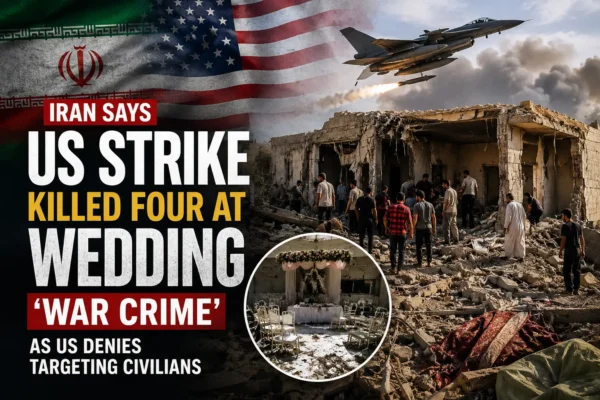
Donald Trump’s renewed threat to impose a blockade on the Strait of Hormuz has heightened geopolitical risks while doing little to resolve the underlying tensions in the region. The strategic waterway, through which nearly a fifth of the world’s oil supply passes, remains a focal point of confrontation between the United States and Iran, with both sides maintaining hardline positions. Trump’s rhetoric signals a willingness to escalate economic and military pressure on Tehran, framing the potential blockade as a means to enforce compliance with existing agreements and ensure freedom of navigation. However, analysts warn that such a move could backfire, triggering retaliatory actions from Iran and further destabilizing global energy markets. Even the suggestion of restricting access to the strait has already contributed to volatility in oil prices and shipping routes. Iran, for its part, has consistently warned that any attempt to block or control the Strait of Hormuz would be met with a strong response. Iranian officials argue that the waterway is vital to their national security and economic survival, and they have demonstrated both the capability and intent to disrupt maritime traffic if provoked. This creates a high-stakes standoff where miscalculation could quickly escalate into direct conflict. Despite the aggressive posturing, the fundamental issues between Washington and Tehran remain unresolved. Disputes over sanctions, regional influence, and security guarantees continue to stall meaningful progress. Trump’s blockade threat, rather than advancing negotiations, appears to reinforce entrenched positions on both sides. International stakeholders, including major oil-importing nations, are increasingly concerned about the potential fallout. A prolonged disruption in the Strait of Hormuz would have far-reaching consequences for global trade and energy security, amplifying the urgency for diplomatic solutions. In essence, while Trump’s threat underscores the seriousness of the situation, it leaves the core predicaments unchanged—highlighting a cycle of pressure and resistance with no clear path to resolution. Join our courses

Read More
Missing US airman Iran

Search for missing US airman continues as Trump threatens ‘hell’ if Iran does not reach deal

The search for a missing American airman in Iran has intensified as the conflict between Washington and Tehran enters a dangerous new phase. The airman was part of a crew aboard an F-15E Strike Eagle that was shot down over Iranian territory during ongoing military operations. While one crew member was successfully rescued shortly after the incident, the second remains unaccounted for, triggering a high-risk search-and-rescue mission in hostile terrain. U.S. forces have deployed helicopters, special operations teams, and surveillance aircraft to locate the missing airman, operating under the constant threat of enemy fire. Reports indicate that Iranian authorities have urged civilians to help find the pilot, even offering rewards, which has further complicated the rescue effort and increased the urgency of the situation. The incident marks a significant escalation, as it is among the first confirmed cases of a U.S. combat aircraft being downed inside Iran during the ongoing war. Military analysts warn that if the airman is captured, it could become a major geopolitical flashpoint and a bargaining tool in negotiations. Amid this unfolding crisis, Donald Trump has issued a stark warning to Iran, giving the country a 48-hour deadline to reach a deal or face severe consequences. In a social media post, he threatened that “all hell” would be unleashed if Tehran fails to comply, signaling a potential escalation in U.S. military action. The situation remains highly volatile, with ongoing airstrikes, regional instability, and rising casualties. As the search continues, the fate of the missing airman has become a focal point of the broader conflict, underscoring the human stakes behind the escalating geopolitical confrontation.

Read More
Trump Iran threat

Trump threatens to ‘obliterate’ Iran’s energy facilities if deal not reached ‘shortly’

U.S. President Donald Trump has sharply escalated tensions with Iran by warning that he could “obliterate” the country’s energy infrastructure if a deal to end the ongoing conflict is not reached soon. The threat specifically targets critical assets such as oil fields, power plants, and water facilities—systems that are essential to both Iran’s economy and civilian life. The warning comes amid negotiations aimed at reopening the Strait of Hormuz, a vital global النفط shipping route through which a significant portion of the world’s oil supply passes. Trump has indicated that progress is being made with what he described as a “more reasonable” Iranian leadership, but he set a short timeline for results, signaling that military escalation remains on the table. Iran, however, has pushed back strongly, reportedly rejecting U.S. proposals and denying that meaningful direct negotiations are underway. Tehran has also warned that any attack on its infrastructure would trigger retaliatory strikes across the region, potentially targeting energy facilities in neighboring countries and escalating the conflict into a broader regional war. The stakes are particularly high because energy infrastructure is deeply tied to civilian survival. Analysts and human rights organizations have cautioned that deliberate attacks on such facilities could have catastrophic humanitarian consequences and may violate international law. Meanwhile, global markets are already reacting. Oil prices have surged amid fears of disruption, and economists warn that a prolonged conflict could fuel inflation and slow global economic growth. The situation remains fluid, with diplomatic efforts continuing behind the scenes, but the rhetoric signals that the crisis may be approaching a critical tipping point

Read More
Trump Iran negotiations

Trump says negotiations to end war happening ‘right now’ and Iran is ‘talking sense’

U.S. President Donald Trump has claimed that negotiations to end the ongoing conflict with Iran are actively underway, saying talks are happening “right now” and that Tehran is “talking sense.” His remarks suggest a possible diplomatic opening after weeks of escalating military tensions in the Middle East. According to Trump, recent discussions have been “productive” and involve senior U.S. officials working through intermediaries to reach a broader agreement that could bring a “complete resolution” to hostilities. He indicated that Iran appears increasingly willing to negotiate, even describing the tone of communication as constructive and encouraging. However, the situation remains highly complex and contested. Iranian officials have publicly denied that any direct negotiations with Washington are taking place, acknowledging only indirect contacts via mediators such as Pakistan, Turkey, and Egypt. This contradiction highlights a familiar pattern in U.S.–Iran relations, where backchannel diplomacy often occurs alongside public denials. Key sticking points persist. Iran is reportedly demanding guarantees against future attacks, compensation for war damages, and no restrictions on its missile program. Meanwhile, the United States is pushing for stricter conditions, particularly concerning security and regional stability. Despite Trump’s optimism, skepticism remains among analysts and officials. Ongoing military exchanges and deep mistrust between both sides continue to undermine confidence in a swift resolution. Still, the emergence of diplomatic engagement—even indirect—signals a potential shift from confrontation toward negotiation. Whether these talks evolve into a formal agreement will depend on bridging significant geopolitical and strategic differences.

Read More
Trump Iran unconditional surrender

Trump demands Iran’s ‘unconditional surrender’ as Israel says it hit leadership bunker ‘with 50 jets’

U.S. President Donald Trump has demanded Iran’s “unconditional surrender”, dramatically escalating rhetoric as the conflict between Iran and Israel intensifies across the Middle East. The statement came as Israel claimed it had launched a massive airstrike using around 50 fighter jets to destroy a key underground bunker believed to be used by senior Iranian leadership in Tehran. Posting on his Truth Social platform, Trump said there would be “no deal with Iran except unconditional surrender,” signaling that Washington would not pursue negotiations unless Tehran fully capitulates. He also suggested that once Iran surrendered and installed what he described as a “great and acceptable leader,” the United States and its allies would help rebuild the country’s economy and restore stability. The remarks came amid a rapidly expanding regional war. Israeli military officials said their air force conducted a large-scale strike on a fortified underground command bunker beneath Iran’s leadership compound in Tehran. According to the Israel Defense Forces (IDF), about 50 warplanes dropped dozens of bombs on the site, targeting infrastructure believed to be used by senior regime figures following the death of Iran’s supreme leader earlier in the conflict. Israeli officials described the bunker as a secure command center spanning multiple streets beneath the capital, designed to protect leadership during wartime. The strike was part of a broader wave of Israeli attacks on Iranian and allied targets across the region. Meanwhile, Iran has continued retaliatory missile and drone attacks against Israeli positions and U.S. bases in the Gulf, raising fears of a wider regional confrontation. International leaders and humanitarian groups have urged de-escalation as casualties rise and displacement spreads across affected areas. Diplomatic efforts are reportedly underway by several countries to mediate the crisis, but Trump’s demand for unconditional surrender suggests the path to negotiations remains uncertain as the conflict deepens.

Read More
Israeli strikes Lebanon

Israeli attacks kill 31 in Lebanon, Iran strikes across region, and US warplanes crash in Kuwait

Israeli military forces carried out intense airstrikes across southern Lebanon, hitting Hezbollah-controlled areas including the southern suburbs of Beirut, the Bekaa Valley, and zones near Tyre, in response to a barrage of missiles and drones launched by the Iran-aligned group toward northern Israel. At least 31 people were killed and scores injured, according to Lebanon’s health authorities, as residential and militant positions were struck. Israeli officials said they targeted senior Hezbollah figures and infrastructure, and warned civilians to evacuate from frontline areas. The broader conflict stems from a joint US-Israeli offensive on Iran after the killing of Iran’s Supreme Leader, which triggered massive Iranian retaliation across the Middle East. Tehran’s Revolutionary Guards launched missiles and drones at Israeli territory, Gulf states, and Western military installations. Regional capitals including Kuwait City, Riyadh, Doha, Abu Dhabi, and Manama reported incoming strikes, damage to airports and oil infrastructure, and civilian casualties. Multiple Gulf airspaces were closed, prompting thousands of flight cancellations and delays. Amid the ongoing hostilities, the Kuwait Ministry of Defence confirmed that several US warplanes crashed on Kuwaiti soil during operations. While exact causes remain unclear, all crew members survived and were reported in stable condition. The incidents underline the high operational tempo and risks faced by coalition air missions in contested airspace. The expanding violence has not only intensified Lebanon’s front but also raised alarm across the Gulf, with diplomatic protests and regional powers bracing for further retaliation. Civilian displacement and international transit disruptions are escalating alongside military confrontations.

Read More
Russian soldiers executions

Russian soldiers tell BBC they saw fellow troops executed on commanders’ orders

Reports from Russian soldiers claiming they witnessed fellow troops being executed on commanders’ orders have raised serious allegations about battlefield discipline and potential war crimes during the ongoing conflict in Ukraine. In interviews with BBC, several servicemen described incidents in which soldiers accused of retreating or refusing orders were allegedly shot by their own side. The accounts, while difficult to independently verify, add to a growing body of testimony suggesting harsh enforcement tactics within parts of the Russian military structure. According to the soldiers, some executions were carried out as warnings to others, particularly during intense fighting when units were under pressure to hold positions. One interviewee claimed that commanders framed such actions as necessary to maintain order and prevent panic among troops facing Ukrainian advances. These statements, if accurate, could indicate violations of international humanitarian law, which prohibits extrajudicial killings and summary executions. Authorities in Russia have not publicly acknowledged the allegations and have repeatedly denied accusations of misconduct by their forces. Meanwhile, officials in Ukraine argue that the testimonies reflect systemic problems within Russian command structures, including poor morale and coercive discipline measures. Independent human rights investigators have previously documented claims of abuse, though confirming incidents in active combat zones remains challenging. The allegations come amid continued scrutiny of Russia’s military leadership and strategy under President Vladimir Putin, as the war enters another prolonged phase with heavy casualties reported on both sides. Analysts note that internal discipline problems often emerge in prolonged conflicts, particularly where communication breakdowns and logistical shortages create stress within units. WABS TALK If corroborated, the claims could increase international calls for investigations into potential war crimes and accountability mechanisms related to the conflict. However, experts caution that testimonies alone are not sufficient proof and require independent verification through forensic evidence and multiple sources. US wants Russia and Ukraine to end war by June, says Zelensky

Read More
Trump global tariffs

Trump raises global tariffs to 15%, day after Supreme Court ruling

In a dramatic policy shift, President Donald Trump announced a global tariff increase to 15%, just one day after a pivotal Supreme Court ruling. This decision marks one of the most significant escalations in trade policy in recent years, with wide‑ranging implications for international commerce, domestic industries, and global markets. The tariff hike is aimed at strengthening U.S. manufacturing and reducing reliance on foreign imports. By raising duties across multiple categories, the administration seeks to encourage domestic production and protect American jobs. However, economists warn that such sweeping measures could trigger retaliatory actions from trading partners, potentially sparking new rounds of trade disputes. Global businesses are bracing for higher costs, particularly in sectors like technology, automotive, and consumer goods. Importers will face increased expenses, which may be passed on to consumers in the form of higher prices. Meanwhile, exporters in countries heavily dependent on U.S. markets are expected to feel immediate pressure, as competitiveness declines under the new tariff regime. The timing of the announcement—coming directly after a Supreme Court ruling—has added political weight to the decision. Analysts suggest that the ruling provided legal backing for broader executive authority in trade matters, paving the way for this aggressive tariff expansion. While supporters argue that the move will bolster national security and economic independence, critics caution that it risks destabilizing global supply chains and undermining long‑standing trade relationships. The coming weeks will reveal how international markets and governments respond to this bold step, and whether negotiations can ease tensions or escalate into a full‑scale trade conflict

Read More
Trump Iran warning

Trump says world has 10 days to see if Iran deal reached

Donald Trump has said the world has roughly 10 days to determine whether a new agreement can be reached with Iran, warning that failure to secure a deal could lead to serious consequences, including potential military escalation. His remarks come as tensions rise over Tehran’s nuclear program and ongoing diplomatic efforts involving the United States and international partners. Speaking after recent negotiations, Trump described the discussions as “productive but complicated,” emphasizing that Washington is seeking a comprehensive agreement that would permanently prevent Iran from obtaining nuclear weapons. He stressed that any deal must include strict limitations on uranium enrichment, expanded international inspections, and constraints on Iran’s missile development capabilities. According to Trump, previous diplomatic frameworks were inadequate, and the new proposal must deliver stronger guarantees. Indirect talks between American and Iranian officials have reportedly taken place in Geneva, where mediators are attempting to bridge longstanding disagreements. Iran continues to maintain that its nuclear activities are intended for civilian energy purposes, while rejecting demands to scale back certain defense programs it considers essential to national sovereignty. These conflicting positions remain a major obstacle to a breakthrough. Meanwhile, the United States has increased its military readiness in the Middle East, deploying additional naval and air assets to the region. Analysts view the buildup as both a pressure tactic in negotiations and a contingency measure should diplomacy fail. The possibility of confrontation has raised global concern, with several governments urging restraint and renewed diplomatic engagement to avoid a wider conflict. Despite his warning, Trump reiterated that his preferred outcome is a peaceful resolution. However, his 10-day timeframe underscores the urgency of the situation and signals that the coming days could be decisive for regional stability and international security.

Read More
Russia-Ukraine peace talks

Difficult’ Russia-Ukraine peace talks end without breakthrough

The latest round of Russia-Ukraine peace talks concluded in Geneva without delivering any meaningful progress toward ending the ongoing war. Over two days of negotiations, Ukrainian President Volodymyr Zelensky described the discussions as “difficult,” accusing Moscow of deliberately stalling the process. The talks, mediated by U.S. envoys, were expected to explore pathways toward a ceasefire and long-term settlement, but they ended abruptly after less than two hours on the second day. Ukrainian officials stressed their commitment to pursuing peace but voiced frustration at Russia’s reluctance to engage constructively. Zelensky emphasized that Kyiv’s delegation had been tasked with maximizing opportunities for peaceful solutions, yet Moscow appeared intent on dragging out negotiations. The Kremlin, meanwhile, maintained its position that Ukraine must make concessions, particularly regarding territorial disputes, which remain the central obstacle to progress. The Geneva talks were part of a U.S.-brokered initiative aimed at reducing tensions and finding common ground. Despite international pressure, both sides left without agreeing on concrete steps forward. Analysts highlight that the failure underscores the complexity of achieving a ceasefire, given the entrenched military and political positions. With the fourth anniversary of Russia’s full-scale invasion approaching, the lack of progress raises concerns about prolonged instability in Europe. Observers warn that continued stalemate could deepen humanitarian crises and further destabilize regional security. While the talks ended without breakthrough, both sides acknowledged that dialogue must continue, leaving open the possibility of future negotiations.

Read More