
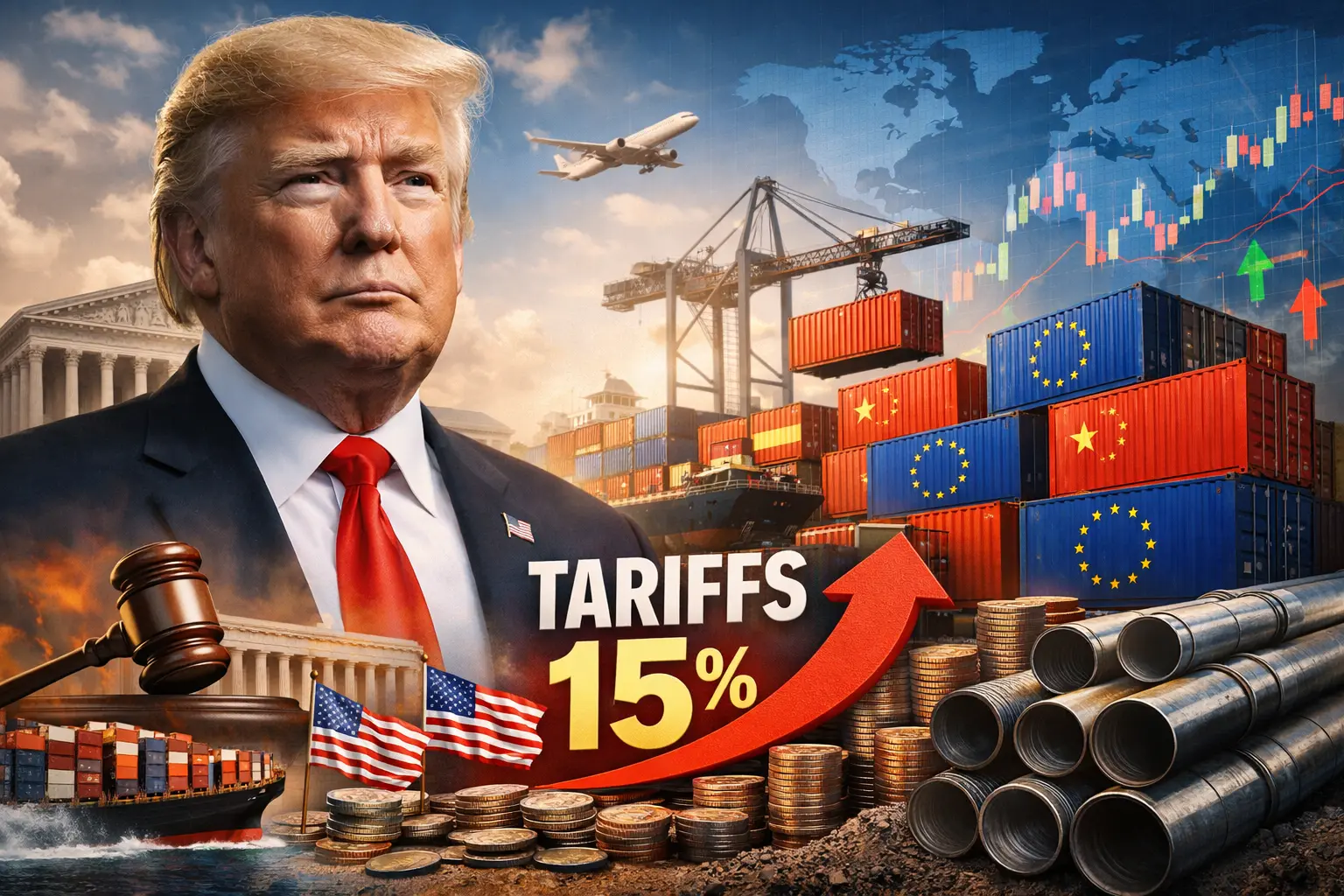
In a dramatic policy shift, President Donald Trump announced a global tariff increase to 15%, just one day after a pivotal Supreme Court ruling. This decision marks one of the most significant escalations in trade policy in recent years, with wide‑ranging implications for international commerce, domestic industries, and global markets.
The tariff hike is aimed at strengthening U.S. manufacturing and reducing reliance on foreign imports. By raising duties across multiple categories, the administration seeks to encourage domestic production and protect American jobs. However, economists warn that such sweeping measures could trigger retaliatory actions from trading partners, potentially sparking new rounds of trade disputes.
Global businesses are bracing for higher costs, particularly in sectors like technology, automotive, and consumer goods. Importers will face increased expenses, which may be passed on to consumers in the form of higher prices. Meanwhile, exporters in countries heavily dependent on U.S. markets are expected to feel immediate pressure, as competitiveness declines under the new tariff regime.
The timing of the announcement—coming directly after a Supreme Court ruling—has added political weight to the decision. Analysts suggest that the ruling provided legal backing for broader executive authority in trade matters, paving the way for this aggressive tariff expansion.
While supporters argue that the move will bolster national security and economic independence, critics caution that it risks destabilizing global supply chains and undermining long‑standing trade relationships. The coming weeks will reveal how international markets and governments respond to this bold step, and whether negotiations can ease tensions or escalate into a full‑scale trade conflict