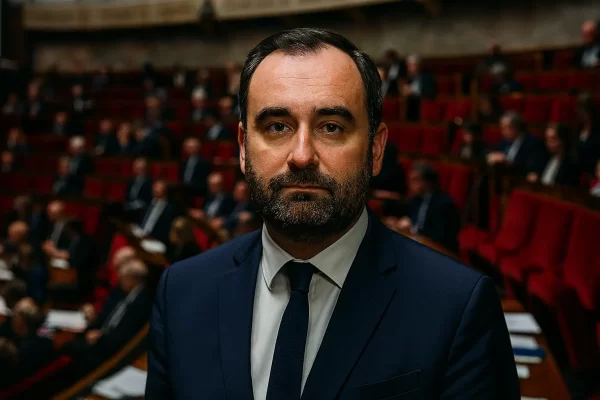

Sébastien Lecornu no-confidence votes

French PM Sébastien Lecornu survives two no-confidence votes by MPs

French Prime Minister Sébastien Lecornu has survived two separate no-confidence motions in the National Assembly, allowing his month-old government to remain in power despite growing political turbulence. The motions, brought by opposition lawmakers from both the left-wing and far-right blocs, were triggered by discontent over Lecornu’s controversial economic reforms and his handling of nationwide protests. The first no-confidence motion was tabled by the leftist coalition La France Insoumise (LFI), accusing the government of “authoritarian methods” and “ignoring the voice of workers.” The second, introduced by the far-right National Rally (RN), criticized Lecornu for what it described as “weak leadership” and “failure to address France’s security and cost-of-living crises.” Both motions were decisively defeated, with the government securing a clear majority of votes in its favor. Lecornu, who was appointed prime minister in September following the resignation of Gabriel Attal, has faced mounting challenges in his short tenure. His proposed labor market reforms, aimed at increasing flexibility for employers and reducing public spending, have been met with fierce opposition from trade unions and student groups. Demonstrations across major French cities have intensified, with protesters accusing the government of pursuing austerity at the expense of social welfare. In a speech following the votes, Lecornu thanked lawmakers who supported his administration and pledged to continue his reform agenda. “France cannot afford paralysis,” he said. “We must move forward with courage and dialogue to secure our economy and restore trust in our institutions.” He also extended an olive branch to opposition parties, calling for “constructive engagement” on key issues such as energy policy, immigration, and public services. Political analysts say Lecornu’s survival offers only temporary stability. While his victory in the Assembly prevents an immediate collapse of the government, deep divisions persist within the political landscape. The National Rally, led by Marine Le Pen, continues to gain popularity ahead of the upcoming regional elections, while the left-wing alliance remains determined to block future government initiatives through parliamentary tactics. President Emmanuel Macron, who appointed Lecornu in a bid to rejuvenate his administration, has also seen his approval ratings decline amid the unrest. Observers note that Lecornu’s resilience in parliament will now depend on his ability to deliver tangible results and restore public confidence in Macron’s centrist platform. China seizes 60,000 maps over ‘mislabelled’ Taiwan For now, Lecornu’s government remains intact—but the dual rejection of the no-confidence motions highlights the fragility of France’s political climate and the growing disillusionment among voters with traditional parties.

Read More
Protests in France

Protests hit France as new PM takes office

France witnessed fresh waves of protests on Tuesday as the country’s newly appointed Prime Minister officially took office, signaling a turbulent start to the government’s new chapter. The demonstrations, which broke out in Paris and several other major cities, reflect deepening public dissatisfaction with government policies and broader social issues. Thousands of protesters, including trade union members, students, and activists, took to the streets carrying banners and chanting slogans against what they see as “out of touch leadership.” Many of the grievances echo long-standing frustrations over economic inequality, rising living costs, and the government’s handling of labor reforms. The protests were largely peaceful, though minor clashes were reported between demonstrators and police near Place de la République in Paris. Authorities deployed additional security forces to manage the unrest, while public transport services were disrupted in several areas. The new Prime Minister, who was appointed by President Emmanuel Macron just days earlier, faces the daunting task of restoring public trust in a climate of growing discontent. While delivering his first speech in office, he called for “dialogue and unity,” pledging to prioritize social justice, employment opportunities, and sustainable economic reforms. However, many protesters remain skeptical. “Every new Prime Minister promises change, but nothing improves for ordinary people,” said a 34-year-old teacher from Lyon who joined the rallies. “We are tired of symbolic speeches; we want real action on wages, housing, and healthcare.” Opposition parties have also seized the moment to criticize the government’s direction. Left-wing leaders accused the administration of ignoring working-class struggles, while far-right groups framed the protests as evidence of failed leadership. The political polarization suggests that the new PM’s term will be marked by fierce debates in parliament as well as on the streets. Trade unions announced plans for further strikes in the coming weeks, particularly targeting the transportation and education sectors. Analysts warn that prolonged protests could weaken the Prime Minister’s ability to pass reforms and undermine President Macron’s broader agenda. Despite the unrest, some observers view the protests as an opportunity for the government to engage more meaningfully with citizens. Political analysts argue that addressing demands for fairer wages, improved welfare systems, and greater transparency could help ease tensions and rebuild confidence. For now, France remains on edge as its new Prime Minister begins his tenure under the shadow of public discontent. Whether the government can bridge the widening gap between political leadership and ordinary citizens will determine not only the success of the new administration but also the stability of the country in the months ahead.

Read More