
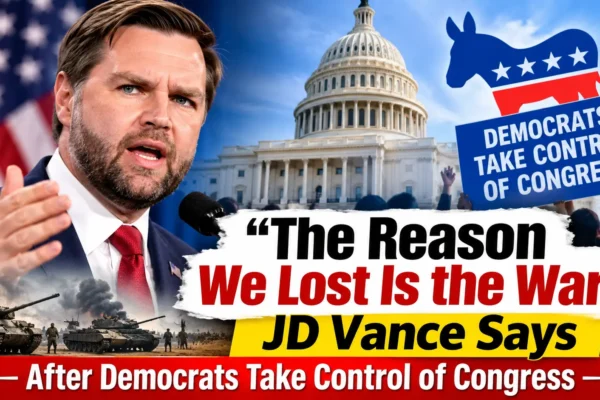
‘The reason we lost is the war,’ JD Vance says after Democrats take control of Congress
JD Vance has acknowledged the impact of the war on American politics after Democrats took control of Congress, saying that the conflict was a major reason for the Republican Party’s defeat. His remarks highlight the political challenges facing the administration as voters express concerns about the country’s direction, foreign policy and domestic priorities. The statement has renewed debate over how overseas conflicts influence elections in the United States. Wars can affect public opinion through their financial costs, military consequences and impact on the lives of American service members and their families. When conflicts continue without a clear resolution, voters may increasingly question the government’s strategy and priorities. For Republicans, the election result represents a significant political challenge. Losing control of Congress can make it more difficult for the administration to pass legislation, approve spending plans and advance key policy proposals. Democrats, meanwhile, may gain greater opportunities to scrutinise government decisions and challenge the administration’s approach to major national issues. Vance’s comments also underline the importance of foreign policy in shaping domestic political debates. Although economic conditions, healthcare, immigration and other issues influence voter decisions, an unpopular war can become a defining issue during an election campaign. The political consequences may extend beyond the immediate election result. Republican leaders could face pressure to reconsider their messaging, explain their foreign policy decisions and respond to voters who want greater accountability. Democrats may use their strengthened position in Congress to demand answers about the conflict and its wider consequences. However, the extent to which the war determined the outcome remains a matter of political analysis. Election results are often influenced by several factors, including voter turnout, economic concerns, candidate popularity and dissatisfaction with the governing party. Vance’s assessment nevertheless places the conflict at the centre of the post-election discussion. As Washington prepares for a potentially more confrontational political environment, the administration’s handling of the war could remain a major test of its leadership and public support