

Ceuta migrant crisis

Spain’s PM blames traffickers after 60,000 migrants reach Ceuta from Morocco

Spain’s Prime Minister has blamed human trafficking networks after more than 60,000 migrants reportedly reached the Spanish enclave of Ceuta from neighboring Morocco, triggering one of the largest migration surges in recent years. The unprecedented arrivals have placed significant pressure on Spain’s border security, emergency shelters, and humanitarian services. Speaking after an emergency government meeting, the Prime Minister said organized criminal groups were exploiting vulnerable people by promising safe passage into Europe in exchange for large sums of money. He stressed that the migration surge was driven by traffickers who profit from desperation while putting thousands of lives at risk during dangerous sea and land crossings. Spanish authorities have deployed additional police, border guards, and military personnel to Ceuta to manage the situation. Temporary reception centers have been expanded as officials work to provide food, medical assistance, and shelter for new arrivals. Emergency teams are also processing asylum claims while identifying vulnerable individuals, including children and families. The Spanish government has intensified cooperation with Moroccan authorities to strengthen border surveillance and dismantle trafficking networks operating across North Africa. Officials said intelligence sharing and joint security operations are essential to preventing further mass crossings and disrupting criminal organizations responsible for smuggling migrants. The European Union has expressed support for Spain, describing the situation as a shared European challenge rather than a national issue. EU leaders have called for stronger external border management while emphasizing the need to protect human rights and provide humanitarian assistance to those seeking asylum under international law. Migration experts say the increase in arrivals reflects a combination of conflict, poverty, political instability, and climate-related hardships across parts of Africa. These factors continue to push thousands of people toward Europe despite the significant risks involved. As Spain faces mounting pressure to balance border security with humanitarian obligations, the government has pledged to continue targeting trafficking networks while working with European and African partners to address the root causes of irregular migration.
Read More
France and Spain wildfires

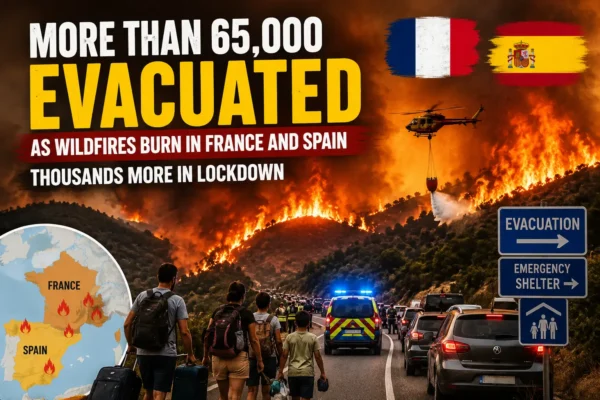
More than 65,000 evacuated as wildfires burn in France and Spain with thousands more in lockdown

More than 65,000 people have been evacuated as devastating France and Spain wildfires continue to spread across southern Europe, fueled by scorching temperatures, strong winds, and prolonged drought. Authorities have also ordered thousands of residents to remain under lockdown as emergency crews battle multiple fast-moving blazes threatening towns, forests, and critical infrastructure. In southern France, firefighters are working around the clock to contain several major wildfires that have consumed large areas of woodland. Thick smoke has reduced visibility, while road closures and power outages have disrupted daily life. Emergency shelters have been opened for displaced families, and additional firefighting aircraft have been deployed to slow the fires’ advance. Spain is facing a similarly severe situation, with multiple regions experiencing rapidly expanding wildfires. Officials have urged residents in high-risk areas to stay indoors as flames approach populated communities. Several villages have been evacuated, while authorities continue to monitor changing weather conditions that could worsen the crisis. The ongoing heatwave across Europe has created ideal conditions for wildfires, with dry vegetation acting as fuel. Meteorologists warn that high temperatures and gusty winds may continue for several days, making containment efforts increasingly difficult. Firefighters from across both countries, supported by aerial water bombers and emergency response teams, are working tirelessly to protect lives and property. Authorities have praised residents for following evacuation orders promptly, helping reduce the risk of casualties. Environmental experts say climate change is increasing the frequency and intensity of extreme weather events, including prolonged heatwaves and destructive wildfires. As Europe experiences another challenging summer, governments are urging communities to remain vigilant and follow official safety instructions. Emergency services continue to assess the damage, while officials hope cooler weather and improved conditions will allow firefighters to gain control of the blazes in the coming days. The France and Spain wildfires remain among the most serious natural disasters currently affecting Europe, with thousands still unable to return to their homes.

Read More