
DOJ Epstein Files Release

US justice department releasing more than three million pages from Epstein files

On January 30, 2026, the U.S. Justice Department announced a major disclosure of documents in its ongoing probe into convicted sex offender Jeffrey Epstein, releasing more than three million pages of records as part of a mandated transparency effort under the Epstein Files Transparency Act. Deputy Attorney General Todd Blanche said the release includes a large volume of material — over 2,000 videos and about 180,000 images — drawn from the department’s investigations, which span more than two decades of probes in Florida and New York, as well as related inquiries into Epstein’s network and activities. Although the law required all unclassified documents to be made public by December 19, 2025, the Justice Department missed that deadline due to the enormity of the review and redaction process. Hundreds of attorneys were tasked with examining the material to properly redact personally identifying information of victims, sensitive law enforcement details, and content that could jeopardize ongoing investigations. Blanche emphasized that while extensive redactions were necessary — including removing the identities of all women in images except Ghislaine Maxwell — the department did not withhold records for political reasons, dismissing claims of shielding any individual from scrutiny. The released files add to previously disclosed batches and represent a significant step in fulfilling the department’s legal obligations under the new transparency law, even as some material remains subject to further review or restricted access by Congress. The surge of public attention around the case — driven by both the scale of the release and the high-profile figures referenced in some records — follows widespread criticism from lawmakers and advocacy groups who had pressed the Justice Department for a more complete disclosure of Epstein-related materials. EU adds Iran’s Revolutionary Guards to terrorist list

Read More
Trump warns Iran time is running out

Trump warns Iran ‘time is running out’ for nuclear deal as US military builds up in Gulf

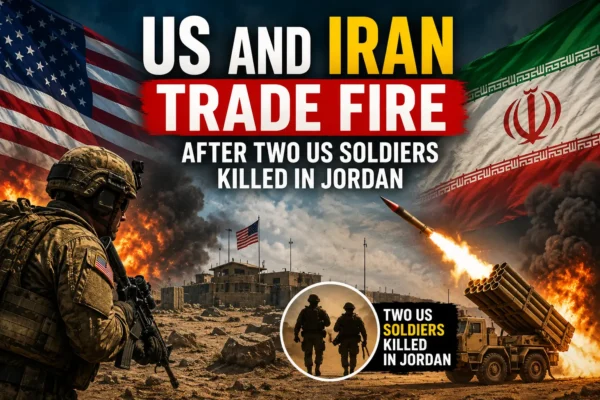
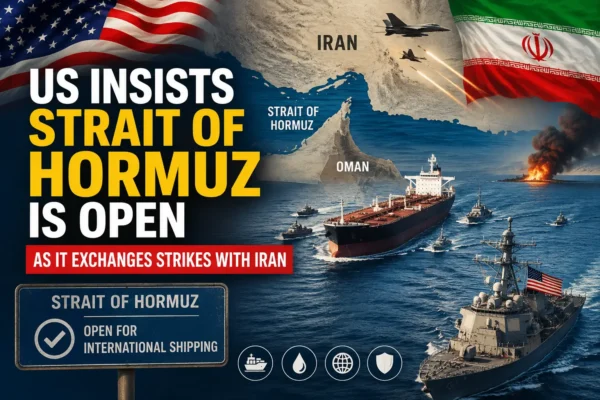
President Donald Trump has issued a stark warning to Iran that “time is running out” for Tehran to negotiate a fresh nuclear deal, intensifying one of the most serious diplomatic standoffs between Washington and Tehran in years. Trump used his Truth Social platform to demand that Iran return to negotiations on its nuclear programme under terms that would completely bar nuclear weapons development. He framed the ultimatum as urgent, urging Tehran to “come to the table” before diplomatic avenues close and military action becomes unavoidable. Alongside this warning, the United States has deployed a significant military buildup in the Persian Gulf region, centred on a “massive armada” led by the aircraft carrier USS Abraham Lincoln. Trump described the force as “ready, willing, and able to rapidly fulfil its mission with speed and violence, if necessary,” underscoring that diplomatic pressure is being backed by a credible military posture. In his message, Trump referenced past U.S. strikes on Iranian nuclear facilities during the 2025 conflict and warned that “the next attack will be far worse” if Iran refuses to negotiate. Tehran has rebuffed what it calls diplomacy under threat, insisting that negotiations must occur without military pressure and that it will defend itself if attacked. Iranian officials have rejected recent U.S. overtures and described Washington’s approach as ineffective and confrontational. The current crisis is unfolding amid broader regional and global concern over Iran’s nuclear trajectory, internal unrest, and the growing risk that further escalation could ignite a wider Middle East conflict. U.S. allies in the region have urged restraint while quietly strengthening their own defences. Some governments remain reluctant to host American military operations, complicating Washington’s strategic options. With tensions rising, Trump has made clear that his administration prefers a negotiated settlement — but only on strict terms. As military forces gather in the Gulf and rhetoric hardens on both sides, the coming weeks may prove decisive in determining whether diplomacy prevails or the standoff slides toward open confrontation.

Read More
Israel Gaza Hostage Remains

Israel says it has retrieved remains of final Gaza hostage

Israel has announced that it has recovered the remains of what it says was the final Israeli hostage held in Gaza, marking a grim milestone in the aftermath of the October 7 attacks and the prolonged war that followed. Israeli officials confirmed the operation was carried out by the military and domestic security services during a targeted mission in southern Gaza. The remains were transferred back to Israel for forensic identification, after which authorities notified the victim’s family. The individual had been presumed dead for months, but confirmation only came following the recovery process. The announcement brings symbolic closure to Israel’s hostage recovery efforts, which have been ongoing alongside intense military operations across Gaza. According to Israeli leaders, the mission reflects a continued commitment to returning every captive, living or deceased, to their families. Prime Minister Benjamin Netanyahu said the country “bows its head in mourning” and reaffirmed Israel’s pledge to account for all those taken during the Hamas-led assault. Defense officials described the recovery as both operationally complex and emotionally significant, emphasizing that intelligence gathering and ground coordination played a critical role. Families of hostages have expressed mixed emotions, combining relief at finally receiving answers with deep grief over the loss of their loved ones. Advocacy groups representing relatives said the moment underscores the human cost of the conflict and renewed calls for accountability. The development comes amid ongoing fighting and mounting international pressure for a ceasefire and expanded humanitarian access to Gaza. Palestinian health authorities continue to report heavy civilian casualties, while aid agencies warn of worsening conditions across the enclave. With the confirmation of the Israel Gaza hostage remains, attention now shifts to broader diplomatic efforts aimed at ending the war and addressing the future governance of Gaza. For many Israelis, the recovery closes one painful chapter, even as the wider conflict shows few signs of resolution.

Read More
Minneapolis immigration agents shooting

One dead after Minneapolis shooting involving immigration agents

A fatal shooting in Minneapolis, Minnesota, involving U.S. federal immigration agents has resulted in the death of one person, according to multiple media reports and hospital records. The incident occurred on January 24, 2026, at the intersection of East 26th Street and Nicollet Avenue South during a broader immigration enforcement operation led by U.S. Immigration and Customs Enforcement (ICE) agents. A 51-year-old man who was shot in the chest by an ICE agent was taken to a local hospital and later pronounced dead, marking another deadly encounter in the city amid heightened federal enforcement activity. Local law enforcement sources and eyewitness accounts indicate that federal agents were engaged in a mission tied to expanded immigration operations when the confrontation occurred. Officials from the Department of Homeland Security later stated that the man was armed and that a firearm with two magazines was recovered at the scene. This assertion has been cited in official statements as justification for the use of deadly force, though further details have not yet been independently confirmed. The shooting follows earlier controversial incidents involving immigration officers in Minneapolis. On January 7, 2026, an ICE agent fatally shot Renée Nicole Good, a 37-year-old U.S. citizen and mother, during an encounter on Portland Avenue South. Accounts from local authorities and federal officials have sharply differed over whether she posed an imminent threat at the time of the shooting, adding to public concern and scrutiny. Both deaths have intensified unrest in the city, prompting protests and renewed calls from Minnesota officials for federal immigration enforcement actions to be paused. Governor Tim Walz condemned the January 24 shooting as “sickening” and urged the Trump administration to halt the current enforcement campaign in the state, arguing that it endangers community safety and undermines public trust. The situation remains fluid, with investigations ongoing and community reactions continuing. The incidents have reignited a national debate over the use of force by federal agents in densely populated urban areas and the level of oversight applied to immigration enforcement operations.

Read More
Trump Nato troops Afghanistan remarks

Trump remarks about Nato troops in Afghanistan are ‘insulting’, says Starmer

UK Labour leader Sir Keir Starmer has condemned remarks by former US president Donald Trump about Nato troops in Afghanistan, describing them as “insulting” and disrespectful to allied forces who served and died alongside American soldiers during the conflict. Starmer said Trump’s comments undermined the sacrifices made by British and other Nato personnel over two decades of operations in Afghanistan. He stressed that the mission was conducted collectively, under Nato command, and involved shared decision-making and shared risk. “British troops stood shoulder to shoulder with US forces,” Starmer said. “Any suggestion that allied contributions were secondary or unworthy is deeply offensive to the families of those who lost their lives.” Trump, who has repeatedly criticised the Afghanistan war and the chaotic withdrawal in 2021, has in recent remarks questioned the value of Nato involvement and accused allies of failing to meet their responsibilities. While Trump did not single out the UK by name, his broader comments about allied performance prompted a strong reaction in London. The UK lost 457 service personnel during the Afghanistan campaign, making it the second-largest contributor of troops after the United States. British forces played key roles in combat operations, training Afghan security forces, and reconstruction efforts, particularly in Helmand province. Starmer said it was legitimate to debate the political decisions that led to the war and the manner of the withdrawal, but argued that criticism should never be directed at the troops themselves. He warned that dismissive rhetoric risked damaging trust within Nato at a time of heightened global insecurity. The comments also drew criticism from senior military figures and veterans’ groups, who said allied unity was essential for the credibility of the alliance. With Trump campaigning for a return to the White House and questioning long-standing US security commitments, the row is likely to fuel further debate in Europe about the future of Nato and the reliability of US leadership within the alliance.

Read More
Trump Greenland negotiations

Trump wants ‘immediate negotiations’ to acquire Greenland but insists he ‘won’t use force’

Former US President Donald Trump has renewed his controversial interest in Greenland, calling for “immediate negotiations” to acquire the strategically vital Arctic island while insisting that the United States would not use military force to achieve the goal. The remarks have reignited international debate over sovereignty, security, and the future balance of power in the Arctic region. Trump framed his position as a matter of national and global security, arguing that Greenland’s location and natural resources make it critical at a time of rising competition among major powers. He stressed that his approach would rely on diplomacy and economic engagement rather than coercion, saying that negotiations could bring mutual benefits to both the United States and Greenland’s population. According to Trump, closer ties would lead to investment, infrastructure development, and enhanced security cooperation. Greenland, an autonomous territory within the Kingdom of Denmark, has repeatedly rejected the idea of being sold or transferred to another country. Danish officials have reaffirmed that Greenland is not for sale, while Greenlandic leaders have emphasized the island’s right to self-determination. Trump’s latest comments nevertheless place renewed pressure on Copenhagen and Nuuk, particularly as Arctic shipping routes open and interest in rare earth minerals intensifies. Analysts note that Trump’s insistence on non-forceful methods appears designed to soften criticism that his proposal undermines international norms. However, critics argue that even pushing for acquisition risks destabilizing relations with allies and sets a troubling precedent. Supporters counter that strategic realities require bold thinking and that negotiations do not automatically imply an outcome. The episode highlights the growing geopolitical importance of the Arctic, where climate change, security concerns, and resource competition intersect. Whether Trump’s call for talks gains traction or fades as diplomatic resistance hardens, the renewed focus on Greenland underscores how Arctic politics are moving closer to the center of global strategic discussions.

Read More
Trump first-year wins

Trump touts first-year wins at White House as Macron warns of shift to ‘world without rules

US President Donald Trump used a White House address to highlight what he described as major achievements in his first year back in office, as French President Emmanuel Macron warned that the world may be entering a “world without rules,” marked by growing power politics and weakened international norms. Speaking alongside senior officials and supporters, Trump argued that his administration had delivered swift results on the economy, border security and US global influence. He pointed to tougher immigration enforcement, new trade terms aimed at protecting American industry, and renewed pressure on allies to increase defence spending. Trump said these moves demonstrated that the United States was “leading again” and no longer constrained by agreements he considers unfair. The White House message focused heavily on sovereignty and national interest, with Trump insisting that strong borders and transactional diplomacy were essential to restoring American strength. He framed his first-year record as proof that unilateral action, rather than multilateral consensus, produces faster outcomes. In contrast, Macron struck a more cautionary tone in a separate address, warning that international rules built after the Second World War are being steadily eroded. He argued that the rise of great-power rivalry, combined with selective respect for international law, risks creating a global order driven more by force than cooperation. Without shared rules, Macron said, smaller states become more vulnerable and conflicts harder to contain. The contrasting messages highlight a widening philosophical gap between Washington and key European partners. While Trump’s approach prioritises immediate national gains and flexibility, European leaders continue to emphasise institutions, alliances and predictable rules as foundations of stability. Analysts say the debate goes beyond personalities, reflecting a broader struggle over how power should be exercised in an increasingly fragmented world. As Trump promotes his first-year wins as evidence of effective leadership, Macron’s warning underscores European fears that a rules-based order is giving way to a more volatile and uncertain global landscape.

Read More
Trump Greenland Nobel Prize

Trump ties Greenland demands to Nobel Prize in message to Norway leader

Donald Trump has once again placed Greenland at the centre of global debate, this time linking US ambitions over the Arctic island to the Nobel Peace Prize in a message reportedly sent to Norway’s leader. The unusual communication has drawn sharp reactions across Europe, reviving tensions over sovereignty, diplomacy, and Trump’s unconventional approach to foreign policy. According to officials familiar with the matter, Trump argued that US control or decisive influence over Greenland would strengthen global security, reduce great-power rivalry in the Arctic, and contribute to long-term peace. He framed these claims within the context of Norway’s role as host of the Nobel Peace Prize, suggesting that such a geopolitical achievement would merit consideration for the prestigious award. The message was described as direct and characteristically provocative, reflecting Trump’s long-standing view of himself as a dealmaker capable of reshaping international order. The Trump Greenland Nobel Prize narrative has unsettled Nordic leaders, particularly Denmark, which retains sovereignty over Greenland. Danish officials have repeatedly stressed that Greenland is not for sale and that its future must be decided by its own people. Norwegian sources, meanwhile, emphasised that the Nobel Committee operates independently and does not consider political lobbying or territorial proposals when awarding the prize. Greenland’s strategic value has increased significantly in recent years due to climate change, melting ice, and expanded access to shipping routes and natural resources. Both China and Russia have stepped up Arctic engagement, a trend Trump has often cited as justification for stronger US involvement. Critics, however, argue that tying territorial ambitions to a peace prize undermines diplomatic norms and risks inflaming regional tensions rather than easing them. Political analysts note that Trump has previously linked his diplomatic initiatives to Nobel recognition, pointing to Middle East agreements and relations with North Korea. In this case, the Greenland remarks appear aimed at reinforcing his image as a leader willing to challenge traditional boundaries of diplomacy. As reactions continue, the episode underscores how Greenland remains a flashpoint in Arctic geopolitics—and how Trump continues to blend personal legacy with international strategy.

Read More
Gaza Board of Peace

Blair and Rubio among names on Gaza ‘Board of Peace’

Former UK prime minister Tony Blair and US senator Marco Rubio are among a list of prominent international figures reportedly associated with a proposed “Gaza Board of Peace,” an initiative aimed at shaping a post-war political and security framework for the Palestinian territory. The concept of a Gaza Board of Peace has emerged amid intense international debate over how Gaza should be governed and rebuilt once active hostilities subside. According to officials familiar with the discussions, the proposed body would bring together senior political figures, security experts, and regional stakeholders to oversee stabilization, humanitarian coordination, and the early stages of reconstruction, while also advising on longer-term governance arrangements. Tony Blair’s name has drawn particular attention given his previous role as the Middle East Quartet’s special envoy, a position that placed him at the center of diplomatic efforts following earlier rounds of conflict. Supporters argue that his experience navigating complex regional politics could lend credibility and institutional memory to the initiative. Critics, however, contend that past diplomatic frameworks failed to deliver lasting solutions and question whether familiar figures can produce different outcomes. Marco Rubio’s inclusion signals continued US interest in shaping the post-conflict order in Gaza. As a senior Republican voice on foreign policy, Rubio has consistently emphasized Israel’s security concerns while also calling for measures to prevent Gaza from becoming a persistent source of regional instability. His reported involvement suggests that any Gaza Board of Peace would seek bipartisan visibility in Washington, particularly as debates intensify over aid, security guarantees, and regional alliances. Proponents of the Gaza Board of Peace describe it as a temporary mechanism designed to avoid a power vacuum and prevent the re-emergence of militant control. They stress that the body would not replace Palestinian self-governance but instead act as a bridge toward a more stable and internationally supported administration. Skeptics remain wary, warning that externally driven governance models risk lacking local legitimacy. As discussions continue, the proposed Gaza Board of Peace underscores the scale of diplomatic maneuvering underway as the international community searches for a viable path forward in Gaza.

Read More
Iran warns it will retaliate if US attacks

Iran warns it will retaliate if US attacks as protesters defy crackdown

Iran issued a stark warning that it will retaliate if the United States attacks, as nationwide protests continued despite an increasingly severe government crackdown. The warning came from Parliament Speaker Mohammad Baqer Qalibaf, who told lawmakers that any U.S. military strike on Iranian territory would be met with force against U.S. and allied interests, including regional military bases and Israel, which Tehran labels “legitimate targets” in such an event. This threat underscores the heightened tension between Tehran and Washington amid one of the most sustained protest movements in years. The demonstrations began in late December in response to deepening economic hardship, especially soaring inflation, and have spread to more than 100 cities and towns. Protesters are demanding systemic change, even as state authorities escalate their response with lethal force, mass arrests, and a widespread internet blackout that limits outside reporting. Verified videos show fierce clashes between protesters and security forces in major cities. U.S. President Donald Trump has publicly expressed support for the demonstrators, saying the United States “stands ready to help” and warning Iran that any further killings could provoke a strong response. In parliament, some Iranian lawmakers responded to the U.S. rhetoric with chants of “Death to America,” reflecting hardline sentiment within the regime. Iranian authorities have also toughened domestic rhetoric, with the attorney general declaring participants in the protests as “enemies of God,” a designation under Iranian law that carries the death penalty. Despite escalating violence and significant casualties, protesters continue to defy the crackdown, pressing ahead with demonstrations that show widespread public discontent with the clerical establishment. The situation remains volatile, with the potential for international military escalation if diplomatic or political solutions are not pursued.

Read More