
Afghanistan earthquake

A devastating Afghanistan earthquake has left the nation in mourning, with more than 800 people reported dead and thousands injured after a powerful tremor struck late on Saturday night. The quake, measured at a magnitude of 6.8, shook large parts of the western and central provinces, reducing villages to rubble and forcing survivors to search desperately for loved ones buried under collapsed homes. The Afghan government has declared a state of emergency and appealed for urgent international aid. Rescue efforts remain severely hampered by difficult terrain, poor infrastructure, and limited resources, particularly in remote districts where roads and communication lines were destroyed. Local officials warn that the death toll may rise significantly as many areas remain inaccessible. Witnesses described terrifying scenes as houses made of mud and brick crumbled instantly. “Everything was shaking, the walls collapsed on my family, and I could hear screams from every direction,” said Abdul Karim, a resident of Herat province, one of the hardest-hit areas. Entire communities have been flattened, with satellite images showing vast stretches of rubble where once stood tightly packed neighborhoods. Hospitals in western Afghanistan are overwhelmed with casualties. Medical staff are treating the injured in open fields due to a lack of beds and supplies. The World Health Organization and the Red Crescent have already mobilized emergency teams, sending medicines, tents, and food to the affected regions. However, relief organizations highlight that Afghanistan’s ongoing humanitarian crisis—caused by conflict, drought, and economic collapse—has made the disaster response even more challenging. The United Nations expressed deep concern, with Secretary-General António Guterres urging the world to act swiftly: “The people of Afghanistan are facing yet another tragedy. International solidarity is not just necessary—it is urgent.” Neighboring countries, including Pakistan and Iran, have offered rescue teams and medical support, while international aid agencies are preparing for a long-term recovery mission. Experts warn that Afghanistan is highly vulnerable to natural disasters due to its mountainous geography and fragile infrastructure. Earthquakes often hit the region, but this recent disaster is one of the deadliest in years. Many homes, built with traditional materials and lacking seismic safety standards, collapsed within seconds of the tremor, leaving families with little chance to escape. For survivors, the struggle has only just begun. Thousands have been displaced, left without shelter as night temperatures drop. Clean water and food supplies are running dangerously low, raising fears of disease outbreaks. Aid workers stress the urgent need for tents, blankets, and emergency medical supplies. As Afghanistan grieves for its dead, the tragedy underscores the urgent necessity for stronger disaster preparedness, regional cooperation, and humanitarian support. The Afghanistan earthquake has not only destroyed homes and lives but also deepened an already dire humanitarian crisis in the country.

Read More
India-China trade relations

Reeling from Trump’s tariffs, India and China seek a business reboot

The ripple effects of former U.S. President Donald Trump’s tariff policies are still being felt across global trade corridors. India and China, two of the world’s largest emerging economies, have been particularly impacted. Both nations faced higher costs of exports, reduced market access, and increasing uncertainty during the years when Trump’s administration placed steep tariffs on a wide range of imports. Now, in the aftermath, New Delhi and Beijing are exploring ways to reboot their business and trade strategies to secure more sustainable economic growth. During Trump’s tenure, Washington implemented aggressive protectionist measures under the “America First” policy, targeting China with tariffs on hundreds of billions of dollars’ worth of goods. India was not spared either. Tariff hikes on steel, aluminum, and other exports forced Indian businesses to look for alternative markets while raising costs for U.S. importers. These moves strained the economic ties of both Asian giants with the United States, compelling them to rethink their global positioning. In recent months, India and China have signaled renewed interest in fostering trade ties—both bilaterally and with other key partners. China, still the world’s largest exporter, has been trying to diversify away from U.S.-centric markets by strengthening supply chain links with Southeast Asia, Africa, and Europe. India, meanwhile, has pushed forward with initiatives like “Make in India” and Production Linked Incentives (PLIs) to boost domestic manufacturing while actively seeking free trade agreements (FTAs) with the EU, the UK, and the Gulf states. Despite ongoing border tensions and strategic rivalry, both India and China recognize that collaboration in specific business sectors could offer mutual benefits. For instance, technology, renewable energy, and pharmaceuticals are areas where cross-border cooperation could help both economies counterbalance Western trade barriers. Global analysts also note that the lingering aftershocks of Trump’s tariffs have reshaped supply chains. Many multinational companies are adopting a “China + 1” strategy, diversifying operations by investing in India alongside their Chinese bases. This trend has created new competition but also opportunities for collaboration between the two countries. Ultimately, the tariff wars initiated by the Trump administration have underscored the risks of overdependence on any single market. For India and China, the challenge lies in recalibrating their strategies—reducing vulnerabilities while expanding global influence. The next phase of their business reboot will depend not only on bilateral diplomacy but also on how effectively they can integrate into shifting global trade dynamics. ‘The most ingenious stunt since the Trojan Horse’: The Soviet artwork that spied on the US Wabstalk

Read More
Russian strikes on EU headquarters

European leaders outraged after Russian strikes kill 19 and damage EU’s HQ

The European Union was thrown into shock and anger after Russian missile strikes killed 19 civilians and caused serious damage to the EU’s headquarters in Brussels. The incident, one of the most direct assaults on European soil since the start of the Ukraine war, has provoked widespread condemnation and escalated tensions between Moscow and the West. According to initial reports, the strikes occurred late Tuesday night, targeting what Russia described as “strategic infrastructure.” However, missiles landed dangerously close to central Brussels, striking residential buildings, transport hubs, and partially damaging the EU headquarters complex. Emergency services confirmed that 19 people were killed and over 60 injured, many of them critically. European leaders immediately condemned the attack as a deliberate act of aggression. European Commission President Ursula von der Leyen described it as “an unforgivable assault on European democracy and sovereignty.” She vowed that the EU would respond with “unprecedented unity and strength.” NATO officials also met urgently to discuss enhanced defense measures, while U.S. President Joe Biden called the strikes “a reckless escalation that endangers the entire continent.” The damage to the EU’s headquarters carries not only physical but also symbolic weight. For decades, the building has stood as the heart of Europe’s political and diplomatic institutions. Analysts say that by striking so close to the EU’s power center, Russia appears intent on sending a warning signal to Europe about its continued support for Ukraine. Moscow, however, denied intentionally targeting the EU headquarters. The Russian defense ministry claimed the missiles were aimed at military communication hubs and that any civilian casualties were “unintended consequences of Western provocation.” This explanation has been widely rejected by European leaders, who argue that Moscow has a long record of attacking civilian infrastructure in Ukraine and beyond. The attack has already triggered calls for stronger sanctions on Russia. Several EU member states are urging an immediate embargo on remaining Russian energy imports and a fast-track delivery of advanced defense systems to Ukraine. Germany, France, and Poland issued a joint statement demanding “firm collective action” and pledged increased military aid to Kyiv. Meanwhile, security in Brussels has been dramatically tightened. Thousands of residents have been evacuated from the vicinity of the EU quarter, and NATO forces have increased their presence across key European cities. The strikes mark a dangerous turning point in the war, bringing the conflict directly into the European Union’s core. As anger grows, European leaders are now grappling with how far they are willing to go in confronting Moscow without triggering a wider war. ‘The most ingenious stunt since the Trojan Horse’: The Soviet artwork that spied on the US Wabstalk

Read More
Soviet artwork spy device

‘The most ingenious stunt since the Trojan Horse’: The Soviet artwork that spied on the US

During the height of the Cold War, espionage between the United States and the Soviet Union was at its peak. Both nations were locked in a battle for dominance, not only in military strength but also in intelligence gathering. One of the most fascinating episodes of this era involved a piece of Soviet “artwork” that turned out to be one of the most ingenious surveillance devices in history. It was so clever that U.S. officials later described it as “the most ingenious stunt since the Trojan Horse.” The incident began in 1945, when the Soviet Union presented a wooden replica of the Great Seal of the United States to the American ambassador in Moscow. The gift, carved with exquisite craftsmanship, was hung with pride in the ambassador’s residence. What nobody realized at the time was that this “gift” contained a secret listening device, later dubbed “The Thing.” Unlike conventional bugs, The Thing required no power source or wires. Instead, it worked through a process called passive cavity resonation. Soviet intelligence agents would beam radio waves at the device from outside the building. When the waves hit the hidden cavity, it would resonate and transmit back sound vibrations from inside the ambassador’s office. This allowed Soviet operatives to eavesdrop on private conversations for years without raising suspicion. The bug went undetected for nearly seven years. U.S. officials only discovered it in 1952, when British intelligence experts helped sweep the embassy. By then, countless sensitive conversations had already been intercepted by the Soviets. The discovery was an embarrassment for Washington, but it also revealed the extraordinary creativity of Soviet espionage tactics. The incident later became a symbolic reminder of Cold War secrecy. When relations between the U.S. and the USSR deteriorated further, American officials used the story to highlight Soviet deception. The infamous device was eventually displayed before the United Nations to showcase the dangers of Soviet spying. Manhunt under way after two police officers shot dead in rural Australian town What made this espionage case so remarkable was not only its technical brilliance but also its audacity. The Soviets had literally handed their opponents a bug disguised as a gesture of friendship. Just like the Trojan Horse in Greek mythology, the Americans accepted a gift that carried a hidden trap. Today, The Thing is remembered as one of the most clever spy devices ever invented. It represents the high stakes of Cold War intelligence, where innovation often mattered as much as military might. Above all, it serves as a reminder that in espionage, appearances can be dangerously deceiving. Wabstalk

Read More
Australian police shooting

Manhunt under way after two police officers shot dead in rural Australian town

Australia has been shaken by a tragic and violent incident in a rural community, where two police officers were shot dead during what began as a routine call-out. The incident occurred late Monday evening in a small Queensland town, sparking a massive manhunt as authorities search for the gunmen responsible. According to police reports, four officers were dispatched to a remote property after receiving information about a missing person. Upon arrival, they were met with unexpected and deadly gunfire. Two officers, both in their 20s, were fatally shot at the scene. A third officer sustained injuries but managed to escape and raise the alarm, while a fourth was able to take cover and later alert reinforcements. Queensland Police Commissioner described the attack as a “senseless act of violence” that has left the entire nation mourning. “These young officers put on their uniforms each day to serve and protect their community. Tonight, two families will not see their loved ones come home,” she said. Flags across the state are being flown at half-mast in tribute. Local residents reported hearing multiple gunshots and seeing smoke near the property where the officers were ambushed. Some community members were advised to remain indoors as heavily armed tactical units scoured the area. Roadblocks have been set up, and aerial surveillance is being used to track the suspects. Prime Minister Anthony Albanese expressed his condolences, calling the incident “a heartbreaking reminder of the risks our police officers take every single day.” He added that Australians everywhere would be grieving alongside the families of the fallen officers. Authorities have not yet confirmed how many suspects were involved, though police believe at least two armed individuals may still be at large. Investigators are piecing together the circumstances that led to the deadly confrontation, while security forces remain on high alert. The rural town, normally quiet and close-knit, has been left in shock. Community leaders have urged residents to stay calm and cooperate fully with police. “We never imagined something like this could happen here,” one resident told reporters, her voice trembling. “This is a tragedy we will never forget.” As the manhunt continues, law enforcement agencies across Queensland and neighboring states are on standby to provide additional support. Police have appealed to the public not to approach the suspects if sighted, but instead to immediately call emergency services. Also Read Germany should look for new trade partners, Chancellor Merz says The deaths of the two young officers mark one of the darkest days in recent Australian policing history. With tributes pouring in from across the country, the tragedy highlights both the courage of frontline officers and the profound dangers they face in the line of duty. Wabstalk

Read More
Famine in Gaza City

Famine confirmed in Gaza City is ‘failure of humanity’, UN chief says

The United Nations has confirmed that famine is now taking hold in Gaza City, with Secretary-General António Guterres calling it a “failure of humanity” and an urgent wake-up call for the international community. The declaration follows weeks of mounting evidence of widespread hunger, collapsing food systems, and mass displacement in the war-torn territory. According to the UN’s latest food security assessment, more than half of Gaza’s population is experiencing catastrophic levels of food insecurity. In Gaza City, the devastation is most acute, with children and vulnerable groups facing the brunt of starvation. Humanitarian organizations report that many families have gone days without food, relying on unsafe water and whatever scraps they can find for survival. Guterres described the situation as both “entirely preventable” and “man-made,” stressing that aid convoys have faced repeated blockages, delays, and security risks. “This famine in Gaza City is not the result of drought or natural disaster—it is the result of relentless conflict, restrictions, and a breakdown in basic humanitarian law,” he said during a press briefing in New York. Aid agencies have long warned that Gaza was on the brink of famine due to continued military operations, damaged infrastructure, and restricted access to life-saving supplies. The confirmation by the UN’s Integrated Food Security Phase Classification (IPC) means the crisis has reached the most severe level on its scale, indicating extreme hunger and high mortality rates. The World Food Programme (WFP) has called for immediate and unrestricted humanitarian access, while UNICEF has warned of irreversible consequences for children, including stunted growth, disease, and death. “Children are paying the highest price of this war,” said Catherine Russell, UNICEF’s Executive Director. International reaction has been swift but divided. Some world leaders have urged for an immediate humanitarian ceasefire to allow aid deliveries, while others maintain that security conditions must be addressed first. Human rights groups argue that political disagreements cannot justify the starvation of civilians. Meanwhile, health officials in Gaza City report that hospitals are overwhelmed with malnourished patients, many of whom arrive too late to receive effective treatment. Medical supplies remain critically low, compounding the crisis and increasing preventable deaths. The famine declaration underscores the urgent need for coordinated international action. The UN chief reiterated his call for an immediate ceasefire, safe humanitarian corridors, and accountability for those obstructing aid. “History will judge us harshly if we fail to act,” Guterres warned. As famine grips Gaza City, the world faces a defining moral test: whether to prioritize political agendas or the survival of millions trapped in an unfolding humanitarian catastrophe.

Read More
Russia strikes Ukraine

Russia launches biggest wave of strikes on Ukraine for weeks

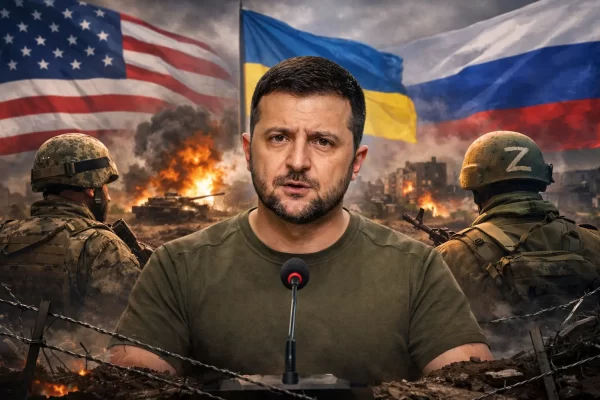
Ukraine faced one of the heaviest nights of bombardment in weeks as Russia strikes Ukraine with a large-scale missile and drone assault across multiple regions. Ukrainian authorities reported dozens of explosions in major cities, including Kyiv, Kharkiv, Dnipro, and Odesa, marking the most intense wave of attacks since early summer. According to Ukraine’s air force, Russia launched more than 100 missiles and drones, including Kalibr cruise missiles, Iskander ballistic rockets, and Shahed drones, targeting critical infrastructure and residential areas. Air defenses intercepted the majority of incoming weapons, but several missiles penetrated, causing widespread damage. At least 12 civilians were confirmed killed, with over 40 injured, though officials warned the numbers could rise as rescue operations continued. The strikes caused blackouts in several regions, with Ukraine’s energy grid suffering renewed damage. In Kharkiv, emergency crews battled fires after residential buildings were hit. Odesa’s port facilities were also targeted, threatening grain exports vital to Ukraine’s economy and global food supplies. Meanwhile, Kyiv residents were forced into shelters for hours as air raid sirens echoed through the capital. Ukraine’s President Volodymyr Zelensky condemned the assault, calling it “another act of terror designed to break our spirit.” He emphasized that despite the scale of destruction, Ukraine’s resolve remains unshaken. “Every time Russia strikes Ukraine, it only strengthens our unity and determination to defend our country,” he said in a late-night address. International reactions were swift. The European Union and the United States condemned Moscow’s latest barrage, pledging additional air defense systems and humanitarian support. NATO Secretary-General Jens Stoltenberg described the strikes as evidence of Russia’s continued escalation, reaffirming that the alliance would not abandon Ukraine. Military analysts believe the assault is part of Russia’s strategy to weaken Ukraine’s infrastructure ahead of the winter months. Targeting energy facilities has been a recurring tactic, aiming to deprive civilians of heat and electricity. However, experts note that Ukraine’s improved air defense network, bolstered by Western-supplied systems like the Patriot and IRIS-T, has significantly reduced the effectiveness of such attacks compared to last year. Despite these defenses, the sheer volume of missiles poses a constant threat. Ukrainian officials have urged allies to accelerate the delivery of advanced systems and ammunition, warning that Russia is increasing its missile production capacity. As the war grinds on into its third year, both sides show no signs of compromise. With each escalation, the humanitarian toll deepens, leaving millions of Ukrainians displaced, without power, or living under the shadow of air raid sirens. read also Zelensky leaves White House unscathed as he buys more time For now, the world watches anxiously as Russia strikes Ukraine with growing ferocity, testing not only Ukraine’s resilience but also the resolve of its Western allies. Wabstalk

Read More
Milan Malpensa airport fire

Man sets fire to check-in area at Milan’s Malpensa airport

A major security scare unfolded at Milan’s Malpensa Airport after a man deliberately set fire to the check-in area, causing chaos and disruption for hundreds of passengers. The incident occurred on Tuesday morning in Terminal 1, Italy’s second-busiest airport, which serves as a key international hub for both business and leisure travelers. According to local authorities, the suspect entered the departure hall carrying a small container of flammable liquid. Witnesses reported seeing the man pour the substance near the check-in counters before igniting it, sending flames and thick smoke across the area. Panic quickly spread as travelers rushed to escape, leaving behind luggage and belongings. Emergency services, including firefighters and airport security, responded within minutes. The blaze was contained before it could spread to other sections of the terminal, but significant damage was reported to several check-in counters and parts of the floor. No fatalities occurred, though at least nine people suffered from smoke inhalation and minor injuries during the evacuation. The suspect was apprehended shortly after the attack. Police confirmed that he is a 37-year-old Italian national with a history of mental health issues and prior minor offenses. Investigators have ruled out terrorism at this stage, describing the act as intentional but isolated. The man is now in custody and facing charges of arson and endangering public safety. The incident caused widespread disruption at Malpensa, with dozens of flights delayed or diverted to other airports, including Milan Linate and Bergamo Orio al Serio. Hundreds of passengers were forced to wait for hours as authorities worked to clear smoke and assess damage. Airport officials later reopened sections of the terminal, but advised travelers to check flight statuses before heading to the airport. Italy’s Interior Ministry released a statement praising the swift actions of firefighters and airport staff, noting that their quick intervention prevented what could have been a far more serious disaster. Security at Malpensa has been temporarily heightened, with additional patrols and baggage checks put in place. For passengers, the scare was a stark reminder of vulnerabilities in crowded public spaces. Several travelers described the scene as chaotic, with parents clutching children as alarms rang and smoke spread across the hall. One passenger, en route to London, said: “It felt like something you see in the movies. Everyone was just running in every direction.” read also Zelensky leaves White House unscathed as he buys more time While normal operations gradually resumed later in the day, the event has sparked renewed debate over airport security and mental health monitoring. Authorities have promised a full review of safety procedures to ensure incidents like the Milan Malpensa airport fire are not repeated. Wabstalk

Read More
Zelensky White House visit

Zelensky leaves White House unscathed as he buys more time

Ukrainian President Volodymyr Zelensky left the White House on Tuesday having secured another reprieve for his war-torn nation. His visit to Washington was marked by intense diplomatic maneuvering, as Kyiv continues to fight for sustained Western support against Russia’s ongoing military offensive. During his meeting with U.S. President Donald Trump, Zelensky’s key objective was to ensure Ukraine remains a priority for Washington amid shifting American foreign policy debates. While Trump stopped short of announcing major new military packages, he emphasized that the United States “remains committed” to helping Ukraine defend itself. This reassurance, though measured, allowed Zelensky to claim a symbolic victory—leaving Washington without major setbacks and with some additional time to press his country’s case on the global stage. For Ukraine, the visit was less about immediate breakthroughs and more about survival in the geopolitical spotlight. Zelensky highlighted the importance of U.S. security guarantees and financial assistance, stressing that Ukraine’s resistance depends heavily on Western unity. The White House, meanwhile, signaled that while military aid would continue, larger strategic commitments may be tied to future negotiations with Russia and Europe. Analysts noted that Zelensky managed to walk a fine line between urgency and diplomacy. His ability to avoid confrontations while still pressing for continued support was seen as a skillful tactic. “Zelensky didn’t come for sweeping deals—he came to buy time,” said one Washington policy expert. “And in that respect, he succeeded.” The Ukrainian leader also took the opportunity to remind American lawmakers of the broader stakes. In meetings with members of Congress, he framed Ukraine’s struggle as part of a global defense of democracy. Lawmakers from both parties expressed concern about wavering support, particularly as domestic political battles in the U.S. intensify ahead of the next election season. For Zelensky, buying time is critical. Ukraine faces mounting battlefield challenges, including shortages of ammunition and manpower. While European allies have pledged additional assistance, U.S. backing remains the cornerstone of Ukraine’s defense. Any signal of hesitation from Washington could embolden Russia and complicate Kyiv’s strategic outlook. also read Trump-Zelenskyy meeting in Washington LIVE: Zelenskyy in U.S. stresses need for security guarantees As he departed Washington, Zelensky appeared cautiously optimistic. “We continue to stand with the United States, and we believe the United States stands with us,” he said in a brief statement. While no groundbreaking agreements were signed, the visit achieved what Kyiv most urgently needed: a pause in doubts and a renewed, if limited, commitment from its most powerful ally. For now, Zelensky has left the White House unscathed, and Ukraine has gained valuable time in its long and grueling struggle for survival. Wabstalk

Read More
Trump-Zelenskyy meeting

Trump-Zelenskyy meeting in Washington LIVE: Zelenskyy in U.S. stresses need for security guarantees

Ukrainian President Volodymyr Zelenskyy arrived in Washington, D.C., on Monday for high-level talks with former U.S. President Donald Trump, who is seeking to play a renewed role in shaping the path forward for Ukraine amid its ongoing conflict with Russia. The Trump-Zelenskyy meeting comes at a pivotal moment, as Kyiv continues to push for stronger security commitments from the United States and its Western allies. Speaking to reporters ahead of the closed-door talks, Zelenskyy underlined that Ukraine’s future depends not only on military support but also on long-term security guarantees. He reiterated that Russia’s war against Ukraine has entered a decisive stage, and Western unity is essential in countering Moscow’s aggression. “We are fighting not just for Ukraine’s sovereignty, but for stability and security in Europe,” Zelenskyy stated. Trump, who has previously expressed skepticism about the scale of U.S. involvement in Ukraine, struck a more measured tone during his appearance with Zelenskyy. While avoiding specifics on future aid packages, he acknowledged Ukraine’s resilience and said discussions would focus on “finding realistic steps that bring lasting peace.” Trump added that any U.S. support must be tied to “clear objectives and accountability,” a remark likely aimed at addressing concerns among his political base about the cost of supporting Ukraine. The Trump-Zelenskyy meeting is being closely watched not only in Washington but across Europe, where allies are keen to see whether Trump could shift U.S. policy toward a more restrained role in Ukraine’s defense. Analysts note that Zelenskyy’s visit is a strategic move to ensure bipartisan American backing, regardless of who occupies the White House after the 2024 elections. Zelenskyy’s agenda also includes meetings with congressional leaders and defense officials to secure commitments on advanced air-defense systems and long-term financial support. Ukrainian officials have stressed that without dependable guarantees, any ceasefire deal with Russia would leave Kyiv vulnerable to renewed attacks. The atmosphere in Washington reflects both urgency and caution. For Ukraine, the visit is an attempt to lock in assurances that will survive political changes in the U.S. For Trump, it is a chance to demonstrate statesmanship while navigating the fine line between supporting an ally and reassuring voters who demand a more inward-focused foreign policy. As the Trump-Zelenskyy meeting unfolds, the central question remains: can Ukraine secure the guarantees it needs to stand against Russia, while also convincing U.S. leaders that their support aligns with America’s strategic interests? For now, all eyes are on Washington, where the outcome of this meeting could shape the trajectory of the war and Ukraine’s future security framework.

Read More