
Trump Iran deal pressure

Trump denies being ‘under pressure’ to make Iran deal ahead of ceasefire deadline

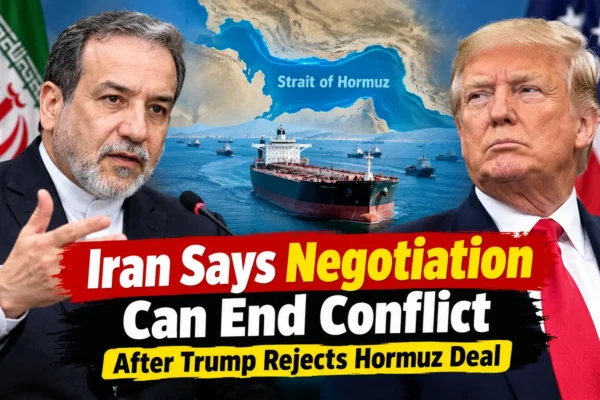
U.S. President Donald Trump has denied claims that he is facing pressure to finalize a deal with Iran as the deadline for a temporary ceasefire approaches. Speaking to reporters, Trump insisted negotiations are progressing on Washington’s terms and said he remains confident that Tehran wants an agreement more urgently than the United States does. The ceasefire, brokered earlier this month after weeks of heightened tensions, is set to expire on April 22 unless both sides agree to extend it or reach a broader settlement. Trump rejected suggestions that the White House is rushing to secure a diplomatic breakthrough, saying he is under “no pressure whatsoever” and that the U.S. has multiple options if talks fail. Recent comments from Trump have mixed optimism with warnings. He previously said a deal with Iran was “looking very good,” while also stating that military measures remain available if negotiations collapse. Analysts say the administration is trying to balance pressure tactics with diplomacy as oil markets remain sensitive to developments around the Strait of Hormuz. Iranian officials have publicly disputed some U.S. claims regarding progress in the talks, signaling that major disagreements still remain. Tehran has demanded stronger guarantees and a permanent end to wartime restrictions, while Washington continues to seek security and nuclear-related concessions. With the ceasefire deadline hours away, global attention is now focused on whether both sides can avoid renewed conflict. Any failure in negotiations could quickly raise tensions again and impact global energy prices, while a successful agreement could stabilize the region and ease market concerns.

Read More
Strait of Hormuz attacks

Ships report attacks after Iran closes Strait of Hormuz, as Trump says US ‘won’t be blackmailed’

Ships crossing the strategic Strait of Hormuz have reported multiple attacks after Iran announced a renewed closure of the vital waterway, sharply escalating tensions in the Gulf. Maritime security agencies said tankers and commercial vessels near the strait faced gunfire and suspicious projectile incidents, though early reports indicated crews were safe. The latest developments have raised fears of a wider disruption to global shipping and oil supplies. Iran said the strait had returned to its “previous state” and would remain under strict military control, blaming a continuing U.S. blockade and accusing Washington of maritime aggression. The Strait of Hormuz is one of the world’s most important energy chokepoints, handling a large share of global crude oil exports. Any prolonged closure could trigger higher fuel prices and supply chain pressure worldwide. President Donald Trump responded forcefully, saying the United States “won’t be blackmailed” by Iran and insisting American naval operations would continue. He also claimed talks with Tehran were still possible, suggesting diplomacy had not fully collapsed despite the renewed crisis. The United Kingdom Maritime Trade Operations center reported further suspicious activity near the strait, while several governments closely monitored vessel movements. Analysts warn that even isolated attacks can cause insurers to raise shipping premiums, forcing some carriers to avoid the route altogether. Oil markets are expected to remain volatile as traders assess whether the confrontation is temporary or the start of a longer standoff. If hostilities intensify, the Strait of Hormuz attacks could become a major flashpoint affecting both regional security and the global economy.

Read More
Strait of Hormuz open

Iran says Strait of Hormuz is ‘open’ as Trump says US blockade will continue until deal reached

Iran announced that the Strait of Hormuz is open for commercial shipping, signaling a possible easing of tensions in one of the world’s most critical energy routes. The statement came as U.S. President Donald Trump said the American naval blockade targeting Iran would remain in place until a final agreement is reached with Tehran. The Strait of Hormuz is a narrow waterway between Iran and Oman through which a large share of global oil and gas shipments pass each day. Any disruption in the route can quickly affect international energy markets, shipping costs, and fuel prices worldwide. Iran’s move to reopen the passage was welcomed by traders, with oil prices reportedly falling after the announcement. Trump said the waterway was “ready for full passage,” but clarified that U.S. restrictions on Iranian ports and vessels would stay active until negotiations are fully completed. The White House appears to be using continued economic and naval pressure as leverage to secure a broader diplomatic settlement. Despite the reopening, uncertainty remains. Some reports indicate ships may still need coordination with Iranian authorities for safe passage, while military vessels remain restricted. Shipping companies are also cautious because of earlier security threats, including mines and tanker attacks during the recent conflict. The development is being viewed as a tentative step toward de-escalation after weeks of conflict and disruption in the Gulf region. However, analysts warn that without a full political agreement between Washington and Tehran, tensions could rise again quickly. For global markets, the key issue now is whether commercial traffic through the Strait of Hormuz returns to normal levels and whether ongoing talks can produce a lasting deal. Until then, the region remains a major geopolitical flashpoint.

Read More
US Iran blockade

US blockade of Iranian ports takes effect as Trump says Tehran wants a deal ‘very badly’

The United States has officially enforced a naval blockade on Iranian ports, marking a significant escalation in tensions after failed peace talks between Washington and Tehran. The move, ordered by President Donald Trump, targets all maritime traffic entering and leaving Iranian coastal areas, with the aim of cutting off Iran’s oil exports and increasing pressure on its leadership. Trump has framed the blockade as both a strategic and economic tool, asserting that Iran is now under severe strain. He claimed that Tehran has already reached out, saying it wants to make a deal “very badly,” suggesting that the pressure campaign may be forcing Iran toward renewed negotiations. However, he has also signaled indifference about immediate talks, indicating the U.S. is prepared to continue the blockade regardless of diplomatic progress. The blockade is being enforced by U.S. Central Command and applies broadly to vessels linked to Iranian ports, though ships transiting the Strait of Hormuz to non-Iranian destinations are still allowed to pass. This distinction is critical, as it aims to maintain some level of global trade flow while isolating Iran economically. Global markets have reacted swiftly. Oil prices surged as much as 7% following the announcement, reflecting fears of supply disruptions from a region responsible for a substantial share of the world’s energy exports. At the same time, analysts warn that the blockade could prove difficult to sustain over the long term and may provoke retaliatory measures from Iran, raising the risk of further military confrontation. Iran has already condemned the action, warning that it could respond forcefully if its economic lifelines are threatened. The standoff underscores the fragile nature of the current ceasefire and highlights how quickly the situation could escalate. Ultimately, while Trump’s blockade is designed to force concessions, it also introduces new uncertainties. The claim that Iran is eager to negotiate may signal an opening, but the ongoing military pressure suggests that a resolution remains far from certain.

Read More
Trump Strait of Hormuz blockade threat risks

Trump Strait of Hormuz blockade threat risks

Donald Trump’s renewed threat to impose a blockade on the Strait of Hormuz has heightened geopolitical risks while doing little to resolve the underlying tensions in the region. The strategic waterway, through which nearly a fifth of the world’s oil supply passes, remains a focal point of confrontation between the United States and Iran, with both sides maintaining hardline positions. Trump’s rhetoric signals a willingness to escalate economic and military pressure on Tehran, framing the potential blockade as a means to enforce compliance with existing agreements and ensure freedom of navigation. However, analysts warn that such a move could backfire, triggering retaliatory actions from Iran and further destabilizing global energy markets. Even the suggestion of restricting access to the strait has already contributed to volatility in oil prices and shipping routes. Iran, for its part, has consistently warned that any attempt to block or control the Strait of Hormuz would be met with a strong response. Iranian officials argue that the waterway is vital to their national security and economic survival, and they have demonstrated both the capability and intent to disrupt maritime traffic if provoked. This creates a high-stakes standoff where miscalculation could quickly escalate into direct conflict. Despite the aggressive posturing, the fundamental issues between Washington and Tehran remain unresolved. Disputes over sanctions, regional influence, and security guarantees continue to stall meaningful progress. Trump’s blockade threat, rather than advancing negotiations, appears to reinforce entrenched positions on both sides. International stakeholders, including major oil-importing nations, are increasingly concerned about the potential fallout. A prolonged disruption in the Strait of Hormuz would have far-reaching consequences for global trade and energy security, amplifying the urgency for diplomatic solutions. In essence, while Trump’s threat underscores the seriousness of the situation, it leaves the core predicaments unchanged—highlighting a cycle of pressure and resistance with no clear path to resolution. Join our courses

Read More
Iran US peace talks Strait of Hormuz navy clearing

Iran-US peace talks take place as Trump claims navy ‘clearing out’ Strait of Hormuz

Iran–US peace talks are underway amid heightened tensions in the Middle East, as U.S. President Donald Trump claims that American naval forces are actively “clearing out” the Strait of Hormuz. The negotiations, taking place in Islamabad under a fragile ceasefire, mark the highest-level direct engagement between Washington and Tehran in decades. The Strait of Hormuz—through which a significant portion of global oil supply passes—has become a central point of contention. Trump has asserted that U.S. forces have begun removing sea mines and securing the waterway to restore safe passage for international shipping. He also claimed that Iranian capabilities in the region have been significantly weakened, framing the naval operations as a necessary step to stabilize global energy markets. At the same time, U.S. naval movements in the strait have underscored the seriousness of the situation. American warships have recently transited the waterway for the first time since the conflict began, signaling a show of force and commitment to freedom of navigation. However, Iran has disputed aspects of these operations and warned that uncoordinated military activity could violate the ceasefire, raising the risk of renewed confrontation. The ongoing peace talks face significant challenges. Iran is reportedly seeking greater control over the strait, as well as broader concessions, while the United States insists on unrestricted maritime access and security guarantees. These competing demands highlight the deep mistrust between the two sides, even as diplomacy continues. Despite the tensions, both nations appear to be pursuing a dual-track strategy—combining military positioning with diplomatic engagement. Analysts warn that while the talks offer a potential path to de-escalation, any miscalculation in the Strait of Hormuz could quickly unravel the fragile ceasefire. Overall, the situation remains volatile, with the outcome of the negotiations likely to shape not only regional stability but also global energy security in the weeks ahead.

Read More
Trump Iran Strait of Hormuz agreement dispute

Trump says Iran’s handling of Strait of Hormuz is ‘not the agreement we have’

U.S. President Donald Trump has sharply criticized Iran’s handling of the Strait of Hormuz, stating that Tehran’s actions are “not the agreement we have,” signaling growing strain in an already fragile ceasefire. The remarks come as global concern intensifies over disruptions to one of the world’s most critical النفط shipping routes. Trump’s comments follow reports that maritime traffic through the strait has slowed significantly, with Iran imposing strict controls and limiting the number of vessels allowed to pass. In some cases, oil tankers have reportedly avoided the route altogether due to fears of confrontation, effectively reducing the flow of global energy supplies. The U.S. administration maintains that any ceasefire agreement with Iran was contingent on the immediate and full reopening of the Strait of Hormuz. Trump had earlier agreed to pause military escalation on the condition that safe and unrestricted navigation would resume. However, current developments suggest a gap between what Washington expected and what Tehran is implementing. Iran, on the other hand, appears to be asserting tighter control over the waterway, framing its actions as part of a broader strategic shift in regional policy. Iranian leadership has indicated plans to bring the management of the strait “into a new stage,” further complicating diplomatic efforts. The disagreement highlights deeper ambiguities within the ceasefire framework, with both sides interpreting key terms differently. Analysts warn that such misalignment increases the risk of renewed confrontation, especially as tensions linked to Israeli military operations in Lebanon continue to escalate. Meanwhile, international partners including the UK are working with the United States to develop a coordinated strategy to reopen the strait and restore normal shipping operations. Overall, Trump’s statement underscores mounting frustration in Washington and raises concerns that the ceasefire could unravel if disputes over the Strait of Hormuz are not quickly resolved.

Read More
Trump Iran airman rescue

Trump says operation to rescue airmen from Iran was like finding ‘needle in a haystack’

U.S. President Donald Trump has described the dramatic mission to rescue American airmen from Iran as “like finding a needle in a haystack,” underscoring the extreme difficulty of locating and extracting personnel deep inside hostile territory. The operation followed the downing of a U.S. F-15E Strike Eagle during escalating conflict between Washington and Tehran. According to U.S. officials, one of the airmen was stranded for more than a day in rugged mountainous terrain, evading Iranian forces who were actively searching for him. Intelligence agencies, including the CIA, played a pivotal role in locating the downed crew member through a sophisticated deception campaign that misled Iranian forces about his whereabouts. Trump emphasized that the rescue required “hundreds of personnel” and a massive deployment of aircraft, highlighting the scale and complexity of the mission. The search effort became a race against time, with Iranian troops reportedly closing in on the airman before U.S. special forces successfully reached him. Officials involved in the mission echoed Trump’s “needle in a haystack” analogy, noting that the airman was hidden in a remote mountain crevice and was nearly impossible to detect using conventional methods. Advanced surveillance, intelligence coordination, and real-time tracking ultimately enabled the successful extraction. The operation has been widely described as one of the most daring search-and-rescue missions in recent U.S. military history. Trump praised the effort as “miraculous,” crediting both military forces and intelligence agencies for executing a high-risk mission without American casualties. Despite the success, the rescue comes amid intensifying tensions with Iran, with ongoing military threats and diplomatic deadlock continuing to shape the broader conflict in the region.

Read More
Trump Iran Strait of Hormuz threat

Trump issues expletive-laden threat to Iran demanding Strait of Hormuz be opened

U.S. President Donald Trump has issued an expletive-laden warning to Iran, demanding the immediate reopening of the strategically critical Strait of Hormuz, in what marks one of the most aggressive rhetorical escalations in the ongoing conflict. In a fiery social media post published on April 5, Trump used unusually explicit language to pressure Tehran, warning that failure to reopen the vital shipping lane would result in severe military retaliation. He set a firm deadline, stating that if the strait is not reopened by Tuesday evening, the United States would launch strikes targeting Iranian infrastructure, including power plants and major bridges. The Strait of Hormuz is one of the world’s most important النفط transit chokepoints, handling a significant portion of global oil shipments. Its closure—triggered amid escalating U.S.-Iran hostilities—has already disrupted global energy markets and driven oil prices higher. Trump’s remarks come after weeks of intensifying conflict between U.S. and Iranian forces, as well as a recent high-risk rescue operation involving a downed American airman inside Iranian territory. The president framed the situation as urgent, suggesting that Iran’s continued blockade of the strait is unacceptable and poses a threat to global economic stability. Critics across the political spectrum have condemned Trump’s rhetoric as inflammatory and potentially dangerous, warning that targeting civilian infrastructure could violate international law and further destabilize the region. Meanwhile, Iranian officials have shown no indication of backing down, instead signaling possible retaliation against U.S. and allied economic interests.

Read More
Missing US airman Iran

Search for missing US airman continues as Trump threatens ‘hell’ if Iran does not reach deal

The search for a missing American airman in Iran has intensified as the conflict between Washington and Tehran enters a dangerous new phase. The airman was part of a crew aboard an F-15E Strike Eagle that was shot down over Iranian territory during ongoing military operations. While one crew member was successfully rescued shortly after the incident, the second remains unaccounted for, triggering a high-risk search-and-rescue mission in hostile terrain. U.S. forces have deployed helicopters, special operations teams, and surveillance aircraft to locate the missing airman, operating under the constant threat of enemy fire. Reports indicate that Iranian authorities have urged civilians to help find the pilot, even offering rewards, which has further complicated the rescue effort and increased the urgency of the situation. The incident marks a significant escalation, as it is among the first confirmed cases of a U.S. combat aircraft being downed inside Iran during the ongoing war. Military analysts warn that if the airman is captured, it could become a major geopolitical flashpoint and a bargaining tool in negotiations. Amid this unfolding crisis, Donald Trump has issued a stark warning to Iran, giving the country a 48-hour deadline to reach a deal or face severe consequences. In a social media post, he threatened that “all hell” would be unleashed if Tehran fails to comply, signaling a potential escalation in U.S. military action. The situation remains highly volatile, with ongoing airstrikes, regional instability, and rising casualties. As the search continues, the fate of the missing airman has become a focal point of the broader conflict, underscoring the human stakes behind the escalating geopolitical confrontation.

Read More