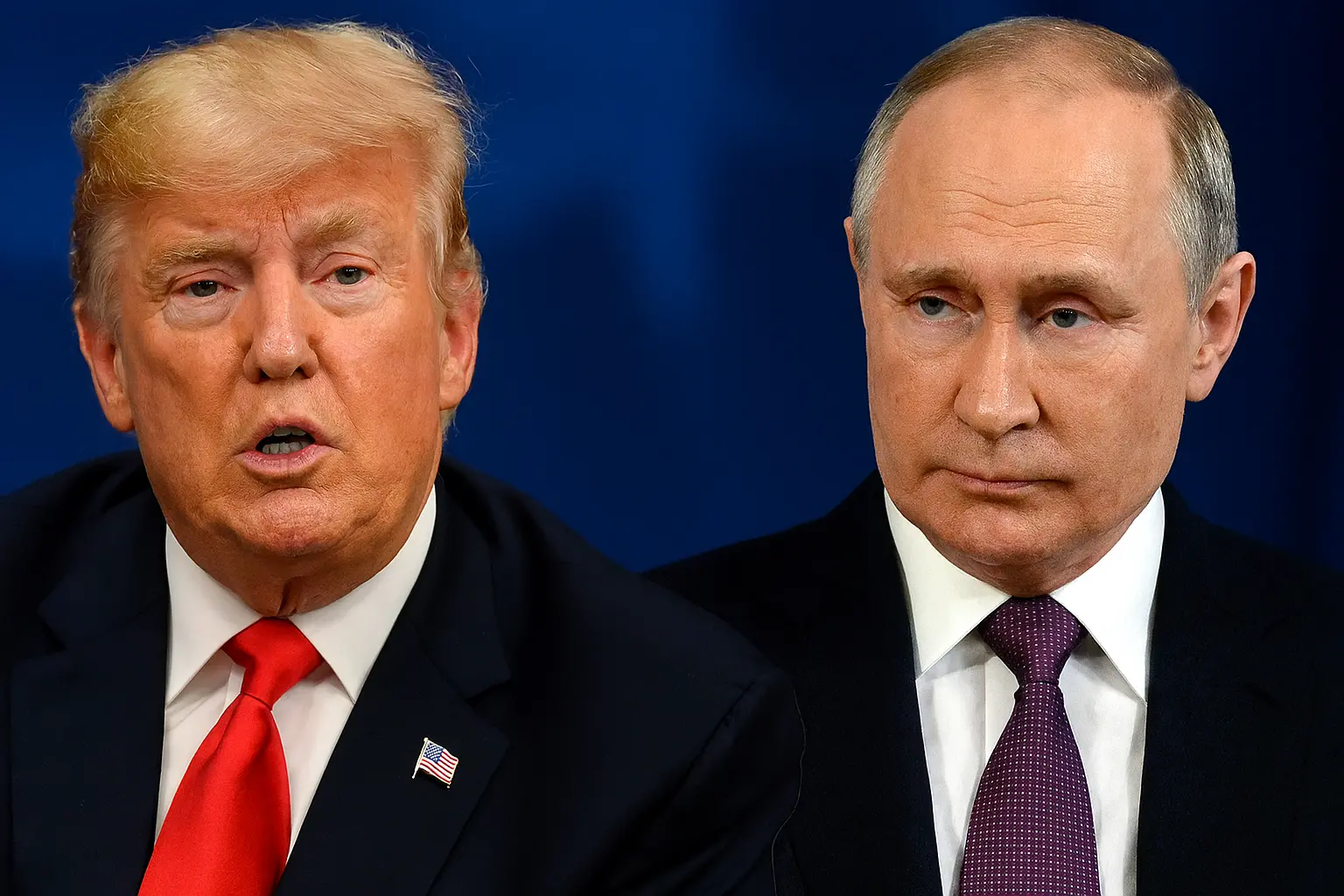
Donald Trump has said that he did not want a “wasted meeting” with Vladimir Putin, after plans for a face-to-face summit in Budapest were put on hold.
The context: Trump had announced last week that he intended to meet Putin “within two weeks” in Budapest to try to help bring an end to the war in Ukraine. But on Tuesday he told reporters that the meeting is not going ahead “in the immediate future,” after Moscow signalled strong refusal to accept an immediate cease-fire.
In his remarks, Trump said:
“I don’t want to have a wasted meeting. I don’t want to have a waste of time, so we’ll see what happens.”
This signals that he believes the pre-conditions for meaningful talks are not yet in place, especially since Sergei Lavrov, Russia’s foreign minister, made clear that Russia’s negotiating position remains unchanged.
From the Russian side, spokesman Dmitry Peskov affirmed that preparation is still required before any summit:
“Preparation is needed, serious preparation,” he said.
He also added, “No one wants to waste time, neither President Trump nor President Putin.”
Hungary — where the meeting was due to take place — also weighed in. Viktor Orbán, the Hungarian prime minister, confirmed that although the date is not set, “preparations … are continuing,” suggesting the summit is not formally cancelled, just deferred.
One major obstacle remains: Russia recently sent a private diplomatic communication — a “non-paper” — to the United States, restating its long-standing peace terms for Ukraine. These terms are seen as maximalist and incompatible with what Ukraine and its European allies are prepared to accept. In short, Russia is staying firm, making it difficult to arrange a meeting worth having from the U.S. side.
Meanwhile, behind these diplomatic moves, Russia launched a major overnight missile and drone attack on Ukraine — killing civilians, including children, and striking key energy infrastructure. That escalation further complicates prospects for diplomacy and puts pressure on both sides over whether any talks can succeed.
Trump’s shift in tone is also noteworthy. Earlier this year, he had suggested that he wanted to bring an end to the war quickly and had appeared open to the idea of territorial compromises by Ukraine. But now he seems to be aligning with the idea of freezing the war along current frontlines — a position also tentatively echoed by Ukrainian President Volodymyr Zelenskyy, who called Trump’s recent proposal “a good compromise,” though he expressed doubt that Russia would accept it.
Why this matters
Trump’s insistence on avoiding a “wasted meeting” underscores how difficult it is to achieve meaningful diplomacy when both sides’ positions remain far apart. For Ukraine and its Western allies, the pause in the planned summit may actually be a relief, as they fear that a poorly prepared meeting could legitimize Russian territorial gains or pressure Kyiv into concessions.
On the other hand, the suspension of the summit may also be viewed as a missed opportunity to re-energize diplomatic efforts at a time when the war continues to drag on and the human and economic costs keep rising.