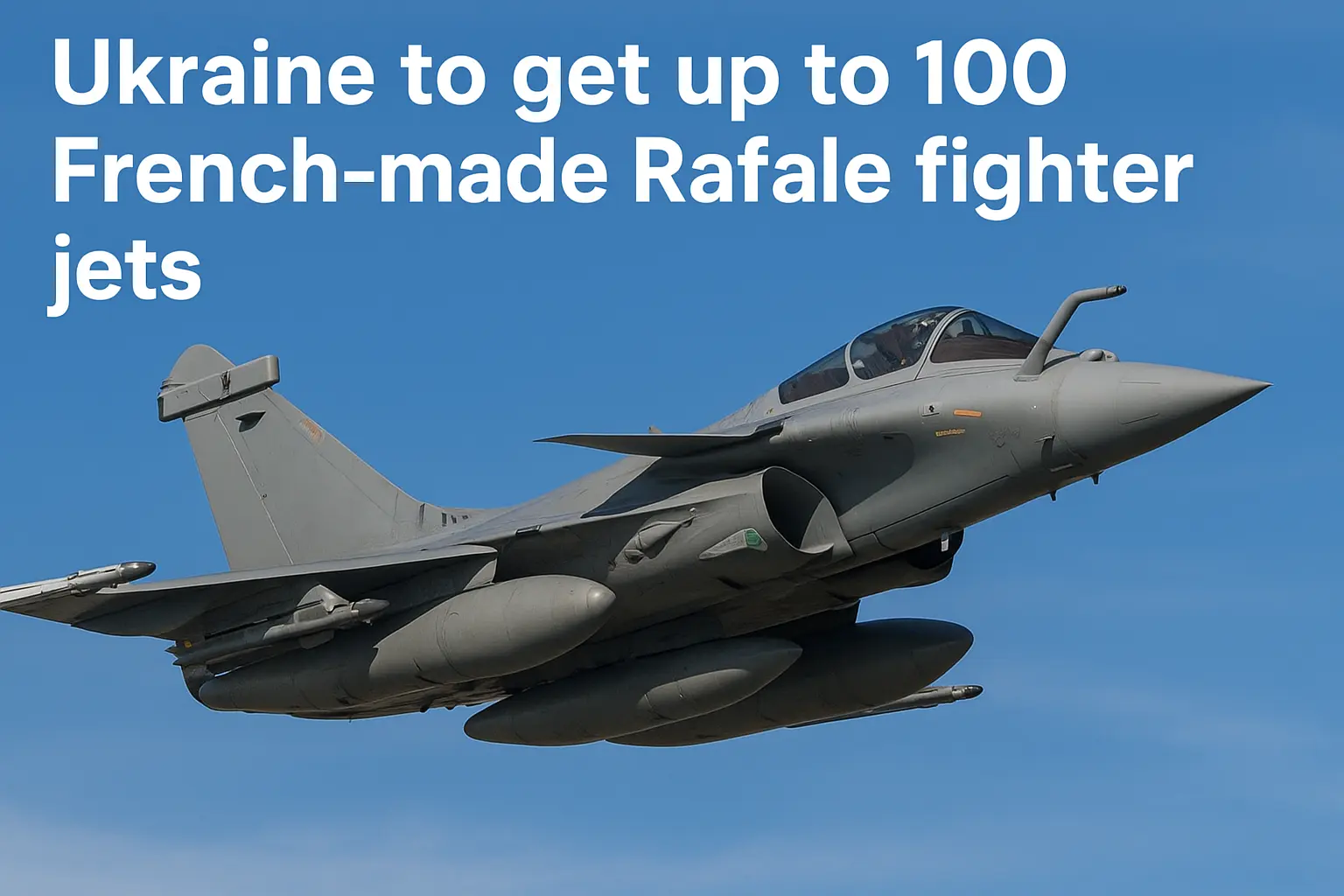
Ukraine is set to receive a major boost to its airpower as France moves forward with a landmark plan to supply up to 100 Rafale fighter jets, marking one of the largest military aviation transfers in Europe since the start of the war. The decision underscores France’s growing commitment to strengthening Ukraine’s long-term defense capabilities and supporting Kyiv’s efforts to modernize its Soviet-era air fleet.
The Rafale, manufactured by Dassault Aviation, is considered one of the world’s most advanced multirole fighter jets. Its ability to perform air superiority missions, deep strike operations, reconnaissance tasks, and nuclear deterrence roles makes it a highly versatile platform. For Ukraine—whose air force has relied heavily on aging MiG-29s and Su-27s—the introduction of Rafales would represent a transformative shift in capability. Ukrainian officials have argued for months that a modern fighter fleet is essential not only for protecting airspace but also for regaining strategic initiative on the battlefield.
While the exact timeline for delivery remains under discussion, French sources suggest that the aircraft could be transferred in phases over several years. This approach would allow Ukrainian pilots and ground crews sufficient time for training, which is a crucial component of the agreement. France is also expected to provide simulators, maintenance support, and long-term logistics to ensure sustained operational readiness.
The deal, still being finalized, signals a broader shift in European security policies. As the war continues with no clear end in sight, European countries are increasingly willing to commit high-value assets to Ukraine’s defense. France’s willingness to supply Rafales—a premium component of its own air force—highlights the seriousness of Europe’s evolving security posture and the recognition that Ukraine’s defense is directly tied to the stability of the continent.
For Kyiv, the potential delivery of up to 100 Rafale jets would dramatically enhance its ability to intercept missiles, challenge Russian aircraft, and support ground operations. It would also integrate Ukraine more deeply into Western defense standards, a step seen as significant for its future ambitions within NATO. Experts believe this modernization could position Ukraine to operate alongside allied air forces with greater interoperability and effectiveness.
The economic implications are also notable. Dassault Aviation, which has seen rising demand for Rafales in recent years, stands to gain from long-term production and support contracts. The deal additionally strengthens France’s geopolitical influence, positioning Paris as a central player in shaping the future of European defense.
Overall, the Ukraine Rafale deal marks a pivotal moment in the ongoing conflict, signalling a strategic upgrade for Ukraine’s air capabilities and a strengthened commitment from France to support Kyiv in the years ahead.
Feud erupts between Trump and ally Marjorie Taylor Greene ahead of Epstein files vote