
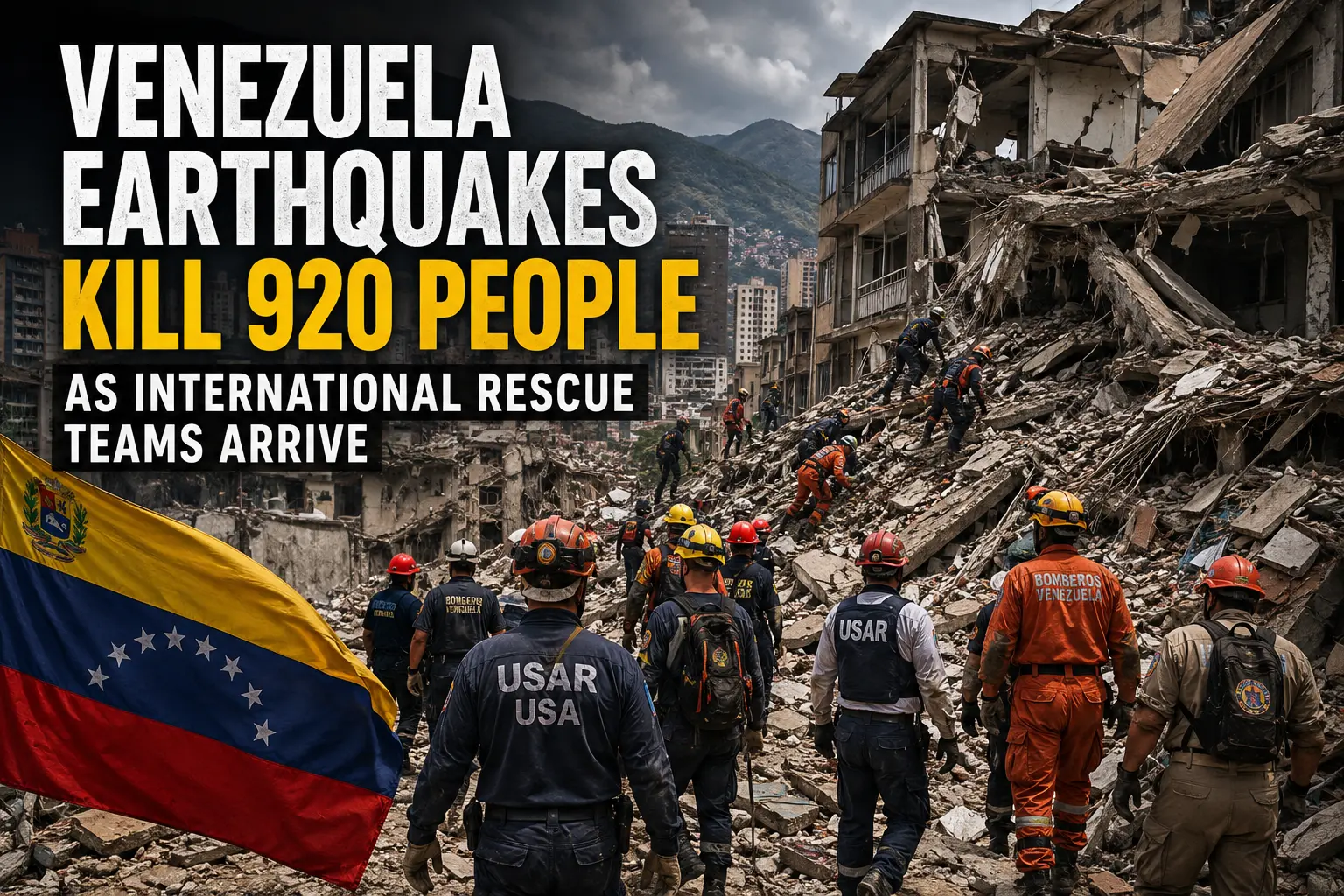
The death toll from the devastating earthquakes that struck Venezuela has risen to at least 920, as international rescue teams race against time to find survivors trapped beneath collapsed buildings. The twin earthquakes, measuring 7.2 and 7.5 in magnitude, hit northern Venezuela on June 24, causing widespread destruction across Caracas, La Guaira, and surrounding regions.
Authorities report that more than 3,300 people have been injured, while tens of thousands remain missing. Rescue efforts have entered a critical phase, with emergency workers focusing on the first 72 hours after the disaster, a period considered crucial for locating survivors under rubble.
International assistance has begun arriving from several countries, including the United States, European nations, and neighboring Latin American states. Specialized search-and-rescue teams, canine units, medical personnel, and heavy equipment have been deployed to support overwhelmed local responders. More than 500 emergency responders from across Europe have also joined the operation.
Many residents have expressed frustration over the slow initial response, with volunteers and family members often digging through debris by hand while waiting for professional rescue crews. Significant damage to roads, communications networks, and public infrastructure has complicated rescue efforts and delayed access to some of the hardest-hit areas.
Acting President Delcy Rodríguez has pledged to save as many lives as possible and welcomed international aid arriving in the country. Humanitarian organizations, including United Nations agencies, are coordinating relief efforts, providing emergency shelter, medical supplies, food, and clean water to affected communities.
As aftershocks continue to shake the region, fears remain that the Venezuela earthquake death toll could rise further. Rescue teams continue their urgent search for survivors, while thousands of displaced families face an uncertain future amid one of the country’s worst natural disasters in more than a century.