
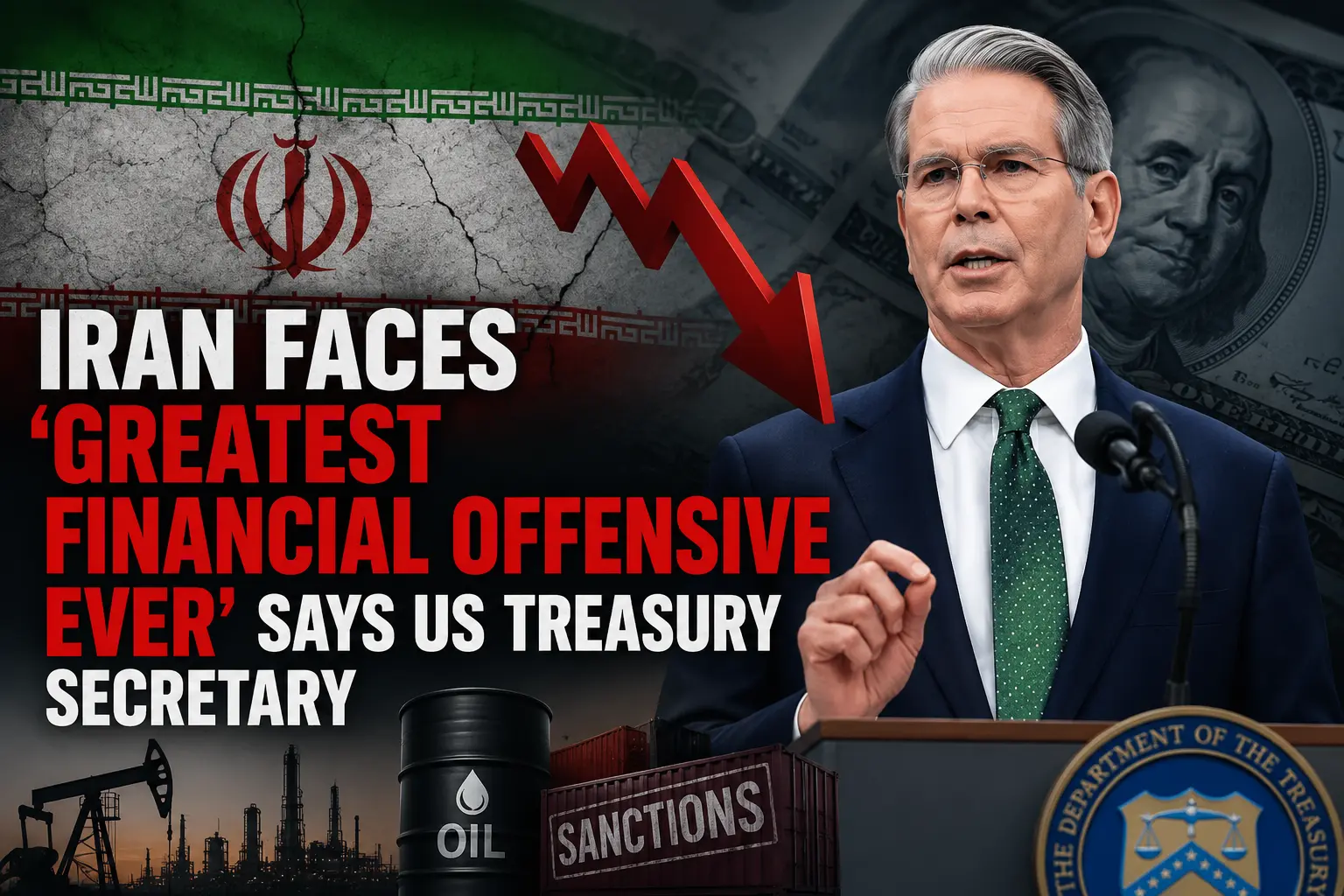
Iran is facing what US Treasury Secretary Scott Bessent has described as “the single greatest financial offensive ever marshalled against an adversary,” as Washington intensifies its economic pressure on Tehran. The new campaign signals a major escalation in the Trump administration’s efforts to isolate Iran and cut off the financial resources supporting its government.
Bessent described the strategy as an “economic D-Day,” aimed at severing Iran’s economic lifelines and increasing pressure on the country’s leadership. The United States has focused its attention not only on Iran’s domestic economy but also on foreign companies and countries that continue to conduct significant trade with Tehran. The measures could include expanded secondary sanctions, potentially forcing international businesses to choose between access to the US financial system and continued economic ties with Iran.
The announcement comes at a time when Iran’s economy is already under severe strain. Its currency has fallen to record lows, while inflation and the wider economic impact of the continuing conflict have added further pressure on ordinary citizens. US officials believe greater financial isolation could weaken Iran’s ability to sustain its current policies and potentially reduce the need for further military action.
However, Tehran has strongly rejected the US approach, arguing that decades of sanctions have failed to force Iran into submission. Iranian officials have warned of retaliation against countries that cooperate with Washington’s new measures, raising concerns about further instability across the Middle East and possible disruption to global energy markets.
As tensions continue to rise, the economic confrontation between Washington and Tehran could have consequences far beyond the two countries, affecting international trade, oil supplies and diplomatic relations across the region.