
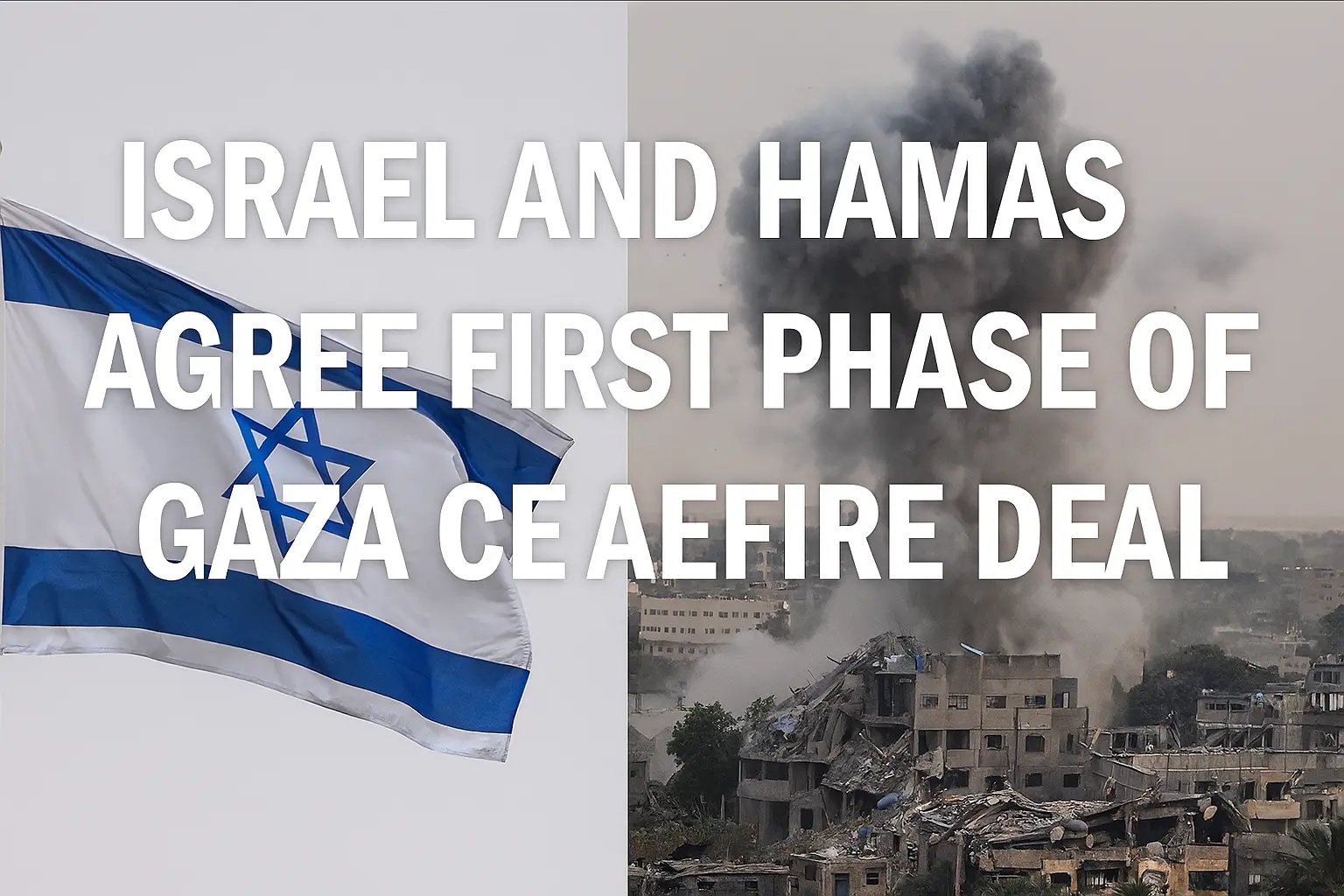
In a major breakthrough toward ending nearly a year of bloodshed, Israel and Hamas have agreed to the first phase of a Gaza ceasefire deal, marking a cautious but significant step toward lasting peace in the region. The deal, brokered through Egyptian and Qatari mediation with strong backing from the United States, outlines an initial cessation of hostilities and the exchange of prisoners and hostages, while setting the stage for future negotiations on Gaza’s political future.
According to Israeli and Palestinian officials, the agreement was signed after days of intensive talks in Sharm el-Sheikh. Under the terms of the first phase, Hamas will release all remaining Israeli hostages believed to be alive within 72 hours of the deal’s ratification. In return, Israel will withdraw its forces from several key positions inside Gaza, easing military pressure on densely populated areas. Additionally, Israel has agreed to release hundreds of Palestinian prisoners, many of whom have been detained without trial during the conflict.
The ceasefire is expected to take effect within 24 hours of final cabinet approval in Jerusalem. U.S. President Donald Trump, who has played a key role in promoting the wider peace framework, described the deal as “a historic opportunity for both sides to end the suffering and rebuild Gaza.” The agreement is reportedly part of a broader 20-point peace plan that envisions gradual disarmament of militant factions and the creation of a joint Israeli-Palestinian reconstruction authority.
Despite the optimism, the deal faces considerable challenges. Hardline factions within both Israel and Hamas have expressed skepticism about the plan’s longevity. In Israel, far-right ministers have criticized the decision to release Palestinian prisoners, while Hamas leaders have warned that any delay in Israel’s troop pullback could trigger renewed hostilities. Analysts note that the first phase addresses only the immediate humanitarian crisis and hostage situation, leaving thornier issues—such as Gaza’s governance and Hamas’s military capabilities—for later stages.
Regional powers have cautiously welcomed the development. Egypt praised the accord as a “vital first step toward de-escalation,” while Qatar emphasized the need for international monitoring to ensure both sides uphold their commitments. The United Nations has offered logistical support for aid delivery and reconstruction efforts once the truce takes hold.
If successfully implemented, this first phase could pave the way for phase two, involving a full Israeli withdrawal, the establishment of a demilitarized Gaza, and potential normalization talks. Yet, with mistrust running deep, the path to a durable peace remains uncertain. For now, the agreement provides a rare moment of hope amid one of the region’s most protracted and devastating conflicts.