
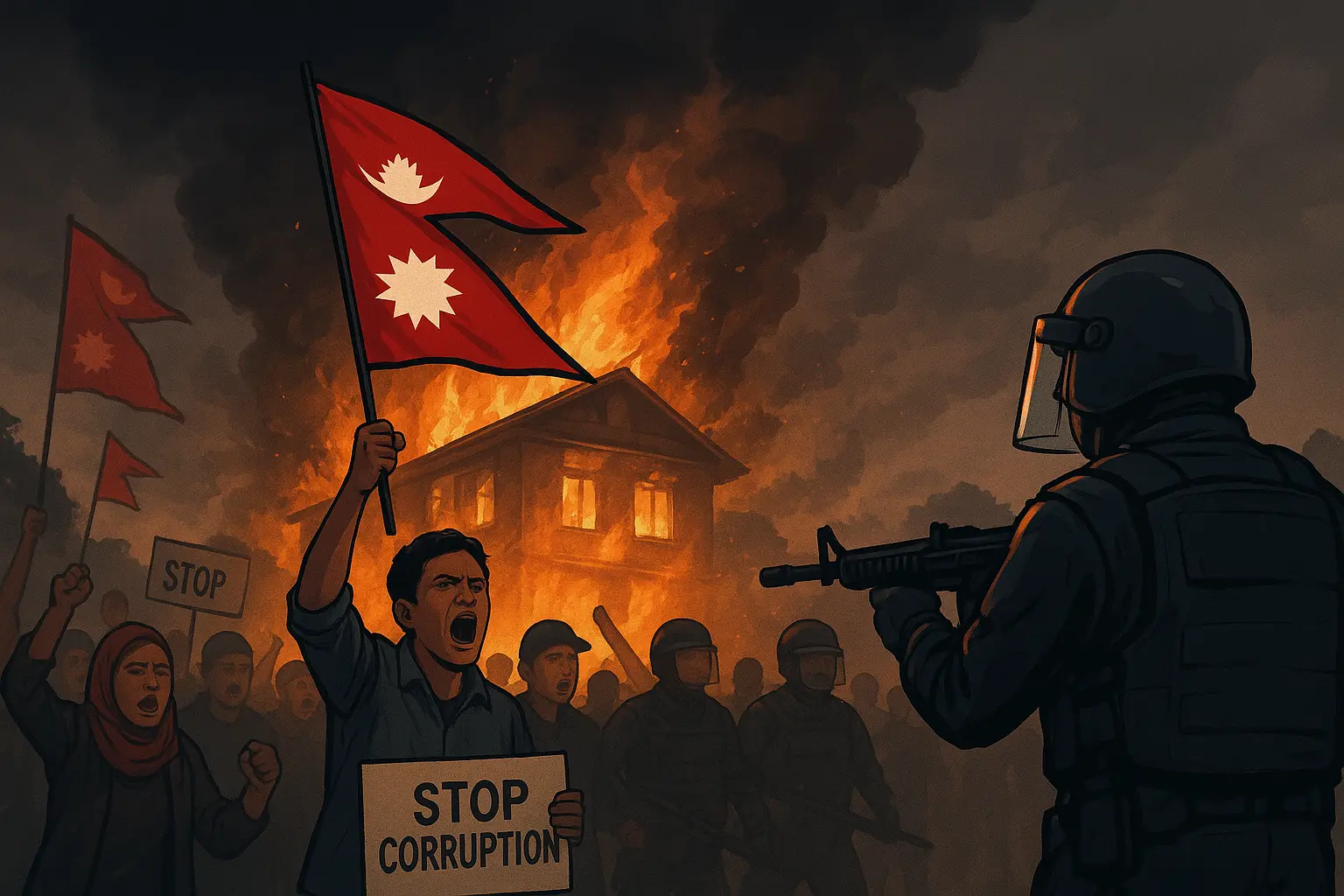
In Nepal, anti-government unrest has escalated dramatically as protesters set fire to the residence of a former Prime Minister, intensifying political tensions in the Himalayan nation. The incident, which occurred late Sunday, underscores the growing frustration among citizens toward the ruling leadership and its handling of economic and social challenges.
According to local reports, hundreds of demonstrators gathered near the home of the ex-PM, chanting slogans against corruption, unemployment, and inflation. The protesters accused the political elite of failing to address the everyday struggles of the population, particularly rising food and fuel prices. In the chaos, the crowd stormed the residence, torching parts of the building. Firefighters rushed to the scene, and while the blaze caused significant damage, no casualties were reported.
The former Prime Minister, whose identity has not yet been officially disclosed by authorities, was not present at the residence during the attack. Police have since cordoned off the area and launched an investigation, but no arrests have been made so far. Officials fear that the arson could mark a dangerous turning point in Nepal’s ongoing political unrest.
Nepal has experienced frequent political instability over the past two decades, with successive governments struggling to maintain public trust. Many citizens accuse leaders of corruption, mismanagement of foreign aid, and failing to deliver on promises of stability and economic growth. The current wave of protests has been fueled by a deepening economic crisis, with unemployment rates soaring and inflation pushing basic necessities beyond the reach of ordinary families.
Observers note that the attack on the ex-PM’s home reflects growing resentment against the entire political establishment, rather than a single individual. Protesters say their anger is directed at decades of failed leadership, which they believe has left Nepal vulnerable to both domestic discontent and external pressures from its neighbors, India and China.
Human rights groups have urged both the government and security forces to exercise restraint and ensure peaceful engagement with demonstrators. However, the arson incident raises concerns about a potential cycle of violence, as the government considers tightening security measures and possibly imposing restrictions on public gatherings.
International observers, including the United Nations, have expressed concern about Nepal’s escalating unrest, warning that further violence could destabilize the fragile democracy. Calls for dialogue between the government and opposition groups are growing louder, but whether either side is willing to compromise remains uncertain.
For now, the burning of the ex-Prime Minister’s home stands as a powerful symbol of public anger in Nepal—an anger that shows little sign of fading without meaningful political and economic reform.