
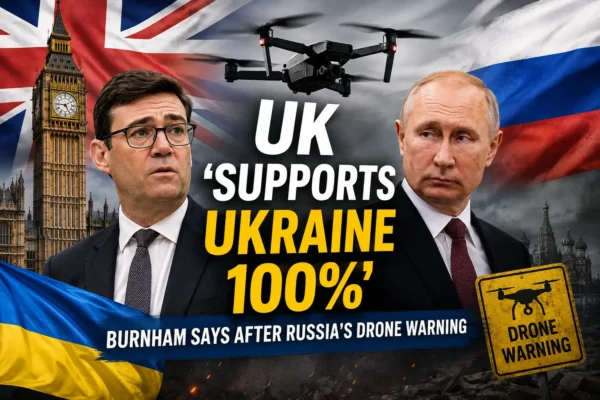
UK ‘supports Ukraine 100%’, Burnham says, after Russia’s drone warning
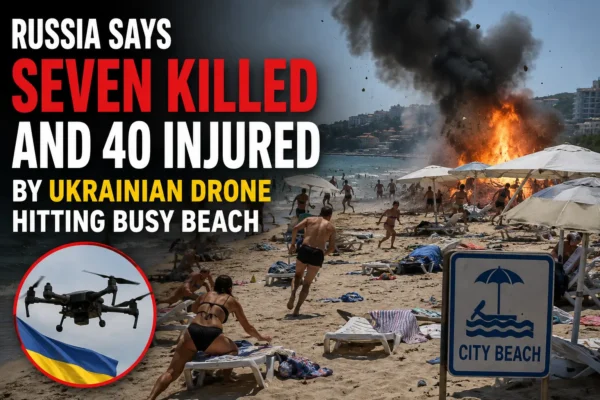
The United Kingdom has reaffirmed its strong backing for Ukraine after Russia warned that British military support and the supply of drones could further escalate the war. Andy Burnham, the UK’s prime minister, said Britain supports Ukraine “100%” as tensions continued to rise between London and Moscow. His comments came after Russia accused the UK of contributing to the escalation of the conflict through its military assistance to Kyiv. The dispute comes as drones have become an increasingly important part of the war. Ukraine has relied heavily on unmanned systems for battlefield operations, surveillance and long-range strikes, while Russia has also expanded its use of drones against Ukrainian targets. Britain has been one of Ukraine’s leading military supporters since Russia launched its full-scale invasion in February 2022. The UK has committed substantial military assistance, including drones and air-defence equipment, and has repeatedly said that Ukraine must be able to defend itself against Russian aggression. The latest warning from Moscow highlights the growing confrontation between Russia and Western countries supporting Kyiv. Russia has repeatedly criticised British and other European military assistance, arguing that weapons supplied to Ukraine are prolonging the conflict. For Britain, however, support for Ukraine remains a central part of its European security policy. The government has continued to emphasise the importance of Ukraine’s sovereignty and its ability to resist Russian attacks. The exchange also comes amid continuing uncertainty over the future course of the war. With drone warfare expanding rapidly on both sides, military technology and defence cooperation are becoming increasingly important to Ukraine’s strategy. Burnham’s comments signal that London does not intend to retreat from its backing for Kyiv despite Moscow’s warnings. The development could further underline the increasingly tense relationship between Britain and Russia as the war continues.