Afham

Palestinian officials

Palestinians say new Israeli measures in West Bank amount to de facto annexation

Palestinian officials and civil society groups say a series of new Israeli measures in the occupied West Bank amount to de facto annexation, warning that recent actions are permanently reshaping the territory’s political and geographic reality. The measures include expanded settlement activity, tighter military controls, and administrative changes that critics argue undermine any future Palestinian state. According to Palestinian authorities, Israel has accelerated approval of new housing units in Jewish settlements while simultaneously restricting Palestinian construction and land access. Large areas of the West Bank have reportedly been redesignated as closed military zones or nature reserves, limiting Palestinian movement and agricultural use. Palestinians say these steps consolidate Israeli control without a formal declaration of annexation. Recent changes in governance have intensified concerns. Israeli officials have transferred additional administrative powers over the West Bank from the military to civilian authorities, a move Palestinians argue blurs the line between occupation and sovereignty. Human rights groups say this shift signals a long-term strategy to integrate the territory into Israel while denying Palestinians equal rights. The Israeli government maintains that its actions are driven by security needs and legal considerations, rejecting claims of annexation. Israeli officials argue that settlement expansion is limited and that final borders should be determined through negotiations. However, peace talks have been stalled for years, and Palestinians say facts on the ground are making a negotiated solution increasingly unrealistic. International reaction has been cautious but critical. Several governments have expressed concern that Israeli policies threaten the viability of a two-state solution. Palestinian leaders warn that continued settlement growth and land reclassification could lead to increased instability and resentment in the region. As tensions rise, Palestinians say the cumulative effect of these measures is clear: even without formal legislation, Israel is entrenching permanent control over large parts of the West Bank, fundamentally altering the prospects for peace. WABS TALK EU adds Iran’s Revolutionary Guards to terrorist list.

Read More
Japan election landslide win

Japan’s governing party on course for landslide election win

Japan’s governing party is on course for a landslide election win, according to early projections and political analysts, reinforcing Prime Minister Fumio Kishida’s mandate at a time of domestic reform and regional uncertainty. The result signals strong voter preference for stability, continuity in economic policy, and a firm approach to national security amid rising geopolitical tensions in East Asia. The Liberal Democratic Party (LDP), which has dominated Japanese politics for much of the post-war era, is expected to secure a commanding majority in the lower house. Exit polls suggest the party has outperformed expectations across both urban and rural constituencies, benefiting from a fragmented opposition and relatively high voter confidence in the government’s crisis management record. The LDP’s coalition partner is also projected to retain most of its seats, further strengthening the ruling bloc. Economic concerns played a central role in shaping voter sentiment. While Japan continues to face challenges such as inflationary pressures, a weak yen, and demographic decline, the government’s promises of wage growth, corporate reform, and long-term fiscal stability appear to have resonated with the electorate. Voters also rewarded the ruling party for maintaining steady governance during a period of global economic volatility. Security policy was another decisive factor. The government’s commitment to strengthening defense capabilities and deepening alliances, particularly with the United States and regional partners, appealed to voters wary of growing security risks in the Asia-Pacific region. The opposition struggled to present a unified alternative vision on these issues, diluting its electoral impact. A landslide victory would give the prime minister greater political capital to push forward contentious reforms, including tax restructuring, social security adjustments, and labor market changes. However, analysts caution that a strong mandate also raises expectations, and the government will face increased pressure to deliver tangible results in the months ahead. WABS TALK EU adds Iran’s Revolutionary Guards to terrorist list.

Read More
Russia Ukraine war end June

US wants Russia and Ukraine to end war by June, says Zelensky

Ukrainian President Volodymyr Zelensky has said the United States is pushing for Russia and Ukraine to bring the ongoing war to an end by June, highlighting growing international pressure to secure a ceasefire after nearly four years of devastating conflict. Speaking during a recent briefing, Zelensky said Washington believes the coming months represent a critical window for diplomacy, as battlefield fatigue, economic strain, and global security concerns continue to mount. According to the Ukrainian leader, the US hopes intensified talks could lead to at least a temporary halt in fighting, paving the way for broader peace negotiations. The Russia Ukraine war end June timeline reflects rising urgency among Western allies, who are seeking to prevent further escalation while managing the humanitarian and economic fallout of the conflict. Zelensky stressed that Ukraine remains open to diplomatic efforts but warned that any agreement must protect the country’s sovereignty and territorial integrity. He also reiterated that Kyiv will not accept a settlement imposed under military pressure. Ukrainian officials continue to demand firm security guarantees and accountability for war-related damages, while Russia has maintained its own conditions for negotiations. The war has caused widespread destruction across Ukraine, displaced millions, and reshaped global energy and food markets. As both sides prepare for another challenging spring on the battlefield, international mediators are stepping up efforts to restart meaningful dialogue. US officials are reportedly coordinating closely with European partners to encourage confidence-building measures, including prisoner exchanges and humanitarian corridors, as potential first steps toward de-escalation. Zelensky emphasized that lasting peace will require more than a ceasefire, calling for a comprehensive framework that addresses reconstruction, security, and justice. He added that Ukraine will continue working with its allies to ensure any talks are grounded in international law. With June emerging as a potential diplomatic milestone, the coming weeks may prove decisive in determining whether the war moves closer to resolution—or enters another prolonged phase.

Read More
Pakistan mosque blast

More than 30 killed in blast at Pakistan mosque, officials say

At least 30 people were killed and dozens more injured after a powerful explosion ripped through a mosque in Pakistan during evening prayers, according to local officials. The devastating Pakistan mosque blast struck a crowded prayer hall, turning a place of worship into a scene of chaos and grief within moments. Authorities said the explosion occurred as worshippers gathered in large numbers, amplifying the impact of the attack. Emergency responders rushed to the site, transporting the wounded to nearby hospitals, where several victims remain in critical condition. Medical staff warned that the death toll could rise as rescue efforts continue and more injured are brought in from surrounding areas. Eyewitnesses described hearing a loud bang followed by thick smoke and panic as survivors attempted to flee the building. Many helped carry injured people out on stretchers or makeshift supports while ambulances struggled to navigate congested streets. Security forces cordoned off the area and launched an immediate investigation. Preliminary reports suggest the blast may have been caused by a suicide bomber, though officials said it was too early to confirm the exact nature of the attack. Bomb disposal units and forensic teams were deployed to collect evidence from the scene. Pakistan’s leadership strongly condemned the violence, calling it a cowardly assault on innocent civilians and religious worshippers. Statements of sympathy poured in from across the country, with leaders pledging to bring those responsible to justice. Militant attacks on religious sites have occurred periodically in Pakistan, despite years of counterterrorism operations aimed at curbing extremist groups. Such incidents continue to highlight the fragile security situation in parts of the country and the persistent threat posed by militant networks. As families mourn their loved ones, officials have promised tighter security around mosques and public spaces. The tragedy has reignited calls for stronger intelligence coordination and enhanced protection for vulnerable communities, underscoring the urgent need to prevent further bloodshed.

Read More
India–US trade deal

Hope and uncertainty as India and US strike long-delayed trade deal

India and the United States have finally reached a long-awaited trade agreement, marking a significant milestone in bilateral relations and raising hopes of stronger economic cooperation. Announced after months of intense negotiations, the deal is being seen as a breakthrough that could ease trade tensions, boost exports, and deepen strategic ties between the world’s largest democracy and its biggest economy. Markets reacted positively to the news, with Indian equities and the rupee showing immediate gains. Export-oriented sectors such as textiles, engineering goods, and jewellery are expected to benefit from reduced tariffs and improved access to the US market. Business leaders in both countries welcomed the agreement, calling it a step toward greater stability and predictability in cross-border commerce. Despite the optimism, uncertainty continues to surround key aspects of the pact. Several details remain unclear, including the full scope of tariff cuts, timelines for implementation, and how sensitive sectors like agriculture and dairy will be protected. Analysts caution that while the headline agreement is encouraging, its real impact will depend on the fine print and how effectively both governments follow through on commitments. There are also geopolitical dimensions to consider. Energy cooperation and India’s oil sourcing policies have reportedly featured in discussions, reflecting Washington’s broader strategic priorities. At home, Indian opposition parties have raised concerns about whether small farmers and domestic industries could face increased competition. For the United States, the deal represents an effort to strengthen economic ties with a key Indo-Pacific partner, while India sees it as an opportunity to attract investment, expand exports, and position itself as a reliable global manufacturing hub. Ultimately, the trade agreement signals renewed momentum in India–US relations. Yet it remains a delicate balancing act between opportunity and risk. As both sides move toward implementation, businesses and policymakers alike will be watching closely to see whether this long-delayed deal delivers lasting economic gains or becomes another chapter of unfinished promises WABS TALK . EU adds Iran’s Revolutionary Guards to terrorist list.

Read More
Bitcoin price drop

Bitcoin falls below $80,000, continuing decline

Bitcoin slid below the $80,000 mark on Friday, extending a multi-day selloff that has rattled the broader cryptocurrency market and reignited concerns about volatility in digital assets. The latest Bitcoin price drop reflects growing investor caution as traders reassess risk amid shifting global financial conditions. The world’s largest cryptocurrency had been trading comfortably above $80,000 earlier this month, supported by strong institutional inflows and optimism surrounding crypto-friendly regulatory developments. However, momentum has faded as profit-taking accelerated and market sentiment turned defensive. Analysts say the move lower was intensified by automated liquidations and reduced buying pressure at key technical levels. Other major cryptocurrencies followed Bitcoin’s downward trend. Ethereum, Solana, and several large-cap altcoins also posted notable losses, highlighting the interconnected nature of the digital asset market. Total crypto market capitalization declined sharply, erasing billions of dollars in value within hours. Market participants point to a combination of factors behind the Bitcoin price drop. Rising bond yields, uncertainty over future interest rate cuts, and renewed strength in the U.S. dollar have all weighed on speculative assets. At the same time, some investors are rotating out of crypto after the strong rally seen late last year, choosing to lock in gains. Despite the pullback, many long-term holders remain optimistic. Supporters argue that Bitcoin’s underlying fundamentals — including limited supply and growing institutional adoption — are unchanged. Several analysts view the current decline as a healthy correction rather than the start of a prolonged bear market. Still, short-term volatility is expected to persist. Traders are closely watching whether Bitcoin can stabilize near current levels or if further downside lies ahead. A sustained break below psychological support zones could trigger additional selling, while a rebound may depend on renewed inflows and improving macro sentiment. For now, the market remains on edge as Bitcoin searches for direction in an increasingly uncertain financial landscape.

Read More
DOJ Epstein Files Release

US justice department releasing more than three million pages from Epstein files

On January 30, 2026, the U.S. Justice Department announced a major disclosure of documents in its ongoing probe into convicted sex offender Jeffrey Epstein, releasing more than three million pages of records as part of a mandated transparency effort under the Epstein Files Transparency Act. Deputy Attorney General Todd Blanche said the release includes a large volume of material — over 2,000 videos and about 180,000 images — drawn from the department’s investigations, which span more than two decades of probes in Florida and New York, as well as related inquiries into Epstein’s network and activities. Although the law required all unclassified documents to be made public by December 19, 2025, the Justice Department missed that deadline due to the enormity of the review and redaction process. Hundreds of attorneys were tasked with examining the material to properly redact personally identifying information of victims, sensitive law enforcement details, and content that could jeopardize ongoing investigations. Blanche emphasized that while extensive redactions were necessary — including removing the identities of all women in images except Ghislaine Maxwell — the department did not withhold records for political reasons, dismissing claims of shielding any individual from scrutiny. The released files add to previously disclosed batches and represent a significant step in fulfilling the department’s legal obligations under the new transparency law, even as some material remains subject to further review or restricted access by Congress. The surge of public attention around the case — driven by both the scale of the release and the high-profile figures referenced in some records — follows widespread criticism from lawmakers and advocacy groups who had pressed the Justice Department for a more complete disclosure of Epstein-related materials. EU adds Iran’s Revolutionary Guards to terrorist list

Read More
EU adds Iran’s Revolutionary Guards to terrorist lis

EU adds Iran’s Revolutionary Guards to terrorist list

EU adds Iran’s Revolutionary Guards to terrorist list — On 29 January 2026, the European Union (EU) formally added Iran’s Islamic Revolutionary Guard Corps (IRGC) to its official terrorist organizations list, marking a major escalation in the bloc’s response to Tehran’s domestic repression and regional conduct. The decision was made unanimously by the 27 EU member states’ foreign ministers during a meeting in Brussels, with support from traditionally cautious capitals including France, Germany, and Italy. The move reflects growing concern within the EU over the IRGC’s role in violently suppressing widespread protests inside Iran. Human rights groups say the crackdown led to thousands of deaths and mass arrests, drawing strong international condemnation. EU foreign policy chief Kaja Kallas said the designation was justified because “repression cannot go unanswered,” adding that labeling an organization accused of killing its own citizens as terrorist sends a clear political signal. By placing the IRGC alongside extremist groups such as al-Qaida and ISIS, the EU now criminalizes material support or cooperation with the Guard within its jurisdiction. The listing triggers asset freezes, travel bans, and legal penalties under EU law. Member states also gain stronger legal authority to investigate networks tied to the IRGC and enforce financial restrictions against individuals or entities linked to the group. Iran swiftly condemned the decision, warning of destabilizing consequences and possible retaliation. Tehran accused the EU of politicizing counterterrorism measures and interfering in Iran’s internal affairs. While some analysts argue the step is largely symbolic given existing sanctions imposed by the United States, Canada, and Australia, the designation represents a significant political rebuke. The move aligns European policy more closely with Western partners critical of Iran’s domestic crackdown and regional activities. It also signals a tougher EU stance toward Tehran at a time of heightened tensions, reinforcing pressure on Iran over human rights and security concerns.

Read More
Trump warns Iran time is running out

Trump warns Iran ‘time is running out’ for nuclear deal as US military builds up in Gulf

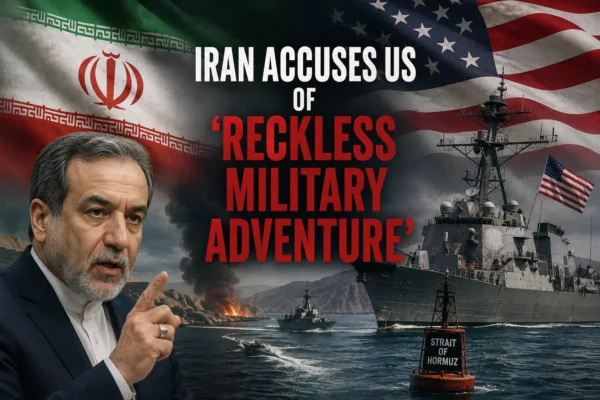
President Donald Trump has issued a stark warning to Iran that “time is running out” for Tehran to negotiate a fresh nuclear deal, intensifying one of the most serious diplomatic standoffs between Washington and Tehran in years. Trump used his Truth Social platform to demand that Iran return to negotiations on its nuclear programme under terms that would completely bar nuclear weapons development. He framed the ultimatum as urgent, urging Tehran to “come to the table” before diplomatic avenues close and military action becomes unavoidable. Alongside this warning, the United States has deployed a significant military buildup in the Persian Gulf region, centred on a “massive armada” led by the aircraft carrier USS Abraham Lincoln. Trump described the force as “ready, willing, and able to rapidly fulfil its mission with speed and violence, if necessary,” underscoring that diplomatic pressure is being backed by a credible military posture. In his message, Trump referenced past U.S. strikes on Iranian nuclear facilities during the 2025 conflict and warned that “the next attack will be far worse” if Iran refuses to negotiate. Tehran has rebuffed what it calls diplomacy under threat, insisting that negotiations must occur without military pressure and that it will defend itself if attacked. Iranian officials have rejected recent U.S. overtures and described Washington’s approach as ineffective and confrontational. The current crisis is unfolding amid broader regional and global concern over Iran’s nuclear trajectory, internal unrest, and the growing risk that further escalation could ignite a wider Middle East conflict. U.S. allies in the region have urged restraint while quietly strengthening their own defences. Some governments remain reluctant to host American military operations, complicating Washington’s strategic options. With tensions rising, Trump has made clear that his administration prefers a negotiated settlement — but only on strict terms. As military forces gather in the Gulf and rhetoric hardens on both sides, the coming weeks may prove decisive in determining whether diplomacy prevails or the standoff slides toward open confrontation.

Read More
Israel Gaza Hostage Remains

Israel says it has retrieved remains of final Gaza hostage

Israel has announced that it has recovered the remains of what it says was the final Israeli hostage held in Gaza, marking a grim milestone in the aftermath of the October 7 attacks and the prolonged war that followed. Israeli officials confirmed the operation was carried out by the military and domestic security services during a targeted mission in southern Gaza. The remains were transferred back to Israel for forensic identification, after which authorities notified the victim’s family. The individual had been presumed dead for months, but confirmation only came following the recovery process. The announcement brings symbolic closure to Israel’s hostage recovery efforts, which have been ongoing alongside intense military operations across Gaza. According to Israeli leaders, the mission reflects a continued commitment to returning every captive, living or deceased, to their families. Prime Minister Benjamin Netanyahu said the country “bows its head in mourning” and reaffirmed Israel’s pledge to account for all those taken during the Hamas-led assault. Defense officials described the recovery as both operationally complex and emotionally significant, emphasizing that intelligence gathering and ground coordination played a critical role. Families of hostages have expressed mixed emotions, combining relief at finally receiving answers with deep grief over the loss of their loved ones. Advocacy groups representing relatives said the moment underscores the human cost of the conflict and renewed calls for accountability. The development comes amid ongoing fighting and mounting international pressure for a ceasefire and expanded humanitarian access to Gaza. Palestinian health authorities continue to report heavy civilian casualties, while aid agencies warn of worsening conditions across the enclave. With the confirmation of the Israel Gaza hostage remains, attention now shifts to broader diplomatic efforts aimed at ending the war and addressing the future governance of Gaza. For many Israelis, the recovery closes one painful chapter, even as the wider conflict shows few signs of resolution.

Read More