Afham

Strait of Hormuz tensions

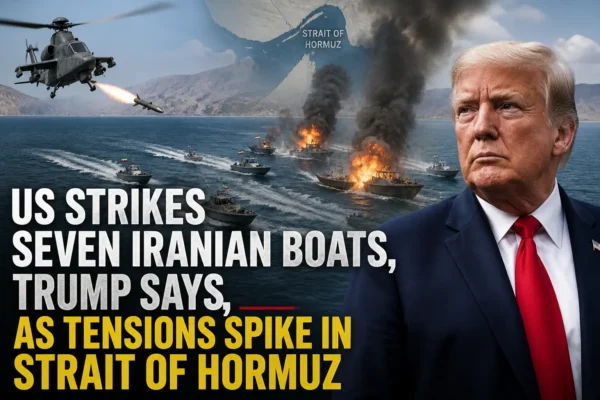
US strikes seven Iranian boats, Trump says, as tensions spike in Strait of Hormuz

Rising Strait of Hormuz tensions took a sharp turn after the United States carried out strikes on seven Iranian boats, according to statements from Donald Trump. The development marks a significant escalation in an already volatile region that is critical to global energy supplies. Speaking to reporters, Trump said the action was taken in response to what he described as “provocative maneuvers” by Iranian forces in the strategic waterway. The Strait of Hormuz handles roughly a fifth of the world’s oil shipments, making any disruption a serious concern for international markets and security. Officials from the U.S. Department of Defense indicated that the targeted boats were believed to be linked to Iran’s paramilitary naval units. The strikes, described as “defensive and proportionate,” were reportedly aimed at preventing further interference with commercial shipping lanes. Iran, however, strongly condemned the attacks, calling them an act of aggression and warning of consequences. Representatives of the Islamic Revolutionary Guard Corps stated that their vessels were operating within their अधिकार and accused the U.S. of escalating tensions deliberately. The incident comes amid heightened friction between Washington and Tehran over sanctions, regional influence, and maritime security. Analysts warn that continued military exchanges could lead to broader conflict, especially given the strategic importance of the waterway. Global oil markets reacted swiftly, with prices showing signs of volatility following the news. Energy analysts note that even limited disruptions in the Strait can trigger significant economic ripple effects worldwide. As diplomatic channels remain strained, international observers are urging restraint from both sides. The situation continues to evolve, with the risk of further escalation in the Strait of Hormuz tensions remaining a key concern for global stability.
Read More
Iran US peace proposal response

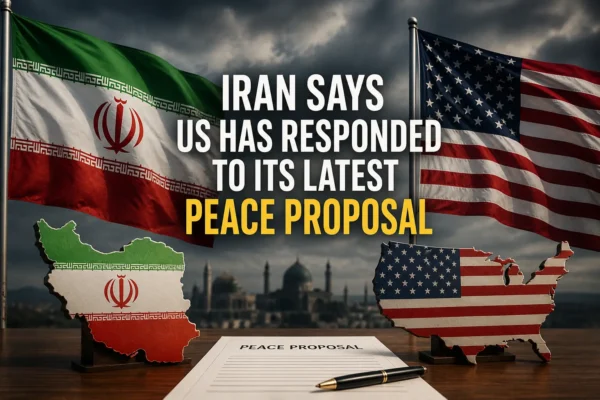
Iran says US has responded to its latest peace proposal

Iran has confirmed that the United States has responded to its latest peace proposal, signaling a fragile but ongoing diplomatic exchange amid heightened tensions in the Middle East. The development comes after Tehran submitted a new multi-point plan—reportedly a 14-point framework—through intermediaries, aiming to end hostilities and ease the standoff that has disrupted global energy markets. According to recent reports, Iranian officials indicated that Washington has reviewed and reacted to the proposal, though details of the U.S. response remain limited. The exchange follows weeks of indirect negotiations, often facilitated by third parties such as Pakistan, highlighting the absence of direct diplomatic engagement between the two sides. U.S. President Donald Trump has taken a cautious and skeptical stance. While acknowledging receipt of Iran’s proposal, he has suggested that the terms may not be acceptable, warning that military options—including renewed airstrikes—remain on the table if negotiations fail. Reports indicate Trump believes Iran has “not yet paid a big enough price,” underscoring the administration’s hardline posture. Iran’s proposal is believed to include key demands such as lifting U.S. sanctions, reopening the Strait of Hormuz, and reducing military pressure in the region. In return, Tehran has signaled willingness to engage in phased de-escalation, though it insists on preserving its strategic and nuclear interests. Despite this exchange, the situation remains volatile. Ongoing incidents in the Strait of Hormuz and continued military threats from both sides illustrate how fragile the diplomatic process is. Analysts note that while both countries appear interested in avoiding prolonged conflict, deep mistrust and conflicting demands continue to hinder a breakthrough. In summary, while Iran says the U.S. has responded to its latest peace proposal, the path to a comprehensive agreement remains uncertain, with diplomacy and military pressure unfolding simultaneously.

Read More
Trump Iran war deadline

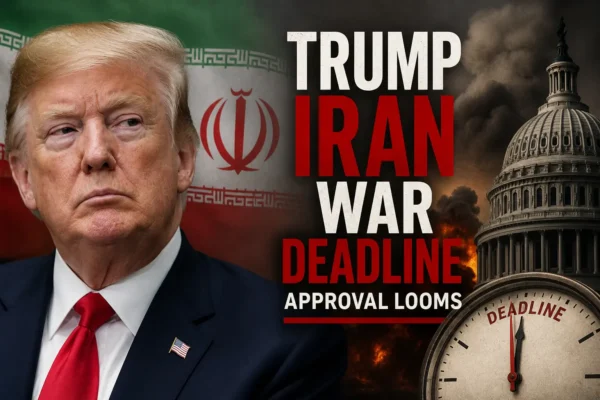
Trump repeats that he is ‘not happy’ with Iran as deadline to seek approval for war looms

U.S. President Donald Trump has reiterated that he is “not happy” with Iran as a కీల moment approaches in Washington: the legal deadline requiring congressional approval for continued military involvement. The statement underscores rising tension between diplomatic efforts and domestic legal constraints tied to the ongoing conflict. Trump’s dissatisfaction centers on Iran’s latest proposals to end hostilities, which he has described as unacceptable and insufficient. According to recent reports, he believes Tehran’s leadership remains divided and unwilling to meet core U.S. demands, particularly on abandoning nuclear ambitions. Despite indirect negotiations through mediators, progress has stalled, leaving the situation in a fragile ceasefire rather than a lasting resolution. At the same time, the administration faces pressure under the War Powers Resolution, which mandates that a president must seek congressional authorization within 60 days of initiating military action. That deadline is now looming, placing Trump in a politically sensitive position. Rather than seeking approval, the White House argues that hostilities have effectively “terminated” due to an earlier ceasefire, a legal interpretation widely disputed by lawmakers and experts. Congress remains deeply divided. Efforts by Democrats to force a vote on ending or authorizing the war have repeatedly failed, while many Republicans continue to back Trump’s approach. This impasse increases the likelihood that the deadline will pass without clear legislative action, further intensifying constitutional questions over executive war powers. Meanwhile, Trump has kept military options open, signaling that further strikes remain possible if Iran does not shift its stance. His remarks suggest a dual-track strategy: maintaining pressure through both diplomacy and the threat of force. With no breakthrough in negotiations and legal uncertainty mounting, the coming days are critical. Whether the administration seeks authorization, ignores the deadline, or escalates tensions will significantly shape the trajectory of the U.S.–Iran conflict and broader regional stability.

Read More
Iran blockade oil price

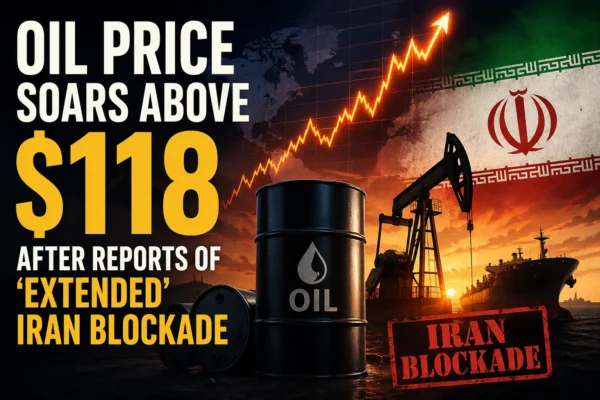
Oil price soars above $118 after reports of ‘extended’ Iran blockade

Oil prices surged sharply on Wednesday, with Brent crude climbing above $118 a barrel after reports that the United States could extend its blockade on Iran, intensifying fears of a prolonged supply shock in global energy markets. The move pushed crude to its highest level in nearly a month and reignited concerns over inflation, transport costs, and fuel prices worldwide. According to market reports, traders reacted after new signals suggested the blockade on Iranian ports may continue longer than previously expected. Iran remains a key oil producer, and any disruption to exports from the Gulf region immediately impacts global supply expectations. Investors are especially concerned because the Strait of Hormuz, one of the world’s most important oil transit routes, remains under pressure amid ongoing tensions. Brent crude futures rose more than 6% to $118.33, while U.S. West Texas Intermediate (WTI) also jumped above $105. Analysts said the rally was driven not only by geopolitical risk but also by fresh U.S. inventory data showing a larger-than-expected drop in crude stockpiles, indicating tighter supply conditions. Higher oil prices could quickly translate into rising petrol and diesel costs for consumers, especially in import-dependent countries such as India and many European nations. Airlines, shipping firms, and manufacturing sectors may also face higher operating expenses if prices remain elevated. Markets are now watching whether diplomatic efforts between Washington and Tehran can resume. Any sign of easing tensions could cool prices, while an extended blockade or military escalation may send crude toward $120 or higher. The latest surge highlights how vulnerable global energy markets remain to geopolitical disruptions. With inflation already a concern in many economies, sustained high oil prices could create fresh challenges for central banks and policymakers in the weeks ahead.

Read More
Trump attempted assassination Washington dinner

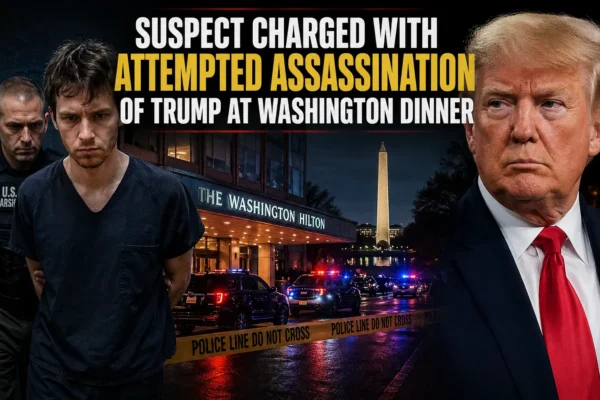
Suspect charged with attempted assassination of Trump at Washington dinner

A suspect has been formally charged with the attempted assassination of former U.S. President Donald Trump after a dramatic security breach during a high-profile Washington dinner event. The incident took place at the annual White House Correspondents’ Association dinner held at the Washington Hilton, where Trump and several senior officials were in attendance. Federal prosecutors identified the suspect as Cole Tomas Allen, 31, from California. Authorities allege he arrived in Washington days before the event carrying multiple weapons, including a shotgun, handgun, and knives. Investigators say Allen attempted to force his way past a security checkpoint before being confronted by Secret Service officers. During the confrontation, shots were fired and at least one Secret Service officer was struck in the chest. Officials said the officer’s ballistic vest prevented serious injury. Trump was immediately removed from the venue by security personnel as guests and staff took cover inside the ballroom. Allen now faces multiple federal charges, including attempted assassination of a former president, illegal transportation of firearms, and use of a weapon during a violent crime. If convicted on the most serious count, he could face life imprisonment. A judge ordered him held in custody pending further court proceedings. Investigators are also reviewing writings and communications allegedly linked to the suspect to determine motive and whether others were involved. Officials described the case as active and said additional charges remain possible. The incident has reignited debate over political violence and security surrounding major U.S. public events. Despite the breach, authorities stated that rapid intervention by security teams likely prevented a far more serious outcome.

Read More
Trump suspected gunman targets

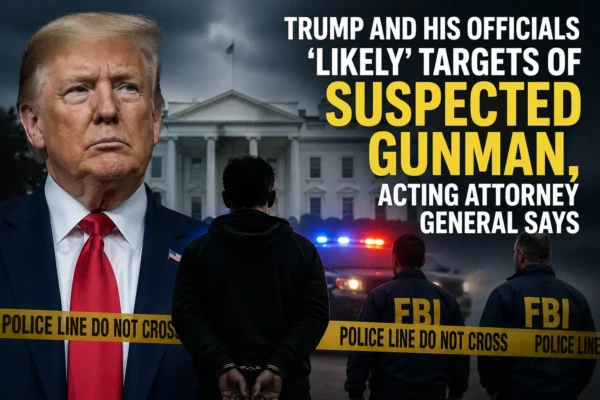
Trump and his officials ‘likely’ targets of suspected gunman, acting attorney general says

Former President Donald Trump and several of his senior officials were described as “likely” targets of a suspected gunman, according to comments made by the acting attorney general during a press briefing. The statement came as investigators continued examining the suspect’s motives, background, and any possible links to extremist ideologies or organized groups. Authorities said the suspect was detained after a coordinated law enforcement operation, with officers recovering multiple weapons, ammunition, and documents that are now being analyzed. Early findings suggest the individual may have been planning attacks against high-profile political figures, with Trump and members of his inner circle among the most prominent names allegedly identified. The acting attorney general emphasized that there is currently no evidence of an immediate wider threat, but security measures around Trump, campaign offices, and current and former government officials have been strengthened as a precaution. Federal agencies, including the FBI and Secret Service, are working together to trace the suspect’s movements, online activity, and communications in the weeks leading up to the arrest. Political violence has become an increasing concern in the United States, with officials from both major parties warning against heated rhetoric and threats aimed at public servants. The latest case is expected to renew debate over domestic extremism, gun access, and the security challenges faced by candidates during election cycles. Trump’s representatives thanked law enforcement agencies for their swift response and said they remain confident in the security systems protecting the former president. They did not comment further on the specifics of the investigation. Legal experts note that prosecutors will likely pursue serious federal charges if evidence confirms a planned attack on political figures. Such offenses can carry lengthy prison sentences and heightened penalties when threats involve former presidents or protected officials. The case remains under active investigation, and officials have urged the public to avoid speculation until verified facts are released. More details are expected as court documents become public in the coming days.

Read More
Trump Pakistan Iran talks

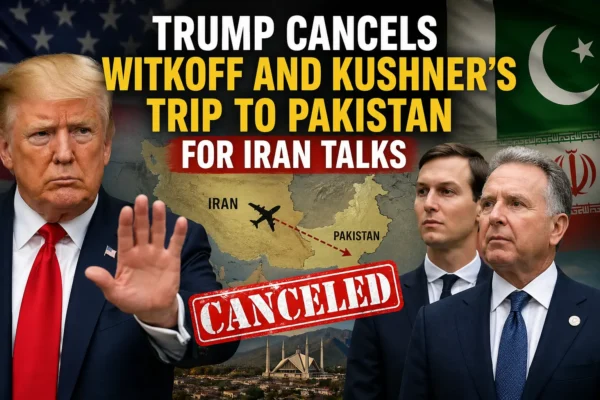
Trump cancels Witkoff and Kushner’s trip to Pakistan for Iran talks

President Donald Trump has canceled a planned trip by envoys Steve Witkoff and Jared Kushner to Pakistan for discussions linked to the ongoing conflict with Iran, creating fresh uncertainty around diplomatic efforts in the region. The delegation had been expected to travel to Islamabad for indirect negotiations involving Iranian officials and Pakistani intermediaries. Trump said he saw little value in sending negotiators on a lengthy trip when progress appeared limited. In public remarks, he argued the United States held stronger leverage and said Iran could make contact directly if it wanted serious talks. Reports also cited Trump’s frustration with what he described as confusion inside Iran’s leadership structure. The cancellation is being viewed as a setback for hopes of a diplomatic breakthrough after weeks of rising tensions. Pakistan had emerged as a possible neutral venue because of its working ties with both Washington and Tehran. Iranian Foreign Minister Abbas Araghchi was already in Islamabad meeting Pakistani leaders, though Tehran reportedly denied that direct U.S.-Iran talks were formally scheduled. The wider crisis continues to affect global markets, particularly energy prices and shipping routes through the Strait of Hormuz. Any delay in negotiations could prolong instability and keep investors cautious. Analysts say future talks may still happen through phone diplomacy, regional mediators, or a different host country. For now, the decision highlights how fragile the current ceasefire and negotiation process remains. While Trump insists talks are still possible, canceling the Pakistan mission signals that a quick resolution is far from certain.

Read More
NATO expel members

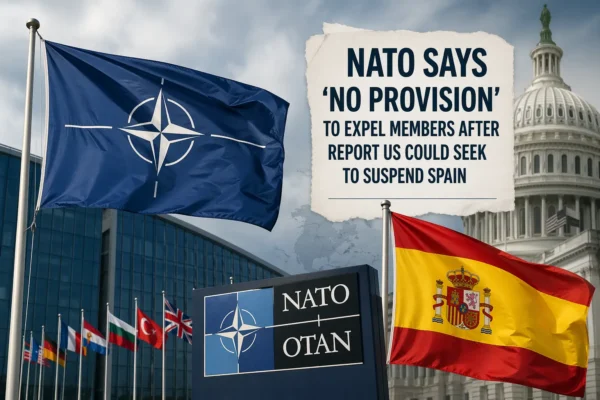
Nato says ‘no provision’ to expel members after report US could seek to suspend Spain

NATO has said there is “no provision” within its founding treaty to expel member states, following reports that the United States could explore ways to suspend Spain over defense spending disputes. The statement comes amid renewed pressure from Washington on allies to meet military spending commitments. According to alliance officials, the NATO treaty does not contain a mechanism for removing or suspending members once they have joined. Any major institutional changes would likely require unanimous agreement among all member states, making such a move highly unlikely. Reports emerged after growing frustration in the United States regarding burden-sharing within the alliance. Several American officials and lawmakers have repeatedly criticized some European nations for not spending enough on defense, with Spain often cited as one of the lower contributors relative to GDP targets. Spain is a longstanding NATO member and hosts important military facilities used for alliance operations. Spanish officials have defended their contributions, pointing to troop deployments, naval assets, and support for joint missions rather than focusing solely on spending percentages. The issue reflects wider tensions inside NATO as members balance domestic budgets with rising security concerns linked to conflicts in Ukraine and instability in other regions. While calls for greater defense spending continue, diplomats stress unity remains the alliance’s top priority. Analysts say any attempt to sideline Spain would create serious political divisions and distract from collective security goals. For now, NATO has made clear that no formal rule exists to expel members, reinforcing the alliance’s consensus-based structure.

Read More
UK relations

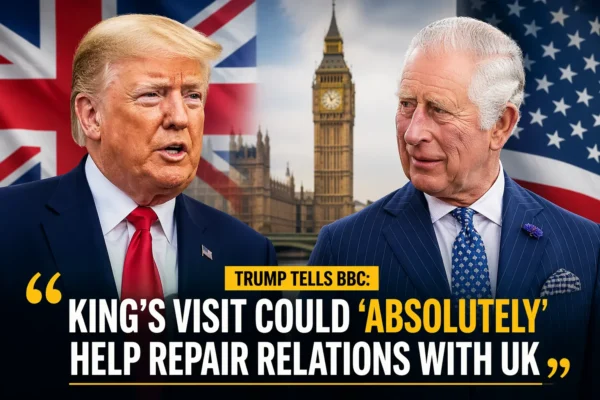
Trump tells BBC that King’s visit could ‘absolutely’ help repair relations with UK

Former U.S. President Donald Trump has said that a future visit hosted by King Charles could “absolutely” help repair relations between the United States and the United Kingdom. Speaking in an interview with the BBC, Trump suggested that the long-standing alliance between the two nations remains strong, but personal diplomacy and symbolic gestures can play an important role in strengthening ties after periods of tension. Trump’s remarks come at a time when UK-US relations are being closely watched over issues including trade, defense cooperation, and global security challenges. He indicated that the British monarchy continues to hold significant soft power and international influence, making a royal visit a meaningful opportunity to reset the tone between leaders. The former president has previously spoken positively about the Royal Family and his past state visits to Britain during his presidency. Trump noted that relations between countries often depend not only on formal negotiations but also on personal respect and public goodwill. A meeting involving King Charles, he argued, could create a more positive atmosphere and encourage closer cooperation. Political analysts say royal diplomacy has historically been used to reinforce Britain’s relationships with major allies. While the monarchy does not set government policy, royal visits often carry symbolic weight and can help smooth political tensions. Trump’s comments highlight how ceremonial events may still influence international relations in practical ways. The United Kingdom remains one of America’s closest partners, with deep economic ties, intelligence sharing, and military cooperation through NATO and other alliances. Any move aimed at improving political chemistry between leaders would likely be welcomed on both sides of the Atlantic. Although no official visit has been announced, Trump’s statement has already sparked discussion about the potential role of King Charles in future diplomacy. As both countries navigate changing global dynamics, gestures of unity and tradition may help preserve one of the world’s most important strategic partnerships. Whether symbolic or substantive, Trump’s comments underline the enduring importance of the special relationship between Washington and London, and how royal engagement could once again become part of that diplomatic story.

Read More
Trump Iran deal pressure

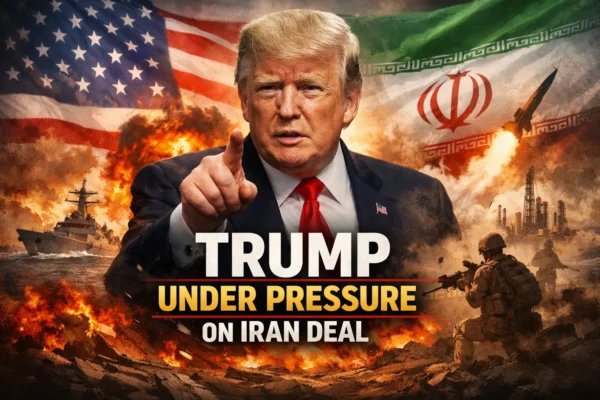
Trump denies being ‘under pressure’ to make Iran deal ahead of ceasefire deadline

U.S. President Donald Trump has denied claims that he is facing pressure to finalize a deal with Iran as the deadline for a temporary ceasefire approaches. Speaking to reporters, Trump insisted negotiations are progressing on Washington’s terms and said he remains confident that Tehran wants an agreement more urgently than the United States does. The ceasefire, brokered earlier this month after weeks of heightened tensions, is set to expire on April 22 unless both sides agree to extend it or reach a broader settlement. Trump rejected suggestions that the White House is rushing to secure a diplomatic breakthrough, saying he is under “no pressure whatsoever” and that the U.S. has multiple options if talks fail. Recent comments from Trump have mixed optimism with warnings. He previously said a deal with Iran was “looking very good,” while also stating that military measures remain available if negotiations collapse. Analysts say the administration is trying to balance pressure tactics with diplomacy as oil markets remain sensitive to developments around the Strait of Hormuz. Iranian officials have publicly disputed some U.S. claims regarding progress in the talks, signaling that major disagreements still remain. Tehran has demanded stronger guarantees and a permanent end to wartime restrictions, while Washington continues to seek security and nuclear-related concessions. With the ceasefire deadline hours away, global attention is now focused on whether both sides can avoid renewed conflict. Any failure in negotiations could quickly raise tensions again and impact global energy prices, while a successful agreement could stabilize the region and ease market concerns.

Read More