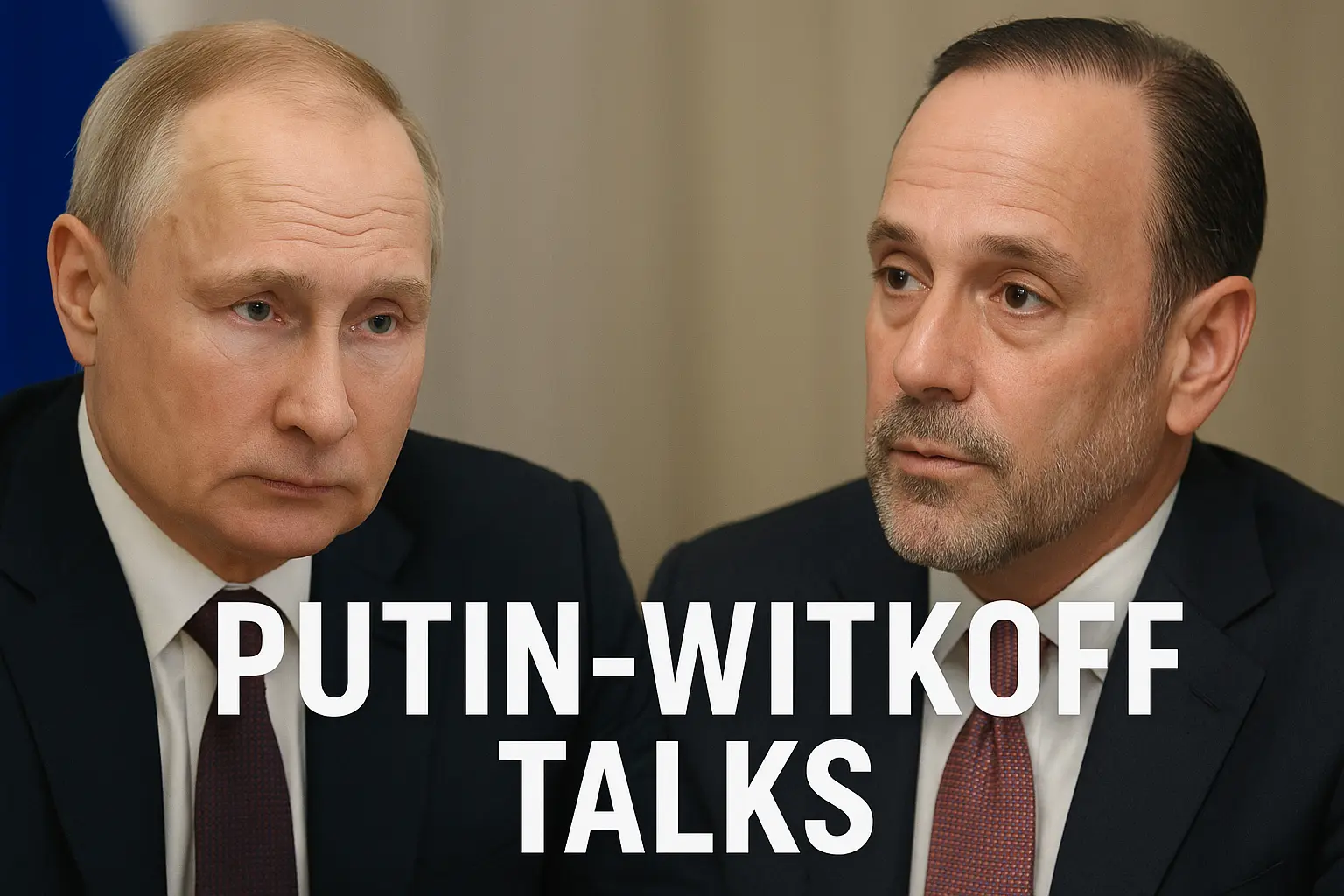
Vladimir Putin and Steve Witkoff, the special envoy appointed by Donald Trump, are set to hold critical discussions in Moscow aimed at shaping the next phase of efforts to end the war in Ukraine. The meeting is being described as one of the most consequential diplomatic engagements since Russia’s full-scale invasion began, as both sides look to test the possibilities of a negotiated settlement while maintaining hardline positions.
Witkoff’s trip to Moscow follows intensive discussions in the United States between American and Ukrainian officials, who have been working to evaluate and revise a U.S.-backed peace framework. That framework has been controversial, with Ukrainian officials expressing deep concern that certain elements appear overly accommodating to Russian demands. Key sticking points include the status of contested territories and security guarantees—issues that have repeatedly derailed previous diplomatic attempts.
Moscow has signaled openness to dialogue but has avoided offering any clear concessions. Russian officials have described this meeting as a preliminary review rather than a decisive moment, suggesting that a long negotiation process may lie ahead. Analysts believe Russia’s strategy is to gauge the extent to which the U.S. envoy might be willing to adjust Washington’s position, particularly regarding sanctions and recognition of Russian control over occupied regions.
For his part, Witkoff has maintained a cautiously optimistic tone, noting that a “permanent peace” could be possible if both sides show flexibility. He has hinted that economic incentives and long-term security arrangements could form part of a broader settlement package. However, Ukrainian leaders remain adamant that territorial integrity cannot be compromised, especially regarding regions such as Crimea, Donbas, Kherson, and Zaporizhzhia.
Complicating the environment further, Putin recently issued a stark public warning to European nations, declaring that Russia is “ready” for war if Europe chooses confrontation. This declaration is widely interpreted as an attempt to strengthen Russia’s negotiating leverage ahead of the talks. At the same time, European leaders have reiterated their support for Ukraine, signaling that they will resist any diplomatic solution that weakens Ukraine’s sovereignty.
The stakes of the Putin-Witkoff talks extend far beyond the battlefield. The outcome may influence the future of European security, Washington’s role in regional stability, and the potential for diplomatic engagement at a time when both sides are digging in. While the meeting does not guarantee immediate breakthroughs, it represents a rare opening in a conflict that has largely resisted negotiation. Whether this window leads to progress or entrenches positions further will become clearer in the coming days, but expectations remain measured amid significant geopolitical uncertainty.