Zelensky negotiations with US

Zelensky ready to work with US on ‘their vision’ for ending Ukraine war

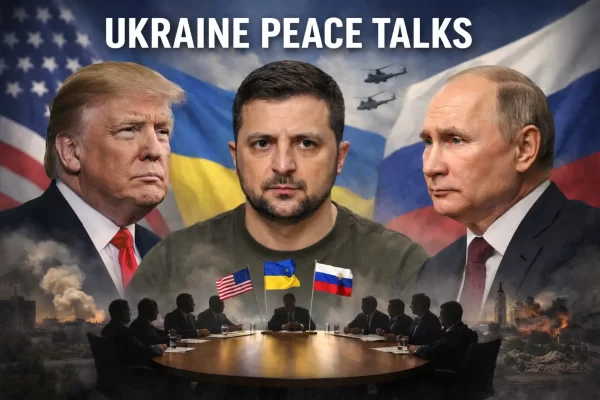
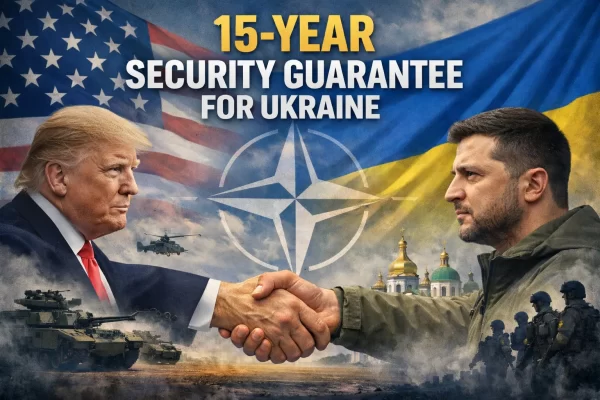
Ukrainian President Volodymyr Zelensky has signaled a willingness to engage closely with Washington on a U.S.-backed peace proposal, describing his approach as “constructive, honest and prompt.” Following a meeting in Kyiv with U.S. Army Secretary Daniel Driscoll, Zelensky affirmed that Ukrainian and American teams would collaboratively work on the key elements of the plan. Although the full details of the 28-point plan have not been publicly disclosed, reports suggest it contains highly sensitive terms — including territorial concessions, military restrictions, and a new security architecture. According to media coverage, some of the most controversial proposals would require Ukraine to cede control over the Donbas region, formally recognize Russian control over Crimea, Luhansk, and Donetsk, and limit its army to 600,000 troops. In exchange, Ukraine would receive “robust security guarantees,” though the exact form and enforceability of those guarantees remain unclear. For Zelensky, agreeing to negotiate does not mean blind capitulation. His office says that while he has accepted a draft, he has also “outlined the fundamental principles that matter to our people.” He frames the collaboration as essential for a “just peace that respects everyone’s sovereignty, a durable peace that can’t be called into question by future aggression.” This willingness to engage has stirred strong reactions. Several European allies have pushed back, warning that the U.S.-proposed plan could amount to a forced surrender of Ukrainian land and resources. Critics argue that such terms might undermine Ukraine’s long-term security and set a dangerous precedent for capitulation-style diplomacy. Still, Zelensky appears determined enough to explore diplomacy. His team plans to hold further discussions not only with U.S. officials but also with other international leaders. According to his office, as part of upcoming diplomacy, Zelensky expects to engage with former U.S. President Donald Trump to explore key diplomatic pathways. How Tommy Hilfiger Became an Overnight Success | Perception Hack | Genius | Secret Zelensky’s outreach underscores a realistic — albeit risky — gamble: he hopes that by aligning with the U.S. vision of peace, Ukraine can secure a deal that prevents future Russian aggression while preserving core national interests. At the same time, he is balancing a fragile relationship — negotiating under pressure from Western allies, wary of concessions, and on a war footing that demands both vigilance and flexibility. Children among 25 killed in one of Russia’s deadliest strikes on western Ukraine

Read More
Russia-Ukraine war residential building strike

Children among 25 killed in one of Russia’s deadliest strikes on western Ukraine

A devastating Russian drone and missile strike hit the western Ukrainian city of Ternopil overnight, killing 25 people, including three children, and injuring dozens more. The attack, one of the deadliest in western Ukraine since the start of the full-scale invasion, struck a densely populated residential area where families were asleep as the bombardment began. According to authorities, two nine-storey residential apartment blocks suffered direct hits. The upper floors were torn apart as explosions triggered a fierce blaze that engulfed the buildings within minutes. Interior Minister Ihor Klymenko described sections of the structure being consumed in what he called “fiery lava,” a torrent of flames so intense that many residents had no chance to escape before the fire overtook their homes. Of the 25 confirmed fatalities, three were children aged just 5, 7, and 16. Emergency crews reported that another 73 people were wounded, including at least 15 children, many suffering burns, blast injuries, or smoke inhalation. Rescue workers continued digging through smoldering rubble throughout the day, warning that as many as two dozen people remained missing and that recovery operations could take several days due to the scale of destruction. Ukraine’s air force said Russia launched an enormous overnight barrage consisting of 476 drones and 48 missiles targeting multiple regions. While air defenses intercepted a significant number, several managed to slip through, striking civilian infrastructure, residential zones, and energy facilities. The attack triggered power outages across several western regions, leaving thousands without electricity or heating as winter temperatures continue to drop sharply. Local officials warned that the humanitarian situation could worsen if strikes on energy facilities persist. Ukrainian leaders condemned the assault as a deliberate attack on civilians, emphasizing that there were no military installations near the impact zone. Officials stressed that the timing and scale of the strike suggested an effort to sow fear and cause mass casualties far from active front lines. The attack coincided with President Volodymyr Zelenskyy’s diplomatic visit to Turkey, where he is seeking enhanced international support to counter Russia’s escalating aerial campaign. Ukrainian authorities announced they would raise the Ternopil strike at the United Nations Security Council, calling for a stronger global response and accountability measures. Ukraine to get up to 100 French-made Rafale fighter jets As firefighters continued to extinguish pockets of flames and families searched for missing loved ones, the tragedy underscored the increasingly lethal reach of Russian strikes—even in Ukraine’s western regions, which had once been considered relatively safe. For many residents, the overnight attack marked a horrifying reminder that no part of the country is beyond the war’s devastating impact. How Tommy Hilfiger Became an Overnight Success | Perception Hack | Genius | Secret

Read More
Ukraine Rafale deal

Ukraine to get up to 100 French-made Rafale fighter jets

Ukraine is set to receive a major boost to its airpower as France moves forward with a landmark plan to supply up to 100 Rafale fighter jets, marking one of the largest military aviation transfers in Europe since the start of the war. The decision underscores France’s growing commitment to strengthening Ukraine’s long-term defense capabilities and supporting Kyiv’s efforts to modernize its Soviet-era air fleet. The Rafale, manufactured by Dassault Aviation, is considered one of the world’s most advanced multirole fighter jets. Its ability to perform air superiority missions, deep strike operations, reconnaissance tasks, and nuclear deterrence roles makes it a highly versatile platform. For Ukraine—whose air force has relied heavily on aging MiG-29s and Su-27s—the introduction of Rafales would represent a transformative shift in capability. Ukrainian officials have argued for months that a modern fighter fleet is essential not only for protecting airspace but also for regaining strategic initiative on the battlefield. While the exact timeline for delivery remains under discussion, French sources suggest that the aircraft could be transferred in phases over several years. This approach would allow Ukrainian pilots and ground crews sufficient time for training, which is a crucial component of the agreement. France is also expected to provide simulators, maintenance support, and long-term logistics to ensure sustained operational readiness. The deal, still being finalized, signals a broader shift in European security policies. As the war continues with no clear end in sight, European countries are increasingly willing to commit high-value assets to Ukraine’s defense. France’s willingness to supply Rafales—a premium component of its own air force—highlights the seriousness of Europe’s evolving security posture and the recognition that Ukraine’s defense is directly tied to the stability of the continent. For Kyiv, the potential delivery of up to 100 Rafale jets would dramatically enhance its ability to intercept missiles, challenge Russian aircraft, and support ground operations. It would also integrate Ukraine more deeply into Western defense standards, a step seen as significant for its future ambitions within NATO. Experts believe this modernization could position Ukraine to operate alongside allied air forces with greater interoperability and effectiveness. The economic implications are also notable. Dassault Aviation, which has seen rising demand for Rafales in recent years, stands to gain from long-term production and support contracts. The deal additionally strengthens France’s geopolitical influence, positioning Paris as a central player in shaping the future of European defense. Overall, the Ukraine Rafale deal marks a pivotal moment in the ongoing conflict, signalling a strategic upgrade for Ukraine’s air capabilities and a strengthened commitment from France to support Kyiv in the years ahead. Feud erupts between Trump and ally Marjorie Taylor Greene ahead of Epstein files vote

Read More
Trump legal action on BBC

Trump says he will take legal action against BBC over Panorama edit

Donald Trump has announced that he will pursue legal action against the BBC, accusing the broadcaster of defamation after what he describes as a deceptive and damaging edit of his January 6, 2021 speech in a recent Panorama documentary. Speaking aboard Air Force One, Trump confirmed that he intends to file the lawsuit “sometime next week,” adding that he is seeking between $1 billion and $5 billion in compensation. His lawyer, Alejandro Brito, previously sent the BBC a letter demanding a full retraction, a public apology, and significant financial damages. The controversy centers on the Panorama episode titled “Trump: A Second Chance?”, which aired shortly before the 2024 U.S. election. The documentary used excerpts from Trump’s January 6 speech, but critics say the program spliced together lines from different parts of the address, making it appear as though Trump called on supporters to “fight like hell” as they moved toward the Capitol. In reality, the statements were made nearly an hour apart, and key segments in which Trump urged protesters to remain peaceful were omitted. These editorial choices prompted accusations that the documentary created a misleading narrative about Trump’s intentions on the day of the Capitol riot. Following the outcry, the BBC issued an apology, with its chair Samir Shah describing the edit as an “error of judgment.” The broadcaster also confirmed that it would not rebroadcast the documentary in its existing form. However, despite acknowledging the editing mistake, the BBC rejected Trump’s request for damages, arguing that there is no legal basis for a defamation claim of the scale he is pursuing. Trump has remained firm in his stance, insisting that he feels an “obligation” to proceed with the lawsuit. He argues that media organizations should be held accountable when they distort or manipulate his words. He publicly described the Panorama edit as a “corrupt” example of fake news designed to misrepresent his message and influence public perception. The fallout from the incident has already been significant. Two high-profile BBC executives—Director-General Tim Davie and News Chief Deborah Turness—have resigned amid the ongoing scandal, reflecting both internal and external pressure over the handling of the documentary. Despite Trump’s determination, legal experts have expressed skepticism about the viability of the lawsuit. Questions have been raised regarding the statute of limitations under UK defamation law, as well as the complexities of pursuing such a claim in U.S. courts. Nevertheless, Trump continues to frame the dispute as part of his broader battle against what he views as longstanding media bias, reinforcing his narrative that major news outlets frequently distort his rhetoric. This planned lawsuit is the latest escalation in Trump’s ongoing clash with mainstream media organizations and underscores his intent to confront those he believes have misrepresented him.

Read More
Zelensky Tomahawk missiles

Zelensky fails to secure Tomahawk missiles at talks with Trump

Ukrainian President Volodymyr Zelensky’s highly anticipated meeting with U.S. President Donald Trump at the White House has ended without an agreement on the transfer of Tomahawk cruise missiles, dealing a blow to Kyiv’s hopes of acquiring advanced long-range weaponry to bolster its defenses against Russian forces. According to U.S. and Ukrainian officials, the discussions between the two leaders were “constructive but inconclusive.” Zelensky had arrived in Washington seeking approval for the sale or transfer of Tomahawk missiles, capable of striking targets up to 1,600 kilometers away, arguing that such systems were vital to Ukraine’s ability to deter Russian attacks on critical infrastructure and logistics hubs. However, President Trump reportedly declined to approve the request, citing concerns that providing such high-precision, long-range weapons could escalate the conflict and draw the United States deeper into the war. Instead, Trump proposed increasing U.S. intelligence sharing and offering a new package of defensive systems, including Patriot interceptors and counter-drone technologies. In a joint press conference following the meeting, Zelensky said he appreciated Washington’s continued support but admitted that “Ukraine had hoped for more tangible commitments.” He added that Kyiv would continue discussions with American defense officials and Congress in hopes of securing “the tools necessary to end the war on fair terms.” Trump emphasized his administration’s focus on “peace through strength” and suggested that further negotiations between Russia and Ukraine could take place “under the right conditions.” He also reiterated his belief that a diplomatic settlement remains possible if both sides “show flexibility and put national interest above pride.” Analysts say the outcome highlights the ongoing tension between Kyiv’s urgent battlefield needs and Washington’s cautious approach to escalation. While the U.S. remains Ukraine’s largest supplier of aid and weaponry, the Trump administration has increasingly framed its support in the context of a potential peace deal rather than open-ended military assistance. The failure to secure Tomahawk missiles is likely to frustrate Ukrainian commanders, who argue that long-range precision weapons are essential for targeting Russian supply lines deep inside occupied territories. Without them, Ukraine remains largely dependent on shorter-range systems like ATACMS and Storm Shadow missiles provided by other Western allies. Despite the setback, Zelensky vowed to keep pushing for stronger defense partnerships. “Ukraine will not stop fighting for its freedom and independence,” he said. “We will continue to work with our partners to ensure our country’s security and future.” The talks mark a pivotal moment in U.S.-Ukraine relations, as Kyiv balances gratitude for continued support with growing pressure to achieve decisive results on the battlefield before winter sets in.

Read More
Obama says US faces political crisis after killing of Charlie Kirk

Obama says US faces ‘political crisis’ after killing of Charlie Kirk

Former President Barack Obama has warned that the United States is at a dangerous turning point following the killing of conservative activist Charlie Kirk, describing the moment as nothing less than a “political crisis.” His comments come amid intensifying fears that political violence is no longer an exception but is becoming an alarming trend in America’s democracy. Charlie Kirk, the 31-year-old founder of Turning Point USA, was assassinated earlier this month while addressing students at a Utah college. Authorities have charged a 22-year-old suspect, Tyler Robinson, with aggravated murder, and prosecutors are seeking the death penalty. The killing has shaken the political landscape, sparking condemnation across party lines but also further inflaming partisan divides. Speaking at a civic event, Obama strongly denounced the attack and linked it to a broader decline in democratic norms. He said that while passionate disagreements are natural in a democracy, resorting to violence against political opponents crosses a dangerous line. “The central premise of our democratic system,” he noted, “is that we have to be able to disagree, sometimes strongly, without resorting to violence.” Obama also criticized the way some political leaders responded to Kirk’s killing, suggesting that a rush to label enemies and inflame divisions is worsening the crisis. Without naming him directly, Obama pointed to former President Donald Trump’s reaction, which immediately placed blame on the “radical left” before investigators had released detailed information. According to Obama, this rhetoric deepens polarization and feeds a cycle of hostility. Analysts say Obama’s remarks highlight a growing concern that the United States is entering a period of normalized political violence. Experts warn that the breakdown of long-standing democratic “guardrails” — unwritten rules of civility and restraint — makes the system more vulnerable. By framing opponents as existential threats, politicians create an atmosphere where violent actions can seem justified in the eyes of extremists. Obama described the nation as being at an “inflection point,” a moment when the country can either recommit to democratic values or slide further toward chaos and division. He urged Americans to reject dehumanizing language, stand against political violence, and hold leaders accountable for protecting institutions and norms. The killing of Charlie Kirk has become more than a tragic act of violence; it has sparked a fierce debate over the future of U.S. politics. For Obama, it is evidence that the country must act decisively to preserve democracy. “This is a political crisis,” he warned, “and how we respond will shape the future of America.” Wabstalk

Read More
Russia heaviest strikes Ukraine

Trump threatens tougher sanctions after Russia’s heaviest strikes on Ukraine

In a sharp escalation of rhetoric, former U.S. President Donald Trump has threatened to impose tougher sanctions on Russia following what Ukrainian officials described as the heaviest strikes on their territory since the war began. The wave of missile and drone attacks devastated multiple cities, leaving widespread destruction and further straining already fragile humanitarian conditions. According to Kyiv, the strikes targeted not only military infrastructure but also civilian areas, including power grids, residential neighborhoods, and hospitals. Ukraine’s President Volodymyr Zelenskyy condemned the attacks as “terrorism aimed at breaking the spirit of the people.” International aid organizations have warned of worsening conditions as millions face blackouts and limited access to essential services. Trump, speaking at a campaign event, argued that Russia’s “aggression must meet an even stronger response.” He claimed that, if in office, his administration would dramatically tighten economic sanctions on Moscow and pressure U.S. allies in Europe and Asia to follow suit. While Trump has previously faced criticism for his mixed messaging on Russia, his latest remarks reflect the growing global outrage over the escalating conflict. The Biden administration, meanwhile, has already coordinated multiple rounds of sanctions with NATO allies, targeting Russian banks, energy companies, and defense suppliers. However, analysts note that the Kremlin has found ways to adapt, leveraging trade with non-Western partners such as China, India, and Iran. Trump’s call for “maximum sanctions” signals a push for more aggressive economic isolation, though experts warn that achieving full international compliance would be challenging. European leaders have also reacted strongly to the renewed strikes. The European Union is reportedly preparing its own expanded sanctions package, focusing on closing loopholes that allow Russia to import restricted technology through third-party countries. Germany and France, in particular, have expressed frustration over Moscow’s continued escalation despite ongoing diplomatic efforts. For Ukraine, the immediate priority remains securing additional air defense systems to counter the missile and drone attacks. Zelenskyy reiterated his plea to Western nations for advanced weaponry, including Patriot missile systems and long-range strike capabilities. “Every day without stronger defenses costs Ukrainian lives,” he said in a televised address. Google fined €2.95bn by EU for abusing advertising dominance The latest strikes underscore the shifting dynamics of the war as Russia seeks to regain momentum on the battlefield. With winter approaching, Ukraine faces both military and humanitarian challenges, and the debate over sanctions is set to dominate international discussions in the coming weeks. Whether Trump’s threats translate into policy remains uncertain, but his remarks highlight how the war in Ukraine continues to shape global politics Wabstalk

Read More
India-China trade relations

Reeling from Trump’s tariffs, India and China seek a business reboot

The ripple effects of former U.S. President Donald Trump’s tariff policies are still being felt across global trade corridors. India and China, two of the world’s largest emerging economies, have been particularly impacted. Both nations faced higher costs of exports, reduced market access, and increasing uncertainty during the years when Trump’s administration placed steep tariffs on a wide range of imports. Now, in the aftermath, New Delhi and Beijing are exploring ways to reboot their business and trade strategies to secure more sustainable economic growth. During Trump’s tenure, Washington implemented aggressive protectionist measures under the “America First” policy, targeting China with tariffs on hundreds of billions of dollars’ worth of goods. India was not spared either. Tariff hikes on steel, aluminum, and other exports forced Indian businesses to look for alternative markets while raising costs for U.S. importers. These moves strained the economic ties of both Asian giants with the United States, compelling them to rethink their global positioning. In recent months, India and China have signaled renewed interest in fostering trade ties—both bilaterally and with other key partners. China, still the world’s largest exporter, has been trying to diversify away from U.S.-centric markets by strengthening supply chain links with Southeast Asia, Africa, and Europe. India, meanwhile, has pushed forward with initiatives like “Make in India” and Production Linked Incentives (PLIs) to boost domestic manufacturing while actively seeking free trade agreements (FTAs) with the EU, the UK, and the Gulf states. Despite ongoing border tensions and strategic rivalry, both India and China recognize that collaboration in specific business sectors could offer mutual benefits. For instance, technology, renewable energy, and pharmaceuticals are areas where cross-border cooperation could help both economies counterbalance Western trade barriers. Global analysts also note that the lingering aftershocks of Trump’s tariffs have reshaped supply chains. Many multinational companies are adopting a “China + 1” strategy, diversifying operations by investing in India alongside their Chinese bases. This trend has created new competition but also opportunities for collaboration between the two countries. Ultimately, the tariff wars initiated by the Trump administration have underscored the risks of overdependence on any single market. For India and China, the challenge lies in recalibrating their strategies—reducing vulnerabilities while expanding global influence. The next phase of their business reboot will depend not only on bilateral diplomacy but also on how effectively they can integrate into shifting global trade dynamics. ‘The most ingenious stunt since the Trojan Horse’: The Soviet artwork that spied on the US Wabstalk

Read More
Russian strikes on EU headquarters

European leaders outraged after Russian strikes kill 19 and damage EU’s HQ

The European Union was thrown into shock and anger after Russian missile strikes killed 19 civilians and caused serious damage to the EU’s headquarters in Brussels. The incident, one of the most direct assaults on European soil since the start of the Ukraine war, has provoked widespread condemnation and escalated tensions between Moscow and the West. According to initial reports, the strikes occurred late Tuesday night, targeting what Russia described as “strategic infrastructure.” However, missiles landed dangerously close to central Brussels, striking residential buildings, transport hubs, and partially damaging the EU headquarters complex. Emergency services confirmed that 19 people were killed and over 60 injured, many of them critically. European leaders immediately condemned the attack as a deliberate act of aggression. European Commission President Ursula von der Leyen described it as “an unforgivable assault on European democracy and sovereignty.” She vowed that the EU would respond with “unprecedented unity and strength.” NATO officials also met urgently to discuss enhanced defense measures, while U.S. President Joe Biden called the strikes “a reckless escalation that endangers the entire continent.” The damage to the EU’s headquarters carries not only physical but also symbolic weight. For decades, the building has stood as the heart of Europe’s political and diplomatic institutions. Analysts say that by striking so close to the EU’s power center, Russia appears intent on sending a warning signal to Europe about its continued support for Ukraine. Moscow, however, denied intentionally targeting the EU headquarters. The Russian defense ministry claimed the missiles were aimed at military communication hubs and that any civilian casualties were “unintended consequences of Western provocation.” This explanation has been widely rejected by European leaders, who argue that Moscow has a long record of attacking civilian infrastructure in Ukraine and beyond. The attack has already triggered calls for stronger sanctions on Russia. Several EU member states are urging an immediate embargo on remaining Russian energy imports and a fast-track delivery of advanced defense systems to Ukraine. Germany, France, and Poland issued a joint statement demanding “firm collective action” and pledged increased military aid to Kyiv. Meanwhile, security in Brussels has been dramatically tightened. Thousands of residents have been evacuated from the vicinity of the EU quarter, and NATO forces have increased their presence across key European cities. The strikes mark a dangerous turning point in the war, bringing the conflict directly into the European Union’s core. As anger grows, European leaders are now grappling with how far they are willing to go in confronting Moscow without triggering a wider war. ‘The most ingenious stunt since the Trojan Horse’: The Soviet artwork that spied on the US Wabstalk

Read More
Germany trade partner

Germany should look for new trade partners, Chancellor Merz says

German Chancellor Friedrich Merz has called for a strategic shift in the country’s economic policies, urging Berlin to diversify its global trade relationships. Speaking at a business forum in Berlin on Saturday, Merz stressed that Germany’s heavy dependence on a few major markets—particularly China—has exposed vulnerabilities that must be addressed to secure long-term stability. According to the Chancellor, Germany’s export-driven economy cannot afford to rely excessively on one or two major partners. “For too long, we have put most of our eggs in the same basket. It is time to broaden our economic horizons and look for new trade partners,” Merz told business leaders. His remarks underline growing concerns that Germany’s economy, Europe’s largest, is facing mounting challenges from geopolitical tensions, slowing demand in key markets, and global supply chain disruptions. Merz highlighted that the world economy is undergoing rapid changes, with new opportunities emerging across Asia, Africa, and Latin America. He emphasized that Germany should actively seek trade agreements with countries such as India, Brazil, and nations in Southeast Asia. Expanding cooperation with African economies, which are projected to see significant growth in the coming decade, was also mentioned as a priority. The Chancellor also noted that the European Union must play a leading role in securing diversified trade links. “A strong European strategy is essential. Germany cannot act alone—we need a united European approach to build partnerships that reduce risks and enhance resilience,” Merz said. His call comes amid broader EU efforts to finalize trade deals with Mercosur, Australia, and other regions. Economic analysts argue that Germany’s long-standing reliance on China as both a supplier and a market has created imbalances. While China remains one of Germany’s largest trading partners, concerns about political tensions, human rights issues, and China’s own slowing growth have triggered debates about reducing exposure. The recent global supply chain crisis, compounded by energy challenges following Russia’s war in Ukraine, has added urgency to these discussions. German industries, especially the automotive and machinery sectors, have been pushing for new markets to offset declining competitiveness in traditional regions. However, experts caution that expanding into new territories will require time, investment, and diplomatic efforts. Building trust with partners in Africa and Latin America, for example, will not only involve trade deals but also investments in infrastructure and technology transfer. Famine confirmed in Gaza City is ‘failure of humanity’, UN chief says Chancellor Merz concluded his remarks by urging German companies to adopt a forward-looking strategy. “Our prosperity depends on our ability to adapt. New trade partners will mean new opportunities, new jobs, and stronger resilience for Germany.” Wabstalk

Read More